How Much Blaze Orange Virginia Requires
Stepping into Virginia’s woods, especially during the hustle and bustle of deer season, can feel like navigating a maze of rules and regulations. One of the most common questions I hear, and certainly one that causes the most head-scratching, revolves around blaze orange. You know the feeling: standing in your gear, wondering if you've got enough, if it's the right kind, and if you're truly safe and legal. This guide is here to untangle the confusion and lay out exactly how much blaze orange Virginia requires, ensuring you're confident and compliant every time you step afield.
Why Blaze Orange Isn't Just a Suggestion, It's a Lifesaver
Let's be honest, no one wants to add more gear or rules to their hunting routine, but blaze orange isn't about bureaucracy; it's about coming home safe. The Virginia Department of Wildlife Resources (DWR) isn't mandating it to complicate your hunt, but to protect you and everyone else out there. It's a critical component of hunter safety that genuinely saves lives, year after year.
The Science Behind Unmistakable Visibility
Have you ever wondered why it's blaze orange, specifically? It's not just a bright color. Studies have shown that blaze orange, sometimes called "hunter orange," is uniquely visible to the human eye, even in low light or dense cover. Unlike natural colors like reds, browns, or greens, which deer might see as muted tones or even shades of gray, blaze orange jumps out to human vision. Deer, with their dichromatic vision, often struggle to distinguish orange from the greens and browns of the forest. This means you appear distinct and unnatural to other hunters, but remain relatively camouflaged to your quarry. It's the best of both worlds: safety for you, minimal impact on your hunt.
A Proven Tool for Accident Prevention
The statistics don't lie. Since the widespread adoption of blaze orange requirements, hunting accidents involving mistaken identity have plummeted. Picture yourself deep in a thick pine stand, or along a brushy fencerow in the Piedmont. The light is fading, the trees are casting long shadows, and suddenly you hear movement. Without blaze orange, a split-second decision based on a glimpse of brown or gray could have tragic consequences. With blaze orange, there's a clear, unmistakable signal: "This is a human." It creates a vital visual buffer, giving hunters crucial extra moments to identify their target positively. It's not just about preventing a direct shot; it's about reducing the chance of any hunter being mistaken for game, even in a peripheral glance.
Virginia's Specific Blaze Orange Requirements: The Nitty-Gritty Details
Now, let's get down to the brass tacks. Virginia's regulations are pretty clear, but they do have specific applications depending on the season, the game you're pursuing, and even who else is in the woods with you. It's important to understand these nuances to avoid a citation or, more importantly, ensure your safety.
Mandatory Seasons and Species
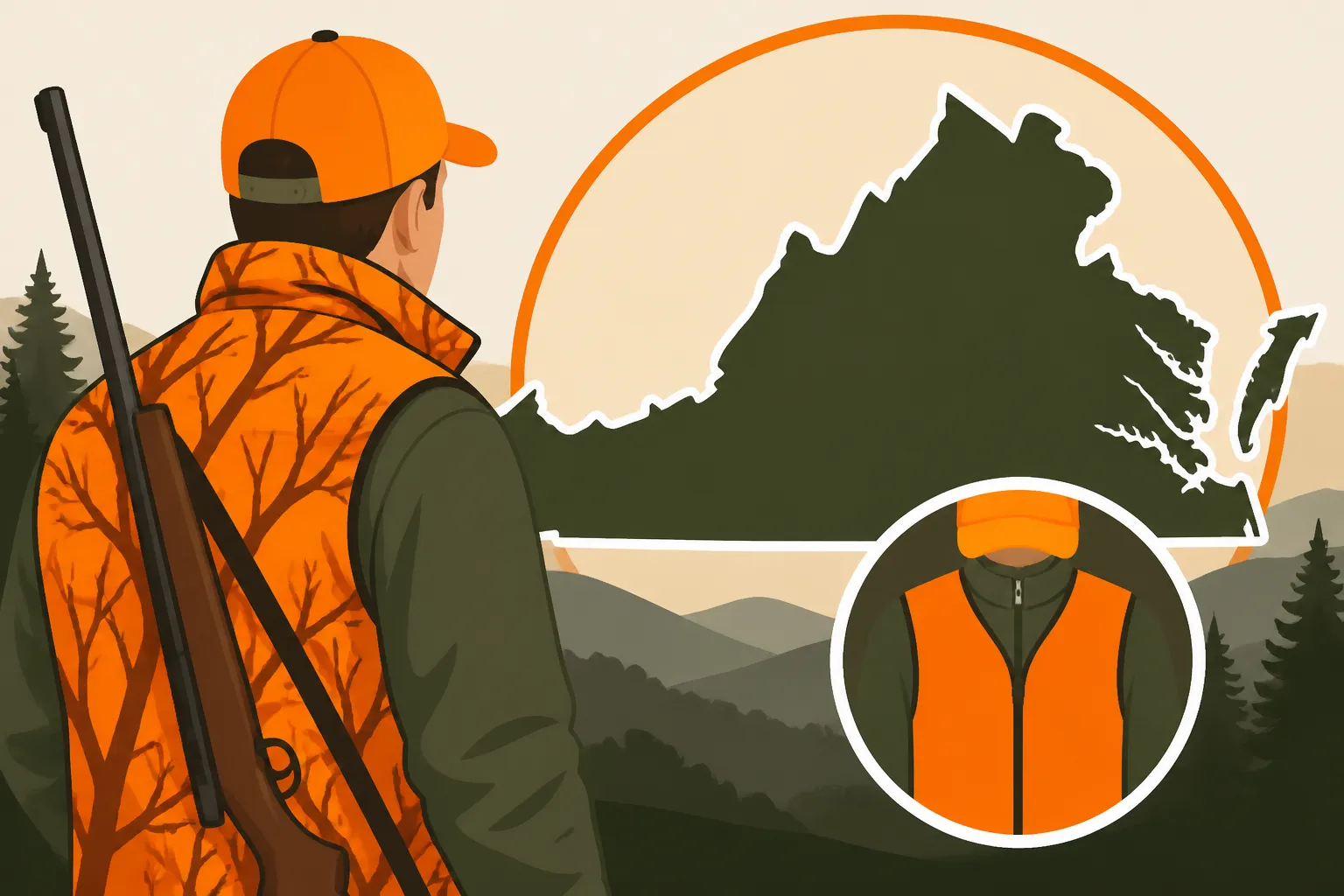
The core rule is this: If you are hunting deer, bear, or elk during Virginia's general firearms season, you must wear blaze orange or blaze pink. This isn't just for the person holding the rifle; it applies to everyone afield. That means if you're a small game hunter sharing the woods with deer hunters during the general firearms season, you're also required to wear it. Even if you're just walking your dog on public land or accompanying a hunter, the same rules apply. The law specifies that you must wear "at least 100 square inches of solid blaze orange or solid blaze pink material visible from 360 degrees, or a cap of solid blaze orange or solid blaze pink material visible from 360 degrees."
This requirement applies across the board during the entirety of Virginia's General Firearms Deer Season, which for many means a significant chunk of November and December. It also extends to special early firearms seasons for deer and bear, and any overlap with other managed hunts where firearms are permitted for big game. Keep in mind that specific county regulations can sometimes differ, so always double-check the DWR regulations for your particular hunting location. If you're planning a hunt that involves a rifle, make sure everyone in your party understands these critical requirements.
Exemptions and Archery Nuances
Here’s where it gets a little more intricate. Not every hunting season demands blaze orange. You are not required to wear blaze orange or blaze pink when:
- Hunting waterfowl from a blind or boat.
- Hunting doves.
- Hunting wild turkeys.
- Hunting crows.
- Hunting any species during an archery-only season (like Virginia's Statewide Archery Season or Urban Archery Hunting in Virginia Cities) or a muzzleloader-only season where no general firearms season for deer, bear, or elk is open anywhere in the state.
This last point is crucial. If you're bowhunting during the statewide archery season in October, and no firearms deer season is open yet anywhere in Virginia, you are generally exempt. However, if you're hunting during the early muzzleloader season, and a general firearms season for deer, bear, or elk is already open in an adjacent county or region, you might still need to wear it. The spirit of the law is to protect against mistaken identity when high-powered rifles are in use for big game. So, always err on the side of caution. If there's any doubt about overlap with a firearms season, just put on the orange. It's a small inconvenience for a huge safety benefit. Remember to check the specific dates for Virginia Early Muzzleloader Tactics to understand the season overlaps.
Blaze Pink: A Stylish and Safe Alternative
In a welcome move, Virginia recognized blaze pink as an equally effective and legally compliant alternative to blaze orange. This option provides a choice for hunters who prefer it, without compromising on visibility or safety. Like blaze orange, blaze pink is designed to stand out vividly in natural environments to the human eye, while still being perceived as muted by deer. So, if you see gear labeled "blaze pink," rest assured it meets Virginia's requirements for visibility and safety, offering the same peace of mind as its orange counterpart.
Practical Considerations for Wearing Blaze Orange Effectively
Beyond just meeting the minimum legal requirements, there are practical considerations to ensure your blaze orange or pink is doing its job optimally. It's not just about having 100 square inches; it's about how you wear it and how visible it truly is.
Placement and Coverage for 360-Degree Visibility
The DWR explicitly states "visible from 360 degrees." This means your orange or pink material shouldn't be covered by your backpack, your tree stand, or the angle of your body. A vest and a hat are typical choices, and for good reason. A vest provides coverage around your torso, while a hat ensures visibility from above and helps break up the outline of your head.
Think about it:
- Sitting in a treestand: If your jacket is too short or your pack covers your back, you might not be visible from all angles, especially to hunters on the ground or those approaching from behind. Consider a longer vest or a jacket designed for hunting that keeps the orange visible even when sitting.
- Walking through thick cover: Your blaze orange can easily get obscured by brush. A hat is great because it often rides above the densest vegetation. If you’re pushing through dense laurel or briars, having patches of orange on your upper arms or legs can also boost visibility, though not strictly mandated.
- Approaching a downed animal: This is a critical time for safety. Make sure you maintain your blaze orange visibility as you move in for recovery.
Layering, Comfort, and Weather Conditions
Virginia's hunting seasons can throw all sorts of weather at you, from warm September days in the early archery season to frigid January sits. Layering is key for comfort, but it shouldn't compromise your blaze orange. You need outer layers that are either blaze orange/pink themselves, or allow a blaze orange vest to be worn effectively over them.
- Warm Weather: A simple blaze orange mesh vest over a t-shirt might be all you need. Focus on lightweight, breathable materials.
- Cold Weather: This is where it gets tricky. If your outermost layer is a heavy, insulated camouflage jacket, you'll need to wear a blaze orange vest over it. Don't stuff your orange vest under your camo; that defeats the purpose! Many companies now make insulated blaze orange jackets or vests that integrate well into a cold-weather layering system. Look for options that are quiet and durable, as outlined in guides like "Clothing for a Virginia Late Season."
The goal is to be seen by humans, not necessarily to be warm or cool, though modern gear often combines both. Don't let comfort override safety.
Enhancing Group Safety: Beyond Individual Compliance
When hunting with a group, especially during deer drives or still-hunting efforts, increasing overall visibility goes a long way. While the 100 square inches rule applies to each individual, coordinating with your hunting party to maximize blaze orange presence is a smart move.
- Deer Drives on Virginia Public Land: During a drive, both drivers and standers benefit from clear visibility. Drivers are moving through thick cover, and standers are often stationary. The more orange, the better. Consider adding orange flags to dog collars if you're hunting with hounds where permitted.
- Public Land Considerations: When hunting on public land, assume there are other hunters, hikers, and recreational users present. Even if you're in an archery-only zone during an archery-only period, wearing a blaze orange cap while walking to and from your stand, or when packing out a deer, is a good habit. You never know who else might be in the woods, even if they aren't hunting. Using tools like GoHunt can help you understand public land boundaries and potential access points for others, making you more aware of where you might encounter non-hunters.
Finding the Right Gear and Staying Compliant Annually
With so many gear options out there, choosing the right blaze orange or pink can feel a bit overwhelming. But it doesn't have to be. Focus on functionality, durability, and most importantly, compliance.
Vests, Hats, and Jackets: What to Look For
The market is flooded with various types of blaze orange and pink gear. Here’s a quick breakdown of what works best for different scenarios:
- Vests: These are the most common and versatile. A simple mesh vest is inexpensive and lightweight for warmer weather or to throw over an existing jacket. For colder weather, consider an insulated vest that offers both warmth and visibility. Look for adjustable straps to ensure a snug fit over varying layers.
- Hats: A solid blaze orange or pink cap is an excellent addition, often fulfilling the 100 square inches requirement on its own if visible from 360 degrees. It’s a no-brainer for adding visibility around your head, which is often the most visible part of a hunter’s body in dense cover or from a treestand.
- Jackets/Outerwear: Many manufacturers, like Sitka Gear or First Lite, offer full blaze orange or pink jackets or reversible options. These are great for cold weather, ensuring your outermost, most insulating layer also provides maximum visibility. If you're hunting in particularly harsh conditions, this can simplify your layering system.
- Accessories: Don't forget small items. Backpack covers in blaze orange are fantastic for maintaining rear visibility, especially if your pack is large and would otherwise obscure a vest. Some hunters even add blaze orange armbands or leg bands for extra visibility while walking.
When scouting Virginia Public Land Before Season, a lot of hunters use mapping tools like GoHunt to mark potential stand locations. As you're visualizing your hunt, also think about how your blaze orange gear will perform in those specific spots – will it be visible from all angles?
Quality, Durability, and Investment
While you don't need to break the bank, investing in quality blaze orange gear pays off in the long run. Cheap, flimsy vests can tear easily in briars or fade quickly after a few washes. Look for:
- Durable Fabrics: Ripstop nylon or rugged polyester blends will stand up to the rigors of the woods.
- Good Stitching: Reinforced seams will prevent unraveling.
- Colorfastness: You want the color to stay vibrant season after season. UV exposure and repeated washing can dull cheap dyes, reducing their effectiveness.
- Quiet Materials: While not always possible with certain fabrics, some brands offer blaze orange gear designed to be quiet in the woods, which is a big plus, especially when Still-Hunting Jefferson Forest Ridges.
Thinking about your gear from a long-term perspective, rather than just a one-season solution, will ensure you're always prepared.
Checking the Regulations Annually: Don't Get Caught Off Guard
Hunting regulations, while generally stable, can have subtle changes from year to year. The DWR publishes its full regulations annually, and it’s your responsibility to stay current. Before opening day, always take a few minutes to review the latest Virginia Deer Season Structure Explained and the specific rules for your game and region. This includes refreshing your memory on blaze orange requirements, any new CWD-related rules, or changes to Virginia Public Land Hunting Hours. A quick check can prevent headaches and keep you safe and legal. Even a robust mapping tool like GoHunt can't interpret the very latest regulation changes for you, so always refer to the official DWR guide.
Ultimately, blaze orange or pink is more than just a legal obligation; it's a commitment to safety for yourself and your fellow outdoors enthusiasts. Embrace it, wear it correctly, and hunt with confidence, knowing you've done your part to ensure a safe and successful season.
Virginia Blaze Orange Requirements at a Glance
To simplify the core requirements, here’s a quick table summarizing when blaze orange or pink is generally required in Virginia. Always consult the official Virginia DWR regulations for the most current and specific details for your hunting zone and season.
| Hunting Scenario | Species Being Hunted | Blaze Orange/Pink Required? | Specifics |
|---|---|---|---|
| General Firearms Season | Deer, Bear, Elk | YES | Minimum 100 sq. inches, solid material, visible from 360 degrees, or a cap visible from 360 degrees. Applies to ALL individuals (hunters, non-hunters, companions) afield when general firearms season for these species is open. |
| Archery-Only Season | Deer, Bear, Elk | NO | Unless a general firearms season for deer, bear, or elk is open concurrently in that county or an adjacent area, then the YES rule above applies. |
| Muzzleloader-Only Season | Deer, Bear, Elk | NO | Unless a general firearms season for deer, bear, or elk is open concurrently in that county or an adjacent area, then the YES rule above applies. |
| Small Game (e.g., Squirrel, Rabbit) | Squirrel, Rabbit, Grouse | NO | Unless hunting concurrently with or in an area where general firearms season for deer, bear, or elk is open. In such cases, the YES rule for big game applies to you too. |
| Waterfowl | Ducks, Geese | NO | When hunting from a blind, boat, or over decoys. |
| Upland Birds (e.g., Turkey, Dove, Crow) | Turkey, Dove, Crow | NO | Always exempt. Turkey hunting often requires camouflage for success. |
| Predator Hunting (e.g., Coyote, Fox) | Coyote, Fox | NO | Unless hunting concurrently with or in an area where general firearms season for deer, bear, or elk is open. In such cases, the YES rule for big game applies to you too. |
| Individuals Accompanying a Hunter | Any Species | Varies | If accompanying a hunter who is required to wear blaze orange/pink, you must also wear it. If the hunter is exempt, you are too. |
| Youth Hunters during Youth Deer Weekend | Deer | YES | All youth and accompanying adults must wear blaze orange/pink, consistent with the Virginia Youth Deer Weekend Rules. |
Disclaimer
The information provided in this guide is for general informational purposes only and is not intended as legal advice. Hunting regulations in Virginia can change and may have specific nuances based on county, season, or other factors. Always consult the official Virginia Department of Wildlife Resources (DWR) regulations or contact them directly for the most current and accurate information before planning any hunting activity. Failure to comply with hunting regulations can result in fines, penalties, or loss of hunting privileges.