Smyth County Public Hunting Access
Finding quality public hunting land in Virginia, especially when you're focusing on a specific county, can feel like navigating a maze. Smyth County, nestled in the rugged southwest mountains, offers fantastic opportunities, but you need to know where to look and how to approach the unique challenges of mountain hunting. This guide is designed to cut through the confusion and help you unlock the potential of public hunting access in Smyth County.
Unveiling Smyth County's Public Hunting Landscape
Smyth County, like much of Southwest Virginia, is defined by its stunning, yet challenging, mountainous terrain. This landscape dictates where public hunting opportunities lie and what kind of hunting experience you can expect. It's not the flat, open country of the Piedmont, nor the marshy lowlands of the coast. This is big woods hunting, pure and simple, and it comes with its own set of rules and rewards.
The Backbone: Jefferson National Forest Lands
When we talk about public hunting in Smyth County, the conversation almost always starts and largely ends with the George Washington and Jefferson National Forests. These vast federal lands make up the lion's share of publicly accessible hunting ground in this part of Virginia. Specifically, within Smyth County, you'll be primarily looking at the Jefferson National Forest, which includes significant portions of the Mount Rogers National Recreation Area. This designation means some specific regulations apply, but generally, it's open for public hunting.
Imagine sprawling tracts of timber, from mature hardwoods on the ridgelines down to thick creek bottoms. You'll encounter steep slopes that will test your endurance, deep hollows, and often dense thickets of rhododendron and mountain laurel. This isn't manicured land; it's wild and untamed, offering a true backcountry experience for those willing to put in the effort. The beauty of these national forest lands is their sheer scale and the sense of solitude they can offer. You can literally walk for miles without seeing another soul if you venture far enough off the beaten path. This ruggedness is precisely what makes it so appealing to hunters seeking a challenge and a genuine wilderness feel. Understanding the terrain is step one in making a plan for Jefferson National Forest Hunting.
Wildlife Management Areas and Other Potential Access Points
While the Jefferson National Forest is the dominant player, it's always wise to check for other potential public access points. The Virginia Department of Wildlife Resources (DWR) manages a network of Wildlife Management Areas (WMAs) across the state. While Smyth County itself might not host a large, dedicated WMA, sometimes smaller DWR parcels, cooperative lands, or public access easements can pop up on the maps, often adjacent to or within the broader national forest boundaries.
These smaller areas, if present, might offer different habitat types or present less strenuous terrain in certain pockets, potentially providing easier access for some hunters. They are typically managed for specific wildlife objectives, which can mean anything from early successional habitat for grouse and rabbits to planted food plots for deer and turkeys. It's crucial to consult the DWR's official resources to pinpoint any such areas and understand their specific regulations, which can differ from national forest rules. A quick search on the DWR website or a look at a comprehensive mapping app can reveal if any Virginia Wildlife Management Areas are located conveniently close to your hunting plans in Smyth County. Keep in mind that WMA regulations sometimes require an access permit in addition to your regular hunting license, so always do your homework before heading out.
Essential Planning and Navigational Tools for Smyth County Hunters
Hunting in Smyth County's mountains isn't something you just "wing." The terrain demands respect, and proper planning is your best friend. From knowing where you can legally step to finding the best game sign, having the right tools and understanding the rules are non-negotiable.
Mastering Digital Mapping for Public Land Identification
In today's hunting world, digital mapping applications are an absolute game-changer, especially when you're dealing with vast and varied public lands like those in Smyth County. Tools like onX Hunt and GoHunt aren't just fancy gadgets; they are essential navigation and scouting aids. They allow you to overlay public and private land boundaries directly onto detailed topographic and satellite imagery, instantly showing you where you can legally hunt. This feature alone is worth its weight in gold, preventing accidental trespass and helping you maximize your hunting time.
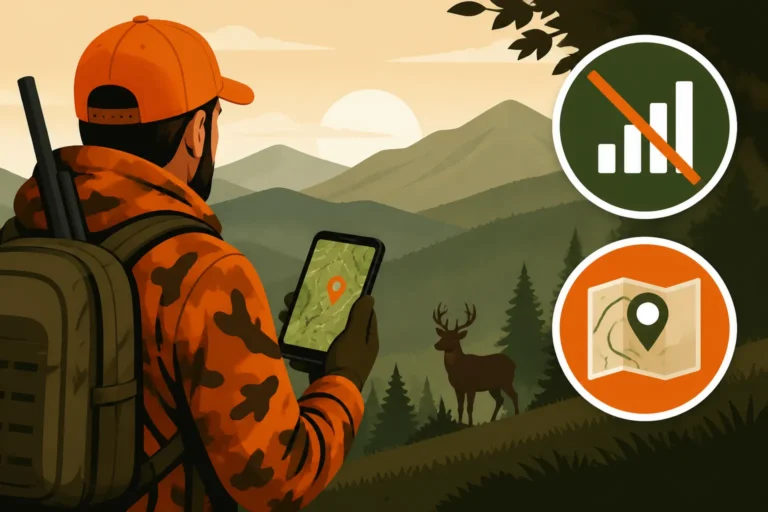
Beyond boundary lines, these apps provide invaluable insights into the terrain. You can identify steep drainages, gentle benches, ridge lines, saddles, and potential water sources—all critical features for understanding animal movement. You can mark potential stand locations, track your routes, and save waypoints for deer sign, rubs, scrapes, or turkey roosts. Furthermore, the ability to download offline maps is absolutely vital in Smyth County's mountains, where cell service can be non-existent for miles. Before you ever leave home, you can scout potential areas, identify access roads, and formulate a game plan. When you're on the ground, having that detailed map on your phone or GPS unit, even without a signal, ensures you know exactly where you are and where you need to go. Learning to use onX Layers for Virginia Land Status can give you an incredible advantage.
Understanding Regulations Specific to Mountainous Public Lands
Hunting in Virginia, and especially on federal lands, comes with a specific set of rules and regulations. Beyond your basic Virginia hunting license and big game tags, there are often nuances tied to the type of land you're on. For the Jefferson National Forest in Smyth County, you'll need to familiarize yourself with general DWR regulations concerning bag limits, seasons, and legal methods, but also with National Forest-specific rules.
For example, while treestands are generally permitted on National Forest land, they often cannot be left unattended overnight or made into permanent structures. Disposing of game waste, vehicle access on forest roads, and camping regulations can also differ. Always carry a copy of the current Virginia DWR hunting regulations digest, and check the specific website for the Jefferson National Forest for any additional or unique rules that apply to federal lands. Ignorance of the law is never an excuse, and a quick review can save you from a frustrating encounter with a game warden or, worse, a violation. Understanding the full Virginia Hunting Licenses and What They Cost and the Virginia Deer Season Structure Explained is foundational before you even consider specific areas.
Strategies for Hunting Smyth County's Mountainous Terrain
Hunting in Smyth County's mountains is a different beast than hunting the flatlands. It's physically demanding, but it offers a unique challenge and a deep sense of accomplishment. Success here often hinges on understanding the game's habits in high-country environments and adapting your tactics accordingly.
Key Game Species and Their Mountain Habits
Smyth County's rugged landscape is home to a robust population of several popular game species. White-tailed deer are abundant, though mountain deer often run a bit smaller in body size compared to their Piedmont cousins, they are incredibly wary and skilled at using the terrain to their advantage. They will utilize benches on steep hillsides for travel and feeding, often bedding on southern-facing slopes to catch the sun, or in dense thickets for cover. Black bears are also a significant presence, especially during mast crop years. These intelligent animals thrive in the vast, remote forests, often found in deep hollows, around berry patches, or feeding on acorns along oak ridges. The region also boasts a healthy population of wild turkeys, with gobblers using the steep topography to their advantage, often roosting high and flying down into hollows or fields at dawn.
Understanding how these animals navigate and utilize the varied elevations, cover, and food sources is paramount. Look for deer trails crisscrossing benches or funnels between two hollows. For bears, focus on areas with abundant natural food sources and thick escape cover. Turkeys will often use logging roads and clearings for strutting, but will quickly vanish into the timber. A good read on White-Tailed Deer Across Virginia, Virginia's Black Bear Population, and Wild Turkeys in Virginia will give you a solid foundation for hunting these species in Smyth County.
Adapting Tactics to Rugged Cover and Elevation
Hunting steep, rugged country requires a shift in mindset and tactics. Gone are the days of long sits on a field edge, waiting for deer to pop out. Here, you'll often be actively hunting. Still-hunting, moving slowly and deliberately through the timber, pausing frequently to observe and listen, is incredibly effective. Focus your attention on terrain features like saddles between ridges, which act as natural travel corridors, or benches on steep slopes where deer feed and travel. Creek bottoms can also be productive, especially during dry spells or as escape routes.
Another critical factor in mountain hunting is understanding wind and thermals. In mountainous terrain, thermals dictate air movement, particularly in the mornings and evenings. As the sun rises and warms the earth, air flows uphill; as it sets and the earth cools, air flows downhill. Hunting with the wind in your face and being mindful of these thermal shifts is crucial to avoiding detection by a wary buck or a keen-nosed bear. You'll often find yourself adjusting your approach based on the time of day and the specific contour of the land. For more on navigating these features, check out Reading a Ridge for Blue Ridge Deer and Still-Hunting Jefferson Forest Ridges. The more you learn to read the landscape, the more successful you'll be.
Practical Considerations for a Successful Hunt in Smyth County
Preparation isn't just about knowing the regulations; it's about making sure your body, your gear, and your strategy are all aligned for the rigors of mountain hunting. A successful hunt in Smyth County involves careful thought before you ever step foot in the woods.
Pre-Season Scouting and Physical Preparation
You wouldn't run a marathon without training, and you shouldn't tackle Smyth County's mountains without some form of preparation. Physical fitness is paramount. You'll be climbing steep grades, navigating uneven terrain, and potentially dragging game out of deep hollows. Start a walking or hiking regimen well before the season opens, ideally mimicking the elevation changes you expect to encounter. The fitter you are, the further you can go, and the more effectively you can hunt throughout the day.
Pre-season scouting is just as vital as physical conditioning. Long before opening day, hit the woods. Use your digital mapping apps to identify potential access points, mark interesting terrain features, and look for signs of game. Find rubs, scrapes, old droppings, and well-worn game trails. Pay attention to food sources—oak flats, berry bushes, and water availability. Early season scouting allows you to understand game patterns without the pressure of a rifle or bow in hand. It’s a chance to learn the land, identify bedding areas, and plan your entry and exit routes for actual hunting days. This boots-on-the-ground recon, combined with your mapping tools, is how you truly build a comprehensive hunting plan. For more detailed advice, check out Scouting Virginia Public Land Before Season.
Gear Essentials and Safety in the Backcountry
Your gear choices can make or break a hunt in Smyth County. The variable mountain weather means layering is crucial. Start with good moisture-wicking base layers, add insulating mid-layers, and top it off with a waterproof and windproof outer shell. Wool or quality synthetics are your best friends here; avoid cotton at all costs. Sturdy, waterproof hiking boots with excellent ankle support are non-negotiable for navigating the steep, rocky terrain. Break them in well before the season to avoid blisters.
Beyond clothing, a reliable navigation system (your phone app with offline maps and a backup physical compass and map), a good quality headlamp for early morning or late evening walks, and a well-stocked first-aid kit are absolute essentials. Don't skimp on hydration and calorie-dense snacks – you'll be burning a lot of energy. Finally, always let someone know where you're going and when you expect to return. Mountain hunting can be remote, and safety should always be your top priority. Packing a small First Aid Kits for Remote Mountain Ground can literally be a lifesaver. Even simple things like having the right Boots for Virginia Swamps and Ridges can make a huge difference, even if you're not in a swamp.
Here’s a quick rundown of essential gear for hunting the rugged terrain of Smyth County:
| Gear Item | Why it's Essential for Smyth County | Notes |
|---|---|---|
| GPS Unit / Phone App | Critical for navigation in complex terrain, knowing public/private lines | Download offline maps (onX Hunt, GoHunt) for no-service areas |
| Topo Maps & Compass | Indispensable backup navigation; helps understand terrain features | Learn to use them before you need them; waterproof them |
| Sturdy Hiking Boots | Traction, ankle support, and comfort over long, steep miles | Waterproof, broken-in, and sized for thick socks |
| Layered Clothing | Adapting to rapid temperature changes from valleys to ridges | Wool or synthetic base/mid-layers; waterproof/windproof outer shell |
| Quality Binoculars | Glassing distant slopes and thick cover for game signs and animals | 8x-10x power is versatile for mountain hunting |
| Headlamp | Safe navigation in the dark before dawn and after dusk | Choose one with red light mode to preserve night vision |
| First-Aid Kit | Addressing minor injuries or emergencies in remote areas | Include essentials: bandages, antiseptic, pain relievers, whistle |
| Water & Snacks | Sustained energy and hydration for physically demanding hunts | Consider a hydration bladder and high-energy foods |
| Blaze Orange/Pink | Meeting legal requirements and enhancing visibility for safety | Wear legally required amounts (often 400 sq. inches) |
| Hunting Pack | Carrying essentials, game meat, and layers comfortably | Consider one with a sturdy frame for heavy loads |
Disclaimer
This article is for general informational purposes only and does not constitute professional advice. Laws, prices and regulations vary by location and change over time. Consult a qualified professional for guidance on your specific situation.