Camping Rules on Virginia National Forest Land
The call of the wild, especially when you're deep in Virginia's national forests chasing game, often means you want to stay as close to the action as possible. But figuring out exactly where you can pitch a tent, park your rig, or just spend a night under the stars without breaking any rules can feel like navigating a maze. This guide is here to clear up the confusion around camping regulations on Virginia's National Forest lands, helping you plan your next hunting trip with confidence and peace of mind.
Understanding Camping Options in Virginia's National Forests
Virginia is blessed with vast expanses of public land, primarily through the George Washington National Forest (GWNF) and the Jefferson National Forest (JNF). These forests offer incredible opportunities for hunting, hiking, and simply getting away from it all. When it comes to setting up camp, you generally have two main choices: developed campgrounds or dispersed camping. Each comes with its own set of rules, expectations, and amenities (or lack thereof).
Developed Campgrounds: Convenience with Structure
Developed campgrounds are what most people picture when they think of camping. These are designated sites, often maintained by the U.S. Forest Service or a concessionaire, that offer a certain level of infrastructure. You'll typically find individual campsites, sometimes with picnic tables and fire rings, and often access to vault toilets or even flush toilets and potable water. Some might even have host services during peak season.
The upside here is convenience. You drive in, pick your spot (or reserve one ahead of time), and you have basic amenities. These spots are usually well-marked, and the rules are clearly posted. The downside, especially for hunters looking for solitude, is that they can be busy, particularly during hunting seasons or popular weekends. There's usually a fee involved, and you're restricted to using the designated site. For a hunter wanting to be out at dawn and return after dusk, these can be a great base camp if the location works, offering a comfortable place to recharge. When scouting locations, using a tool like onX Hunt can show you where these developed campgrounds are relative to prime hunting spots in George Washington National Forest Hunting or Jefferson National Forest Hunting.
Dispersed Camping: The True Backcountry Experience
This is where many hunters truly connect with the wild spirit of Virginia's national forests. Dispersed camping means camping outside of developed campgrounds, usually along forest roads or trails, or deep in the backcountry. There are no facilities—no picnic tables, no fire rings (unless you build your own in a safe, Leave No Trace manner), and definitely no flush toilets. It's primitive, self-reliant camping, and it's largely free.
The appeal of dispersed camping is the solitude and the ability to set up camp closer to your hunting grounds. Imagine spending the night just a mile or two from a promising ridge or a secluded hollow you've been Scouting Virginia Public Land Before Season. This freedom, however, comes with a greater responsibility to minimize your impact on the land. The rules for dispersed camping are less about where you can go and more about how you behave once you're there. It requires a deeper understanding of Leave No Trace principles, which we'll dive into shortly, to ensure these pristine areas remain that way for future generations.
Key Regulations for Dispersed Camping and Hunter Camps
While the national forests offer a lot of freedom, they aren't a free-for-all. There are specific rules designed to protect the natural resources, prevent conflicts, and ensure public safety. Ignoring these can lead to fines or, worse, irreversible damage to the environment.
Location and Distance Restrictions
One of the most common questions about dispersed camping revolves around where you can actually set up. Generally, you need to be a certain distance away from developed recreation sites, trails, and water sources. This buffer helps maintain the wilderness feel for others and protects sensitive ecosystems.
- Roads: Most national forests require you to camp at least 200 feet from any open public road. This helps keep vehicle traffic flowing, reduces visual impact, and ensures privacy for campers. It also means you can't just pull off the asphalt and pitch your tent right next to your truck. You need to get off the beaten path a bit.
- Water Sources: Similarly, a minimum distance of 200 feet (sometimes more, check local ranger district rules) from springs, streams, rivers, and other water sources is usually required. This is critical for protecting water quality and allowing wildlife access to crucial drinking spots without human disturbance. You don't want to accidentally contaminate a stream that deer, bears, and other animals rely on, or impact someone downstream.
- Trails: Keeping a distance from designated trails, typically 200 feet, prevents your camp from interfering with hikers or other trail users and helps maintain the natural aesthetic of the trail corridor. If you're using a tool like GoHunt or onX Hunt, you can often overlay trail maps and boundary lines to help visualize these distance requirements when picking a spot.
Campfire Regulations and Firewood
Ah, the campfire—the soul of any good hunting camp. But fires are also one of the biggest risks in a forest environment, especially during dry conditions.
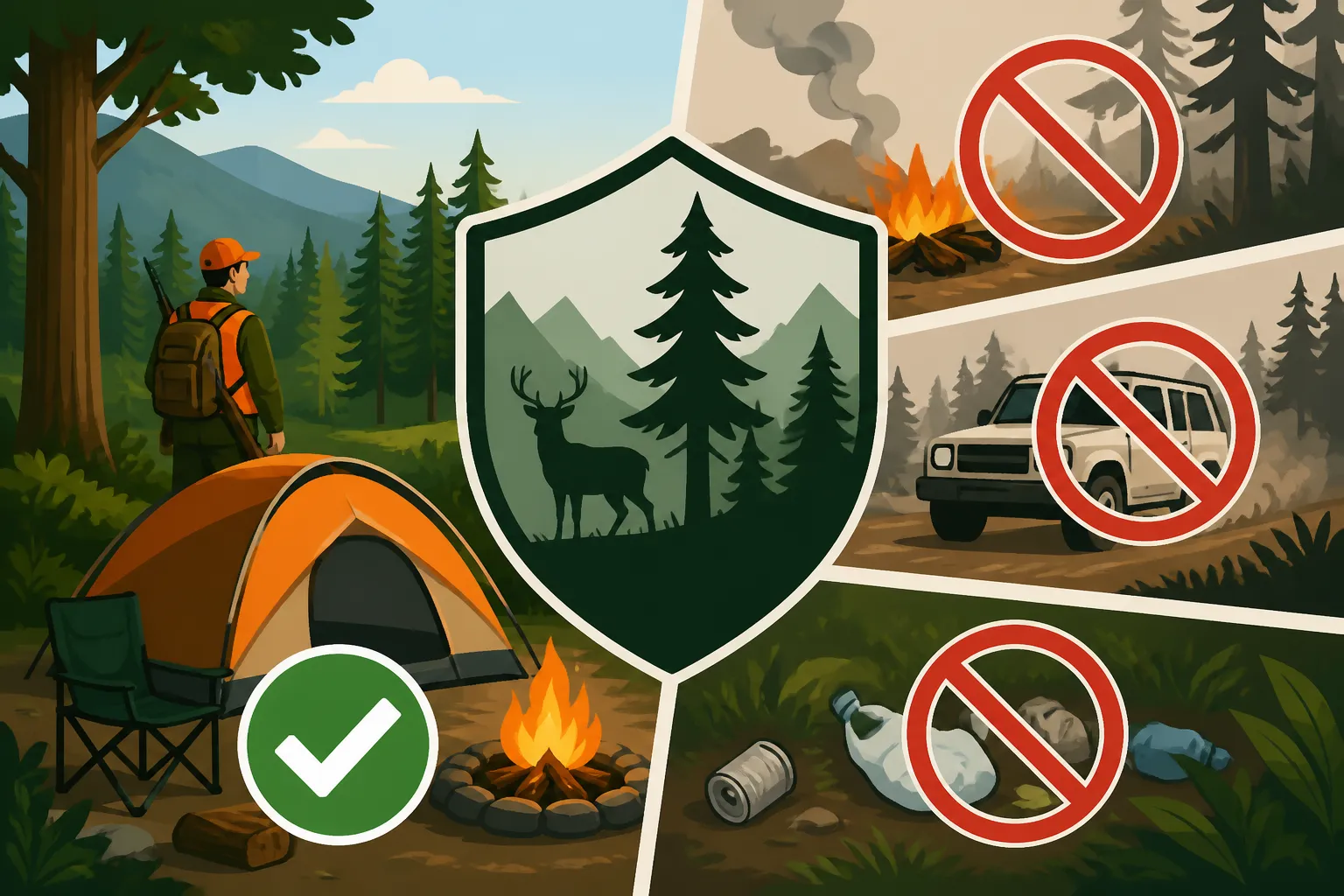
- Fire Rings: In dispersed camping areas, you often won't find existing fire rings. If you build one, it must be small, contained, and completely extinguished before you leave. Use existing disturbed areas when possible, rather than creating new scars on the landscape.
- Firewood: Only collect dead and down wood for your campfire. Never cut standing trees, even dead ones, as they provide habitat for countless insects and small animals. Bringing in outside firewood is generally discouraged and often prohibited due to the risk of introducing invasive pests and diseases, like the emerald ash borer, which can devastate Virginia's hardwood forests.
- Fire Restrictions: Always, always, always check for fire restrictions or bans before heading out. Conditions can change rapidly, and a seemingly innocent campfire during a dry spell can quickly turn into a devastating wildfire. These bans are often posted at ranger stations, on forest service websites, or local news outlets. Ignoring a fire ban carries hefty penalties and can endanger lives and vast tracts of forest.
Waste Management and Leave No Trace Principles
This is perhaps the most crucial aspect of dispersed camping. When there are no trash cans or outhouses, everything you bring in must be carried out.
- Pack It In, Pack It Out: This golden rule means all trash, food scraps, and anything else you brought with you leaves with you. Even biodegradable items like orange peels or apple cores can take years to decompose, attract wildlife, and leave an unsightly mess.
- Human Waste: For solid human waste, the general rule is to dig a "cathole" 6-8 inches deep and at least 200 feet from water, trails, and camp. Cover it thoroughly when finished. Pack out all toilet paper. Yes, even used toilet paper. This is non-negotiable for hygiene and aesthetics.
- Greywater: Any water used for washing dishes or personal hygiene (often called greywater) should be scattered widely away from camp and water sources, not poured in a concentrated spot. Use biodegradable soaps sparingly, if at all.
- Impact: The goal is to leave your campsite looking like no one was ever there. This includes dismantling any temporary structures, dispersing rocks from a fire ring, and naturalizing the area. This is the essence of Finding Ground That Sees Fewer Hunters – keeping it pristine means more quality hunting for everyone.
Duration of Stay
You can't just set up a permanent residence in the national forest. There are usually limits on how long you can camp in one spot or within the forest boundaries annually.
- Stay Limit: Most national forests have a 14-day stay limit within any 30-day period. This prevents individuals from establishing long-term camps and ensures fair access for all visitors. After 14 days, you need to move a certain distance (often 5-10 miles) to a new site.
- Annual Limit: There might also be an annual limit on total days spent camping in the forest, perhaps 30 days per calendar year. These rules are in place to manage impacts on resources and ensure a rotating use of sites.
Here's a quick comparison of developed vs. dispersed camping to help you visualize the differences:
| Feature | Developed Campgrounds | Dispersed Camping (Hunter Camps) |
|---|---|---|
| Location | Designated sites, often reservable | Anywhere outside developed areas, minimum distances apply |
| Amenities | Picnic tables, fire rings, vault/flush toilets, potable water | None; self-sufficient |
| Fees | Usually requires a fee per night | Generally free |
| Privacy | Limited; close to other campers | High; can find secluded spots |
| Fire Rings | Often provided | Must be constructed safely, small, dispersed upon leaving |
| Water | Potable water often available | Must pack in or filter from natural sources |
| Waste | Trash cans, designated restrooms | Pack it in, pack it out; catholes for human waste |
| Stay Limit | Site-specific rules, often 14 days | Typically 14 days in any 30-day period |
| Vehicle Access | Designated parking at site | Often roadside, or short walk from legal parking. Check Vehicle Rules on Virginia Public Land. |
| Impact | Lower individual impact due to infrastructure | Higher individual responsibility; strict adherence to LNT crucial |
Permits, Fees, and Planning Your National Forest Stay
While dispersed camping is generally free, there are situations where you might need a permit or encounter fees. Understanding these can prevent headaches down the road.
What About Permits?
For the vast majority of dispersed camping and hunting camps in the GWNF and JNF, you do not need a specific camping permit. This is a common point of confusion, as many wilderness areas or specific recreational sites do require permits. However, for general dispersed camping in the national forest, you're usually good to go without one.
That said, there are exceptions:
- Wilderness Areas: If you plan to camp in a designated Wilderness Area (like Ramsey's Draft Wilderness in the GWNF), specific rules and possibly permits might apply. These areas have stricter regulations to preserve their pristine nature. Always check with the local ranger district before entering a Wilderness Area.
- Specific Trails/Sites: Occasionally, a popular trail or a specific site might have unique requirements, especially if it's heavily used. It's always a good idea to check the website for the specific ranger district you're visiting or call them directly.
- Parking Fees: While camping might be free, some trailhead parking areas or special recreation sites might require a day-use or annual pass, like an America the Beautiful pass. This isn't a camping fee, but a fee for using developed facilities.
Financial Considerations Beyond the Campsite
Even if you're not paying for a campsite, there are other costs associated with camping and hunting in the national forests that you should budget for. These might include:
- Hunting Licenses: Of course, you'll need all the necessary Virginia Hunting Licenses and What They Cost.
- Fuel: Driving to and from remote forest locations, especially if you're moving between hunting spots daily, can add up.
- Gear: You'll need appropriate gear for Clothing for a Virginia Late Season, Boots for Virginia Swamps and Ridges, and a reliable Packs for a Jefferson Forest Day Hunt.
- Food and Water: Packing in all your food and having a plan for water (either packed in or filtered) is essential.
- Emergency Supplies: A well-stocked First Aid Kits for Remote Mountain Ground and other emergency essentials are critical, as cell service can be spotty or nonexistent.
It’s always a good practice to check the official U.S. Forest Service website for the specific National Forest you plan to visit. Websites like the George Washington and Jefferson National Forests site will have the most up-to-date information on any closures, fire restrictions, or specific rules for certain areas.
Practical Tips for a Responsible and Respectful Forest Camp
Making the most of your national forest camping experience, especially as a hunter, involves more than just knowing the rules. It's about embodying a mindset of respect for the land, wildlife, and other users.
Choosing Your Campsite Wisely
The spot you pick can make or break your experience, and critically, your impact.
- Look for Existing Sites: If you see evidence of previous camping (a faint fire ring, a cleared tent spot), consider using that area. This concentrates impact rather than spreading it. Just be sure to clean up any lingering trash left by previous occupants.
- Hard Surfaces: Whenever possible, choose a durable surface like bare soil, rock, or dry grass for your tent. Avoid sensitive areas like mossy patches or areas with delicate plants.
- Avoid Widening Roads: Resist the temptation to drive off-road to reach a "better" spot. Stick to designated roads and parking areas. Even if the ground looks firm, driving off-road can damage vegetation, create new erosion channels, and lead to vehicle recovery nightmares. Remember, Virginia's national forests are vast, and you might be far from help if you get stuck.
- Proximity to Hunting Grounds: While you want to be close, consider the wind direction and potential scent dispersal when setting up for an early morning hunt. You don't want your camp odors blowing right into the area you plan to hunt!
Respecting Wildlife and Other Forest Users
You're not the only one enjoying the national forest. Wildlife lives there, and other people recreate there.
- Food Storage: Bears are present in Virginia's national forests, and they are intelligent and opportunistic. All food, trash, and scented items (toothpaste, bug spray) should be stored in bear-resistant containers, hung from a tree, or secured in a hard-sided vehicle out of sight. A fed bear is a dead bear, and it's our responsibility to keep them wild. This is especially true in areas like Hunting Mountain Bears in November.
- Noise Levels: Keep noise to a minimum, particularly during dawn and dusk. This is prime time for wildlife movement, and loud voices or music can disrupt animals and disturb other campers or hunters seeking solitude.
- Right of Way: Yield to hikers, mountain bikers, and horseback riders on trails. They often have less situational awareness than hunters who are constantly scanning their surroundings. A polite greeting goes a long way.
- Sharing the Land: Understand that different user groups have different goals. While you might be focused on a deer, someone else might be birdwatching or simply enjoying a quiet walk. Mutual respect ensures everyone has a positive experience. Using apps like onX Hunt can help you identify public land boundaries and features, allowing you to choose camp locations that minimize conflicts.
Contingency Planning and Safety
Being self-reliant means being prepared for anything.
- Weather: Mountain weather, particularly in the Hunting West of the Blue Ridge areas, can change rapidly. Pack extra layers, rain gear, and a sturdy shelter. What starts as a mild day can quickly turn into a cold, wet night.
- Navigation: While cell phone apps are great, always carry a physical map and compass and know how to use them. Batteries die, and signals drop. Knowing how to navigate without technology is a vital skill in remote areas.
- Emergency Plan: Tell someone where you're going and when you expect to return. Have a fully charged power bank for your phone. Know basic first aid. In case of an emergency, having a clear plan can be life-saving.
By following these guidelines and embracing a responsible outdoor ethic, your camping experiences in Virginia's national forests can be incredibly rewarding, allowing you to fully immerse yourself in the hunting tradition and the natural beauty of the Old Dominion.
Disclaimer
This article is for general informational purposes only and does not constitute professional advice. Laws, prices and regulations vary by location and change over time. Consult a qualified professional for guidance on your specific situation.