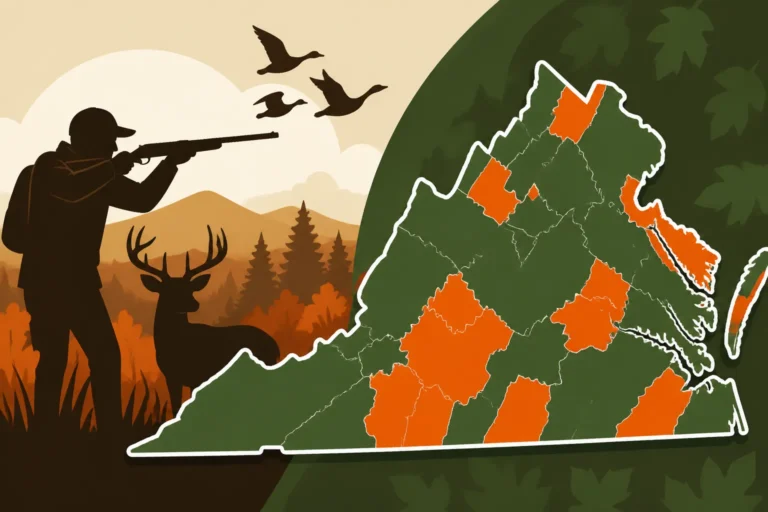
Hunting the Virginia Piedmont
Hunting the Virginia Piedmont can feel like a riddle sometimes. You're not quite in the big timber mountains of the west, nor are you fully immersed in the expansive, flat farmlands of the Tidewater. It's a unique, diverse landscape that presents its own set of challenges and incredible rewards, often leaving hunters wondering where to even begin. This guide is here to unravel the complexities of chasing game across Virginia's rolling Piedmont, helping you understand its terrain, its wildlife, and the strategies that truly work in this distinct region.
Understanding the Piedmont Landscape for Hunters
The Virginia Piedmont is a truly special place, a vast, undulating belt of land that stretches from the fall line—where the coastal plain meets the harder, older rocks of the interior—all the way west to the foothills of the Blue Ridge Mountains. For hunters, this means an incredible mix of habitats, from sprawling agricultural fields and pastoral pastures to dense hardwood forests, pine plantations, and tangled creek bottoms. It's a region where you might find yourself walking through a mature oak stand one minute and peering across a cut bean field the next, and understanding these transitions is key to consistent success.
Defining the Piedmont Region for Hunting
When we talk about the Piedmont, we're referring to that vast swath of central Virginia that's characterized by its rolling hills and a unique blend of land use. Unlike the rugged, steep inclines of the Appalachian Mountains, the Piedmont offers more gentle topography, making it physically less demanding to navigate, though no less challenging in terms of finding and approaching game. It's a region defined by its geology, its history of agriculture, and its proximity to growing population centers. This combination means that while there's plenty of cover, there's also significant human activity, influencing deer movement and turkey roosting habits. Hunters here often have to be adaptable, ready to shift their tactics from deep woods to field edges within a short distance.
The Piedmont isn't just one type of hunting experience; it's a spectrum. The eastern edge might blend into more suburban or heavily farmed areas, while the western side begins to show hints of mountain influence with larger tracts of timber. This geographical nuance directly impacts how deer move, where turkeys establish their territories, and even how small game populations thrive. Recognizing these subtle shifts from county to county within the Piedmont can give you a significant advantage. It's not enough to say you're "hunting the Piedmont"; you need to dial in on whether you're in a more agricultural, fragmented landscape or a timber-rich zone.
Varied Habitats: Farmland, Forests, and River Bottoms
The true beauty and challenge of Piedmont hunting lie in its habitat diversity. You'll encounter a mosaic of environments, each providing different resources and cover for wildlife. Farmlands, with their corn, soybean, and winter wheat fields, act as massive food sources, drawing deer out of cover at dawn and dusk. Adjacent woodlots and fencerows then become critical travel corridors and bedding areas. These small patches of timber, often overlooked by those accustomed to vast national forests, can hold surprising numbers of deer and turkeys, especially if they offer thick thermal cover or access to water.
River and creek bottoms are absolute magnets for game in the Piedmont. These areas typically boast rich, fertile soil, leading to a profusion of mast-producing trees like oaks and hickories, as well as dense undergrowth that offers excellent bedding. The constant presence of water is, of course, a huge draw, and these riparian corridors often serve as natural highways for deer moving between bedding areas and distant food sources. You’ll find signs of deer, turkey, and even hogs concentrated along these waterways, making them prime scouting locations. Don't underestimate the power of a small creek winding through what seems like otherwise open country; it's often the lifeline for local wildlife.
Reading the Terrain: Subtle Changes that Matter
Unlike the dramatic elevation changes of the mountains, reading the Piedmont terrain requires a more nuanced eye. Here, subtle shifts in elevation, small drainage ditches, or slight rises in a field can funnel game just as effectively as a mountain saddle. A slight ridge running through a woodlot, a dip where water collects, or even a change in tree species can indicate a preferred travel route or bedding area. Look for these micro-topography features; they're the highways and bedrooms of the whitetail world in the Piedmont. Using detailed topographic maps or tools like onX Hunt can reveal these small but critical features that are invisible from the ground.
Another often-overlooked aspect is the vegetation itself. Old growth timber stands offer different resources and cover than younger clear-cuts or pine plantations. A dense thicket of greenbrier and honeysuckle might look impenetrable, but it's exactly where a mature buck feels safe bedding during daylight hours. Conversely, an open oak flat might be a fantastic feeding area when acorns are dropping. Learning to interpret these vegetative cues – recognizing the difference between a white oak and a red oak, or identifying areas with heavy browse versus those with sparse understory – will drastically improve your ability to predict game movement and Reading aerial photos for Piedmont deer can be a huge asset in this regard.
Key Game Species and Their Habits in the Piedmont
Virginia's Piedmont is home to a robust population of game animals, with white-tailed deer and wild turkeys being the undeniable stars of the show. However, there's also a thriving community of small game and an increasing presence of predators and even feral hogs that offer additional hunting opportunities. Understanding the specific habits and preferences of these species within the Piedmont's unique landscape is paramount to successful hunting. It's not just about knowing what's out there, but knowing how they utilize the specific mix of farmland, forests, and creek bottoms this region provides.
Virginia Deer: The Dominant Game Animal
White-tailed deer are, without a doubt, the most popular game animal in the Virginia Piedmont. The region’s mix of agricultural fields, diverse timber, and ample water sources provides an ideal environment for deer to thrive. These deer tend to be well-fed, often exhibiting impressive body weights, and the genetics for antler growth are certainly present. However, Piedmont deer can be incredibly wary due to consistent hunting pressure and human encroachment, particularly on smaller private tracts or public lands near populated areas. They are masters of using every piece of available cover, no matter how small, to their advantage.
Piedmont deer often establish bedding areas in dense woodlots adjacent to crop fields, thick creek bottoms, or even overgrown fencerows that provide just enough concealment. Their travel patterns frequently involve moving from these secure bedding areas to feeding grounds in agricultural fields or mast-producing timber. Understanding these daily movements, especially how they relate to prevailing winds and thermal currents, is crucial. You'll find deer utilizing brushy draws and subtle elevation changes to move unobserved. Hunting the edges of these woodlots, especially where they funnel into creek bottoms or connect different blocks of cover, can be incredibly productive, particularly during the Hunting the rut East of the Blue Ridge.
Wild Turkeys: Spring and Fall Opportunities
Wild turkeys are another highly sought-after species in the Piedmont, offering both thrilling spring gobbler hunts and challenging fall opportunities. The rolling terrain, combined with abundant mast crops and open fields, creates excellent turkey habitat. You'll often find birds roosting in mature hardwoods along creek drainages or in larger timber blocks, then flying down to feed in nearby pastures or oak flats. The patchwork nature of Piedmont land means that turkeys often travel considerable distances, moving between roost sites, feeding areas, and breeding grounds.
Spring turkey hunting in the Piedmont can be incredibly exciting, with gobblers sounding off from their roosts, eager to find hens. The key here is often identifying reliable roosting areas and then positioning yourself to intercept them shortly after fly down. During the fall, hunting becomes more about locating flocks through scouting and calling, as the birds are less vocal. Understanding their preferred food sources, whether it's acorns in the timber or waste grain in harvested fields, is vital for fall success. Virginia Turkey Population Trends show a healthy population, but these birds still require careful scouting and smart calling to bring into range.
Small Game and Predators: Beyond Deer and Turkey
While deer and turkey get most of the attention, the Virginia Piedmont offers fantastic opportunities for small game hunters. Squirrels, especially gray squirrels, are abundant in the hardwood forests, particularly where oaks and hickories provide a consistent food source. Rabbit populations thrive in the overgrown fields, fencerows, and thick brush common across the region. Hunting these species can be a great way to introduce new hunters to the outdoors or to simply enjoy a different kind of challenge.
Beyond game animals, the Piedmont is also home to a healthy population of predators, most notably coyotes and foxes. Coyotes, in particular, have expanded their range significantly across Virginia, and the mix of open country and dense cover in the Piedmont provides ideal habitat. Predator hunting, especially calling coyotes, can be a year-round pursuit and offers an exciting way to spend time afield while also potentially helping local deer and turkey populations. Additionally, the region holds opportunities for trapping various furbearers, contributing to wildlife management efforts and offering unique outdoor experiences.
| Game Species | Primary Piedmont Habitat | Key Food Sources | Ideal Hunting Conditions |
|---|---|---|---|
| White-Tailed Deer | Woodlots, creek bottoms, field edges, thickets, pine plantations | Acorns, soybeans, corn, browse, persimmons | Early morning/late evening, during rut |
| Wild Turkey | Mature hardwoods, open pastures, agricultural fields, creek drainages | Acorns, insects, waste grain, berries, seeds | Spring (gobbling), Fall (flock calling) |
| Eastern Gray Squirrel | Oak and Hickory forests, mixed hardwoods | Acorns, hickory nuts, walnuts, pine cones | Early morning, calm weather |
| Eastern Cottontail Rabbit | Brushy fields, fencerows, thickets, clear-cuts | Grasses, clover, woody browse | Early morning/late evening, after rain |
| Coyote | Diverse, adaptable; often near farm-forest interfaces | Small mammals, deer fawns, carrion, insects | Year-round, calling during low light |
Navigating Public and Private Land in the Piedmont
One of the most significant challenges for hunters in the Virginia Piedmont is navigating the complex mosaic of land ownership. Unlike the expansive national forests in the western part of the state, much of the Piedmont is privately owned, often in smaller parcels. This means that successful hunting often hinges on a combination of strategic public land use and, crucially, the ability to gain permission to hunt private property. Understanding the regulations for each, and how to respectfully approach landowners, is absolutely essential for consistent hunting success in this region.
Accessing Virginia Wildlife Management Areas in the Piedmont
While private land dominates the Piedmont, Virginia is fortunate to have a network of excellent Wildlife Management Areas (WMAs) managed by the Virginia Department of Wildlife Resources (DWR). Many of these WMAs are located in the Piedmont and offer significant opportunities for deer, turkey, and small game hunting. Examples like Amelia Wildlife Management Area provide thousands of acres of diverse habitat, specifically managed for wildlife. These public lands can be fantastic resources, but they also come with their own set of rules and often experience higher hunting pressure, especially on opening day or during peak season.
Before heading out to a Piedmont WMA, it's critical to do your homework. Check the DWR website for specific regulations, access requirements (many WMAs require a Virginia WMA Access Permit in addition to your hunting license), and any special seasons or quota hunts. Using tools like the DWR's Go Outdoors Virginia map tool can help you identify boundaries, parking areas, and habitat features. Be prepared for company, and consider scouting during the off-season or focusing on harder-to-reach areas within the WMA to find pockets of less pressured game. Remember, finding ground others walk past can be the key to success on public land.
The Art of Gaining Private Land Permission
For many Piedmont hunters, gaining access to private land is the holy grail. With so much land in private hands, securing permission can unlock incredible opportunities on properties that see minimal hunting pressure. However, this is an art, not a science, and it requires patience, respect, and good communication skills. The first step is often identifying potential properties through aerial maps (like those found on onX Hunt) and then Knocking on doors in Piedmont farm country. This face-to-face approach, while intimidating for some, is often the most effective.
When approaching a landowner, always be polite, well-dressed, and respectful of their time. Clearly state your intentions, offer to help with chores, and leave your contact information. Be prepared to discuss liability (many landowners are concerned about this) and be explicit about what you plan to hunt, when, and with what weapon. Offering to share game, help with property maintenance, or even just keeping an eye on the property can go a long way in building trust. A "no" isn't a failure; it's just information. Thank them for their time and move on. Building a reputation as a responsible, respectful hunter is priceless in the Piedmont.
Understanding Trespass Laws and Boundaries
Regardless of whether you're hunting public or private land, understanding Virginia's trespass laws and respecting property boundaries is non-negotiable. Ignorance of the law is not an excuse, and trespassing can lead to severe penalties, loss of hunting privileges, and irreparable damage to your reputation as a hunter. In Virginia, it's generally understood that hunting on private land requires permission, and simply "unposted" doesn't automatically mean "open to hunting." Always assume you need permission unless it's clearly marked public land.
Modern technology has made boundary identification much easier, but it doesn't replace common sense and respect. GPS apps like onX Hunt have greatly reduced the chances of accidental trespass, allowing hunters to see property lines clearly on their phones. However, even with technology, always be mindful of where you are. If you're granted permission to hunt a specific parcel, ensure you understand the exact boundaries. A good practice is to walk the boundaries with the landowner before your first hunt. If a deer runs onto adjacent property, you still need permission to retrieve it. This commitment to ethical and legal conduct is paramount for maintaining good hunter-landowner relations and ensuring the future of hunting in the Piedmont.
Essential Hunting Strategies for Piedmont Terrain
Hunting the Virginia Piedmont demands a blend of adaptable strategies, given its varied landscape. You'll need tactics for open fields, dense woodlots, and winding creek bottoms, often all within a single hunt. It’s about leveraging the unique characteristics of this region to your advantage, rather than trying to force a mountain or deep-woods strategy onto a distinctly Piedmont environment. Whether you prefer to sit patiently or actively pursue game, there are proven methods that yield results in these rolling hills.
Stand Hunting Field Edges and Food Sources
One of the most effective strategies in the Piedmont, especially for deer, is stand hunting along field edges and other concentrated food sources. Agricultural fields – whether planted in corn, soybeans, winter wheat, or even hay – are magnets for deer, particularly during the late afternoon and early morning. Deer will emerge from their bedding areas in adjacent timber to feed, offering excellent opportunities for observation and a shot. Setting up on a Piedmont field edge requires careful consideration of wind direction, access routes, and the deer's likely entry and exit points.
The key to successful field edge hunting isn't just setting up on the edge, but understanding where deer will approach and cross it. Look for natural funnels, pinch points, or preferred trails where deer enter and exit the field. Sometimes, the best stand location isn't directly on the edge, but 50-100 yards back into the timber, catching deer as they stage before committing to the open or as they filter back into cover. Food plots, if available on private land, also fall into this category, acting as irresistible draws. Always consider your entry and exit to avoid spooking deer, which can ruin a stand for days or even weeks.
Still-Hunting Woodlots and Creek Bottoms
While stand hunting excels around open food sources, still-hunting is an incredibly effective tactic for navigating the denser woodlots and tangled creek bottoms characteristic of the Piedmont. This active approach involves slowly and quietly moving through cover, pausing frequently to observe, listen, and scan for movement. It’s a strategy that rewards patience, stealth, and a keen eye, allowing you to cover ground and adapt to the unpredictable movements of game. Still-hunting is particularly potent during midday, when deer might be bedded in thickets but are still susceptible to being bumped.
When still-hunting, focus on areas with varied topography and cover – a small rise, a downed tree, or a change in vegetation can conceal a bedded deer. Creek bottoms, with their abundant sign and natural travel corridors, are prime still-hunting territory. The sounds of moving water can also help mask your approach. Pay close attention to wind direction, moving into the wind or with a crosswind to keep your scent from blowing ahead of you. This method requires a high level of discipline, moving at a snail's pace, often taking only a few steps every minute, and stopping behind cover to glass ahead. This method also works well for flushing pheasants or rabbits from heavy cover, or for Squirrel hunting Virginia bottomland hardwoods.
Employing Calls and Scents Effectively
Adding calls and scents to your Piedmont hunting arsenal can significantly boost your success, especially during specific seasons. For deer, grunt tubes, bleat calls, and rattling antlers can be incredibly effective, particularly during the rut. A well-timed series of grunts can stop a cruising buck or pique the curiosity of one passing through. During the peak of the Hunting the Virginia rut in November, rattling can simulate a fight between bucks, drawing in dominant animals looking to assert their territory or check out the commotion. However, over-calling can be detrimental, so always read the situation and listen for a response before continuing.
For turkeys, calls are absolutely indispensable. From diaphragm calls to slate and box calls, mastering a few basic turkey vocalizations – yelps, clucks, purrs, and cuts – can bring a gobbler strutting into your setup during spring.Locator calls, like an owl hooter or crow call, are fantastic for getting a shock gobble from a roosted bird without putting pressure on them. During the fall, soft clucks and purrs can help pinpoint a flock or bring in lost birds. Scents, especially deer urine or estrus scents, can also be used to draw deer closer to your stand or to mask human odor. Remember, a little goes a long way, and freshness is key. Scent control, even for urban archery hunts, is always a good idea in areas with educated deer.
Seasonal Opportunities and Challenges
The Virginia Piedmont offers distinct hunting opportunities and challenges across its different seasons. Each period, from the warm days of early archery to the frigid late-season firearms hunts, demands a unique approach, specific gear, and a deep understanding of how game animals react to changing weather, food availability, and hunting pressure. Adapting your strategy to the calendar is crucial for maximizing your chances of success throughout the hunting year.
Early Season Tactics: Archery and Muzzleloader
The early season in the Piedmont, typically starting with archery, presents both advantages and unique challenges. During late September and early October, temperatures can still be warm, and deer are largely focused on summer feeding patterns, often hitting agricultural fields or natural mast sources. This is a prime time for bowhunters to capitalize on predictable movement from bedding to feeding. Setting up on known travel corridors or directly overlooking a productive white oak stand can be incredibly effective. However, the warm weather also means stringent meat care is essential, and mosquitoes can be a real nuisance.
As October progresses into the early muzzleloader season, the leaves begin to turn, and deer begin to shift their focus towards pre-rut activity. While still primarily food-driven, bucks may start making scrapes and rubs, and you might see some initial sparring. This period often sees less hunting pressure than the later firearms season, offering a more tranquil experience. Muzzleloader hunters should practice at various ranges and ensure their setup is reliable in potentially damp conditions. The challenge here is often finding undisturbed pockets of deer before the main firearms season pushes them into thicker cover. When Virginia's Statewide Archery Season Opens, it's a great opportunity to get out before heavy pressure.
Hunting the Peak Rut in the Piedmont
November in the Piedmont is all about the rut, and it's arguably the most exciting time to be in the deer woods. During this period, bucks are actively seeking does, leading to increased daytime movement and more unpredictable patterns. Suddenly, that shy buck you've been chasing might appear in an unexpected place, driven by the urge to breed. Hunters often find success by focusing on traditional travel corridors, pinch points, and areas with heavy rub and scrape lines. Tree stands overlooking these funnels become prime real estate.
Piedmont bucks during the rut will cover significant ground, moving between different woodlots and checking fields for receptive does. This is when calling and rattling can be particularly effective, drawing in curious or competitive bucks. All-day sits are often rewarded, as deer can be active at any time. While the rut is exhilarating, it also often coincides with the general firearms season, meaning increased hunting pressure. Being strategic about where you hunt – finding less-pressured areas or private land – can make a huge difference during this high-stakes period. You'll find yourself Hunting the Virginia rut in November, which is often the most rewarding time of year.
Late Season Persistence and Food Sources
As the calendar turns to December and January, the Piedmont enters its late season, characterized by colder temperatures and often diminished food sources. Hunting during this time requires persistence, warm clothing, and a keen focus on remaining food. Deer are primarily concerned with replenishing energy and finding shelter. Agricultural fields that still hold waste grain, persistent acorn crops in oak flats, or planted winter food plots become critical draws. Thermal cover, such as dense pine thickets or thick briar patches in creek bottoms, will hold deer seeking refuge from the cold.
Late season can be challenging due to cold weather and wary deer, but it also offers unique opportunities. With most leaves off the trees, visibility is often improved, and deer are more concentrated around the remaining food. Hunters willing to brave the elements and scout for fresh sign around these late-season food sources can find great success. Still-hunting slowly through dense thermal cover or sitting over a secluded food source can pay off. Remember to prioritize scent control, as deer are often on high alert, and dress in layers to stay comfortable for long periods on stand. Late-Season Food Sources for Virginia Whitetails are absolutely critical to pinpoint.
Gear and Equipment for Piedmont Success
Having the right gear is crucial for any hunting endeavor, and the Virginia Piedmont, with its varied terrain and weather, demands a versatile approach to your equipment choices. From the type of firearm or bow you carry to your optics and layering system, thoughtful preparation can make the difference between a frustrating outing and a successful one. Comfort, reliability, and suitability for the environment are the guiding principles for selecting your Piedmont hunting kit.
Firearms and Archery Setups for Mixed Terrain
For firearms hunters in the Piedmont, versatility is key. While some areas might offer longer shots across expansive fields, much of the hunting occurs in timbered woodlots or along fencerows where shots are typically closer. A reliable bolt-action rifle in a common deer caliber like a .270, .30-06, or .308 is an excellent all-around choice. These calibers offer sufficient power and accuracy for both close timber shots and those occasional longer distances across a field. For those hunting in areas with more restrictive firearm regulations or for those who prefer them, shotguns with slugs or straight-wall cartridge rifles are also popular and effective options.
Archery hunting in the Piedmont often means anticipating shots within 30-40 yards, frequently in dense cover. A modern compound bow, properly tuned and sighted in, is ideal. Focus on a setup that balances speed with forgiveness, and practice shooting from various positions – from a treestand, kneeling, or even around brush – to simulate real-world conditions. Fixed-blade or mechanical broadheads that are legal in Virginia and proven for whitetails are essential. Crossbows are also a popular choice, particularly for hunters who may struggle with the physical demands of a compound bow, and Crossbow rules during Virginia archery season allow for widespread use, making them a great option for many.
Optics for Close-Quarters and Open Fields
Good optics are invaluable in the Piedmont, where you might be glassing a distant field edge one moment and trying to pick apart thick timber the next. A quality pair of 8×42 or 10×42 binoculars is a standard recommendation. These power ranges offer a good balance of magnification for spotting distant deer while still providing a wide field of view for scanning closer cover. Look for binoculars with good low-light performance, as much of the deer activity occurs at dawn and dusk. A dependable rangefinder is also a must-have, especially for archery hunters, to accurately determine distances in varied terrain.
For rifle hunters, a variable power scope (e.g., 3-9×40 or 4-12×40) offers the flexibility needed for both tight woods and open country. Being able to dial down the magnification for close shots in thick brush and then dial up for longer shots across a field is incredibly useful. Ensure your scope holds zero reliably and performs well in low light conditions. While advanced thermal or night vision optics might be tempting, always check Thermal and night vision rules in Virginia as their use is often restricted for hunting purposes, particularly for big game.
Clothing and Footwear for Varied Weather
Virginia Piedmont weather can be incredibly unpredictable, swinging from mild, humid days in early fall to bitter cold and even snow in late winter. Layering is the golden rule for clothing. Start with a moisture-wicking base layer, add insulating mid-layers (fleece or wool work well), and finish with a waterproof and windproof outer shell. This allows you to add or shed layers as conditions change throughout the day, preventing you from getting too hot while walking in or too cold while sitting on stand. Don't forget a blaze orange or blaze pink outer layer during firearms season, as How much blaze orange Virginia requires is a critical safety consideration.
Footwear is equally important. For early season, breathable, waterproof boots are often sufficient. As the weather cools, insulated, waterproof boots become essential to keep your feet warm and dry during long sits. If you'll be hunting creek bottoms or swampy areas, knee-high rubber boots can be a game-changer. Comfort and support are paramount, especially if you plan on covering significant ground while still-hunting or scouting. A good pair of comfortable, well-fitting boots can prevent blisters and fatigue, allowing you to stay in the field longer.
Conservation and Ethical Hunting in the Piedmont
Hunting in the Virginia Piedmont, like anywhere else, carries a profound responsibility for conservation and ethical conduct. As hunters, we are stewards of the land and its wildlife. Our actions directly impact the health of game populations, the perception of hunting by the non-hunting public, and our continued access to hunting opportunities. Embracing responsible practices is not just about following rules; it's about upholding a tradition and ensuring its future for generations to come.
Managing Deer Populations and CWD Considerations
Virginia's white-tailed deer population in the Piedmont is generally healthy and robust, but effective management is crucial. Hunters play a vital role in this by adhering to bag limits, particularly antlerless deer quotas, which help manage herd numbers and balance buck-to-doe ratios. Overpopulation can lead to increased disease transmission, habitat degradation, and more deer-vehicle collisions. By harvesting does responsibly, hunters contribute directly to a healthier, more balanced deer herd.
However, a significant concern across Virginia, including parts of the Piedmont, is Chronic Wasting Disease (CWD). This neurological disease is fatal to deer and elk, and its presence necessitates proactive measures from hunters. If you are hunting in one of Virginia's CWD Management Areas, understanding and complying with mandatory testing requirements and carcass movement restrictions is paramount. Virginia's four Chronic Wasting Disease Areas have specific rules designed to monitor and slow the spread of the disease. Reporting sick-looking deer and educating yourself on CWD facts helps protect the future of Virginia's deer herd.
Respecting Landowners and Fellow Hunters
Ethical hunting extends far beyond just following game laws; it encompasses how we interact with others. In the Piedmont, where private land dominates and population centers are often nearby, respecting landowners is perhaps the single most critical aspect of maintaining hunting access. Always honor the terms of your permission, leave gates as you found them, pack out all trash (and then some), and never damage property. A thank-you note or a small gift at the end of the season can go a long way in showing appreciation and securing future access. Remember, your actions reflect on all hunters.
Similarly, respecting fellow hunters, whether on public or private land, fosters a positive hunting community. This means giving other hunters ample space, avoiding cutting into someone else's setup, and being mindful of noise and disturbance. If you encounter another hunter on public land, a friendly nod or brief, quiet conversation is appropriate. On WMAs, be aware that you might be sharing space, so practicing patience and courtesy is essential. Ethical behavior also includes making quick, clean kills, and conscientiously recovering all game. Tracking a deer through Virginia leaf litter is a skill every hunter should cultivate to ensure no animal is wasted.
Supporting Virginia's Wildlife Resources
Finally, ethical hunting involves actively supporting the organizations that conserve wildlife and manage hunting opportunities in Virginia. The Virginia Department of Wildlife Resources (DWR) relies heavily on funds generated from hunting license sales and federal excise taxes on hunting equipment (Pittman-Robertson Act) to conduct vital research, manage habitats, and enforce regulations. By purchasing your Virginia hunting licenses and what they cost, big game stamps, and other permits, you are directly contributing to the well-being of the game animals and the wild places you love to hunt.
Beyond licenses, consider volunteering for habitat improvement projects, joining local conservation groups, or simply spreading accurate information about hunting and wildlife management. Educating non-hunters about the role hunters play in conservation can help bridge divides and build understanding. Every hunter has a role to play in advocating for and protecting our hunting heritage and the wild resources of the Virginia Piedmont.
Disclaimer
This article is for general informational purposes only and does not constitute professional advice. Laws, prices and regulations vary by location and change over time. Consult a qualified professional for guidance on your specific situation.