Knocking on Doors in Piedmont Farm Country
Finding good hunting land in Virginia, especially in the productive but often tightly-held Piedmont farm country, can feel like an impossible quest. You scout endless public land, only to find it crawling with other hunters, or you see prime private tracts from the road, wondering how anyone ever gets access. This guide is all about demystifying that process, walking you through the practical, respectful, and ultimately rewarding art of knocking on doors to secure private hunting permission.
Understanding the Piedmont Landscape and Landowners
The Piedmont region of Virginia is a mosaic of rolling hills, scattered woodlots, active agricultural fields, and increasingly, suburban expansion. It's a land of opportunity for deer, turkey, and small game, but it's also a challenging landscape for hunters seeking access.
The Unique Challenges of Piedmont Farmland
Unlike the vast expanses of the National Forests out west, the Piedmont is characterized by smaller, privately owned parcels. Farmers here are often working descendants of families who have tilled the same soil for generations, and they take immense pride in their land. This means they're naturally protective of it. You might drive past a beautiful patch of timber bordering a cornfield, imagining the deer moving between them, but that land is usually owned by someone who knows its every contour. They might have leased it out for years, or they might hunt it themselves, or have family members who do.
Another factor is the sheer diversity of land use. One property might be a working cattle farm, the next a sprawling soybean field, and the one after that a mixed timber block. Each presents different challenges and opportunities for hunting, but also different concerns for the landowner. Farmers are dealing with equipment, livestock, crops, and often, liability. The idea of a stranger walking their woods with a firearm can be a significant worry, especially if they’ve had bad experiences in the past with irresponsible hunters. You also have a mix of active farmers and more residential landowners, some of whom might just own a few acres with a woodlot, and their concerns might differ significantly.
What Landowners Look For in a Hunter
When you approach a landowner, understand that you're not just asking for a place to hunt; you're asking for their trust. They are essentially inviting you onto their home or workplace. They want to know you're not going to be a liability or a nuisance. What they're often looking for is a reliable, respectful individual who understands the value of their property. They want to know you're safe, sober, and will treat their land as if it were your own.
Beyond that basic level of respect, many landowners appreciate a hunter who is communicative. They want to know when you'll be there, where you'll be, and what you're hunting. They also value hunters who can offer something in return. This could be helping with chores around the farm, like mending fences, moving equipment, or even just sharing some of the harvest. For many farmers, deer can be a significant nuisance, causing crop damage. A hunter who can help manage the deer population, particularly by taking antlerless deer, can be a huge asset. This is where you can really set yourself apart from the casual hunter who just wants to shoot a big buck.
Preparation Before You Knock
Success in gaining private land access often comes down to preparation. You wouldn't go into the woods without your gear, and you shouldn't approach a landowner without doing your homework.
Researching Potential Properties
Before you even think about knocking on a door, you need to do your scouting, but not with binoculars – with maps and technology. Start by identifying areas in the Piedmont that have the habitat you're looking for. Are you seeing good-sized timber blocks, creek bottoms, or fields that are likely to hold game? Once you've identified these general areas, you can use digital mapping tools like onX Hunt or GoHunt to pinpoint specific parcels. These apps are invaluable for showing property lines, identifying landowners, and often providing contact information.
With GoHunt, for instance, you can overlay public and private land boundaries, satellite imagery, and even topo maps. Look for parcels that seem to have a good mix of cover and food sources. Identify the landowner's name and address. Sometimes, the property owner lives on-site; other times, they might live states away. Knowing this in advance helps you tailor your approach. If it's an absentee landowner, you might need to write a letter or make a phone call instead of knocking. Also, pay attention to the surrounding area. Are there other houses nearby? How much road frontage does the property have? This helps you gauge potential hunting pressure or safety concerns. For a deeper dive into understanding the landscape from above, check out Reading Aerial Photos for Piedmont Deer.
Crafting Your Introduction and Offer
Once you have a target property and landowner in mind, prepare what you're going to say. First impressions are everything. Dress neatly – you don't need a suit, but clean, casual attire is far better than muddy hunting clothes. Have a clear, concise introduction ready. State who you are, where you're from (if local), and why you're there. "Hello, Mr./Ms. [Landowner's Name], my name is [Your Name], and I live just a few towns over. I've noticed your beautiful property while driving by, and I was wondering if you ever allow hunting for deer or turkey?" Keep it short, polite, and to the point.
Then, pivot to your offer. This is where you can stand out. Mention your commitment to safety, your respect for property, and your willingness to help. "I'm a very safe and responsible hunter, fully insured, and I'd be happy to share some venison if I'm successful. I'm also quite handy and would be glad to help with any chores you might have around the farm, whether it's mending a fence or helping with harvest." If deer are a known problem in the area, you can specifically offer to help with population control, emphasizing your willingness to take does. Having a written letter of introduction or references from other landowners (if you have them) can also boost your credibility. Don't forget to mention that you're a legal, licensed hunter and have completed Virginia Hunter Education Requirements.
The Art of the Knock: Approach and Follow-Through
Knocking on a stranger's door can be intimidating, but a thoughtful and respectful approach can make all the difference. Remember, you're building a relationship, not just trying to get a signature.
Best Times and Etiquette for Approaching a Landowner
Timing is crucial. Avoid knocking during typical meal times (lunch and dinner) or early in the morning when people might still be asleep or rushing to start their day. Late mornings or mid-afternoons on weekdays are often best, as farmers might be wrapping up tasks or taking a break. Weekends can be hit or miss; some might be more relaxed, others might have family gatherings. Pay attention to what's happening on the property. If they're actively working in a field, it's probably not the best time to interrupt them.
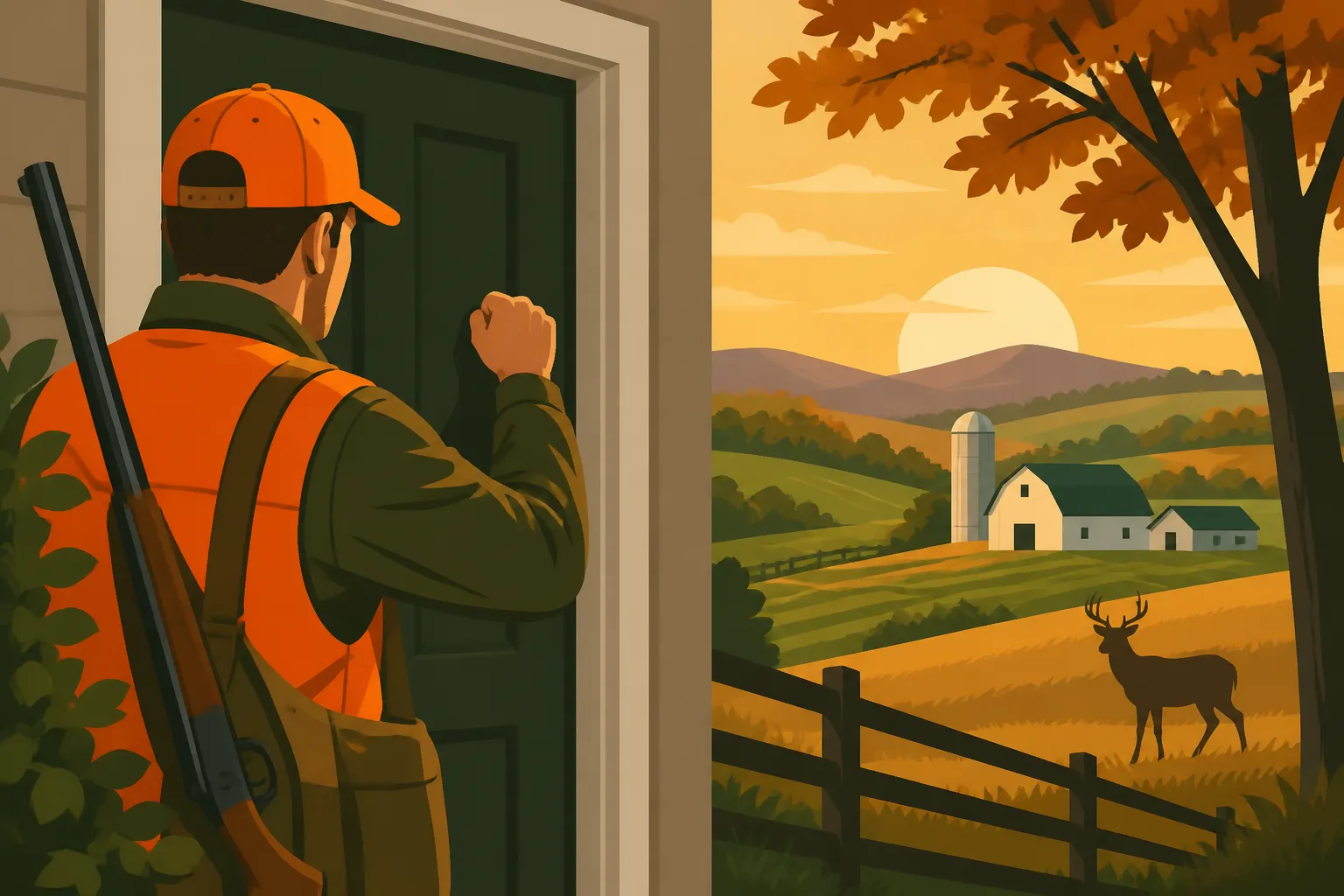
When you arrive, park your vehicle in a respectful manner, not blocking any driveways or gates. Walk confidently to the door. If there's a gate, close it behind you. Leave your hunting gear in the car. You want to appear approachable, not like you're about to stalk their backyard. If no one answers after a polite knock and a few minutes of waiting, leave a neatly written note with your contact information and a brief, polite request. Do not wander around the property or peek into windows. If someone answers, make eye contact, smile, and deliver your prepared introduction. Be prepared for a "no," and accept it graciously. A polite "Thank you for your time, have a good day" can leave a positive impression, even if you don't get permission this time.
What to Discuss and Confirm
If the landowner expresses interest, this is your opportunity to clearly outline your intentions and establish boundaries. Be transparent about what you plan to hunt (deer, turkey, small game), what weapons you'll use (bow, rifle, muzzleloader), and during what seasons. Discuss specific access points and parking areas. Walk the property with them if they offer, to clearly identify boundaries and no-go zones. Understanding details like Reading a Ridge for Blue Ridge Deer or Hunting a Funnel Between Two Hollows can help you discuss specific terrain features and how you plan to hunt them, showing you've done your homework.
It's also vital to discuss safety protocols, any concerns about livestock or crops, and how to contact them in case of an emergency or a successful harvest. Confirming who else might be on the property (family, other hunters) is important to avoid conflicts. Always ask if they require you to check in before each hunt. Being proactive and covering these details upfront demonstrates responsibility and helps prevent misunderstandings down the road.
Here’s a quick overview of critical points to discuss:
| Discussion Point | Why It's Important |
|---|---|
| Species & Weapons | Clarifies intent, ensures legal and safe methods |
| Dates & Times | Avoids conflicts with landowner activities |
| Access Points & Parking | Prevents property damage, ensures respectful entry |
| Boundaries | Avoids trespassing on neighboring properties |
| Safety Rules | Paramount for all involved, especially near homes/livestock |
| Emergency Contact | Crucial for immediate issues or successful harvest |
| Harvest Reporting | Helps landowner manage wildlife, fulfills legal requirements |
| Guests | Prevents unexpected visitors, manages liability |
| Farm Operations | Respects their livelihood, avoids damaging equipment/crops |
| CWD Zones | Relevant if the property is in a Virginia's Eighteen CWD Counties |
Maintaining the Relationship Even if It's a "No" for Now
Even if you get a "no," the conversation isn't necessarily over forever. Leave a polite thank you note with your contact information. Sometimes, a "no" today might turn into a "yes" next year, especially if their circumstances change or if they hear positive things about you from neighbors. Consider offering to help with a small chore anyway, even if you don't get hunting permission. "Mr. Johnson, I understand you're not allowing hunting right now, but if you ever need a hand moving those hay bales or fixing a fence, please don't hesitate to call. I'm happy to help out a neighbor." This goodwill can pay dividends down the line.
If you do get permission, the work has just begun. The goal isn't just to get access once; it's to maintain a long-term, mutually beneficial relationship. Always follow through on your promises. If you said you'd help with chores, do it. If you offered to share venison, do it. Check in with the landowner periodically, not just when you want to hunt. A quick call or text to say "thinking of you" or "hope the harvest went well" can go a long way. Small gestures of appreciation, like a gift basket at Christmas or helping clear a downed tree, reinforce your value. Remember, your actions reflect on all hunters, and being a good ambassador can open doors for others, too.
Legalities and Best Practices for Virginia Private Land
Navigating private land hunting in Virginia involves more than just a polite conversation. Understanding the legal framework is essential for protecting both you and the landowner.
Virginia's Trespass and Permission Laws
Virginia's laws regarding trespass on private land are quite clear. Generally, it is illegal to hunt, trap, or fish on private lands without the permission of the landowner or their agent. This permission doesn't always have to be written, but it is strongly advised to have it in writing to avoid any misunderstandings. The Virginia Department of Wildlife Resources (DWR) encourages written permission for clarity. If the land is posted with "No Hunting" or "No Trespassing" signs, or marked with purple paint on trees or posts, permission is explicitly required.
Even if a property isn't explicitly posted, it's considered good practice and often a legal requirement in many situations to obtain permission. Don't assume that unposted land means open season. Always err on the side of caution. For a comprehensive overview of the rules, you should read What Virginia Trespass Law Requires. It's crucial to know these laws not only to protect yourself from legal trouble but also to show the landowner that you are a responsible and informed individual.
The Value of a Written Agreement
While verbal permission might seem sufficient for a handshake deal, a written agreement is truly the gold standard for both parties. It eliminates ambiguity and provides a clear record of what was agreed upon. A written agreement doesn't have to be a complex legal document; it can be a simple letter outlining the terms.
What should it include?
- Identification of Parties: Your name and the landowner's name.
- Property Description: Address and/or parcel number of the land.
- Dates: The specific season or dates you are allowed to hunt.
- Species & Methods: What you can hunt and with what weapons (e.g., deer only, archery only).
- Access & Parking: Designated entry points and where to park.
- Guest Policy: Whether you can bring guests, and if so, their names.
- Contact Info: For both you and the landowner, in case of emergency.
- Signatures: Dated signatures from both parties.
This simple document protects you by proving you have permission and protects the landowner by setting clear boundaries and expectations. It also minimizes any potential liability issues. If the landowner has specific concerns about managing deer populations, you might also find insights in Virginia Landowner Deer Permit Rules which can be discussed as part of your agreement.
Being a Responsible Ambassador for Hunters
Every time you step onto private land, you are representing not just yourself, but the entire hunting community. Your actions can either reinforce negative stereotypes or help build positive perceptions. Always leave the property cleaner than you found it. This means picking up any trash, spent casings, or other items, even if they aren't yours. Close all gates, making sure they are latched properly to prevent livestock from escaping. Do not drive off-road without explicit permission, and stick to designated parking areas.
Respect crops and livestock above all else. Never discharge a firearm in the direction of or near homes, barns, or animals. Keep your noise levels down, especially near residences. If you encounter any unusual activity or damage on the property (like illegal dumping or trespassing by others), report it to the landowner immediately. Being a good steward of their land fosters trust and strengthens the relationship. By demonstrating impeccable ethics and responsibility, you become an invaluable asset to the landowner, ensuring continued access for yourself and potentially opening doors for other ethical hunters in the future.
Disclaimer
Please remember that hunting regulations and laws can change. Always consult the most current Virginia Department of Wildlife Resources (DWR) regulations before heading afield. This guide is for informational purposes only and should not be considered legal advice.