Red Wolf History in Virginia
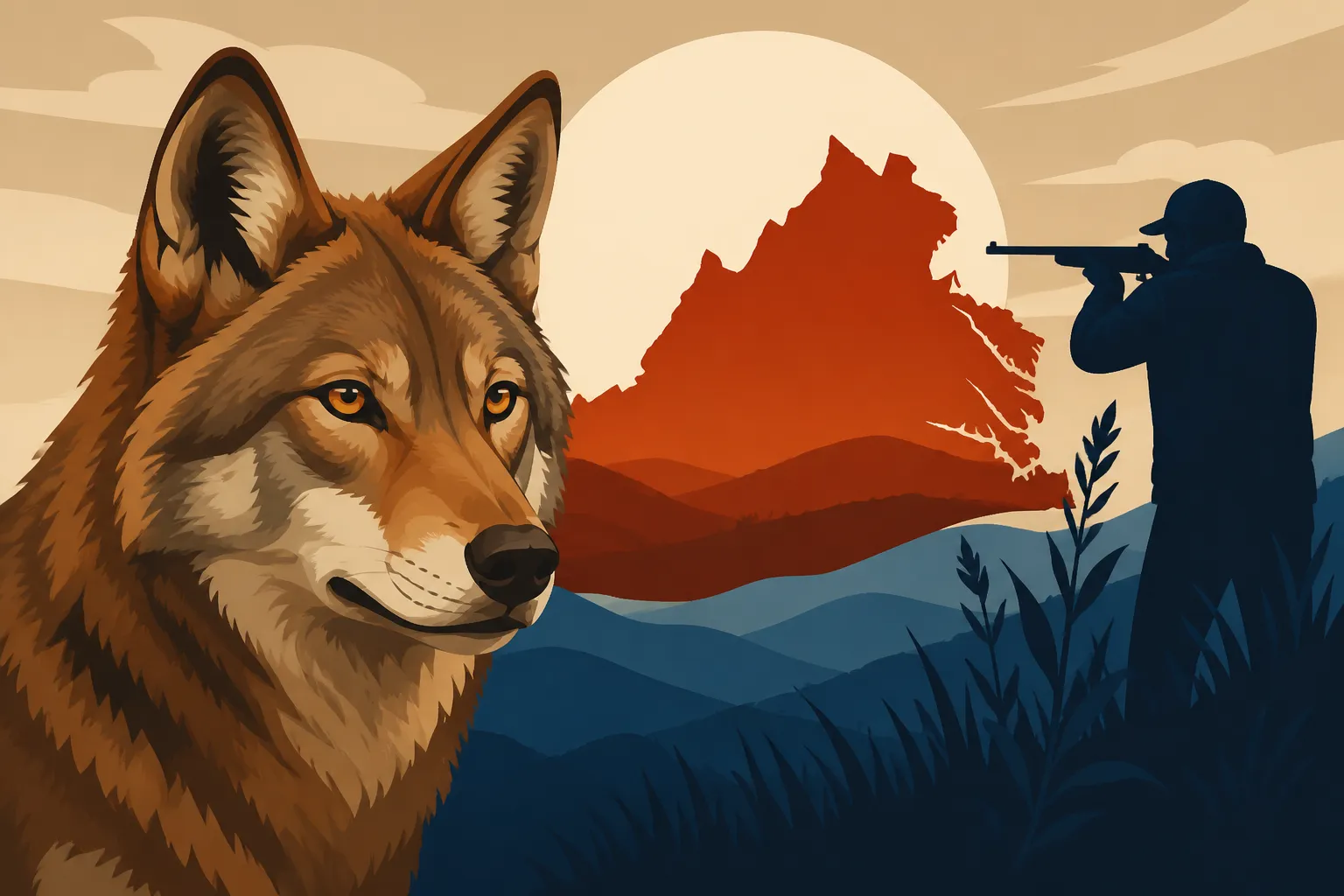
It's easy to romanticize the wild heart of Virginia, imagining untouched forests teeming with every creature that once called these ancient mountains and coastal plains home. But the truth is, time and progress have left scars, and some of those scars are the absence of species that once played vital roles in our ecosystems. One such absence, often overlooked, is that of the red wolf. If you've ever wondered about the original wild inhabitants of Virginia and why some majestic creatures are no longer found roaming our forests, then this deep dive into the red wolf's history in our state is for you. We'll explore their ancient presence, the reasons for their disappearance, and the legacy they leave behind.
The Ghost of the Eastern Forests: Red Wolves in Pre-Colonial Virginia
Imagine Virginia before the roar of chainsaws and the sprawl of concrete, a vast expanse of mixed hardwood forests, dense canebrakes along rivers, and open pine savannas. This was the original dominion of the red wolf, a truly iconic, yet tragically misunderstood, predator of the East.
Ancient Presence and Ecological Role
For thousands of years, the red wolf (Canis rufus) was a quintessential part of the rich tapestry of life across the southeastern United States, with its historical range stretching from Texas to Florida, and north into the Ohio River Valley and, yes, right here into Virginia. These weren't the grey wolves of the far North, nor were they the smaller, more adaptable coyotes we see today. Red wolves were a unique species, perfectly adapted to the diverse habitats of the eastern forests and wetlands. They were the original architects of ecological balance, often preying on white-tailed deer, but also on smaller game like rabbits, raccoons, and rodents. Their presence kept herbivore populations in check, which, in turn, allowed forest undergrowth to thrive, creating healthier habitats for a myriad of other species. Without such apex predators, the entire food web shifts, sometimes subtly, sometimes dramatically. It’s hard to imagine the true Virginia wilderness without them.
Their impact wasn't just on deer, though that was significant. Think about how a healthy deer herd functions when there's a natural predator selecting for the weak or diseased animals. The red wolves helped cull sick individuals, which helped prevent widespread disease outbreaks within the deer population. They were also incredibly intelligent, operating in family units, teaching their young the ways of the wild. They were a cornerstone of a healthy, functioning ecosystem, a true testament to the intricate balance of nature that once defined Virginia's wild places.
Indigenous Peoples and the Red Wolf
The indigenous peoples of Virginia lived alongside the red wolf for millennia, often forming relationships rooted in respect, fear, and sometimes, spiritual connection. Tribes like the Powhatan, Monacan, and Cherokee, whose ancestral lands covered much of what is now Virginia, certainly encountered these formidable predators. Unlike the European settlers who would later arrive with a mindset of conquest and eradication, many Native American cultures viewed animals, especially powerful ones like wolves, as integral parts of their world, often imbued with spiritual significance. The wolf was a creature of cunning, strength, and loyalty – traits often admired and sometimes feared.
While specific historical records from Virginia's indigenous populations regarding red wolves are sparse due to the oral tradition of many tribes and the devastating impact of colonization, we can infer a relationship different from that of early European settlers. Their hunting practices were often sustainable, designed to coexist with the natural world rather than dominate it. There might have been instances of conflict, especially with game animals important for sustenance, but there’s little evidence of systematic extermination campaigns. The wolf was simply a part of the landscape, respected for its place in the natural order, much like the black bear or the wild turkey. Understanding this perspective helps us grasp the profound shift in human-wildlife relations that was soon to come.
European Settlement and the Onslaught of Eradication
The arrival of European settlers in Virginia marked a dramatic turning point for the red wolf and, indeed, for much of the state's wildlife. The clash of cultures brought with it a clash of ecological philosophies, leading to a relentless campaign against predators that would ultimately drive the red wolf to the brink of extinction.
Perceived Threats and Bounties
When the first European colonists landed at Jamestown in the early 17th century, they brought with them livestock – cattle, sheep, and hogs – animals utterly defenseless against the wild predators of the New World. It didn't take long for conflicts to arise. Wolves, along with bears and mountain lions, were immediately perceived as direct threats to these valuable domestic animals, which were essential for the settlers' survival and economic stability. This perception quickly led to a policy of extermination. Bounties were swiftly placed on wolves, an incentive system designed to encourage their widespread killing. Colonial records from Virginia frequently mention these bounties, illustrating the intense pressure brought to bear on wolf populations.
These eradication campaigns were not merely accidental by-products of settlement; they were often deliberate and organized efforts. Trapping, poisoning, and hunting were all employed with ruthless efficiency. It was a war against the wild, driven by a desire to tame the landscape and protect fledgling agricultural interests. The idea that predators played a beneficial role in the ecosystem was utterly foreign to many settlers, whose European heritage often included centuries of similar campaigns against wolves. This relentless, state-sanctioned persecution, coupled with the increasing human population, set the stage for the red wolf's rapid decline across Virginia and the wider Southeast.
Habitat Loss and Fragmentation
As European settlement expanded, the impact wasn't just limited to direct killing; it also involved massive habitat destruction. Virginia's once-vast, unbroken forests began to fall to the axe and plow. Timber was needed for homes, ships, and fuel, and land was cleared for agriculture to feed the growing population. This extensive logging and conversion of forests into farms and towns drastically reduced the amount of suitable habitat available for red wolves. These animals require large, undisturbed territories to thrive, and as their homes shrank and became fragmented, their ability to find food, mates, and escape human persecution diminished rapidly.
Think about a wolf pack needing hundreds of square miles of interconnected habitat. As farms spread, roads were built, and villages grew into towns, these large territories were chopped into smaller, isolated parcels. This fragmentation not only reduced their numbers but also isolated remaining populations, making them more vulnerable to inbreeding and localized extinction. Imagine trying to live in your home if your walls were constantly shrinking and your neighbors were actively trying to get rid of you. That's essentially what the red wolf faced. The relentless expansion of human activity, coupled with direct persecution, created a pincer movement that squeezed the red wolf out of Virginia's landscape. If you're looking at historical land use patterns, you might even find tools like GoHunt useful for visualizing how land ownership and usage have shifted over centuries, hinting at the vastness of what was lost.
The Near Extinction and Last Stands in Virginia
The combination of systematic persecution and widespread habitat destruction pushed the red wolf to the brink. By the mid-20th century, the species was considered functionally extinct across much of its historical range, including Virginia. The few remaining populations faced new, insidious threats that sealed their fate in the wild.
Genetic Bottlenecks and Hybridization
As red wolf numbers plummeted, surviving individuals became increasingly isolated. This led to a severe genetic bottleneck, where the gene pool became so small that inbreeding became a serious problem, reducing genetic diversity and making the species less resilient to disease and environmental changes. But another, perhaps even more critical, threat emerged: hybridization with coyotes. As wolves disappeared, coyotes, a more adaptable and smaller canid, began to expand their range eastward, filling the ecological void left by the wolves.
Coyotes and red wolves are close enough genetically that they can interbreed, producing fertile offspring. In areas where red wolf numbers were critically low, and coyotes were abundant, the remaining pure red wolves began to mate with coyotes. This was a biological absorption, where the distinct genetic identity of the red wolf was slowly diluted and eventually overwhelmed by the more numerous coyotes. It wasn't necessarily a conscious choice by the animals, but a desperate act of survival for dwindling populations trying to find mates. For a species already on the ropes, this genetic swamping was the final, devastating blow in the wild, ensuring that even if a "wolf-like" animal survived, it was no longer a pure red wolf. This struggle highlights the complex challenges in conserving species, especially when new pressures arrive, as seen in the increasing range of Virginia's Coyote Range and Density today.
Documenting the Decline: The Last Glimmers
Pinpointing the exact moment the last pure red wolf disappeared from Virginia is a challenging, if not impossible, task. These animals were notoriously elusive, and by the time their populations were critically low, sightings were rare and often anecdotal. Unlike larger, more visible game animals, the quiet disappearance of a highly persecuted predator often went unnoticed in the broader public consciousness. Historical records, bounties, and local accounts indicate that red wolves were certainly present in Virginia through the 18th and 19th centuries, particularly in more remote, forested areas of the Piedmont and mountains. However, by the early 20th century, confirmed sightings became exceedingly rare.
Most experts believe that the last pure red wolves in Virginia were likely extirpated by the early to mid-1900s. There might have been isolated individuals or hybrid animals lingering in the deepest hollows of the Blue Ridge Mountains or the remotest swamps of the Tidewater, but their days as a viable, self-sustaining population were long over. The final disappearance was likely a whimper, not a roar, a gradual fading into the background, where their genetics were slowly absorbed by the expanding coyote population. This makes their story particularly poignant, a ghost of an apex predator haunting the collective memory of Virginia’s wilderness. This historical decline gives us perspective when we consider the Virginia Deer Population Estimate today, which thrives in an environment free of its original apex predator.
Modern Conservation and the Path Not Taken in Virginia
While the red wolf was disappearing from Virginia, a desperate effort was underway elsewhere to save the species from total extinction. This national effort yielded some remarkable successes but ultimately didn't lead to the red wolf's return to the Old Dominion.
National Recovery Efforts and Challenges
The story of red wolf conservation is one of both triumph and ongoing struggle. By the 1970s, it was recognized that the red wolf was on the very brink of extinction, with fewer than 20 pure individuals remaining in the wild, all found in a small pocket of coastal Louisiana and Texas. In a truly monumental effort, the U.S. Fish and Wildlife Service launched a captive breeding program, capturing these last few wild wolves to ensure the survival of the species. From this tiny founder population, a new hope emerged. The program was incredibly successful, allowing for the first-ever reintroduction of a top-level predator once declared extinct in the wild.
The primary reintroduction site, starting in 1987, was the Alligator River National Wildlife Refuge in northeastern North Carolina, a landscape that shared many ecological similarities with historical red wolf habitat, including parts of Virginia's own southeastern region. This reintroduction saw captive-bred red wolves released into the wild, where they began to establish territories, hunt, and reproduce. For a time, the program thrived, with wild populations growing and expanding. However, these efforts have faced immense challenges, including continued hybridization with coyotes, landowner conflicts, illegal killings, and ongoing policy debates. Despite these setbacks, the program continues to be a crucial beacon for species recovery. Conservation organizations, and even hunters interested in wildlife management, often use advanced mapping tools, such as those provided by GoHunt, to analyze habitat connectivity and potential wildlife movement, even for species as elusive as the red wolf.
Why Virginia Wasn't a Reintroduction Site
Given Virginia's historical range for the red wolf and its proximity to the North Carolina reintroduction site, many wonder why the Old Dominion hasn't seen its own red wolf recovery effort. There are several complex reasons, primarily revolving around habitat suitability, public perception, and existing wildlife dynamics. While Virginia certainly has large tracts of suitable habitat, especially in its southeastern swamps and along the coastal plain, these areas often butt up against more developed or agricultural lands, creating significant human-wildlife conflict potential. The population density in many of these areas, even rural ones, is higher than the relatively isolated landscapes of eastern North Carolina chosen for the initial reintroduction.
Furthermore, the issue of coyote hybridization remains a pervasive challenge. Virginia's landscape is now thoroughly populated by coyotes. Reintroducing pure red wolves into an area with a dense, established coyote population would present an immediate and significant risk of genetic swamping, undermining decades of conservation efforts. Public acceptance also plays a critical role; any large predator reintroduction requires considerable community buy-in, and the legacy of wolf extermination still casts a long shadow. Without widespread local support and secure, large, and truly isolated parcels of land, the likelihood of a successful red wolf reintroduction in Virginia remains low. Even the best laid plans for species management, like those for Public Hunting Land in Virginia, must consider the social and ecological landscape.
The Legacy of the Red Wolf and Future Hopes
The disappearance of the red wolf from Virginia is more than just the loss of a single species; it's a stark reminder of the profound impact human activity can have on ecosystems and a call to understand the delicate balance of nature.
Ecological Lessons Learned
The absence of the red wolf in Virginia for over a century offers crucial ecological lessons. As an apex predator, the red wolf played a vital role in regulating the populations of its prey, primarily white-tailed deer. Without this natural control, deer populations can sometimes grow unchecked, leading to overbrowsing of vegetation. This overbrowsing can, in turn, degrade forest health, reduce biodiversity (as certain plant species are preferentially eaten), and impact other wildlife that depend on that vegetation for food and cover. This cascading effect, known as a "trophic cascade," illustrates how the removal of one species can ripple throughout an entire ecosystem. When we discuss Virginia Deer Season Structure Explained, we are implicitly managing a deer herd that evolved with predators, but now lacks them.
Beyond deer, red wolves also preyed on smaller animals, providing balance across multiple levels of the food web. Their absence allowed for potential mesopredator release, where smaller predators like raccoons, opossums, and even coyotes, whose populations might have been kept in check by wolves, could increase in number. This can sometimes lead to increased predation pressure on ground-nesting birds or other vulnerable species. Understanding these dynamics is paramount for modern wildlife management, informing decisions about deer harvest limits, habitat restoration on Virginia Wildlife Management Areas, and even efforts to control invasive species. Hunters and conservationists often use data from tools like GoHunt to understand these complex interrelationships and evaluate the effectiveness of current management strategies, even for species no longer found in a region.
The Dream of Return: What Would It Take?
The idea of red wolves once again roaming the forests and swamps of Virginia is a powerful, almost romantic, notion for many conservationists and wildlife enthusiasts. While the immediate prospects for a large-scale reintroduction are challenging, it's not entirely out of the realm of possibility in the very long term, but it would require monumental shifts and efforts. First and foremost, vast tracts of suitable, secure habitat would need to be identified and managed specifically for red wolves, minimizing human-wildlife conflict. This would likely mean extensive partnerships between state agencies, federal lands, and willing private landowners.
Perhaps even more critically, a concerted effort to manage or mitigate the ongoing hybridization challenge with coyotes would be necessary. This might involve innovative conservation techniques or a shift in coyote management strategies in designated recovery zones. Public education and engagement would also be paramount, fostering a deeper understanding and acceptance of these predators within the community. It would be a monumental undertaking, far exceeding the scope of typical hunting regulation (like Virginia Hunting Licenses and What They Cost), requiring a holistic vision for ecological restoration. While the challenges are immense, the enduring hope for the return of this magnificent creature to its historical Virginia homeland reminds us of our responsibility to the wild places and the species that belong there.
Here’s a quick comparison of the red wolf and its more common cousin, the coyote, in Virginia:
| Feature | Red Wolf (Historical Virginia) | Coyote (Current Virginia) |
|---|---|---|
| Size | Medium-sized canid, larger than a coyote | Smaller than a red wolf, but highly variable |
| Weight | Typically 45-80 lbs | Typically 20-50 lbs |
| Appearance | Often reddish-brown coat, sometimes grizzled, lanky build | Grayish-brown, tan, or rusty fur; often lanky, bushy tail |
| Ears | Proportionately shorter and wider | Proportionately longer and more pointed |
| Habitat | Forests, swamps, coastal prairies, wetlands | Highly adaptable; forests, farmlands, suburban, urban areas |
| Social Structure | Primarily pack animals, family units | Solitary or small family groups |
| Primary Diet | Deer, raccoons, rabbits, rodents | Rodents, rabbits, deer fawns, fruit, opportunistic scavengers |
| Status in VA | Extirpated (gone from the wild, pure strain) | Widespread and abundant |
| Conservation | Critically Endangered (captive breeding & reintroduction in NC) | Thriving, often considered a nuisance in some areas |
Disclaimer
This article is for general informational purposes only and does not constitute professional advice. Laws, prices and regulations vary by location and change over time. Consult a qualified professional for guidance on your specific situation.