Virginia Wild Turkey Subspecies
Many Virginia turkey hunters often wonder if the wild turkeys they pursue are all the same, or if different types roam the Commonwealth's diverse landscapes. It’s a completely fair question, especially when you hear hunters from other states talk about specific subspecies with distinct characteristics. The truth is, understanding the specific lineage of Virginia’s wild turkeys is key to appreciating their history and, frankly, to becoming a more effective hunter. This guide will clarify exactly which wild turkey subspecies thrives in Virginia, detail its unique traits, and explain how this knowledge can inform your hunting approach.
The Eastern Wild Turkey: Virginia's Native Monarch
When you're calling a gobbler in Virginia, whether from the mountains, the rolling Piedmont, or the coastal plain, you are engaging with the Eastern wild turkey (Meleagris gallopavo silvestris). This is the native subspecies to our region, and it's truly the cornerstone of our turkey hunting heritage. Other states might boast about their Merriam's or Rio Grandes, but here in Virginia, the Eastern reigns supreme, and for good reason – they are challenging, beautiful birds, deeply ingrained in our ecosystem.
Distinguishing Features of the Eastern Subspecies
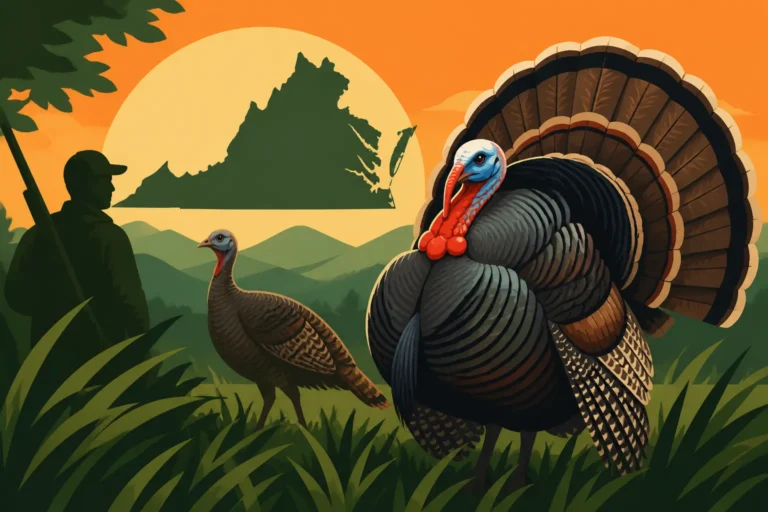
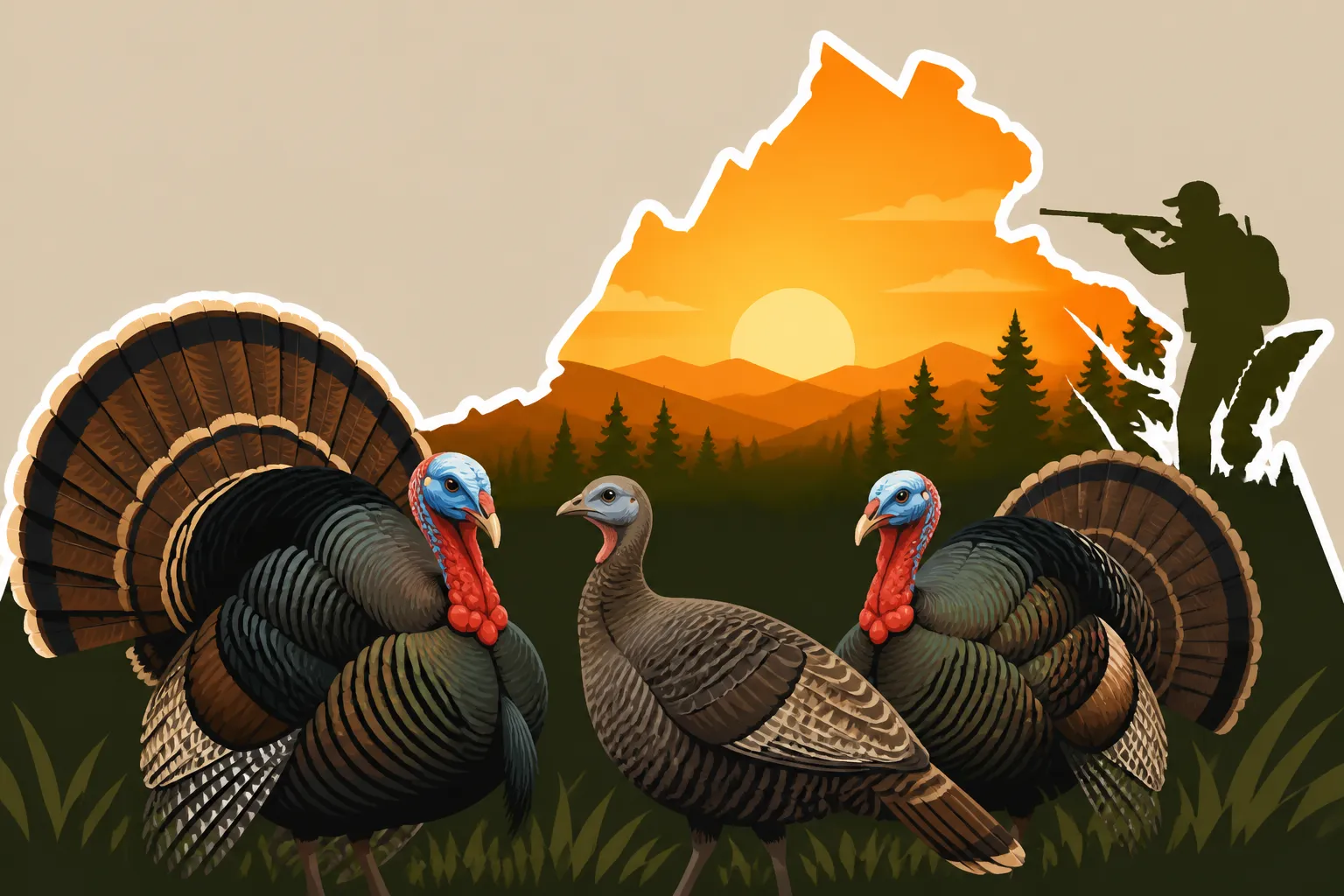
Eastern wild turkeys have a distinct look that sets them apart. If you've spent any time observing these birds, you've probably noticed their rich, iridescent plumage that can shimmer with hues of copper, bronze, green, and red in direct sunlight. It’s a truly magnificent sight when a strutting gobbler catches the light. Their body feathers are typically metallic copper-bronze, with a band of black on the breast.
The tail fan is another key identifier. The tips of the tail feathers on an Eastern turkey are a beautiful chestnut brown or dark buff. This contrasts with the white or tan tips you'd see on a Merriam's turkey, or the lighter buff of a Rio Grande. The rump feathers and upper tail coverts are also dark, usually iridescent green and bronze. Their legs are typically dark, often a dull reddish-pink to gray, and the head and neck skin can range from red, white, and blue, changing with excitement or mood. While it can sometimes be hard to tell in the field without a direct comparison, once you learn these nuances, you'll start appreciating the subtle differences. These subtle variations make them perfectly adapted to their hardwood forest homes.
The Remarkable Comeback Story of Virginia's Easterns
It's easy to take for granted the robust turkey populations we enjoy today, but it wasn't always this way. By the early 20th century, wild turkeys were practically non-existent in much of Virginia, driven to the brink by unregulated hunting and massive habitat loss due to widespread logging. It's a sobering thought, isn't it? Our ancestors nearly wiped out these incredible birds.
However, thanks to dedicated conservation efforts by wildlife agencies, including the Virginia Department of Wildlife Resources (DWR), the Eastern wild turkey made an incredible comeback. This restoration primarily involved trapping birds from resilient populations in remote areas of Virginia and other states and relocating them to suitable habitats where they had been extirpated. This strategic approach, combined with improved habitat management and regulated hunting seasons, allowed the populations to rebound dramatically. It’s a testament to what focused conservation can achieve. Today, Wild Turkeys in Virginia are a thriving success story, a vibrant part of our state’s natural heritage, providing abundant hunting opportunities for spring and fall seasons. You can see the result of these efforts in the Virginia Turkey Population Trends data each year.
Why Other Wild Turkey Subspecies Aren't Roaming Virginia
It’s natural to wonder about other subspecies, especially if you travel or read hunting magazines. You might hear about Merriam's in the Rockies, Rio Grandes in Texas, or the elusive Osceola in Florida. But why aren't they found here in Virginia? The simple answer lies in their distinct geographic ranges and habitat preferences.
Geographic Niches of Merriam's, Rio Grandes, and Osceolas
Each of the five recognized North American wild turkey subspecies has evolved to thrive in specific environments:
- Eastern Wild Turkey: As we've discussed, these birds are perfectly at home in the vast hardwood forests of the eastern United States, from southern Canada down to Florida and west to the Midwest. Virginia sits squarely in their natural range.
- Merriam's Wild Turkey: Characterized by their white-tipped tail feathers and pale blue-white head, Merriam's thrive in the mountainous Ponderosa pine forests of the western United States, including states like Colorado, New Mexico, and Arizona. Their habitat is drastically different from Virginia's.
- Rio Grande Wild Turkey: With buff-tan tail feather tips and a more arid-adapted nature, Rio Grandes are found in the brushy country and woodlands of states like Texas, Oklahoma, and Kansas, often near riparian zones.
- Osceola Wild Turkey (Florida Wild Turkey): This subspecies, exclusive to Florida, is darker than the Eastern, with less white barring on the primary wing feathers. They prefer the palm hammocks, cypress swamps, and pine flatwoods unique to the Sunshine State.
- Gould's Wild Turkey: The least common of the five, Gould's turkeys are found in the mountains of Arizona, New Mexico, and northern Mexico, favoring higher elevations and pine-oak woodlands.
As you can see, Virginia's ecosystems – our rolling hills, dense oak forests, and coastal swamps – simply don't match the specific conditions these other subspecies require. Their natural ranges just don't overlap, and that's a good thing for genetic integrity.
The Importance of Maintaining Genetic Purity
Wildlife agencies, including our own DWR, are highly dedicated to maintaining the genetic purity of native species. This means they focus on managing and supporting the indigenous Eastern wild turkey population rather than introducing non-native subspecies. Why is this so important? Introducing a different subspecies could lead to cross-breeding, which can dilute the genetic traits that make our Easterns so well-adapted to Virginia's environment. Hybrid birds might not possess the same disease resistance, foraging efficiency, or behavioral patterns that have allowed the Easterns to flourish here for centuries.
It's about preserving what makes Virginia's wildlife unique and robust. While the thought of a "super turkey" from cross-breeding might sound interesting on paper, in reality, it often weakens populations in the long run. By sticking to the native stock, DWR ensures the continued health and vitality of our Wild Turkeys in Virginia. For hunters, this means you can be confident that the birds you're pursuing are true Easterns, exhibiting the classic behaviors and challenges this subspecies is known for. Always check the latest DWR regulations when planning a hunt; tools like GoHunt can help you cross-reference public land boundaries with specific county regulations to ensure you're always informed and legal.
Understanding Eastern Turkey Behavior in Virginia's Diverse Landscapes
Knowing you're hunting Easterns is one thing, but understanding how they behave within Virginia's unique and varied terrain is where the real knowledge comes in. Our state offers everything from rugged mountain ridges to sprawling farm country and dense bottomland swamps, and Eastern turkeys adapt their lives to each.
Preferred Environments Across the Commonwealth
Eastern wild turkeys are truly woodland birds, and Virginia's extensive forests provide ideal habitat. They thrive in mature hardwood forests, particularly those with a good mix of oak and hickory trees, which provide crucial mast crops like acorns for food. You'll find them in:
- Mountainous Regions: In areas like the George Washington National Forest and Jefferson National Forest, turkeys prefer steep, timbered slopes, deep hollows, and ridge tops. Here, they'll roost in tall hardwoods and feed on mast in the autumn. Finding them often means covering a lot of ground, using contour lines to your advantage, and being mindful of Wind and Thermals on a Blue Ridge Slope.
- Piedmont Forests and Farm Edges: The rolling hills of the Piedmont offer a mix of mature timber and agricultural fields. Turkeys here often use field edges for feeding, especially during the spring green-up, but always retreat to the safety of the woods for roosting and cover. Understanding Turkey Tactics for Piedmont Field Edges is crucial here. They’ll use transition zones between woods and fields heavily.
- Tidewater and Coastal Plain: In the low-lying eastern parts of the state, turkeys inhabit river bottoms, swamps, and pine/hardwood mixes. They're adept at navigating dense cover and utilizing the unique food sources found in these wet environments.
No matter the specific locale, the common thread is often access to mature timber for roosting, diverse understory for foraging and nesting, and a water source. Areas that have undergone selective timber cutting or prescribed burns can also be magnets for turkeys, as these activities promote new growth and insect populations, which are vital for poults. For information on where to find the highest concentrations, you might want to read Where Virginia Turkeys Are Densest.
Seasonal Adaptations and Daily Routines
Eastern turkeys in Virginia are creatures of habit, but their habits shift with the seasons, driven by food availability, breeding cycles, and pressure.
- Spring (Breeding Season): This is when we're out there chasing gobblers! In early spring, turkeys are focused on breeding. Gobblers become vocal, strutting to attract hens. They'll fly down from roost trees around dawn and spend the mornings with hens, feeding in open areas before breaking off to seek out more hens or respond to calls. As the season progresses, especially during the Virginia Early Turkey Period Closing Time and the Virginia Late Turkey Period Hours, their behavior can change as hens go to nest. Gobblers might become more solitary or harder to call as they've been pressured. Understanding Virginia Turkey Roost Tree Preferences can help locate them before they hit the ground.
- Summer (Brood Rearing): Hens with poults will stick to areas with dense cover for protection and abundant insects for the young birds. Poult-to-Hen Ratios and What They Mean are crucial metrics DWR uses to gauge the health of our turkey population.
- Fall and Winter (Foraging): Turkeys will form larger flocks, often hens and poults together, and gobblers in bachelor groups. Their focus shifts heavily to foraging for mast crops like acorns, beechnuts, and wild grapes, as well as waste grain in agricultural fields.
Throughout the year, Eastern turkeys are highly aware of their surroundings. They'll typically roost in tall, mature trees near water or on ridges for safety. Their daily routine involves flying down at first light, feeding, dusting, preening, and then flying back to roost just before dark. Hunters who understand these patterns and how they adapt to local conditions have a significant edge. Using detailed topo maps, perhaps even with an app like GoHunt, to visualize terrain and potential roosting/feeding areas, can be incredibly helpful.
Effective Hunting Strategies for Virginia's Eastern Gobblers
Hunting Eastern wild turkeys in Virginia is a fantastic challenge that combines patience, woodsmanship, and strategy. Since we know what we're dealing with – the adaptable, sharp-eyed Eastern – we can fine-tune our approach to match their specific behaviors.
Calling Techniques and Decoy Deployments
Eastern turkeys are known for being vocal, but they can also be incredibly wary, especially on heavily hunted public lands.
- Calling Realism: The key to success with Easterns is often realism and restraint. While aggressive calling can sometimes work, subtle clucks, purrs, and soft yelps can often be more effective, especially for birds that have heard it all. Learning different calls is essential. A good article to review is Turkey Calls Worth Carrying in Virginia. Try to mimic the natural cadence and sounds of a hen. Remember, you're not just making noise; you're having a conversation.
- Early Season: During the initial burst of spring, gobblers are often looking for hens. More aggressive calling, like cuts and yelps, can be effective in getting a response, particularly if you're trying to locate a bird.
- Later Season: As hens start nesting and gobblers become more solitary, a softer approach with clucks and purrs can often seal the deal. Birds that have been pressured will often "hang up" just out of range, so patience and a less aggressive calling style can coax them those last few yards. It's frustrating when they do that, but a soft call often tells them the hen is coming to them.
- Decoy Strategy: Decoys can be a game-changer but must be used wisely.
- Hen Decoys: A single hen decoy or a jake/hen combination can often bring a gobbler in close. Positioning them to face away from your setup can entice a gobbler to circle, bringing him into easy range.
- Full Strut Decoys: These can be very effective in provoking an aggressive gobbler, but they can also intimidate less dominant birds or alert wary ones if they spot the decoy from afar and aren't convinced. If you're using a full-strut decoy, ensure you have excellent concealment. Always consider Decoy Placement for Pressured Virginia Birds.
- Movement: Static decoys are good, but adding even a slight bit of movement (a slight breeze, or a decoy with a subtle lifelike motion) can significantly increase their realism and draw power.
Scouting, Setup, and Locating Birds
Success with Easterns often starts long before opening day. Understanding their movements and patterns is crucial.
- Pre-Season Scouting: This cannot be emphasized enough. Spend time in the woods before the season opens. Look for roosting areas (droppings under tall trees), dusting bowls, strut marks, and tracks. Identifying travel corridors between roosts and feeding areas is vital. Scouting Virginia Public Land Before Season is invaluable. You can also use apps like GoHunt to study topo maps, mark potential spots, and even track your movements without cell service in remote areas.
- Locating Roosts: Getting to your spot before daylight and listening for gobblers on the roost is a classic and highly effective tactic. Owl hoots or crow calls can sometimes provoke a "shock gobble" to help pinpoint their location. Once you hear them, plan your approach carefully to get as close as possible without being detected.
- Strategic Setups: Once a bird is located, or you've found a promising area, choose your setup wisely. Look for natural cover that breaks up your silhouette, ideally with a wide field of view for spotting approaching birds. Sitting against a wide tree trunk with clear shooting lanes is a classic setup that provides both concealment and a solid backrest for comfort and stability.
- Patience and Adaptability: Easterns are masters of the forest. They can approach silently, circling your position to get a better look. Be patient, stay still, and be ready for a shot at any moment. If a bird hangs up, don't be afraid to change tactics – a soft, subtle call, a change in decoy position, or even a slow, quiet Run-and-Gun Turkey Tactics on Public Land move can sometimes close the distance. Keeping a detailed hunting journal, maybe within a platform like GoHunt, can help you track successes and failures for future reference.
By understanding the unique characteristics and behaviors of Virginia's Eastern wild turkey, you're not just hunting a bird; you're participating in a rich tradition that demands respect for the animal and the land.
| Subspecies | Tail Fan Tips | Primary Body Color | Head/Neck Colors | Typical Habitat | Range in Virginia |
|---|---|---|---|---|---|
| Eastern | Chestnut Brown | Metallic Copper-Bronze | Red, White, Blue (variable) | Hardwood Forests | All of Virginia |
| Merriam's | White | Iridescent Purple/Bronze | Blue-White | Mountain Pine Forests | Not Native |
| Rio Grande | Buff-Tan | Green-Coppery Bronze | Blue, Red (often more pronounced) | Arid Brushlands, Riparian Zones | Not Native |
| Osceola | Dark Buff/Brown | Dark Iridescent Green | Red, White, Blue (often darker) | Florida Palm Hammocks, Cypress Swamps | Not Native |
| Gould's | White | Copper-Bronze with Green Sheen | Red, Blue (brightest) | High Elevation Pine-Oak Woodlands | Not Native |
Disclaimer
This article is for general informational purposes only and does not constitute professional advice. Laws, prices and regulations vary by location and change over time. Consult a qualified professional for guidance on your specific situation.