How the Forests Hold Sixty Percent of Virginia’s Trout Water
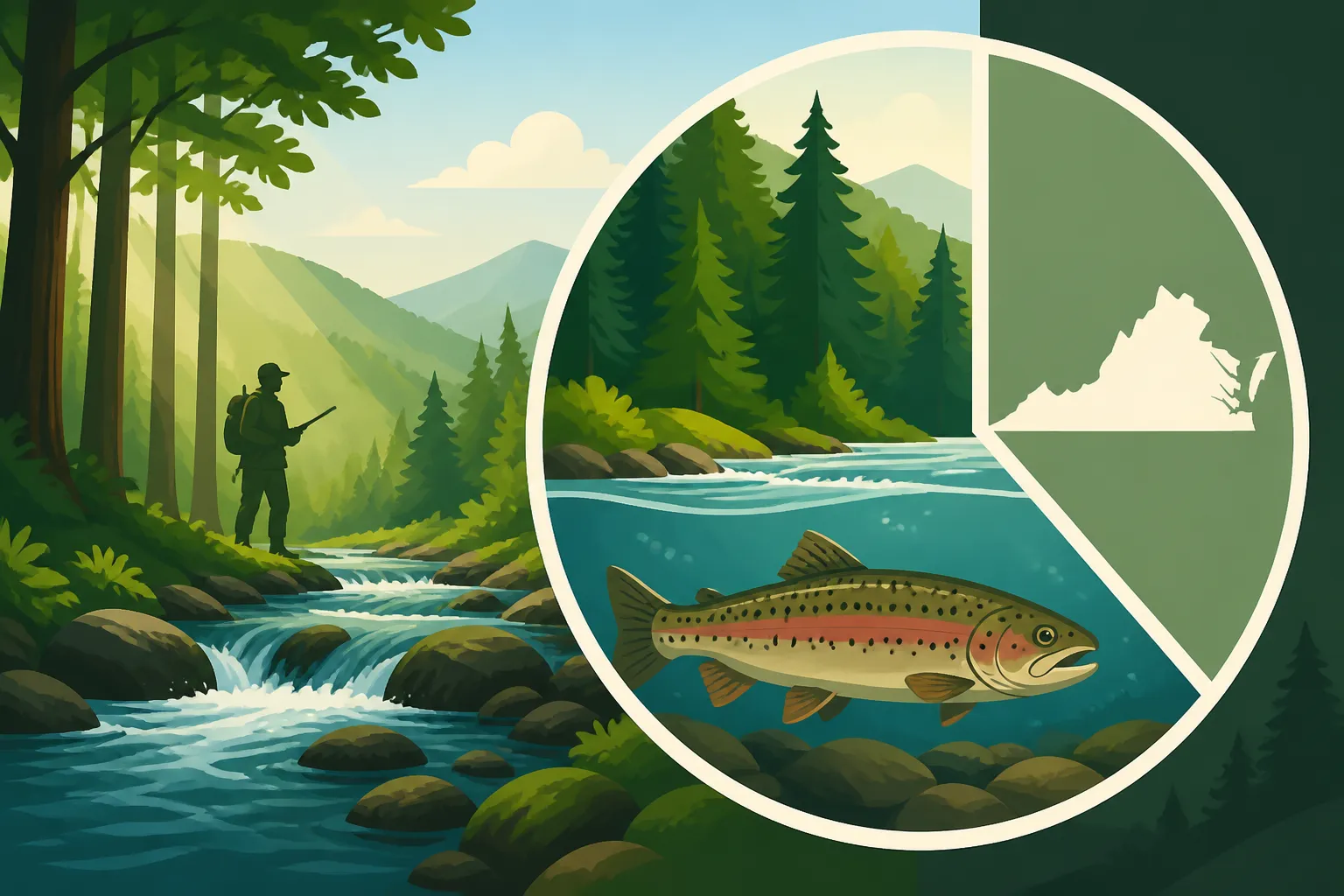
It’s a common frustration for many of us who cherish Virginia’s wild places: finding truly pristine waters, those cold, clear streams where native brook trout thrive, can feel like searching for a needle in a haystack of development and access challenges. But here's a remarkable truth often overlooked: the vast stretches of our National Forests in Virginia aren't just incredible places to chase deer or call in a gobbler; they are also the primary guardians of over sixty percent of the Old Dominion's coldwater trout streams. This guide will dive deep into how these forest ecosystems protect these vital aquatic habitats and what that means for sportsmen who appreciate both rod and gun.
The Unsung Heroes: Virginia's National Forests and Their Aquatic Treasures
When we talk about Virginia's natural heritage, the George Washington and Jefferson National Forests often spring to mind for their sprawling timberlands, challenging terrain, and abundant wildlife. Yet, their role as critical headwater reservoirs and protectors of coldwater fisheries is equally, if not more, significant. These aren't just woods; they are vast, intricate systems that filter our water, regulate temperatures, and provide the bedrock for healthy aquatic life, particularly for our beloved trout.
The Historical Context of Forest Management for Water Quality
Before these lands became national forests, much of Virginia's mountainous terrain was subjected to intense logging, mining, and agricultural practices that significantly degraded water quality. Streams were often choked with sediment, their banks destabilized, and the critical shade cover for coldwater species was stripped away. The creation of the national forest system, particularly in the early to mid-20th century, marked a profound shift. Management strategies began to focus not just on timber production but also on watershed protection, soil stabilization, and biodiversity.
This long-term commitment to conservation has slowly but surely allowed many of these ecosystems to heal. Forest roads were closed or maintained to reduce erosion, timber harvests were conducted with stricter environmental guidelines, and natural reforestation took hold. This shift was pivotal in restoring the delicate balance required for trout survival. It’s a testament to sustained conservation efforts that we can now enjoy such a wealth of coldwater streams within these public lands. The clean water running through these forests is a direct result of decades of careful stewardship, benefitting not just fish but all wildlife, including the deer and bears we pursue.
The Sheer Scale of Protected Waterways and Their Value
Just think about it: over sixty percent of Virginia's trout water flows through these national forests. That's an astonishing amount of unspoiled habitat. We’re talking about countless miles of freestone streams, spring-fed runs, and high-gradient creeks that originate within these protected boundaries. These are the arteries of the mountains, carrying life-sustaining cold water downstream.
This scale means several things for anglers and hunters alike. For the angler, it offers unparalleled opportunities to pursue wild brook trout, brown trout, and rainbow trout in a truly natural setting, often far from the pressures of stocked streams. For the hunter, it means that areas supporting healthy trout populations are also likely to be ecologically robust, with diverse habitats that support strong deer, bear, and turkey populations. Clean water is the foundation of all healthy ecosystems, and knowing that so much of it is protected within these forests underscores their immense value to all sportsmen. It’s a vast, interconnected network where every ridge, hollow, and stream plays a vital role.
George Washington National Forest: A Coldwater Mecca
Spanning a significant portion of western Virginia, the George Washington National Forest (GWNF) is a true gem for anyone seeking solitude and wild experiences. From the northern Shenandoah Valley down to the central Blue Ridge, its mountains are laced with some of the state’s most storied trout streams. This forest's rugged topography and vast, undeveloped tracts provide ideal conditions for coldwater fisheries, offering a haven for both native and wild-reproducing trout.
Iconic Trout Streams and Their Unique Characteristics
The GWNF is home to dozens of coldwater streams, each with its own character. Streams like Ramsey's Draft, Little Dry River, and Laurel Fork are often mentioned with reverence among trout anglers. These aren’t your wide, slow-moving rivers; they are typically smaller, high-gradient mountain streams, tumbling over rocks and through rhododendron thickets. The water here stays incredibly cold, even during the summer months, thanks to abundant shade, spring-fed sources, and the high elevation. This cold, oxygen-rich environment is precisely what wild trout, especially native brook trout, need to thrive.
The fishing here is often about stealth, precision, and a willingness to hike. You won't find many easy access points, which is part of their charm and protection. The fish are often wary, but the reward of hooking a brightly colored brook trout from a pristine mountain pool, knowing it has never seen a hatchery truck, is unmatched. Hunters moving through these areas understand the kind of wildness these streams represent. It’s the same wildness that makes Treestand Setups in George Washington National Forest so effective; deer and bear thrive in these untouched environments, often using the same drainages and hollows as routes of travel.
Accessing Remote Trout Water While Respecting Wildlife
Accessing these remote trout waters can be a challenge, and that's often by design. Many of the best streams require significant hiking, often on primitive trails or by bushwhacking. This physical barrier helps to limit pressure and preserve the wild character of the fishery. When planning a trip, whether for fishing or hunting, understanding the topography is key. The same ridge systems that offer great vantage points for a deer stand can also lead you to an overlooked headwater stream.
It’s crucial to use detailed maps and even satellite imagery to scout your approach. Remember, you're not just looking for a fishing spot, but for an immersive wilderness experience. While you're enjoying the solitude of these streams, be mindful of the other wildlife that calls these woods home. Deer, bear, and turkey are frequently found along these water corridors, especially during dry spells or in the warmer months. Keep your noise down, pack out everything you pack in, and always be aware of your surroundings. A responsible approach ensures these remote areas remain wild for future generations of sportsmen.
Jefferson National Forest: Southern Mountains, Pristine Streams
Further south, stretching across Virginia's southwestern highlands, lies the Jefferson National Forest (JNF). While it shares many characteristics with the GWNF, the Jefferson offers its own unique array of coldwater opportunities, often in more rugged and remote settings. This region is famous for its dramatic peaks and deep valleys, and these geological features play a significant role in creating and sustaining its trout-rich waters.
The Diverse Trout Waters of Virginia's Southwest
The Jefferson National Forest boasts an incredible diversity of trout streams, from the high-elevation waters of the Mount Rogers National Recreation Area to the more remote drainages flowing into the New River. Streams such as Whitetop Laurel Creek, Big Stony Creek, and Wilson Creek are renowned for their wild trout populations, often holding a mix of brook, brown, and rainbow trout. The sheer elevation and cooler climate in many parts of the JNF contribute to ideal conditions for coldwater species, providing stable temperatures even when other parts of the state begin to warm up.
These streams are often characterized by their steeper gradients, creating a dynamic environment of riffles, runs, and deep pools. The surrounding forest provides crucial cover, both in terms of shade to keep water temperatures down and structure in the form of fallen timber and undercut banks. This complex habitat offers ample foraging and hiding opportunities for trout. Hunting in these same areas, you’ll notice the rich diversity of flora and fauna, which makes Still-Hunting Jefferson Forest Ridges such a rewarding, albeit challenging, endeavor. The wildness of the terrain means deer and other game often follow these watercourses.
Balancing Fishing Access with Hunting Opportunities
The Jefferson National Forest is a true multi-use paradise, offering extensive opportunities for both hunting and fishing, often within the same general areas. This means sportsmen frequently find themselves sharing these vast landscapes. For instance, a hunter pursuing a fall deer during muzzleloader season might stumble upon a gorgeous trout stream, while an angler might jump a flock of turkeys on their way to a favorite fishing hole.
This shared use necessitates a balanced approach and mutual respect. Familiarize yourself with the regulations for both activities, including seasons, access points, and specific area restrictions. Many of the forest roads and trails that provide access for hunting also serve as entry points for anglers. Tools like Scouting Virginia Public Land Before Season become invaluable for identifying not just game sign but also potential stream access. Whether you're hanging a stand or rigging a fly rod, remember that you’re a guest in these wild spaces. Practice low-impact camping and be mindful of other users. Being prepared for varying conditions, like the Wind and Thermals on a Blue Ridge Slope, is essential for both endeavors.
Connecting the Dots: Understanding the Forest-Trout Relationship
It’s not just a coincidence that the best trout waters are found deep within our national forests. There’s a profound, symbiotic relationship between the health of the forest and the vitality of its coldwater streams. Understanding this connection helps us appreciate why these lands are so critical and why their continued protection is paramount.
Water Quality, Forest Health, and the Coldwater Ecosystem
The forest acts as a giant natural filtration system. The dense canopy and undergrowth minimize soil erosion, preventing sediment from washing into streams, which can smother fish eggs and invertebrate habitats. Forest soils absorb rainfall like a sponge, gradually releasing it into springs and streams, maintaining consistent flow even during dry periods. This slow release also helps regulate water temperature, ensuring that streams remain cold enough for trout to survive and thrive throughout the year.
The roots of trees and other vegetation stabilize stream banks, preventing erosion and creating essential cover for fish. Fallen logs and branches, far from being clutter, are crucial components of stream habitat, creating pools, eddies, and hiding spots. Without a healthy, intact forest ecosystem, these coldwater streams would rapidly degrade, losing their ability to support trout populations. When you see a crystal-clear mountain stream teeming with brook trout, you are witnessing the direct result of a healthy forest doing its job.
The Critical Role of Elevation, Shade, and Geologic Features
Beyond just the general health of the forest, specific geographical and geological features play a massive role in creating prime trout habitat. The high elevations of the Blue Ridge and Allegheny Mountains, where much of the GWNF and JNF are located, naturally mean cooler ambient temperatures. This, combined with dense forest canopy, provides consistent shade, preventing streams from warming to lethal levels for trout.
Furthermore, the underlying geology of these mountain ranges often contributes to stable water chemistry and the presence of numerous cold, spring-fed tributaries. Many of these streams originate from groundwater seeps and springs, which have a naturally consistent cold temperature. This stable temperature, coupled with the rugged topography that creates natural riffles and cascades, ensures high oxygen levels – another non-negotiable requirement for trout. It's a perfect storm of environmental factors, carefully preserved within these national forests, that makes them so uniquely suited to support coldwater fisheries.
Your Role in Conservation and Access: Planning Your Trip
As sportsmen, we have a vital role to play in both enjoying and protecting these incredible resources. Accessing remote areas and making the most of your trip requires preparation, respect for regulations, and a commitment to ethical practices. Whether you're heading out for deer, bear, or trout, understanding how to navigate and minimize your impact is key.
Navigating Public Land with Modern Tools and Ethics
Gone are the days when a paper map and compass were your only tools for navigating vast public lands. While those skills are still essential, modern mapping applications have revolutionized how we interact with these landscapes. Platforms like onX Hunt are incredibly valuable, offering detailed topographic maps, public/private land boundaries, and satellite imagery that can help you pinpoint promising trout streams or scout out a remote hunting locale. Similarly, GoHunt provides advanced mapping features and species-specific data that can aid in planning multi-faceted hunting and fishing expeditions. These tools can help you find hidden gems and avoid trespassing, but they don't replace common sense or preparation.
When using these tools, always download maps for offline use, as cell service is often nonexistent in remote forest areas. Beyond technology, ethical conduct is paramount. This includes respecting all regulations, leaving no trace, and being courteous to other users. Whether you're setting up a ground blind or casting a dry fly, remember that you are a steward of these lands. Our actions reflect on the entire hunting and fishing community. Always check the current regulations, especially if you're venturing into areas with specific rules, like those detailed for Virginia WMA Access Permit Sign-In Process – though national forests often have broader access, local rules still apply.
Essential Gear and Responsible Practices for Multi-Sport Adventures
Planning a trip to the national forests that might involve both hunting and fishing means thinking strategically about your gear. You want to be prepared for the diverse conditions and activities without overpacking for long hikes into remote areas. Here's a table outlining some essential considerations:
| Category | Hunting Gear Considerations | Fishing Gear Considerations | Shared Gear & Best Practices |
|---|---|---|---|
| Clothing | Layered system, blaze orange/pink, durable brush pants | Waders (chest or hip), quick-dry layers, rain gear | Moisture-wicking base layers, waterproof outer shell, sturdy hiking boots, wool socks |
| Navigation | GPS unit or phone with offline maps (onX Hunt), compass | GPS unit or phone with offline maps (onX Hunt), compass | Printed maps (backup!), external battery pack for electronics, headlamp/flashlight |
| Safety | First-aid kit, whistle, knife, fire starter, signaling device | First-aid kit, whistle, knife, fire starter, signaling device | Bear spray (where appropriate), water filter/purifier, emergency shelter, satellite messenger |
| Food & Water | High-energy snacks, sufficient water for the day | High-energy snacks, sufficient water for the day | Lightweight, non-perishable food, collapsible water bottles |
| Specific Tools | Rifle/bow, ammunition/arrows, binoculars, rangefinder | Fly rod/reel, waders, fly box, net, forceps, tippet | Backpack (appropriate size), small multi-tool, game bags (if hunting), camera |
| Ethical Conduct | Check Virginia Hunting Licenses and What They Cost, tag game | Virginia fishing license, catch & release where mandated | Pack out all trash, stay on designated trails, respect private property, minimize noise and impact |
When combining these activities, consider the seasons. Early fall often offers prime opportunities for both bowhunting and cool-weather trout fishing. Remember to clearly display any required blaze orange or pink, even if you’re "just fishing," if you are in a hunting area during firearms season. Always check all local and state regulations for both activities, as they can vary by county and specific public land tracts. Completing Virginia Hunter Education Requirements is a great way to ensure you're up to date on best practices and safety, even if your primary goal on a particular day is fishing.
The George Washington and Jefferson National Forests are extraordinary resources, providing not only vast hunting grounds but also preserving the lifeblood of Virginia's coldwater fisheries. Understanding and respecting this interconnectedness ensures that these wild places remain healthy and vibrant for generations of sportsmen to come.
Disclaimer
This article is for general informational purposes only and does not constitute professional advice. Laws, prices and regulations vary by location and change over time. Consult a qualified professional for guidance on your specific situation.