Vehicle Rules on Virginia Public Land
It can be incredibly frustrating to head out for a day of hunting or exploring on Virginia's beautiful public lands, only to find yourself confused by gates, "No Entry" signs, or ambiguous vehicle regulations. You plan your route, pack your gear, and then hit a roadblock – sometimes literally – that throws off your entire day. This guide is here to clear up that confusion, offering a comprehensive look at the vehicle rules you need to know to navigate Virginia's public lands confidently and legally.
Understanding General Vehicle Regulations on Virginia Public Lands
Virginia offers a fantastic amount of public land for outdoor enthusiasts, from sprawling national forests to diverse wildlife management areas. However, these lands are managed with conservation and safety in mind, which means there are specific rules about where you can and cannot drive. These aren't arbitrary guidelines; they're designed to protect wildlife habitat, prevent erosion, and ensure a quality experience for all users. Ignoring them can lead to fines, damage to your vehicle, or even the loss of access to these valuable areas. The key takeaway is this: just because a path looks like a road doesn't mean it's open to motorized vehicles. Always assume restrictions unless explicitly stated otherwise.
Forest Service Roads: Open, Gated, or Decommissioned?
When you're out in the vast stretches of the George Washington or Jefferson National Forests, you'll encounter a network of Forest Service roads. These aren't like the state highways you're used to; their status can change dramatically depending on the season, weather conditions, and management objectives. Some roads are designated as open year-round, allowing vehicular access for hunters, hikers, and campers. These are usually well-maintained, gravel roads. However, many more are subject to seasonal closures, often gated during specific times of the year, particularly in winter or during wet periods, to prevent damage and protect sensitive habitats. It's not uncommon to drive a few miles down a gravel road only to find a sturdy metal gate blocking your path, forcing you to backtrack.
Then there are the roads that are completely decommissioned or simply old logging tracks. These might appear on older maps or even some digital overlays, looking like viable routes. In reality, they are often overgrown, washed out, or intentionally blocked to restore the area to its natural state. Driving on these can quickly lead to your vehicle getting stuck, causing environmental damage, and incurring significant fines. It's a humbling experience to realize you've just put your truck through a creek crossing that hasn't seen a vehicle in twenty years. Always check current Forest Service maps for the most up-to-date information on road status before you embark.
Designated Trails and Off-Road Vehicle Use
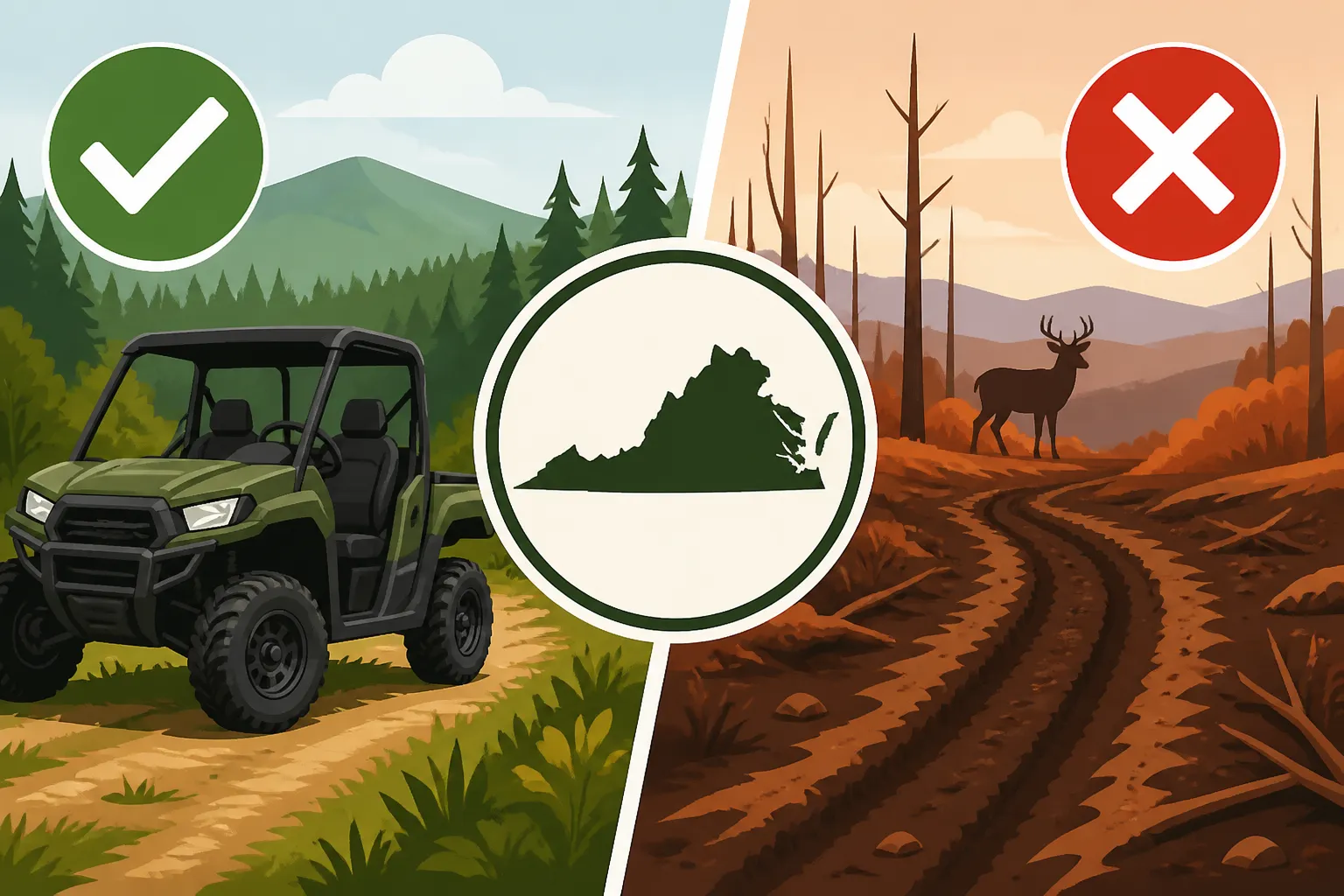
The allure of taking your ATV or OHV off the beaten path can be strong, especially when you see what looks like an old game trail winding into the woods. However, on most Virginia public lands, off-road vehicle use is strictly prohibited. This rule is in place for several crucial reasons: preventing soil erosion, protecting fragile ecosystems, minimizing disturbance to wildlife, and reducing user conflicts. Imagine a hunter trying to sneak through the woods, only to have their experience ruined by the sound of an ATV tearing through a nearby creek bottom.
There are specific areas in Virginia where ATV and OHV use is permitted, usually on designated trail systems. These are typically managed by the state or federal agencies and require specific permits or fees. An example would be certain trails managed by the Virginia Department of Forestry or specific sections of National Forest land carved out for this purpose. Always verify that a trail is explicitly designated for motorized off-road use before venturing onto it. If it's not clearly marked as an ATV/OHV trail, assume it's for foot traffic only. This is where relying on detailed mapping applications like onX Hunt can be a real game-changer, as they often have layers indicating designated trail systems and areas where motorized vehicles are allowed.
Specific Rules for Virginia's Major Public Land Types
Virginia's diverse landscape means that vehicle rules can vary significantly depending on whether you're in a national forest, a wildlife management area, or another type of public land. What's allowed in one area might be strictly forbidden in another. Understanding these distinctions is crucial for a smooth and legal outing.
National Forests George Washington and Jefferson
The George Washington and Jefferson National Forests comprise massive tracts of land across Virginia, offering incredible hunting, fishing, and recreation opportunities. Due to their sheer size and mountainous terrain, vehicle access is a critical topic. Generally, you can drive on designated Forest Service roads that are open to public use. These are typically gravel roads, sometimes maintained, sometimes very rough, and often lead to trailheads, campsites, or remote hunting access points. The key is "designated and open." Just because a road is on a map doesn't mean it's open for public vehicle traffic; it might be an administrative road, temporarily closed, or decommissioned entirely.
For hunters, this often means parking your vehicle at a designated spot and then hiking in. While you might spot an old logging road that looks perfect for driving to your stand, resist the temptation. These are usually closed to public motorized use to reduce human impact on remote areas and protect sensitive habitats. Camping rules also tie into vehicle access; while dispersed camping is often permitted, your vehicle must be parked in a legal spot, usually within a certain distance of an open Forest Service road. Always check with the local ranger district office or their website for the most current motor vehicle use maps, which clearly show which roads are open to vehicles, which are seasonal, and which are closed. These maps are invaluable when planning a trip for Treestand Setups in George Washington National Forest or Still-Hunting Jefferson Forest Ridges.
Wildlife Management Areas WMAs
Virginia's Wildlife Management Areas (WMAs), managed by the Virginia Department of Wildlife Resources (DWR), are specifically acquired and managed for wildlife conservation and public recreation, with a strong emphasis on hunting and fishing. As such, vehicle rules on WMAs tend to be more restrictive than in national forests. The primary goal is to minimize disturbance to wildlife and maintain habitat integrity. This often means that motorized vehicle access is limited to main entrance roads and designated parking areas.
It's very common on WMAs to find gates at the entrance of internal roads or trails, even those that look perfectly drivable. These gates are typically locked, allowing only DWR staff or authorized personnel access. For hunters, this means you'll usually be parking at a designated lot and then walking or utilizing non-motorized methods (like a bicycle or game cart) to reach your hunting spots. Some WMAs may have specific dates or seasons when certain internal roads are open, especially for game retrieval, but these are exceptions and will be clearly posted. To hunt or access most WMAs, you'll need a Virginia WMA Access Permit Sign-In Process, in addition to your regular hunting license. Always check the DWR's individual WMA pages or the Virginia Wildlife Management Areas website before visiting, as regulations can vary significantly from one WMA to another.
Practical Tips for Navigating Vehicle Rules and Avoiding Trouble
Navigating the labyrinth of vehicle rules on Virginia's public lands can feel like a challenge, but with the right preparation and tools, you can avoid costly mistakes and enjoy your outdoor adventures without unnecessary stress. Forethought is your best friend when it comes to understanding and adhering to these regulations.
Pre-Season Scouting and Map Resources
One of the absolute best ways to understand vehicle access on public land is to do your homework before you ever put your truck in drive. This means digital scouting from home, and if possible, a physical scouting trip before the season opens. Online resources are your first line of defense. The DWR website and individual National Forest websites often have interactive maps or downloadable Motor Vehicle Use Maps (MVUMs) that clearly delineate open roads, seasonal closures, and prohibited areas. These maps are crucial because they're updated regularly and show the legal status of roads, not just their physical presence.
Beyond government resources, third-party mapping applications have revolutionized how hunters and outdoor enthusiasts scout. Tools like onX Hunt are invaluable for this. They offer detailed satellite imagery, topographic maps, and public/private land ownership layers. Crucially, many also integrate public land road network information, showing gated roads, administrative roads, and trails. This allows you to plan your parking spots and walking routes with confidence, avoiding frustrating dead ends or illegal access points. Similarly, the Scouting With the Virginia DWR App or a similar app provided by the state can provide real-time updates or access to official maps. Always download maps for offline use if you'll be in areas without cell service, which is common in many of Virginia's wilder regions.
Understanding Signage and Enforcement
Once you're actually out in the field, knowing how to interpret signage is paramount. Public land agencies use a variety of signs to communicate vehicle rules, and understanding them can save you a lot of grief. Look for signs that explicitly state "Open to Public Travel," "Seasonal Road Closure," or "No Motorized Vehicles Beyond This Point." A simple gate, even if unlocked, often implies restricted access, so err on the side of caution. "Administrative Use Only" signs mean just that – only authorized personnel are allowed past that point.
The consequences of violating vehicle rules can range from a warning to significant fines, vehicle towing, or even legal action. DWR conservation police officers and Forest Service rangers regularly patrol public lands and are well-versed in these regulations. They take violations seriously, as illegal vehicle use can cause substantial environmental damage and safety hazards. Remember, ignorance of the law is rarely an acceptable defense. Always respect posted signs, and if in doubt, park your vehicle and proceed on foot. It’s far better to walk an extra mile than to face a ticket or worse, as outlined in potential Virginia Wildlife Violation Penalties.
Special Considerations for Hunting-Related Vehicle Use
Hunting often involves heavy gear, long treks, and, if successful, the strenuous task of game retrieval. While a vehicle might seem like the perfect solution for these challenges, specific rules often govern how and where you can use one in a hunting context on public land.
Retrieving Game and Hauling Equipment
This is a common point of frustration for many hunters. You've just harvested a big deer or bear, and the thought of dragging it a mile or more through rugged terrain is daunting. You see an old two-track leading right to your kill site and wonder, "Can I just drive in to get it?" The answer, on most Virginia public lands, is a resounding no, unless that two-track is a designated, open Forest Service road. While some WMAs or National Forest units may have specific provisions for vehicle-assisted game retrieval during certain periods or in designated areas, these are exceptions and must be explicitly stated in the regulations for that particular unit. You generally cannot drive off established, open roads simply to retrieve game.
This means you'll need to be prepared to get your animal out under your own power, or with the help of friends. Investing in game carts, sleds (especially useful in snowy conditions), or a good frame pack for quartering and packing out meat is a wise decision for hunters using Virginia's public lands. Tools like a Deer Sleds for Mountain Country can turn an impossible task into merely a very difficult one. Even if you're hunting private land, it's a good idea to discuss game retrieval plans with the landowner, as they might have specific preferences or restrictions regarding vehicle use on their property. Planning for game retrieval is just as important as planning your shot, especially when hunting in areas like where Dragging a Deer Out of a Mountain Hollow is a real possibility.
Parking and Camping with Vehicles
Where you park your vehicle isn't just a matter of convenience; it's a matter of compliance with land use regulations. On most public lands, you'll find designated parking areas, pull-offs, or shoulder parking along open roads. It is generally not permitted to drive off-road to create your own parking spot, as this can damage vegetation, create erosion, and block administrative access. Always ensure your vehicle is completely off the main travel lane and not obstructing any gates, trails, or other access points.
For hunters who like to combine their hunt with a camping trip, vehicle-based camping is often allowed in designated campgrounds or in dispersed camping areas within national forests. However, even when dispersed camping, your vehicle must be parked on an open, established Forest Service road or in an area explicitly designated for camping with vehicles. You cannot just drive into the woods and set up camp wherever you please. Some WMAs may have specific camping areas, but many prohibit overnight parking or camping altogether, especially during hunting seasons. Always check the specific rules for the area you plan to visit, particularly regarding Camping Rules on Virginia National Forest Land, to avoid a rude awakening from a ranger or an unwelcome ticket on your windshield.
Disclaimer
This article is for general informational purposes only and does not constitute professional advice. Laws, prices and regulations vary by location and change over time. Consult a qualified professional for guidance on your specific situation.