How Close a Virginia Mentor Must Stay
One of the most common questions and, frankly, anxieties, for parents and seasoned hunters looking to introduce someone new to the woods in Virginia is about supervision. You want to do it right, follow the rules, and keep everyone safe, but the exact regulations can feel a little vague sometimes. How close do you really need to be when you're mentoring an apprentice hunter or taking a youngster out for their first deer hunt? It's not just about what the law says; it's about the spirit of mentorship and ensuring a safe, positive experience. This guide will walk you through the Virginia Department of Wildlife Resources (DWR) requirements, offering practical advice to ensure you're always within legal and ethical bounds.
Understanding Virginia's Direct Supervision Requirements
The heart of the matter, when it comes to mentoring new hunters in Virginia, lies in the concept of "direct supervision." This isn't just a casual suggestion; it's a legal requirement designed to ensure safety and responsible hunting practices, especially when you're out with someone who doesn't yet have their full hunter education certification or is still learning the ropes. Many states have slightly different definitions, which can make it confusing if you're used to hunting elsewhere. Virginia aims for clarity, but real-world scenarios always add a layer of complexity.
The "Sight and Hearing" Rule for Apprentice Hunters
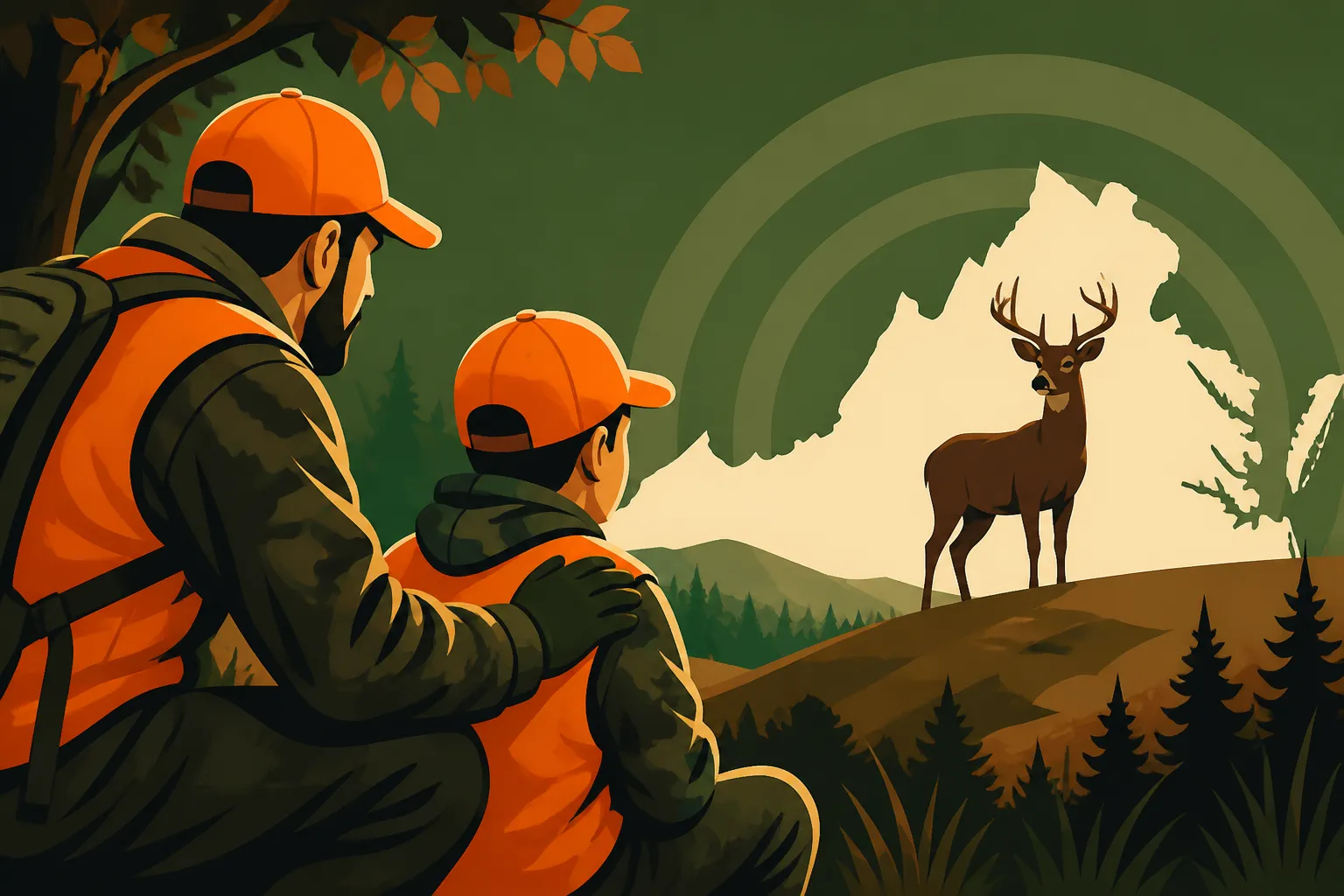
If you're mentoring someone with an Virginia Apprentice Hunter License, the DWR is quite specific. The licensed adult mentor, who must be at least 18 years old and hold a valid Virginia hunting license, must remain in sight and hearing of the apprentice hunter. This isn't just a suggestion; it's the core regulation. It means you can't drop your apprentice off at a stand and go hunt a different ridge, even if you have radios. The intent is for you to be immediately accessible to provide instruction, intervene in a safety situation, or assist with game recovery.
Think about what "in sight and hearing" truly implies in a hunting context. It's not like a wide-open field on a clear day where you can see for miles. In the dense timber of the Jefferson National Forest, or the rolling hills and thickets of the Piedmont, "in sight" might mean a mere 40-50 yards. If you're using a ground blind on a field edge, you might have a clearer view, but if your apprentice is tucked into a different part of the field, you still need to see them and hear what's happening. The moment you lose visual contact, or if the wind shifts and you can no longer hear them clearly, you've potentially violated the rule. This rule applies whether you're deer hunting, turkey hunting, or pursuing small game. It’s about being an active, engaged mentor, not just a bystander. For more on this specific license, you can refer to our detailed guide on Virginia Apprentice Hunter License Rules.
Supervising Youth Hunters Without a License
Virginia offers a fantastic opportunity for young hunters under 16 years of age who don't yet have their hunter education certificate or a regular hunting license. They can hunt without a license when accompanied and directly supervised by a licensed adult at least 18 years old. While the explicit "sight and hearing" phrase isn't always appended to this specific rule in every DWR publication as it is for apprentice licenses, the spirit and expectation of direct supervision are exactly the same. The adult is responsible for the youth's actions, safety, and adherence to all hunting regulations.
Consider a scenario where you're out during the Virginia Youth Deer Weekend Rules. Your young hunter might be brimming with excitement, perhaps carrying their own firearm for the first time. The adult mentor needs to be right there, ready to guide them on shot placement, ethical considerations, and safety. This isn't just about watching them take a shot; it's about teaching them to identify legal game, understand shooting lanes, and safely handle their weapon. If the youth is in a tree stand, the mentor should ideally be in an adjacent stand, or at the very least, within an arm's reach on the ground below, if the stand setup allows for it safely and quietly. The responsibility here is immense, and proximity is key to fulfilling that role effectively.
The Practical Realities of Maintaining Proximity Afield
Knowing the rules is one thing; applying them in the diverse landscapes of Virginia is another. From the dense mountain laurel thickets of the Blue Ridge to the open agricultural fields of the Piedmont, maintaining sight and sound of your mentee requires thoughtful planning and realistic expectations. It’s not always easy, but it’s absolutely critical for safety and compliance.
Positioning for Visibility in Different Terrains
When you're planning your hunt, whether you're using a tool like GoHunt to scout aerial photos or physically walking the ground, consider how the terrain will impact your ability to maintain "sight and hearing."
- Dense Woods: If you're still-hunting through thick timber, you'll need to walk very close to your apprentice, perhaps side-by-side or with the apprentice just a few steps ahead or behind you. This allows you to communicate quietly, point out sign, and react immediately if a deer presents itself or an unsafe situation arises. In areas like the George Washington National Forest, where cover can be incredibly dense, you might even consider tying a short string between you and your apprentice to ensure you don't accidentally drift apart. When setting up for a sit, carefully choose positions where both of you have a clear, unobstructed view of each other, even if it means sacrificing a perfect shooting lane for the sake of supervision. This is where Reading Aerial Photos for Piedmont Deer can really help you anticipate visibility challenges before you even step foot in the woods.
- Open Fields and Food Plots: These areas might seem easier, but distances can be deceiving. While you might be able to see across a 100-yard field, can you still hear a whispered question or the click of a safety from that distance, especially with wind or other ambient noise? If you're setting up a ground blind, placing two separate blinds close together, or ensuring your single blind has adequate visibility for both hunters, is crucial. If hunting from a treestand, consider a two-person stand or two closely positioned single stands. Treestand setups, especially in national forests, need careful consideration, as described in Treestand Setups in George Washington National Forest.
- Rolling Terrain and Hollows: The mountains of Virginia present unique challenges. A small dip in the terrain or a subtle ridge line can quickly put you out of sight and hearing. If you're hunting an area with varied elevation, plan your movements carefully. Avoid sending your apprentice over a rise while you stay behind, unless you can still see them from your vantage point. You should always be able to quickly reach your apprentice if needed.
Communication and Safety Protocols
Effective direct supervision goes beyond just physical proximity; it involves clear communication and established safety protocols. Before you even head out, have a detailed discussion with your apprentice or youth hunter about what "in sight and hearing" means to both of you.
- Verbal Cues: Agree on quiet verbal cues or hand signals you can use to communicate without spooking game. This is especially important if you're positioned slightly apart but still within legal bounds.
- Emergency Plan: Discuss what to do if you get separated (even if briefly), if a shot is taken, or if there's an emergency. While you're supposed to be in sight and hearing, accidents happen. Having a plan for calling for help or rendezvous points is always wise.
- Weapon Handling: Emphasize safe firearm or bow handling constantly. As a mentor, you should be able to intervene immediately if you see unsafe behavior. This immediate accessibility is a cornerstone of the "direct supervision" rule. Your presence is not just for compliance but for continuous safety education.
A useful table outlining supervision scenarios:
| Hunting Scenario | Mentor's Proximity & Action | Rationale | Key Consideration |
|---|---|---|---|
| Still-hunting Dense Cover | Walk side-by-side or a few steps apart, constant quiet communication. | Maintain immediate visual/auditory contact and quick intervention. | Wind direction, noise, thick vegetation. |
| Treestand Hunting | Mentor in adjacent stand or safely on ground below. | Ensure clear view of youth/apprentice and ability to assist/instruct. | Stand safety, quiet entry/exit, clear shooting lanes. |
| Ground Blind Hunting | Mentor in same blind, or very close blinds with clear sightlines. | Unobstructed view, clear communication, immediate access. | Blind placement, visibility through windows, acoustics. |
| Overlooking a Food Plot | Mentor and apprentice together, sharing a vantage point. | Direct instruction on animal identification, shot choice, and safety. | Distance to animals, background safety. |
| Following a Blood Trail | Mentor leads, apprentice follows closely, learning tracking skills. | Mentor ensures safety, confirms trail, teaches ethics and recovery. | Pace, focus on signs, avoiding getting lost. |
The Broader Role of a Virginia Hunter Mentor
Beyond the legal definitions of proximity, being a mentor in Virginia carries a profound responsibility. It’s about cultivating the next generation of ethical, safe, and conservation-minded hunters. Your role is far more than just ensuring you’re within shouting distance; it’s about shaping their entire hunting experience.
Teaching Beyond the Shot
A great mentor teaches much more than how to pull a trigger or release an arrow. They instill a deep respect for wildlife, the land, and the traditions of hunting. This includes:
- Understanding Regulations: Explain the importance of following DWR regulations, from license requirements (like Virginia Hunting Licenses and What They Cost) to specific season dates and bag limits.
- Scouting and Habitat: Take them Scouting Virginia Public Land Before Season. Teach them how to read sign, identify food sources, and understand deer or turkey behavior. Show them how to use tools like GoHunt to analyze topography, property lines, and potential pinch points. This groundwork makes them a better hunter for life, not just for one outing.
- Wildlife Conservation: Explain the role of hunting in wildlife management and conservation funding. Help them understand why we have seasons and limits, and how their license fees contribute to healthy populations.
- Ethics and Respect: This is paramount. Teach them about fair chase, clean kills, and responsible game recovery. Discuss why respecting landowners and other hunters is crucial, and the importance of leaving no trace.
- Field Dressing and Meat Care: The hunt doesn't end when the animal hits the ground. Show them how to properly field dress an animal and care for the meat. This connection to the food source is a powerful part of the hunting experience.
Fostering a Lifelong Passion
The relationship between a mentor and an apprentice is often foundational for a new hunter. Your enthusiasm, patience, and commitment will be contagious. By making the experience positive, educational, and safe, you're not just complying with a rule; you're creating a pathway for someone to develop a lifelong passion for the outdoors and contribute to hunting's future. The Virginia DWR created the Apprentice Hunter License specifically to bridge the gap for those who might not immediately be able to take a full Virginia Hunter Education Requirements course, allowing them to gain hands-on experience under direct guidance. This program is a testament to the belief that mentorship is critical.
Ultimately, "how close a Virginia mentor must stay" isn't just a legal minimum; it's an opportunity. It's the physical manifestation of your commitment to their safety, their learning, and their overall experience. Embrace that proximity not as a burden, but as a privilege to guide and educate. Whether you're hunting deer in the Piedmont or small game in the mountains, being within sight and sound ensures that every moment is a teaching moment, every potential hazard is quickly addressed, and every success is shared intimately.
Disclaimer
Please remember that hunting regulations can change. Always consult the most current Virginia Department of Wildlife Resources (DWR) regulations before heading afield. This guide is for informational purposes only and should not be considered legal advice.