Virginia Blaze Orange Requirements
Every November someone posts the same question in a Virginia hunting group: does a blaze orange hat count, can I wear pink instead, and do I really need it if I am sitting in a ladder stand alone on my own farm? The answers matter, because getting them wrong can mean a citation or worse. This guide explains what Virginia requires, when it applies, who is covered and how to choose gear that keeps you legal and visible.
What Virginia’s Blaze Orange Law Actually Requires
Virginia’s visibility rule is short when you read it in the regulations digest, but there is a lot packed into a few sentences. At its heart, the law is about one thing: making sure other hunters can see you as a human being, from any direction, during the time of year when the woods are full of people carrying rifles, shotguns and muzzleloaders.
I have hunted Virginia’s mountains and Piedmont for a long time, and I have seen the conversations around this rule shift. Twenty years ago, plenty of older hunters grumbled that orange spooked deer. Today, most of us understand that deer see color very differently than people do, and that the small trade-off in concealment is nothing compared with the safety benefit. Still, the details of the rule confuse a lot of people, so let’s walk through them carefully.
The Three Ways to Comply
During the firearms deer season, Virginia gives hunters three basic ways to meet the visibility requirement. You need to satisfy at least one of them:
- Wear a blaze orange or blaze pink hat.
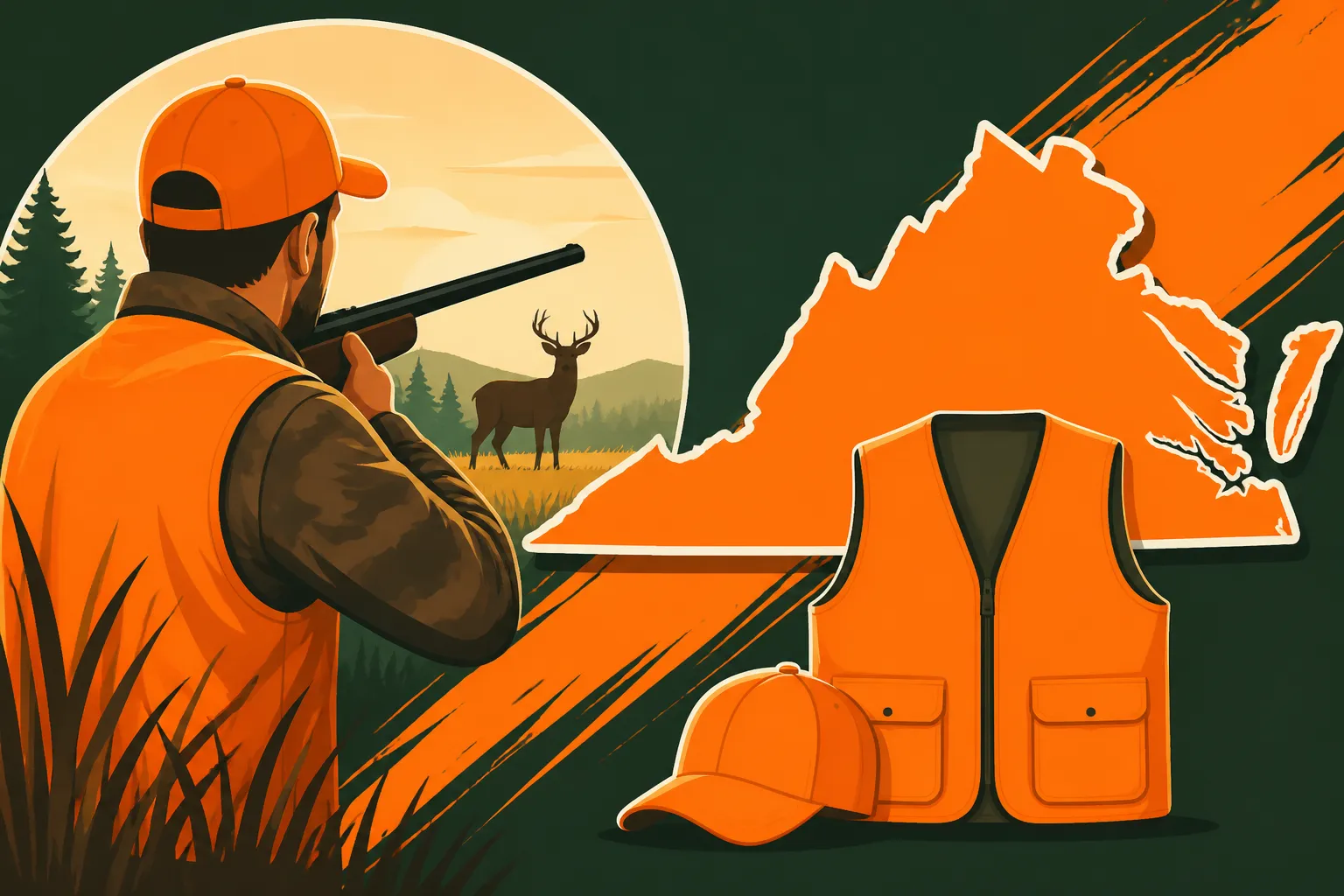
- Wear blaze orange or blaze pink upper body clothing that is visible from 360 degrees.
- Display at least 100 square inches of solid blaze orange or blaze pink material at or above shoulder level, within body reach, and visible from 360 degrees.
That third option is the one people most often misunderstand. It exists mainly for hunters in stands or blinds who do not want to wear orange clothing. You can hang a band or panel of orange around your tree stand or on top of your ground blind, as long as it meets the size, height and visibility conditions. If any of those conditions is missing, you are not legal under that option.
Each option has strengths and weaknesses, and many experienced Virginia hunters combine them, wearing a vest and a hat and hanging orange near their stand, so they are visible whether they are walking in, sitting still or dragging a deer out. For a closer look at the quantity rules, see How Much Blaze Orange Virginia Requires.
Who Must Comply
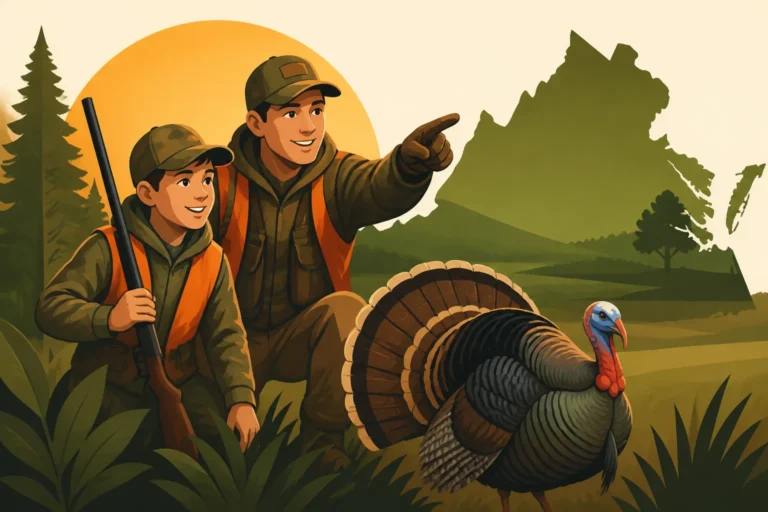
The requirement applies to every hunter, and to every person accompanying a hunter, during the firearms deer season. That second part trips people up. If you are taking a friend, spouse or child along to watch, carry gear or learn, they are covered by the rule too, even if they are not carrying a weapon. A parent sitting next to a young hunter on the youth weekend, a friend helping drag a deer, a guide or mentor walking with a new hunter all need to comply.
It also applies regardless of what you are hunting. During the firearms deer season, someone hunting squirrels, rabbits or other small game in the same woods is covered. The rule is tied to the season, not to the species you are after, because the danger comes from the number of firearms in the woods during that period.
Exceptions Built Into the Rule
Virginia’s law has historically carved out a handful of exceptions. Waterfowl hunters are a common example, since they hunt over water or in blinds where orange would be impractical and the risk of being mistaken for a deer is low. Fox hunters on horseback who do not carry firearms are another traditional exception. Some special hunts on certain lands may have their own rules set by the managing agency.
Because exceptions can change and are written in precise legal language, never assume you are exempt just because a buddy says so. Read the current regulations digest from the Virginia Department of Wildlife Resources before each season, and if your situation is unusual, call the agency and ask. When in doubt, wear orange or pink. No one has ever been ticketed for being too visible.
Hunting Alone or on Your Own Land
The question I hear most often is whether the rule really applies if you hunt alone on private property. The short answer is yes. Virginia’s requirement is tied to the firearms deer season, not to whether you are on public or private land or whether you think anyone else is nearby. A hunter sitting alone on a family farm in Southside is covered just as much as someone walking a busy ridge in the George Washington National Forest.
There is a good reason for that. Property lines in rural Virginia are often unmarked or poorly marked, neighbors hunt adjacent tracts, and trespassers are not unheard of. You may believe you are alone on a 200-acre farm, but a hunter on the next property may be watching the same field edge from the other side of a fence. A deer running between you creates exactly the kind of situation where visibility saves lives.
Sunday hunting has added more days of activity to the calendar on many properties, which means more chances for overlap with other hunters. Every extra day in the woods is another day when being seen matters.
When the Requirement Applies
Knowing when the rule is in force is just as important as knowing what to wear. Many hunters are confused because Virginia’s deer seasons overlap, run differently east and west of the Blue Ridge and vary by county.
Common Myths About Blaze Orange
A few myths keep circulating at deer camps, and they deserve to be cleared up.
The first myth is that deer see orange as a glowing warning sign. In reality, deer have limited color vision compared with people and are thought to have difficulty distinguishing orange from green and brown. What spooks deer is movement, human shape and scent. A hunter in an orange vest who sits still with the wind in their face will almost always do better than a hunter in full camouflage who fidgets.
The second myth is that a little orange is enough. A faded cap pushed into a backpack does nothing for anyone. The rule requires specific items or a specific display, worn or placed properly, and the purpose is to be seen from every direction. Half-measures do not satisfy the law, and they do not protect you.
The third myth is that hunters in tree stands do not need orange because they are above the line of fire. Hunters in stands are still visible to others on the ground and in nearby stands, and hunters climbing in and out of stands are at their most vulnerable. Many Virginia hunters who use stands choose a vest or hat in addition to a stand display for exactly that reason.
The Firearms Deer Season Window
The core of the requirement is the firearms deer season. In much of Virginia, the general firearms season opens in mid-November and runs into early January in many eastern counties, with shorter seasons in parts of the west. Exact dates vary by county and year. For an overview of how the seasons fit together, read Virginia Deer Season Structure Explained and Virginia’s General Firearms Deer Season.
Muzzleloader seasons add another layer. Virginia has early and late muzzleloader periods that sit on either side of the general firearms season. Whether the visibility requirement covers those periods is laid out in the current digest, so read it each year. Many careful hunters simply wear orange or pink any time a gun season of any kind is open, which removes the guesswork entirely.
Archery Hunters During Gun Season
One of the most common questions comes from bowhunters. If you are hunting with a bow or crossbow in a county where the firearms deer season is open, the general rule is that you are covered by the visibility requirement just like a gun hunter. The fact that you are carrying a bow does not make you less visible to someone else carrying a rifle.
Some areas, such as certain urban archery zones where firearms are not used, or properties where firearms hunting is not allowed, may be treated differently. The details are covered in Orange Requirements for Archery Hunters, and if you are not sure, err on the side of wearing it. Many bowhunters hang a strip of orange near their stand and wear an orange hat while walking in and out, then take the hat off once settled if their option is the hanging display.
Youth Weekends, Bear Seasons and Overlaps
Virginia’s youth and apprentice deer hunting weekend typically comes before the general firearms opener. Young hunters and the adults who accompany them should wear blaze orange or pink during that weekend. Even if the specific regulation language puts it under a different section, it is the smart and safe choice. For details, see Virginia Youth Deer Weekend Rules.
Bear seasons overlap with deer seasons in many parts of Virginia. Bear hound hunters moving through the mountains in November face the same safety concerns as deer hunters, and in many cases the same visibility rules apply. Dog handlers and hunters running hounds cover a lot of ground, and visibility is especially important for them.
Here is a quick summary of how visibility typically lines up with each season.
| Season or activity | Visibility requirement | Practical recommendation |
|---|---|---|
| General firearms deer season | Required for hunters and those accompanying them | Hat plus upper body garment |
| Early and late muzzleloader periods | Check the current digest | Wear orange or pink regardless |
| Archery hunting while firearms season is open | Generally required | Hat while moving, display or vest on stand |
| Archery hunting before any gun season opens | Not required | Optional, consider during walks in the dark |
| Youth and apprentice deer weekend | Strongly recommended and often required | Full orange or pink for youth and mentor |
| Bear hound hunting overlapping gun deer season | Often required | Vest and hat for handlers and hunters |
| Waterfowl hunting | Generally exempt | Wear orange while walking to the blind in gun season |
| Spring turkey season | Not required | Orange or pink for walking in and carrying birds out |
Blaze Orange Versus Blaze Pink
One of the more interesting changes in Virginia hunting law in recent years has been the addition of blaze pink as a legal alternative to blaze orange. Some hunters love it, some laugh at it, but it is a legitimate option and worth understanding.
Why Pink Was Added
Blaze pink is a fluorescent color that, like blaze orange, stands out sharply against natural backgrounds. Supporters argued that offering a second color would make hunting gear more appealing to new hunters, especially women, and give everyone a wider choice of clothing. Studies of visibility have suggested that fluorescent pink is highly visible to people in the woods, comparable to orange in most conditions.
For deer, which see color differently than humans and have limited ability to distinguish reds and oranges from greens, both colors likely appear as dull shades rather than glowing beacons. The real concern for deer hunters is not color, but movement and solid blocks of shape. That is why many hunters choose orange or pink clothing in camouflage patterns, which break up their outline while still meeting visibility requirements. Check the regulations on how much solid color is needed and whether patterned garments count for the option you are using.
Choosing Between Orange and Pink
The choice between orange and pink comes down to personal preference and availability. Orange gear is easier to find, cheaper in many cases and available in a much wider range of sizes and styles. Pink gear has become more common, but selection can still be limited depending on where you shop.
| Feature | Blaze orange | Blaze pink |
|---|---|---|
| Legal in Virginia | Yes | Yes |
| Availability in stores | Very wide | Growing but more limited |
| Visibility to people | Excellent | Excellent |
| Accepted in other states | Nearly everywhere | Only in some states |
| Clothing styles | Vests, jackets, hats, packs, gloves | Mostly vests, hats and some jackets |
| Price range | Wide, many budget options | Often similar, fewer budget choices |
One practical note: if you hunt in other states, check whether pink is legal there. Not every state allows it, so a pink vest that is perfect in Virginia might not meet the law across the border. To explore your options, see Blaze Pink Options Under Virginia Law and Virginia’s Blaze Orange and Pink Options.
Mixing Colors and Patterns
Some hunters wear an orange vest with a pink hat, or vice versa. As long as each item meets the requirements, mixing colors is fine. Camouflage blaze patterns are also popular, but the key is whether the garment provides enough solid fluorescent color to be visible from all sides. A pattern that is mostly brown with small orange flecks might not satisfy the requirement. When choosing patterned gear, look for clothing designed to meet hunter visibility laws.
Choosing and Using Visibility Gear
Having the right gear makes compliance easy. Having gear that fits and works with your hunting style makes it something you actually use every time.
Hats, Vests and Jackets
The simplest way to comply is with a blaze orange or pink hat. A hat is light, cheap and easy to put on. For many hunters, especially those sitting in stands, a hat alone satisfies the requirement. However, a hat alone may not provide as much visibility as a vest or jacket, especially if you are moving through thick cover.
Vests are popular because they are lightweight, inexpensive and can be worn over any jacket. A vest gives you 360-degree visibility on your upper body, and many vests have pockets for calls, shells and other gear. Jackets are more expensive but offer warmth and visibility in a single piece, which is useful in cold weather. For a detailed comparison, see Blaze Orange Jackets Versus Vests.
When choosing gear, look for:
- Bright, solid fluorescent color that has not faded.
- A fit that works over your heaviest layers.
- Quiet fabric that does not rustle when you move.
- Pockets and features that suit your style of hunting.
- Sizes that fit youth hunters if you are outfitting a young hunter.
Outfitting Youth and New Hunters
Young and new hunters often end up with whatever hand-me-down vest is lying around, and that can be a problem. An adult vest that hangs down to a child’s knees, or a hat that falls over the eyes, is uncomfortable and easy to lose. Take the time to buy youth-sized orange or pink gear that fits properly over the young hunter’s warm layers.
New hunters also benefit from a simple explanation of why the rule exists. When a youngster understands that the orange is there so other people can see them, not because an adult said so, they are much more likely to keep it on all day. Pink options can also help some young hunters feel more excited about their gear, which makes it more likely they will wear it.
Finally, model good behavior. If you wear orange every time, the young hunters you mentor will too, and that habit will follow them for the rest of their hunting lives.
Making the 100-Square-Inch Display Work
If you prefer not to wear orange or pink clothing while sitting in your stand, the 100-square-inch display option can work, but it must be done properly. Here is how to set it up.
- Cut or buy a piece of blaze orange or pink material at least 100 square inches in size, such as a 10-by-10-inch square or a strip about 5 inches wide and 20 inches long.
- Position it at or above shoulder level when you are in your hunting position.
- Make sure it is within body reach, meaning close to where you are sitting.
- Arrange it so it is visible from all directions, which often means wrapping it around a tree trunk or hanging it on all sides of a blind.
- Check from the ground or from a distance to confirm it is easy to see.
- Wear orange or pink while walking to and from your stand.
Many hunters place a strip around the tree above their stand or tie orange ribbon on the four corners of a ground blind. Remember that the display only counts when you are near it. Once you leave your stand to track a deer or walk out, you need to be wearing orange or pink. For more on safety gear for stands, see Treestand Safety Gear for Steep Ground.
Taking Care of Your Gear
Fluorescent colors fade over time, especially when exposed to sunlight and repeated washing. An old orange vest that has faded to a dull peach color may not provide the visibility it once did. Inspect your gear each season and replace it when the color fades. Store gear out of direct sunlight, wash it gently and follow the manufacturer’s care instructions.
A good habit is to do a quick gear check on the same day each year, such as the weekend before the youth deer hunt. Lay out every orange and pink item you own, hold each one next to a new piece of fluorescent fabric, and retire anything that looks noticeably duller. Check hat brims and vest straps for tears, and make sure stand display panels have not been chewed by squirrels or bleached by a summer of sunlight on the tree.
Some hunters use scent-control washes or sprays. Make sure any product you use does not dull fluorescent colors. Also, keep extra hats and vests in your truck for friends or family who forget theirs. It is an easy way to keep everyone safe and legal.
Why Visibility Matters: Safety, Enforcement and Planning
The blaze orange requirement is more than a rule. It is one of the most effective safety measures in hunting.
The Safety Record Behind the Rule
Hunter visibility laws were adopted across the country because hunters were being mistaken for game and shot. Studies and incident reports have consistently shown that hunters wearing fluorescent orange are far less likely to be involved in this kind of accident. Virginia’s hunter education program emphasizes the importance of visibility, along with firearm handling and identifying your target and what lies beyond it. For details on the course, see Virginia Hunter Education Requirements.
Deer drives, where groups of hunters push deer through cover toward standers, are a time when visibility is especially important. Hunters are moving, visibility is limited and firearms are in use. If you participate in deer drives, wear plenty of orange or pink and know where everyone is. For tips, see Deer Drives on Virginia Public Land.
Picture a frosty morning in the Piedmont during the general firearms season. A hunter slips out of a ladder stand to retrieve a dropped glove and steps into a thicket, wearing only a brown jacket because the orange vest came off while sitting. At the same moment, a hunter on the adjacent property sees movement in the brush and raises a rifle. The only thing that prevents a tragedy is the second hunter’s discipline in waiting to identify the target. That scenario plays out more often than most people realize, and the lesson is simple: wear your orange or pink whenever you are moving, even if you are only stepping a few yards from your stand.
Enforcement and Penalties
Conservation police officers in Virginia check hunters for compliance with visibility laws during the firearms season. Failing to meet the requirement can result in a citation. More importantly, it puts you and others at risk. The law is not complicated, and compliance is easy and inexpensive. There is no good reason to take the risk.
If you are stopped by an officer, be courteous and show your license and other documents. If you are not in compliance, accept the correction and fix it. Officers are there to keep everyone safe.
Planning Your Season With Visibility in Mind
Good planning makes compliance automatic. Before the season, check your gear, read the current regulations and make a list of who will be hunting with you. Make sure everyone has the right gear, including youth hunters and companions.
Many hunters use mapping and scouting tools to plan their hunts. GoHunt is best known for its research tools for western big game, but hunters who travel use its maps and planning features to study public land boundaries and terrain. If you are combining a Virginia season with an out-of-state hunt, GoHunt can help you research the other state’s rules alongside its maps, but always confirm visibility requirements directly with each state’s wildlife agency. Pricing and features change, so check GoHunt’s site for current details.
For Virginia hunts, use maps to identify where other hunters are likely to be, such as parking areas, access roads, popular ridges and public land boundaries. Public land in Virginia can be crowded during the firearms season, and knowing where others are likely to hunt helps you choose safer spots. Hunters who plan multi-state seasons with GoHunt often build a simple checklist for each state that includes license, tags, season dates and visibility rules.
A Quick Pre-Hunt Checklist
- Read the current Virginia DWR regulations digest.
- Confirm which seasons are open in your county.
- Check your orange or pink gear for fading and fit.
- Make sure everyone in your group, including companions, has gear.
- Set up a 100-square-inch display if you plan to use that option.
- Wear orange or pink while walking in and out.
- Review safe firearm handling and target identification.
- Tell someone where you will be hunting and when you plan to return.
Final Thoughts
Virginia’s blaze orange and pink requirements exist to keep hunters safe. Whether you choose orange, pink, a hat, a vest or a stand display, the important thing is to be visible. Take a few minutes before each season to understand the rules and check your gear. It is one of the easiest things you can do to make sure everyone in your hunting party comes home safely.
Disclaimer
This article is for general informational purposes only and does not constitute professional advice. Laws, prices and regulations vary by location and change over time. Consult a qualified professional for guidance on your specific situation.