Virginia Suburban Archery-Only Zones
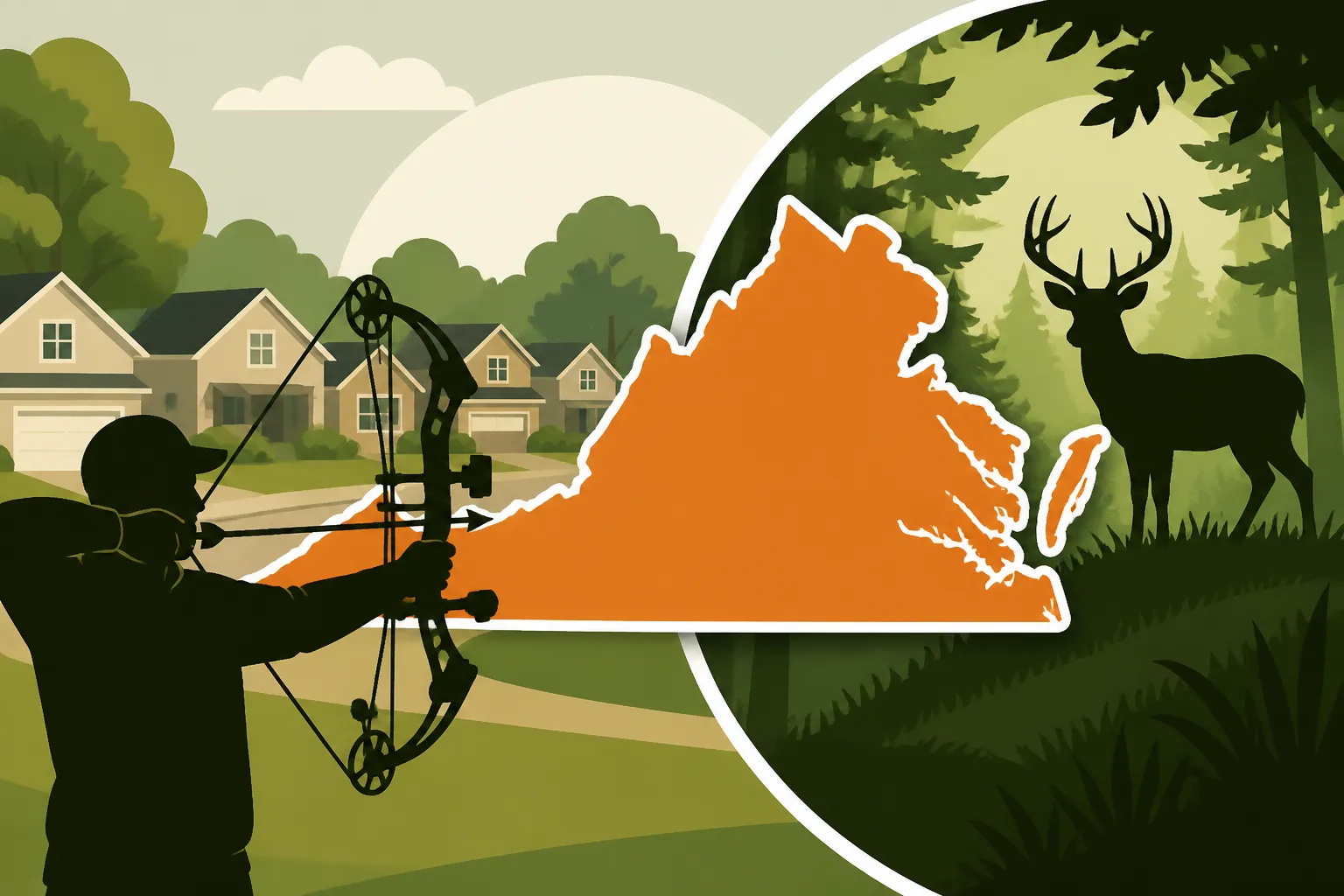
It's tough, isn't it? As Virginia's population centers grow, finding accessible hunting land, especially for archers who cherish those early season opportunities, becomes an ever-present challenge. Many of us grapple with the feeling that prime deer habitat is slipping away, replaced by subdivisions and strip malls. But there's a unique solution that many Virginia localities have embraced to manage deer populations and offer hunters a chance close to home: the Suburban Archery-Only Zone. This guide will walk you through everything you need to know about these special zones, from understanding the rules to successfully hunting them.
The "Why" Behind Archery-Only Zones
Imagine living in a suburban neighborhood where deer are practically yard ornaments. They’re beautiful, no doubt, but when their numbers swell, so do the problems. This isn't just about your prize-winning hostas being munched; it's about increased deer-vehicle collisions, the potential for disease spread, and general ecological imbalance. Landowners and communities, desperate for a solution that doesn't involve noisy firearms close to homes, often turn to archery.
Archery-only zones are a direct response to these human-wildlife conflicts. They allow for selective, quiet deer management in areas where traditional firearms hunting would be unsafe or socially unacceptable. For us hunters, it represents a fantastic opportunity to engage in our passion without driving hours to remote public lands. It’s a delicate balance, managing a healthy deer population within a stone's throw of playgrounds and coffee shops, but it’s a vital one that benefits both deer and community residents. It's a testament to how local governments and the Virginia Department of Wildlife Resources (DWR) can work together to find practical solutions for growing urban wildlife issues.
Defining the Boundaries and Designations
These aren't blanket rules across the entire state; rather, they are specific ordinances adopted by individual cities and counties. This means that a "suburban archery-only zone" in Fairfax County might have slightly different nuances than one in Loudoun County or Chesterfield. The DWR works with these localities to establish the framework, but the local government dictates the precise areas where these rules apply.
Generally, these zones encompass developed, often densely populated, areas where discharging a firearm is prohibited by local ordinance. Think residential neighborhoods, business parks, and even portions of municipal parks or green spaces. It's absolutely critical for any hunter considering these areas to do their homework. Don't assume; always verify the exact boundaries and rules for the specific city or county you intend to hunt. Resources like the Virginia DWR app and detailed county maps, often available through local government websites, are your best friends here. You might find a small woodlot bordering a shopping center that’s perfectly legal to hunt under these provisions, even if it feels incredibly close to civilization.
Understanding the Rules and Regulations
Diving into suburban archery-only zones means stepping into a world with a slightly different rulebook than your typical deep woods hunt. It’s not just about what season it is; it’s about where you are and the specific demands of hunting safely and ethically in close proximity to non-hunters. The Virginia Department of Wildlife Resources (DWR) provides the overarching state regulations, but remember, individual cities and counties often layer additional restrictions on top, especially concerning safety setbacks and local ordinances.
This is where your diligence really pays off. Before you even think about hanging a stand or drawing a bow, you need to be intimately familiar with both state law and local regulations for your chosen area. The last thing you want is to inadvertently break a law or, worse, create a public safety incident that jeopardizes the future of these valuable hunting opportunities for everyone. Ignorance of the law is no excuse, and in these sensitive areas, the consequences can be particularly severe, impacting not just your hunting privileges but also community perception of hunting.
Weaponry and Equipment Restrictions
The name says it all: "archery-only." This means that traditional bows, compound bows, and crossbows are your only legal means of harvest within these zones. While Crossbow Rules During Virginia Archery Season typically allow them during the statewide archery season, specific local ordinances within a suburban zone might impose additional requirements or even restrictions on certain types of equipment. It's crucial to confirm. For instance, some localities might have specific rules regarding broadhead types, though generally, any broadhead legal for deer in Virginia's statewide archery season is allowed.
When it comes to your setup, think precision and efficiency for close-range shots. Most engagements in these tight, often thicker suburban woodlots will be under 30 yards. Your bow needs to be tuned perfectly, and your broadheads razor-sharp and flying true. Given the proximity to homes, ethical shot placement becomes even more paramount to ensure quick, clean kills and minimize tracking distances. You don't want a wounded deer running across a busy road or into someone's backyard. Consider practicing extensively at these shorter ranges, focusing on tight groups and consistent form.
Safety Protocols and Setback Requirements
This is arguably the most critical aspect of hunting in suburban archery zones. Safety is paramount, not just for the hunter but for the non-hunting public who live, work, and recreate in these areas. Virginia state law dictates minimum setback distances for discharging archery equipment from occupied dwellings, public roads, and property lines. However, many localities will have more stringent requirements. For example, while the state might allow certain distances, a city ordinance could double them.
Always use a rangefinder to confirm distances from potential shot angles to any structures or property lines. This isn't just a suggestion; it's a non-negotiable part of hunting responsibly here. Pay close attention to your shot trajectory and what's behind your target. An arrow that passes through a deer could travel a considerable distance, and you must ensure there’s a safe backstop. This commitment to safety not only keeps everyone safe but also helps maintain the social license for these hunting programs to continue. Remember, you are an ambassador for all hunters every time you step into one of these zones.
| Safety Factor | Virginia State Minimum (General) | Potential Local Ordinance (Example) | Hunter's Responsibility |
|---|---|---|---|
| Occupied Dwelling | 150 yards (archery) | 200-300 yards or more | Verify local rules, use rangefinder, ensure safe backstop. |
| Public Roadway | 50 yards | 100-150 yards | Confirm local rules, avoid shooting across roads. |
| Property Line | N/A (implied by dwelling rules) | Often 50-100 yards | Always obtain permission, know boundaries, avoid encroachment. |
| Projectile Backstop | N/A | N/A | Critical in urban areas, ensure no stray arrows. |
| Tree Stand Height | N/A | N/A | Position for downward shot angle, minimize arrow travel. |
Reporting and Carcass Management
Once you've successfully harvested a deer in a suburban archery zone, the process isn't over. Virginia has specific Virginia Deer Reporting Requirements for all harvested deer, and this applies equally to animals taken in these special zones. You'll need to report your harvest via the DWR's online system, mobile app, or by phone. This data is crucial for the DWR to monitor deer populations and the effectiveness of management strategies, especially in areas with unique dynamics like suburban zones.
Beyond reporting, thoughtful carcass management is essential. Unlike a remote hunt where you might have ample space for field dressing, in suburban areas, discretion is key. Consider where you will field dress the animal. If you’re on private land with permission, ask the landowner about their preferences. Have a plan for promptly removing the carcass from the field, ideally out of public view. Game bags, large coolers, and a well-thought-out exit strategy are invaluable. You don't want to alarm residents or leave behind an unsightly scene. It’s all part of being a responsible and respectful hunter in a sensitive environment.
Gaining Access and Ethical Considerations
Securing a place to hunt is often the biggest hurdle for any hunter, and it’s especially true in Virginia’s suburban archery-only zones. These areas, by their very nature, are mosaics of private property interspersed with small public parcels. The notion of simply "finding a spot" is far too simplistic here. Success hinges on a thoughtful approach to gaining access, building trust, and consistently demonstrating ethical behavior. Your actions directly reflect on all hunters, and in these high-visibility areas, the stakes are even higher.
Don't underestimate the power of a friendly conversation and a clear explanation of your intentions. Many landowners are dealing with deer issues themselves and are open to responsible hunting, but they need to feel comfortable and confident in the person they allow onto their property. Remember, this isn't just about bagging a deer; it's about being a good steward of the land, respecting the community, and upholding the integrity of our hunting heritage.
Securing Private Land Permission
For most suburban archery-only zones, private land is going to be your primary opportunity. Public land parcels, if they exist at all, are often small and face intense pressure. So, how do you get your foot in the door? It starts with legwork and good old-fashioned communication. Many hunters find success by identifying properties with deer sign, then using mapping tools like GoHunt or county GIS systems to identify landowners. From there, it's about making a polite, well-prepared request.
When you approach a landowner, be clear, concise, and professional. Explain the problem (overpopulation, property damage), present yourself as a solution, and detail your approach (archery only, safety measures, quick carcass removal). Offer references, proof of insurance (if you have it), and always ensure you understand Do You Need Written Permission in Virginia?. While state law might not always require written permission, it's highly recommended in these sensitive areas to avoid any misunderstandings. A formal, written agreement outlines expectations for both parties and provides peace of mind. Remember, a "no" is not a personal rejection; it just means that landowner isn't the right fit. Keep trying, and build those relationships slowly and genuinely.
Navigating Public Land Opportunities
While most suburban archery zones rely heavily on private land access, some localities might have small public parcels – perhaps a town-owned park, a utility easement, or a municipal forest – that are designated for archery hunting. These are often quota hunts or require special permits, and they are usually highly competitive. Accessing these spots often means keeping a close eye on your local DWR announcements or municipal park and recreation department websites.
If you are lucky enough to draw a permit or find an open public parcel, expect significant pressure. Hunters will likely be concentrated in a small area, making stealth and minimal impact even more important. Scout these areas thoroughly before the season. Look for overlooked pockets of cover, thickets along property lines, or small draws that deer might use to travel undetected. Be incredibly respectful of other users – hikers, dog walkers, and bird watchers – as these areas are multi-use. Remember, your goal is to be invisible and leave no trace, maintaining a positive image of hunting in the public eye.
Being a Good Neighbor and Ambassador
Hunting in a suburban environment places a unique responsibility on your shoulders. You are not just a hunter; you are an ambassador for the entire hunting community. Your actions, positive or negative, will shape public perception of hunting in these sensitive areas. This means going above and beyond what might be considered "normal" hunting etiquette.
Be discreet: dress appropriately (no blood-splattered camo while knocking on doors), keep your equipment out of sight when possible, and transport harvested deer covered. Communicate clearly with landowners and neighbors about when you'll be there. If a neighbor expresses concern, address it calmly and respectfully, explaining the safety measures you're taking. Offering to share venison or even helping a landowner with other property tasks can go a long way in building goodwill. By being a visible, responsible, and ethical hunter, you not only secure your own access but help ensure these valuable hunting opportunities continue to exist for future generations.
Effective Hunting Strategies for Urban Environments
Hunting deer in Virginia's suburban archery-only zones presents a fascinating blend of traditional woodsmanship and an acute awareness of the urban landscape. It's not your typical vast wilderness hunt; instead, you're looking for pockets of cover, subtle travel corridors, and undisturbed bedding areas within earshot of traffic and barking dogs. The deer in these areas are often accustomed to human presence but are incredibly wary of direct interaction, making stealth and smart stand placement paramount. This unique challenge can be incredibly rewarding for an archer, requiring patience, adaptability, and a keen eye for details often overlooked in larger tracts of land.
The strategies that work here are often refined versions of what you'd use anywhere else, but with an added layer of consideration for human activity and the limited size of the huntable parcels. It’s all about maximizing your chances in smaller, more fragmented habitats, often under the noses of a non-hunting public. For an archer, these tight quarters and short shooting lanes can be exhilarating, demanding perfect execution of your shot.
Scouting Smart in Developed Areas
Forget the expansive ridge traverses you might undertake in the Jefferson National Forest; suburban scouting is about finding the "hidden" within the "seen." Deer in these zones are masters of using small, overlooked patches of thick cover for bedding. Look for dense honeysuckle, privet hedges, thorny multiflora rose, or even brush piles along creek bottoms or fence lines that are close to food sources like residential gardens, ornamental plantings, or small, neglected agricultural fields. GoHunt, with its satellite imagery and parcel ownership data, can be an invaluable tool for identifying potential bedding areas and then cross-referencing with property lines to see if they're on huntable land.
When scouting, be as discreet as possible. Avoid wearing full camo unless you're deep in a woodlot; blend in with casual outdoor clothing. Look for subtle deer trails, rub lines on saplings, and small scrapes. Deer here will often travel along ditches, fencelines, and wooded buffers between properties to stay out of sight. Pay close attention to wind direction and thermals, especially near buildings that can create unusual drafts. Understanding how deer move through these constrained spaces will dictate your stand placement, and often, an overlooked finger of woods that funnels deer between two yards can be a goldmine. You're looking for high-traffic pinch points where deer feel relatively safe moving.
Stand Placement for Short-Range Shots
Given the small parcel sizes and the proximity to homes, ethical stand placement is critical. Most shots in these zones will be within 25 yards, so your setup needs to maximize concealment and allow for a clear, downward shooting lane. Tree stands are almost always preferred over ground blinds in these situations. Getting 15-20 feet up in a tree not only helps you stay above a deer's line of sight and scent cone but also provides a steep downward angle for your arrow, making a pass-through more likely and reducing the risk of a missed arrow traveling too far.
Select a sturdy, well-camouflaged tree that offers good cover from all angles. Consider the prevailing wind direction and how it will carry your scent into likely deer travel routes and bedding areas. Often, a stand placed on the edge of a thicket, overlooking a subtle trail or a natural funnel, will be more productive than trying to penetrate deep into cover where deer are already bedded. Remember, Scent Control Gear for Urban Archery Hunts becomes even more crucial when hunting in close quarters where deer are hypersensitive to human presence. Minimize noise, hang your stand quietly, and always use a safety harness and lifeline.
Minimizing Impact and Pressure
Deer in suburban archery zones are highly sensitive to hunting pressure. They see people constantly, so they’re attuned to changes in their environment. This means your approach and exit routes need to be carefully planned to avoid bumping deer or alerting them to your presence. Use natural terrain features, ditches, or even the cover of darkness (before dawn or after dusk) to slip in and out undetected.
Avoid hunting the same stand repeatedly, especially if you’re not seeing success. Deer will quickly pattern human activity. Consider having a few stand options to rotate, or simply give a spot a break if you've hunted it hard. Minimize talking, excessive movement, or strong human odors. The goal is to be a ghost in their backyard, causing as little disturbance as possible. By being stealthy and minimizing your impact, you increase your chances of success and preserve the quality of the hunting experience for yourself and potentially others. These "invisible" tactics are key to consistently punching tags when Hunting a Virginia Urban Archery Zone.
Disclaimer
Hunting is an activity with inherent risks. This guide provides general information and recommendations but cannot substitute for individual research, proper training, and adherence to all current Virginia Department of Wildlife Resources (DWR) regulations and local ordinances. Laws and regulations can change, and it is the hunter's sole responsibility to be aware of and comply with all applicable rules before and during any hunting activity. Always prioritize safety, ethical hunting practices, and respect for landowners and the non-hunting public.