Virginia Snipe Season Dates
It can feel like finding a needle in a haystack trying to pin down the exact season dates for lesser-known game birds, especially when your focus is usually on bigger game like deer or turkey. But for those of us who appreciate the subtle challenges and fast-paced action of wingshooting, knowing the ins and outs of Virginia's snipe season is key. This guide is here to untangle the regulations, shed light on where to find these elusive birds, and help you prepare for a rewarding day afield chasing these amazing migratory shorebirds.
Virginia Snipe Season Dates and General Regulations
When it comes to migratory birds like the common snipe, the season dates and regulations are set in a complex dance between federal guidelines and state implementation by the Virginia Department of Wildlife Resources (DWR). Unlike deer or turkey seasons which often have long, continuous stretches, migratory bird seasons are often broken into segments, sometimes with specific bag limits or shooting hour adjustments. It's easy to miss these details if you're not specifically looking for them.
Annual Season Framework
Virginia's common snipe season typically falls within the broader migratory bird hunting framework. Generally, you can expect the season to open in the early fall, often around September, and run through much of the winter, sometimes closing in late January or early February. However, these dates are not set in stone year after year. They can shift slightly based on federal frameworks and DWR's annual recommendations and surveys. For instance, one year the season might open on the first Saturday of September, and the next it might be the second. The key takeaway here is to always consult the most current Virginia Hunting & Trapping Regulations booklet or the DWR website right before the season kicks off. They'll have the precise dates, which are usually finalized and published in late summer.
One of the frustrations many hunters face is that while the DWR provides these comprehensive regulations, finding the specific page or section for a bird like snipe can be a bit of a treasure hunt if you're not used to navigating the full document. It's often lumped in with other migratory game birds. But rest assured, the season is generally quite generous in length, giving you plenty of opportunities to get out and chase these lightning-fast fliers. This extended period is fantastic because snipe numbers can fluctuate throughout the fall and winter depending on weather fronts and the timing of their migration, allowing you to hit them when conditions are prime.
Daily Bag and Possession Limits
Just like ducks or doves, snipe come with specific bag and possession limits designed to ensure sustainable hunting opportunities. For common snipe in Virginia, the daily bag limit is typically 8 birds. This means you can legally harvest eight snipe per person, per day. The possession limit, which is the maximum number of birds you can have in your possession at any given time (including those from previous hunts stored at home), is usually three times the daily bag limit, making it 24 snipe.
It's crucial to adhere to these limits, not just because it's the law, but because it's part of being a responsible conservationist. Accidentally exceeding your bag limit, even by one bird, can lead to fines and penalties. Remember, these rules are in place to help manage the overall population, ensuring future generations have the same opportunities to pursue these challenging birds. If you're hunting with a group, keep a clear count of everyone's birds. It's easy to get excited and lose track when the action is hot, but a quick tally throughout the hunt can prevent any accidental over-harvesting.
Legal Shooting Hours
Understanding the legal shooting hours for migratory birds is just as important as knowing the season dates and bag limits. For common snipe, the general rule of thumb follows the framework for other migratory game birds. This means shooting hours typically begin one-half hour before sunrise and extend until sunset. This generous window allows for both early morning and late afternoon hunts, which can be prime times for snipe as they move to and from feeding areas.
However, "one-half hour before sunrise" isn't always easy to calculate on the fly, especially when you're deep in a marsh or a wet field. Many hunters rely on apps or websites that provide exact sunrise and sunset times for their specific location. The Virginia DWR website, as well as many popular hunting apps like GoHunt, often have tools or tables to help you determine these precise times. Just input your location and date, and it will give you the exact legal shooting window. This level of precision is important; being in the field with a loaded gun outside of legal shooting hours, even by a few minutes, is a serious violation. It's always better to be safe than sorry and double-check those times before heading out.
Understanding Snipe Habitat and Behavior in Virginia
Snipe aren't your typical backyard bird; they thrive in very specific environments, which often dictates where you'll find them in Virginia. Knowing their preferred habitat and understanding their behavior is half the battle when trying to locate these elusive, fast-flying targets.
Preferred Wetlands and Field Types
Common snipe are truly birds of the wet margins. They absolutely adore shallow, muddy wetlands, soggy pastures, flooded agricultural fields, and the boggy edges of ponds and slow-moving streams. Think about areas that might be too wet for comfortable walking but not quite deep enough for ducks to really enjoy. These "sweet spots" are rich in the invertebrates and worms that make up the bulk of a snipe's diet.
In Virginia, this means you'll often find them in places like recently cut hay fields that haven't fully dried out, the edges of Beaver ponds, or even in low-lying areas of agricultural fields after a heavy rain. Areas with short, sparse vegetation over soft mud are ideal because it allows them to probe the ground for food easily and provides just enough cover. Public land options like certain Wildlife Management Areas (WMAs) often have managed wetlands or agricultural fields that can attract snipe, though they are rarely managed specifically for snipe. You might be surprised to find them in areas you scout for other game. For example, a low-lying section of a field you scouted for deer might hold snipe if it's sufficiently wet. You can find detailed information on these public lands and their features in guides like Virginia Wildlife Management Areas to pinpoint potential hotspots.
It's also worth noting that they tend to shy away from areas with dense, tall vegetation, preferring to have relatively open ground for feeding and taking flight. So, when you're scouting, look for those transitions between dry ground and shallow water, or areas where the soil remains consistently moist.
Identifying Common Snipe
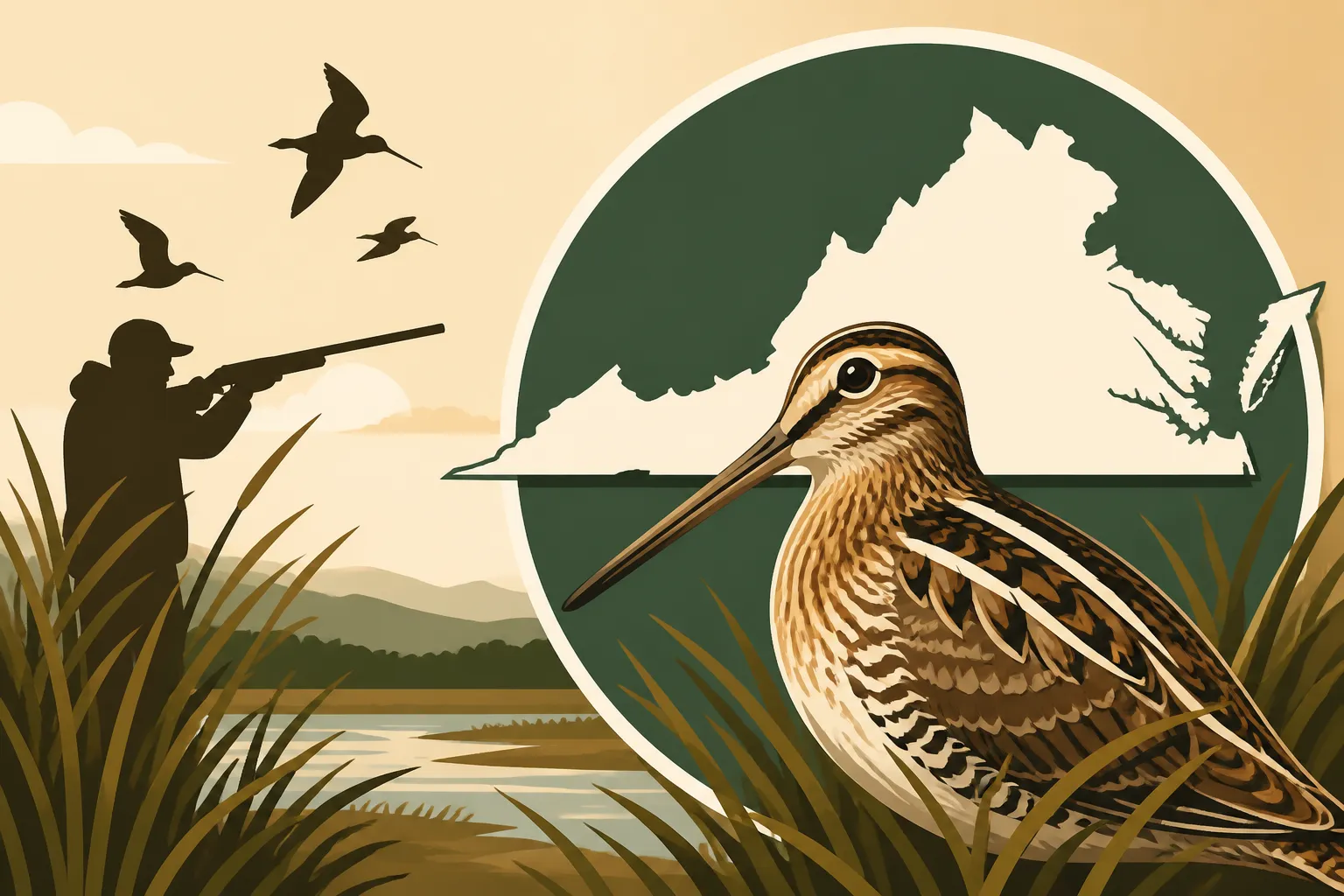
Identifying a common snipe on the wing can be a challenge, especially if you're not accustomed to their erratic flight patterns. They are medium-sized shorebirds, about 10-12 inches long, with a long, straight bill and a striped head. Their plumage is mottled brown, offering excellent camouflage against marshy backgrounds. When flushed, they often spring into the air with a distinctive "scaipe" call, flying in a zigzag pattern that makes them incredibly difficult to track.
It's essential to be absolutely certain of your target before you shoot, especially when hunting in areas where other protected shorebirds might be present. A quick, positive ID ensures you're harvesting legally and ethically. Their flight is truly unique—a sudden burst of speed followed by unpredictable turns, making them a true test of a wingshooter's skill. They are distinctly different from woodcock, which have a chunkier body and fly in a more direct, albeit still fast, manner. Taking some time to study identification guides for Virginia's migratory birds before heading out can save you a lot of grief and ensure you don't mistakenly harvest a non-game species.
Migration Patterns and Peak Times
Common snipe are migratory birds, passing through Virginia during their fall and spring migrations. While some may breed in the northern parts of the state, significant numbers are passage migrants, meaning they are just passing through on their way to wintering grounds further south, often in the southern U.S., Mexico, or Central America.
The peak of their fall migration through Virginia typically occurs from late September through November. During this time, you'll find the highest concentrations of birds in suitable habitats. However, huntable populations can persist throughout the winter, especially in milder years, as some birds may choose to winter in Virginia if food sources remain accessible and open water is present. A cold snap or a hard freeze can push birds further south quickly, so paying attention to weather patterns is important. After a severe cold front, areas that held many snipe might be empty, only to be refilled by new arrivals a few days later if the weather moderates. Similarly, a warm spell can bring birds back north for a period. Consulting resources that track Virginia Waterfowl Migration Timing can give you a good general idea of when migratory bird traffic is picking up, as snipe movements often correlate with those of other wetland species.
Essential Gear and Tactics for Virginia Snipe Hunting
Hunting snipe is a unique experience, demanding specific gear and a particular approach to succeed. You won't be sitting in a treestand or calling from a blind; snipe hunting is all about covering ground and being ready for fast action.
Shotgun and Ammunition Choices
For snipe, you'll want a fast-swinging shotgun that you're comfortable carrying all day. Most wingshooters prefer 12-gauge or 20-gauge shotguns, as they offer a good balance of shot payload and portability. A lighter gun, like a 20-gauge, can be a real blessing when you're slogging through muddy fields for hours. Open chokes, such as improved cylinder or modified, are generally preferred due to the close-range, erratic nature of the shots. Snipe burst out of cover, and often the shot presents itself quickly and close. You need a spread pattern that gives you a chance.
When it comes to ammunition, light field loads are the way to go. Small shot sizes, like 7.5 or 8, are ideal for snipe. These tiny pellets provide a dense pattern, which is crucial for connecting with such small, fast-moving targets. Given that snipe are migratory game birds and often found in wetland environments, remember that Nontoxic Shot is Required in Virginia in many areas, particularly on most public lands and within a certain distance of water. Always check the regulations for your specific hunting area, but it's often easiest to just use nontoxic shot like steel or bismuth for all your snipe hunting to avoid any issues. For a deep dive into shotgun choices and patterning, you might also find relevant information in guides focused on other game birds, such as Turkey Shotguns and Chokes, which discuss similar principles of pattern density and choke selection.
Appropriate Apparel and Footwear
This is where comfort and practicality truly come into play. Snipe hunting means walking, a lot, through wet, often muddy terrain. Therefore, waterproof footwear is non-negotiable. Knee-high rubber boots or even chest waders are often the best choice, especially if you plan on exploring deeper marshy areas. There's nothing worse than wet feet on a cold fall or winter day to cut a hunt short.
For clothing, think layers. You'll be doing a lot of walking, which generates heat, but then you might stop to glass an area or retrieve a bird, and you'll cool down quickly. A good moisture-wicking base layer, an insulating mid-layer, and a waterproof/windproof outer shell will serve you well. Because you're often hunting in open fields, blaze orange is a smart choice for safety, even if not explicitly required for migratory bird hunting in all situations. While the requirements for big game are clear (like How Much Blaze Orange Virginia Requires), wearing a blaze orange hat or vest when hunting snipe in areas that might also see small game or even late-season deer hunters is just good practice.
Gloves that offer dexterity for shooting but also some warmth are important, as is a hat to retain body heat and keep the sun or rain out of your eyes. Don't forget bug spray during the early season; mosquitoes and gnats can be fierce in Virginia's wetlands.
Flush-and-Shoot Strategies
Snipe hunting is a classic "walk-up" or "flush-and-shoot" affair. There's no calling, no decoys, and very little sitting still. The primary tactic is to simply walk through promising habitat, covering ground slowly and methodically. Snipe are masters of camouflage and will hold tight until you are almost on top of them before bursting into the air. This is where their erratic flight comes into play, making them such a challenging target.
Walk in a zigzag pattern or parallel lines through a field, making sure to cover all the likely pockets of wet ground. Pay close attention to ditches, low spots, and the edges of standing water. When a snipe flushes, react quickly. Don't hesitate. Swing through the bird and pull the trigger. If you're hunting with a partner, communicate clearly about who is shooting at which bird. It's easy to get target fixation when several birds flush at once.
One common strategy is to work a field with a partner, walking 20-30 yards apart in parallel. This helps cover more ground and can flush birds that might sit tight for a single walker. A well-trained bird dog can be an invaluable asset for snipe hunting, both for flushing birds you might walk past and, crucially, for retrieving them from thick, muddy cover. Retrieving downed snipe can be surprisingly difficult in their preferred habitat, so a good retriever saves you a lot of effort and lost birds. For more on similar field tactics, you could draw inspiration from techniques described in Working a Dove Field on Opening Day, which also emphasizes covering ground and anticipating flushes.
Obtaining Your Virginia Snipe Hunting Licenses and Permits
Before you even think about stepping into a marsh or wet field to hunt snipe, you absolutely must have the correct licenses and permits. Virginia has a straightforward, but specific, set of requirements that migratory bird hunters need to meet. Trying to go afield without them is not only illegal but also disrespectful to the resource and other hunters.
Required State Licenses
To hunt snipe in Virginia, you'll first need a valid Virginia hunting license. This is your foundational permit for any hunting activity in the state. For residents, various options exist, including a basic one-year license or multi-year discounted licenses. Non-residents also have several choices. Beyond the general hunting license, you'll need a Virginia Migratory Bird Hunting License, which is an additional permit specifically for hunting species like snipe, ducks, geese, and doves. This allows the DWR to track participation in migratory bird hunting and allocate resources accordingly.
For detailed information on purchasing these, you can look up guides like Virginia Hunting Licenses and What They Cost, which outlines the various license types and their associated fees. Remember, all licenses are valid for a specific license year, which in Virginia typically runs from July 1st to June 30th. Don't let an expired license catch you off guard; it's a common mistake that's easily avoided with a quick check.
Federal Duck Stamp and HIP Certification
Beyond the state-level licenses, migratory bird hunters are also subject to federal requirements. One of the most important is the Federal Migratory Bird Hunting and Conservation Stamp, commonly known as the "Federal Duck Stamp." While its name might imply it's only for duck hunters, it's actually required for hunting any migratory waterfowl or migratory game bird, and that includes snipe. A significant portion of the revenue generated from Duck Stamp sales goes directly into conservation efforts, helping to protect and restore wetlands critical to migratory birds. So, it's not just a permit; it's a direct contribution to the future of migratory bird hunting.
The other crucial federal requirement is the Harvest Information Program (HIP) certification. This is free but mandatory. When you purchase your Virginia Migratory Bird Hunting License, you'll be asked a series of questions about your migratory bird hunting activity from the previous year. This data helps the U.S. Fish and Wildlife Service gather critical information on hunting effort and harvest numbers, which in turn informs population management decisions. You can often get your Virginia HIP Certification for Bird Hunters simultaneously when you buy your state licenses, either online or at a license agent. Failing to complete HIP certification is a federal violation, so make sure it's checked off your list.
Using Online Resources Like GoHunt
In today's digital age, managing your hunting licenses and staying up-to-date on regulations is easier than ever, thanks to platforms like the Virginia DWR's Go Outdoors Virginia system and helpful tools from companies like GoHunt. The Go Outdoors Virginia platform is your one-stop shop for purchasing all your required state hunting and fishing licenses, including the migratory bird license. You can purchase them online, print them at home, or save them directly to your phone. This convenience eliminates the need to visit a physical license agent if you're strapped for time.
Beyond purchasing licenses, these online portals are invaluable for checking the latest regulations, which can sometimes see emergency changes or updates. While Go Outdoors Virginia is the official source for DWR regulations, GoHunt offers mapping and planning tools that can integrate with DWR data. For example, if you're trying to figure out if a certain public land parcel falls within a nontoxic shot zone or has specific hunting hours, an app like GoHunt can overlay that information onto a map, making planning your snipe hunt much more efficient. It can also help you scout for potential snipe habitat by identifying wetlands, public access points, and property lines. You can utilize the scouting features of tools like GoHunt to pinpoint areas that fit the snipe habitat description, similar to how one might use the Scouting With the Virginia DWR App for deer. Being able to access maps and regulations on your phone while in the field is a huge advantage.
Here's a quick summary table of common snipe season details to help you keep things straight:
| Category | Typical Season Dates (Check DWR Annually) | Daily Bag Limit | Possession Limit | Legal Shooting Hours | Federal Requirements |
|---|---|---|---|---|---|
| Common Snipe (VA) | Early Sept. – Late Jan./Early Feb. | 8 birds | 24 birds | 1/2 hour before sunrise to sunset | Federal Duck Stamp, HIP Cert. |
Disclaimer
Please remember that hunting regulations, season dates, and bag limits are subject to change. Always consult the most current Virginia Department of Wildlife Resources (DWR) regulations or the DWR website (dwr.virginia.gov) before heading afield to ensure you are in full compliance with all state and federal laws. This article is intended for informational purposes only and does not constitute legal advice.