Where Nontoxic Shot Is Required in Virginia
The world of hunting regulations can feel like a tangled thicket sometimes, especially when it comes to specific gear requirements. One area that often causes confusion for even seasoned hunters in Virginia is knowing exactly where nontoxic shot is required. It's easy to assume your favorite lead loads are fine everywhere, only to realize you're unknowingly in violation or, worse, impacting the environment. This guide is here to clear up that confusion, helping you understand not just where nontoxic shot is mandatory, but why, and how to ensure you're always compliant for a responsible and successful hunt.
The "Why" Behind Nontoxic Shot Requirements in Virginia
It's natural to wonder why these rules exist, especially if you've been hunting with lead for years. The regulations around nontoxic shot aren't just arbitrary hoops to jump through; they're in place for some very important ecological reasons that directly impact the health of our wildlife and the waterways we all cherish.
Protecting Virginia's Ecosystems and Wildlife
Think about a busy waterfowl impoundment after a season of hunting. Over time, countless lead pellets can accumulate on the bottom, in the mud, or scattered across fields where ducks and geese feed. Waterfowl, particularly dabbling ducks, consume grit to help them digest their food. Unfortunately, they can ingest these lead pellets right along with natural grit and food items. Once ingested, the lead breaks down in their digestive system, leading to lead poisoning, which can be fatal. This isn't just about individual birds; lead poisoning can impact entire populations, slowly diminishing numbers in specific areas. It’s a silent killer that has prompted wildlife agencies across the nation, including here in Virginia, to take action.
Beyond waterfowl, other species can be affected indirectly. Scavengers like bald eagles or coyotes might feed on the carcasses of lead-poisoned birds or game animals that were shot but not recovered, thereby ingesting lead themselves. It creates a domino effect throughout the food chain, a problem that accumulates over time and can have long-lasting consequences. When we switch to nontoxic shot, we're actively breaking that cycle, protecting not only the ducks and geese we pursue but the broader ecosystem that supports all Virginia's wildlife.
Understanding Federal and State Regulations
The move to nontoxic shot actually started with federal mandates, primarily driven by the U.S. Fish and Wildlife Service, long before specific state rules trickled down. Recognizing the widespread issue of lead poisoning in migratory waterfowl, the federal government began phasing in a nationwide ban on lead shot for waterfowl hunting in the late 1980s, culminating in a full ban by 1991. This means that anywhere you are hunting ducks, geese, coots, or swans in the United States, you must use nontoxic shot. This federal rule is the foundational layer for all other regulations in Virginia and elsewhere.
Virginia, through its Department of Wildlife Resources (DWR), then builds upon these federal mandates, often extending the nontoxic requirement to additional areas or specific species. For instance, many state-managed Wildlife Management Areas (WMAs) go above and beyond the federal waterfowl-only rule and require nontoxic shot for all hunting, not just waterfowl, to protect the diverse array of wildlife that calls those public lands home. These regulations are designed to be proactive, minimizing the risk of lead accumulation in sensitive habitats where various species forage and live. Staying informed about both federal and state laws is crucial, and resources like the Go Outdoors Virginia website are invaluable for checking the latest updates before heading out.
Key Locations Where Nontoxic Shot is a Must in Virginia
Understanding the "why" is half the battle; knowing the "where" is what keeps you legal and responsible. While the federal mandate covers all waterfowl hunting, Virginia has specific areas where the requirement broadens significantly.
Waterfowl Hunting Areas and Specific Waters
This is the most straightforward application of nontoxic shot rules. If you are hunting any species of duck, goose, coot, or swan anywhere in Virginia, you must use nontoxic shot. This applies whether you're hunkered down in a layout blind on a cut cornfield, jump-shooting a creek for wood ducks, or battling the elements in a layout boat on the Chesapeake Bay. It's universal for migratory waterfowl.
Furthermore, it’s not just about the species you're targeting. If you are hunting in or over water bodies, or adjacent marshlands that are specifically managed for waterfowl or frequently used by them, nontoxic shot is generally required for all species, even if you are aiming for a squirrel or a rabbit that might happen to cross your path. This prevents lead from being deposited into these sensitive aquatic environments regardless of what you are pursuing. For example, if you're Hunting Chesapeake Bay Diving Ducks, you'll certainly be using nontoxic shot. But even if you were deer hunting in a stand overlooking a marsh that is part of a waterfowl habitat, using lead deer slugs could still be problematic in some specific areas or during certain seasons. The intent is to keep lead out of these high-risk zones. Always verify the specific rules for any private or public land that borders or contains significant water features before your hunt.
National Wildlife Refuges and Select Wildlife Management Areas
This is where the state and federal regulations often expand beyond just waterfowl. National Wildlife Refuges (NWRs) within Virginia are federal lands managed by the U.S. Fish and Wildlife Service. Many of these refuges have stringent rules, often requiring nontoxic shot for all hunting activities, not just waterfowl. This is particularly true for places like the Great Dismal Swamp Refuge Hunting Rules or the Chincoteague National Wildlife Refuge Hunting, where conservation of diverse wildlife is paramount. You might be planning to hunt deer or small game on these lands, but due to their status as NWRs and their sensitive ecosystems, you'll still need to use nontoxic shot. Always check the specific refuge regulations directly, as they can sometimes vary by location or even by specific hunting unit within a refuge.
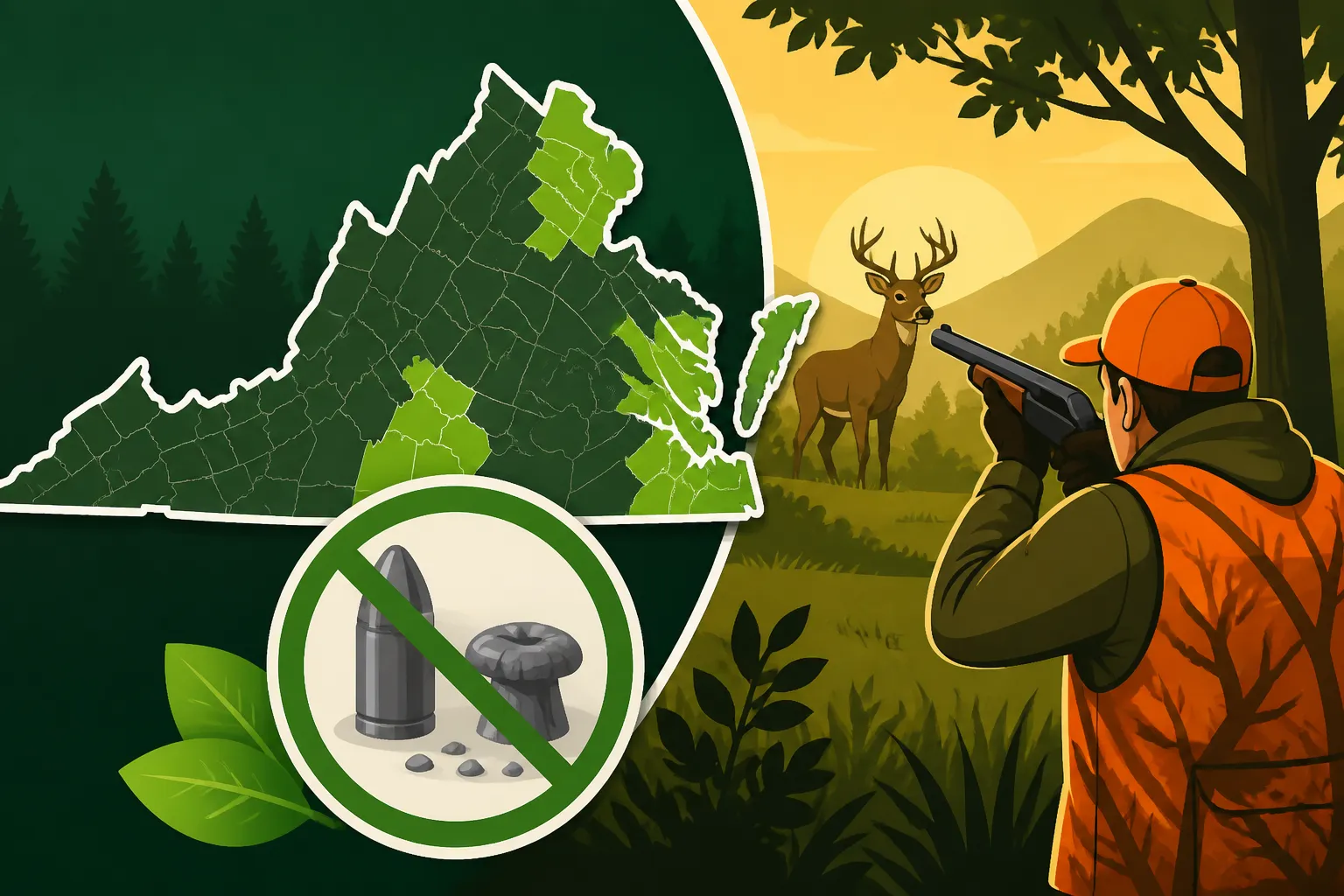
Similarly, many of Virginia's Wildlife Management Areas (WMAs), managed by the DWR, have adopted universal nontoxic shot requirements. These are often areas that contain significant waterfowl habitats, but the DWR has chosen to apply the rule broadly to simplify enforcement and maximize environmental protection. For example, some WMAs might be located near important river systems or have extensive wetland components, making them prime candidates for this universal rule. It's not uncommon to find signs posted at WMA entrances detailing these requirements, but it's always best practice to consult the DWR's official WMA regulations booklet or use the GoHunt app to check specific WMA rules before you leave home. A quick check of a WMA like Amelia Wildlife Management Area or Hog Island Wildlife Management Area can reveal these specific restrictions.
Here's a quick reference table for common scenarios, but remember, always verify current regulations for your specific hunting location and species:
| Hunting Location/Scenario | Species/Activity | Nontoxic Shot Required? | Notes |
|---|---|---|---|
| Anywhere in Virginia | Ducks, Geese, Coots, Swans (Migratory Waterfowl) | YES | Federal law. Applies universally. |
| National Wildlife Refuges (NWRs) | All Hunting (Deer, Small Game, Waterfowl, etc.) | LIKELY YES | Check individual refuge rules. Often universal for all hunting. |
| Virginia Wildlife Management Areas (WMAs) | All Hunting (Deer, Small Game, Waterfowl, etc.) | OFTEN YES | Many WMAs have universal nontoxic shot rules. Always check specific WMA regulations. |
| Private Land (Non-Waterfowl) | Deer, Small Game (upland, away from water) | NO | Generally, lead shot is permitted for upland game on private land, unless otherwise posted by landowner. |
| Private Land (Waterfowl Hunting) | Ducks, Geese, Coots, Swans | YES | Federal law applies universally to waterfowl, even on private land. |
| Hunting in or over water | Any species, if lead could enter water/wetland | LIKELY YES | Even if targeting upland game, if shot impacts water, nontoxic may be required. |
Upland Game Considerations
For most upland game hunting on private land in Virginia, away from water or specific regulated areas, lead shot is generally still permissible. This includes species like grouse, quail, rabbits, and squirrels. However, as noted above, if your upland hunt takes you onto a National Wildlife Refuge or a specific WMA with a universal nontoxic shot rule, then you'll need to swap out your lead shells for nontoxic alternatives. This also applies if your upland hunt takes place in or directly over a wetland or water body (like jump-shooting pheasants along a marsh edge).
It's a good habit to simply check the DWR regulations annually and use resources like the DWR website or a mapping application that integrates hunting regulations, such as the GoHunt platform, to review the specific rules for your chosen hunting grounds. While many focus on waterfowl, remember that some of the regulations apply more broadly to where you are hunting, rather than what you are hunting. Getting into the habit of checking these details, especially when exploring new public lands or WMAs, can save you a headache and ensure you're always on the right side of the law.
Navigating Your Nontoxic Shot Options
So, you know you need nontoxic shot. But what exactly is it? It's not just "not lead." There's a whole world of options out there, each with its own characteristics, and understanding them can help you choose the best load for your specific hunting situation.
Common Nontoxic Shot Materials
The most widely available and often most affordable nontoxic shot material is steel. Steel shot is lighter than lead for the same pellet size, meaning it carries less energy and patterns differently. To compensate for this, many hunters often go up one or two shot sizes when using steel (e.g., if you normally shoot #4 lead, you might try #2 or #3 steel). Steel is also much harder than lead, which can cause concerns about barrel damage in older, unapproved shotguns, though modern shotguns are almost universally rated for steel shot. The good news is that advancements in steel shot technology and wad designs have made it a very effective option for waterfowl, especially at closer to moderate ranges.
Beyond steel, you'll find other, denser materials. Bismuth is a great option as it's much closer to lead in density, meaning it carries more energy and offers better ballistic performance than steel. This allows hunters to often use the same shot size they would with lead, and it's much softer than steel, making it safe for older shotguns with tighter chokes. The downside? It generally comes with a higher price tag.
Then there are tungsten-alloy options, which are the densest of all commercially available nontoxic shots, often denser than lead. Brands like HEVI-Shot (a common brand in this category) or similar tungsten blends offer incredible knockdown power and extended range. Their high density means you can use smaller shot sizes, delivering more pellets on target with greater energy. However, this superior performance comes at a premium, making tungsten-alloy loads significantly more expensive than steel or even bismuth. They are often favored for challenging long-range shots or when hunting large, tough birds like Canada geese. Understanding these differences is key to choosing the right tool for the job.
Performance Considerations and Cost
When picking your nontoxic shot, think about your typical shooting distances and the game you're after. For decoying ducks over a marsh at 20-30 yards, steel shot in a size like #3 or #4 will likely be perfectly effective and budget-friendly. You'll get plenty of pellets on target, and the cost won't break the bank for a day's hunt. However, if you're pass-shooting high-flying geese or need more effective range, stepping up to a denser material like bismuth or even tungsten-alloy can make a significant difference in clean kills and reduced cripples.
The cost difference is real, and it's a major factor for many hunters. Steel loads are typically the most economical, often comparable to or slightly more than premium lead loads. Bismuth will be noticeably more expensive, and tungsten-alloy loads can be several times the cost of steel. This often leads hunters to carry a mix – perhaps steel for general decoying and a handful of bismuth or tungsten-alloy loads for those longer, more challenging shots. It’s all about balancing performance, ethics, and your wallet. Checking reviews and patterning your chosen loads (more on that next!) will give you confidence in the field. Don't be afraid to experiment a little to find what works best for your setup and hunting style.
Ensuring Compliance and Ethical Hunting
Knowing the rules and the different types of shot is a great start, but truly being a responsible hunter means taking a few extra steps before you hit the woods or marsh. These steps ensure you're always compliant and that you're making the most ethical choices for the game you pursue.
Checking Regulations Before You Hunt
This is, without a doubt, the most important step. Regulations can change, specific county rules might apply, or a WMA might update its policies. Never assume what was legal last year or in a neighboring county is legal for your current hunt. The Virginia DWR website is your primary source for official regulations. They publish annual hunting and trapping digests that are comprehensive. Many hunters also find the DWR's Go Outdoors Virginia app incredibly useful, as it often has integrated mapping features that show WMA boundaries and can sometimes flag specific regulations for those areas.
Beyond the DWR, if you're hunting on federal lands like a National Wildlife Refuge or a National Forest, always check their specific websites or contact their local office directly. These federal lands often have their own layer of rules that supplement state laws. A great tool like the GoHunt app can provide real-time updates and land ownership maps that show public land boundaries, helping you quickly identify if you're on a WMA or NWR where universal nontoxic shot might be required. Imagine showing up to a public dove field in the Piedmont, only to realize that due to its management as a waterfowl restoration area, only nontoxic shot is allowed for all species. A quick check beforehand saves you a wasted trip and potential legal trouble. Make it a routine to verify regulations every season, and especially before hunting new areas.
Patterning Your Shotgun with Nontoxic Loads
This step is often overlooked but is absolutely critical for ethical hunting with nontoxic shot. Just because a load is nontoxic doesn't mean it will perform the same way your favorite lead load did. Steel, bismuth, and tungsten-alloy loads all behave differently when fired, and their interaction with your shotgun's choke can vary wildly. Steel shot, being harder and lighter, often patterns tighter than lead shot of the same size and can sometimes even 'blow' patterns in very tight chokes, especially older ones.
So, what does this mean for you? You need to take your shotgun to the range and pattern it with the specific nontoxic loads you plan to use. Set up large paper targets at realistic hunting distances (e.g., 20, 30, 40 yards) and shoot a few rounds with different chokes and shot sizes. Observe how consistently the pellets are distributed within a 30-inch circle. Are there large gaps? Is the pattern too tight or too open for the range you expect to shoot?
This patterning exercise will tell you which choke/load combination provides the most effective and consistent pattern for the distances you'll be shooting. For instance, you might find that a modified choke with steel shot gives you the same effective pattern as a full choke with lead did, or that you need to try a different shot size to get the density you desire. This practice not only makes you a more effective hunter by ensuring clean kills but also dramatically reduces the chance of wounding game due to an inefficient pattern. It’s an ethical responsibility to know your equipment and how it performs with the ammunition you're using.
Disclaimer
This article is for general informational purposes only and does not constitute professional advice. Laws, prices and regulations vary by location and change over time. Consult a qualified professional for guidance on your specific situation.