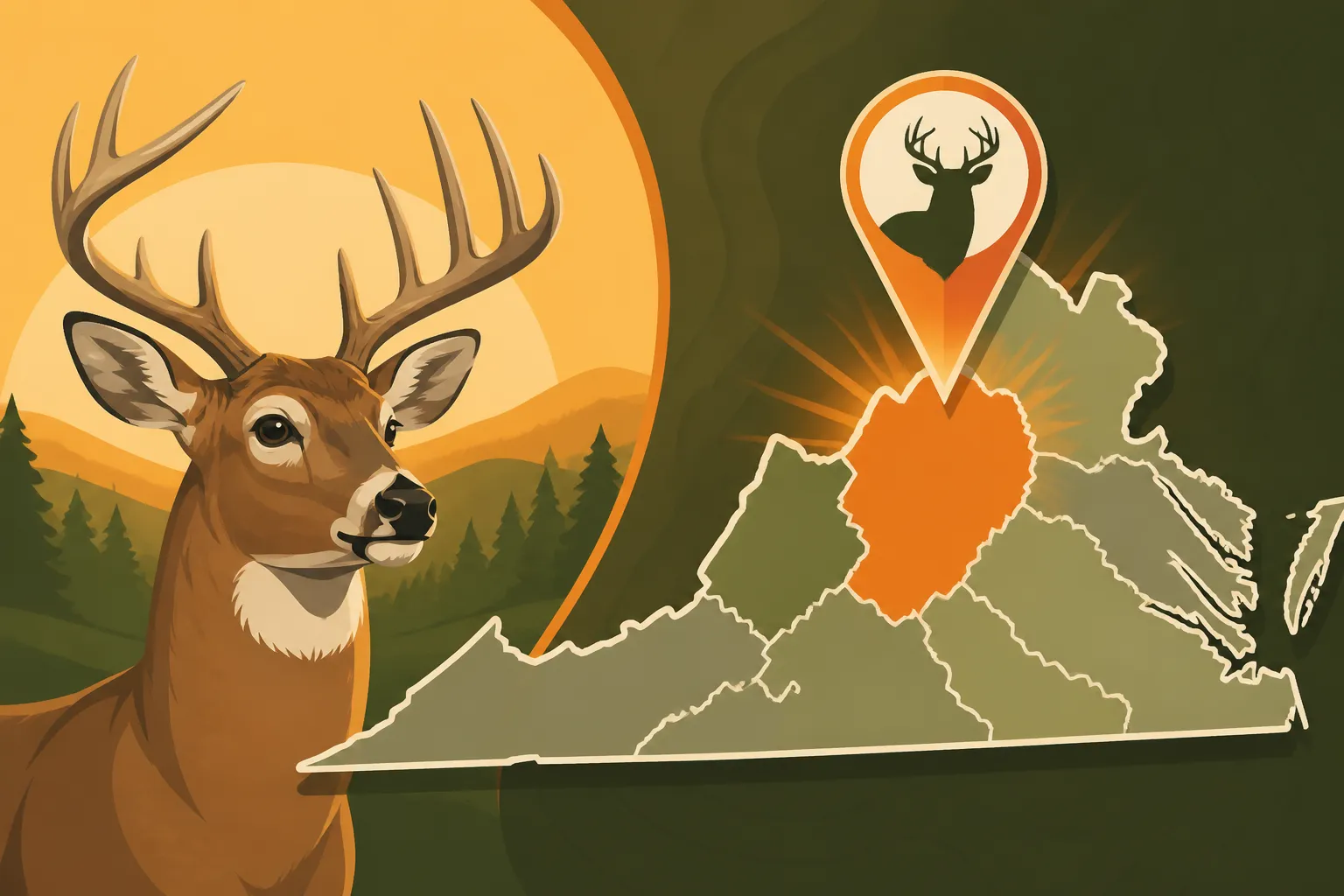
Why DMA1 Holds the Most Confirmed Cases
It's incredibly frustrating, isn't it? You hear about Chronic Wasting Disease (CWD) and the management areas, but then you keep seeing news about one area in particular – DMA1 – having the lion's share of confirmed cases. It can feel disheartening, and you might wonder why that specific region seems to be struggling more than others. This comprehensive guide is here to unravel the complex factors behind why Virginia's Disease Management Area 1 (DMA1) holds the most confirmed CWD cases, helping you understand the history, geography, and ongoing challenges in this critical area for Virginia's deer herd.
Understanding Virginia's Chronic Wasting Disease Management Areas
When we talk about hunting in Virginia, especially deer hunting, the conversation inevitably turns to Chronic Wasting Disease (CWD). It's a topic that weighs heavily on the minds of many hunters, impacting everything from season dates to how we handle our harvested game. Understanding CWD and how our state manages it through Disease Management Areas (DMAs) is the first crucial step in grasping why some areas, like DMA1, are hit harder than others.
What Exactly is Chronic Wasting Disease CWD?
Let's get down to basics. CWD is a neurological disease that affects cervids – that's deer, elk, and moose, among others. It's caused by abnormal proteins called prions, which slowly build up in the brain and other tissues of infected animals. Think of it like a very slow-acting, invariably fatal disease. Deer that contract CWD will eventually show symptoms like extreme weight loss (hence "wasting"), behavioral changes, excessive salivation, and a lack of coordination. It's a truly heartbreaking thing to witness in an animal. The most concerning part for us as hunters and wildlife enthusiasts is that once an animal is infected, there is no cure, and it's always fatal. It's also a disease that can spread through direct contact between animals, or indirectly through contaminated environments, which makes managing it particularly challenging. We're talking about something that can linger in the soil for years, waiting for another unsuspecting deer to pick it up.
The Creation and Purpose of Disease Management Areas DMAs
Given the persistent and insidious nature of CWD, state wildlife agencies, including the Virginia Department of Wildlife Resources (DWR), developed a strategy to contain and manage its spread: the establishment of Disease Management Areas, or DMAs. These aren't just arbitrary lines on a map; they are specifically designated zones where CWD has been detected or is considered to be at high risk. Each DMA comes with its own set of intensified regulations designed to monitor the disease, minimize its spread, and educate hunters. Virginia has several of these areas, and if you hunt across the state, it's vital to be aware of Virginia's Four Chronic Wasting Disease Areas. These rules can range from mandatory CWD testing of harvested deer to restrictions on how you can transport deer carcasses out of the area. The idea is to limit both natural and human-assisted movement of infected animals or contaminated materials, thereby protecting the wider deer population. It's a huge undertaking, and it relies heavily on hunter cooperation and understanding. Without these designated zones and the specific rules that come with them, the disease could spread much more rapidly and become even harder to control.
Why DMA1 Stands Out: A Deeper Dive into Its History and Geography
So, if DMAs are designed to manage CWD, why does DMA1 consistently report the most confirmed cases year after year? It's not a simple answer, but rather a confluence of historical events, unique geographical characteristics, and persistent biological factors that make this region a particular hotbed for CWD activity. Hunters in this area often feel the weight of these statistics, knowing their local deer herd is under immense pressure.
The Origin Story: Where Virginia's CWD Journey Began
Every story has a beginning, and Virginia's CWD narrative sadly starts in what we now know as DMA1. Back in the mid-2000s, it was a concerning discovery that shook the hunting community. The very first confirmed case of CWD in Virginia was detected in 2009 in a deer harvested in Frederick County, which sits right at the northern end of the Shenandoah Valley. This immediately put Frederick County on the map as the epicenter of Virginia's CWD challenge, effectively answering the question of Which County Found Virginia's First CWD Case. This initial detection was a wake-up call, prompting immediate action from the DWR to understand the prevalence and potential spread. The early response focused heavily on surveillance and education, trying to trace the potential source and define the boundaries of the affected area. Because CWD was established here first, it's had a longer time to incubate, spread, and manifest across multiple generations of deer compared to other DMAs that were established later. It's like having a head start, unfortunately, for the disease itself.
The initial detection in Frederick County was not an isolated incident. Subsequent years saw more positive cases emerging within the surrounding counties, slowly but surely expanding the known footprint of the disease. This meant that the prions, the infectious agents, had already been established in the environment and were actively cycling through the local deer population for some time before detection. This prolonged period of undetected spread allowed the disease to become deeply entrenched, making eradication or even significant reduction much more challenging than if it had been caught in its absolute infancy and isolated immediately. This history of early and sustained presence is a primary driver of the higher case numbers we see today in DMA1.
Geographic Factors and Deer Movement in DMA1
DMA1, primarily encompassing much of the beautiful but diverse Shenandoah Valley, presents a unique set of geographical conditions that contribute significantly to CWD prevalence. This isn't just a random patch of land; it's a valley system with a specific layout that can both funnel and concentrate deer movement, inadvertently aiding disease transmission. The valley itself is a mix of agricultural fields, dense woodlots, mountain foothills, and riparian corridors along rivers like the Shenandoah. Deer in this region navigate this varied landscape, often following creek bottoms, traversing field edges, and moving between forested bedding areas and agricultural feeding grounds. This natural flow of deer within a relatively confined valley system means that if CWD is present in one area, it's likely to be carried to others along these well-worn paths.
The rich agricultural landscape, while providing abundant food sources for deer, can also concentrate animals. Deer will often gather in larger numbers to feed in corn, soybean, or hay fields, especially during certain times of the year. These congregation points increase the chances of direct nose-to-nose contact between deer, which is a known transmission route for CWD. Furthermore, communal feeding areas, whether natural mast crops or agricultural remnants, can become contaminated with CWD prions through saliva, urine, or feces from infected animals. The disease prions are incredibly hardy and can persist in the soil for years, meaning a spot where an infected deer once fed could remain a source of infection for healthy deer long after that initial animal is gone. Hunters who are familiar with DMA1 Shenandoah Valley Rules know how crucial it is to understand these dynamics, as the terrain itself can be a silent partner in the disease's spread.
Factors Contributing to Higher Case Numbers in DMA1
Beyond its early establishment and unique geography, a combination of biological and human factors continues to fuel the higher concentration of CWD cases in DMA1. These elements create a challenging environment for disease control, demanding continuous effort from both wildlife managers and the hunting community.
Deer Density and Social Structures
One of the most significant contributors to CWD's spread in any area is deer density. Simply put, when you have more deer per square mile, the chances of them interacting, and thus transmitting disease, increase exponentially. The Shenandoah Valley, a core part of DMA1, has historically supported a robust and healthy deer population. While this is great for hunting opportunities, a higher deer density means more frequent nose-to-nose contact, shared bedding areas, and repeated use of the same feeding locations. This constant interaction among deer social groups, including family units of does and fawns, and bachelor groups of bucks, creates numerous opportunities for prions to spread.
Think about it: deer are social creatures, much like us. They groom each other, they rub antlers on the same trees, they share mineral licks (even though artificial feeding is largely banned in DMAs), and they often visit the same water sources. Each of these interactions, or even just the repeated use of a specific area, can facilitate the transfer of CWD prions. If one deer in a social group is infected, the likelihood of others in that group becoming exposed is much higher. The DWR monitors Virginia Deer Herd Size across the state, and the sustained health of the herd in DMA1, while a positive for hunters, also means there are more potential hosts for CWD, allowing it to become deeply rooted in the population dynamics. This high concentration of deer, combined with their natural behaviors, creates a perfect storm for CWD to propagate and sustain itself within the DMA1 boundaries.
Human Influence and Hunter Reporting
While CWD is a natural phenomenon, human activities and hunter behavior play a critical role in its detection and management. In DMA1, the disease has been present for a longer duration compared to other DMAs, which means there has been more time for surveillance and, consequently, more confirmed cases to accumulate. The DWR has maintained a vigilant and proactive approach in this area since the initial discovery. This includes widespread public outreach and consistent efforts to engage hunters in reporting their harvests and submitting samples for testing.
The high level of hunter participation in mandatory CWD testing in DMA1 is a double-edged sword: it’s crucial for monitoring, but it also directly leads to more confirmed cases being identified. Hunters in the Shenandoah Valley have become accustomed to the regulations, diligently submitting samples, whether through drop-off sites or direct contact with DWR personnel. This sustained effort over many years has built a comprehensive dataset for the region, allowing the DWR to track the disease more accurately. In fact, many hunters are now using advanced mapping tools, such as those from GoHunt, not just for scouting but also to quickly locate nearby Finding a Virginia CWD Sampling Location when they harvest a deer in a mandatory testing zone. This commitment to testing means we simply know more about the disease's presence in DMA1 than in areas where CWD might be more nascent or where surveillance hasn't been as prolonged or intensive. The continuous vigilance and high reporting rates by dedicated hunters in the region directly contribute to the higher recorded numbers of How Many Deer Have Tested CWD-Positive in Virginia.
Environmental Persistence of Prions
Perhaps one of the most frustrating and challenging aspects of CWD management is the sheer hardiness of the prions themselves. Unlike bacteria or viruses, CWD prions are incredibly resistant to degradation. They can persist in the environment for years, even decades, surviving freezing, drying, and many disinfectants. This environmental persistence is a major factor in why DMA1 continues to show high case numbers. Infected deer shed these prions into the environment through saliva, urine, feces, and decomposing carcasses. Once shed, these prions bind to soil particles, particularly clay minerals, making them incredibly difficult to remove or neutralize.
Consider a popular deer trail, a favorite bedding area, or a historical mineral lick (even where now subject to a Virginia's Twenty-Five-Mile Feeding Ban): if infected deer have frequented these spots over the years, the soil and vegetation can become contaminated. Healthy deer then ingest these prions as they graze, lick the soil for minerals, or simply move through the contaminated landscape. This creates a self-perpetuating cycle of infection, where even if you could remove every infected deer, the environment itself remains a source of new infections. The longer CWD has been present in DMA1, the more opportunities there have been for environmental contamination to build up, essentially "seeding" the landscape with prions. This makes managing the disease a long-term battle, far more complicated than simply reducing deer numbers, as the ground itself holds the infectious agents.
Here's a quick look at some key contributing factors:
| Factor | Impact on CWD in DMA1 |
|---|---|
| Early Detection | First confirmed case in Virginia occurred here in 2009, giving the disease a head start to spread and become entrenched before extensive management protocols were fully developed and implemented statewide. |
| High Deer Density | A historically robust deer population in the Shenandoah Valley means more interactions between animals, facilitating direct and indirect prion transmission. |
| Favorable Geography | The valley's mix of agricultural lands and natural habitats concentrates deer in certain areas, increasing potential contact points and environmental contamination. |
| Environmental Persistence | CWD prions are extremely durable and can remain infectious in soil and vegetation for many years, creating ongoing sources of infection for new generations of deer, especially in areas with long-term exposure. |
| Intensive Surveillance | Due to its history, DMA1 has consistently experienced more rigorous and prolonged testing efforts, leading to a higher detection rate and, consequently, more confirmed cases being identified. Hunter cooperation is key here, often leveraging tools like GoHunt to stay current on rules and find testing sites. |
Implications for Hunters in DMA1 and Beyond
For those of us who cherish our time in the Virginia woods, especially in areas like DMA1, understanding CWD isn't just academic; it has direct and tangible impacts on our hunting experiences and responsibilities. The higher concentration of cases in DMA1 means hunters in this region face specific challenges and must adhere to particular regulations to help manage the disease.
Navigating Regulations and Best Practices
Hunting in DMA1 requires an extra layer of awareness and responsibility. The Virginia Department of Wildlife Resources (DWR) has implemented specific rules designed to monitor the disease and prevent its further spread. This often includes Mandatory Testing Inside a Virginia DMA for harvested deer, especially during peak hunting seasons. As a hunter, it's absolutely crucial to know the boundaries of DMA1 and understand what's required of you. This might mean bringing your deer to a designated CWD sampling station or utilizing self-service drop-off locations within a certain timeframe after harvest. Skipping this step isn't just against the rules; it undermines the entire management effort.
Beyond testing, there are also strict regulations regarding Virginia Carcass Movement Restrictions. You generally cannot take certain parts of a deer harvested in DMA1 out of the designated area, which is a critical measure to prevent the accidental transport of prions to new, unaffected regions. This means you might need to process your deer differently – leaving the brain and spinal column behind, for example – or use a certified meat processor within the DMA. These regulations are in place for a reason: to safeguard the health of Virginia's deer herd statewide. It's a small inconvenience for a much larger cause, and staying informed through DWR resources or even apps like GoHunt, which often have geo-fenced information, is essential for every responsible hunter.
The Importance of Continued Monitoring and Management
The battle against CWD in DMA1, and indeed across Virginia, is a long-term commitment. The higher number of confirmed cases in this region doesn't mean the fight is lost; rather, it highlights the importance of continued, vigilant monitoring and adaptive management strategies. Each year, the DWR meticulously analyzes the data, including the overall Virginia CWD Prevalence in the Shenandoah Valley, to understand how the disease is progressing, where new hot spots might be emerging, and how existing management strategies are performing. This ongoing surveillance helps inform decisions about future regulations, potential research initiatives, and public outreach efforts.
As hunters, our role in this continuous effort is paramount. Our participation in mandatory testing, adherence to carcass movement restrictions, and willingness to report sick or unusual-acting deer directly contributes to the DWR's ability to track and manage CWD effectively. It's not just about compliance; it's about being an active partner in wildlife conservation. By understanding why DMA1 has more cases – its history, geography, and the persistent nature of the prions – we can appreciate the magnitude of the challenge and our collective responsibility to help ensure a healthy future for Virginia's deer and our hunting heritage. The information we gather year after year, especially data on How Many Deer Have Tested CWD-Positive in Virginia, guides the DWR's efforts to protect this vital resource for generations to come.
Disclaimer
This article is for general informational purposes only and does not constitute professional advice. Laws, prices and regulations vary by location and change over time. Consult a qualified professional for guidance on your specific situation.