Nest Predation and Virginia Turkey Hatches
There's nothing quite like the hopeful anticipation of spring turkey season in Virginia, is there? You spend all winter dreaming of that thunderous gobble, that crisp morning air, only to find the woods eerily quiet on opening day, or perhaps you notice a scarcity of young birds later in the season. This quiet can be incredibly frustrating, leaving you wondering why the turkey population seems to be struggling in your favorite spots. Oftentimes, a major, unseen factor at play is nest predation, where wild turkeys lose their precious clutches of eggs or young poults to a host of hungry critters. This guide will walk you through understanding why this happens in our Virginia landscape and what we can do to help.
The Heartbreak of the Silent Spring: Why Turkey Hatches Matter
For many of us who cherish the tradition of turkey hunting, a successful hatch isn't just about filling tags next spring; it's about the very health and future of our wild turkey populations. When you put in all that time scouting before the season, perhaps using tools like GoHunt to analyze aerial maps and locate prime roosting spots, you're investing in the future. The expectation is that the hens you see will successfully nest and bring off a brood of vibrant, peeping poults. When that doesn't happen consistently, it impacts everything.
A poor hatch doesn't just mean fewer gobblers to chase next year; it signifies a potential imbalance in the ecosystem. It's a sign that the delicate dance between predator and prey might be leaning too heavily in one direction, or that habitat isn't providing the necessary cover and safety for nesting hens. Virginia's wild turkeys have made an incredible comeback over the decades, a testament to dedicated conservation efforts, but maintaining that success requires understanding and addressing challenges like nest predation. We all want to see those healthy Virginia Turkey Population Trends continue for generations.
A robust hatch ensures a strong recruitment of young birds into the population, which helps offset natural mortality from disease, harsh weather, and even hunting pressure. Without sufficient new blood, a population can stagnate or even decline. This is why paying attention to things like Poult-to-Hen Ratios and What They Mean becomes so important for understanding the overall health of our turkey flocks. It's a critical metric for wildlife biologists, and it should matter to us hunters and conservationists too.
Unmasking the Culprits: Common Nest Predators in Virginia
When a hen turkey lays her clutch of eggs, she's essentially offering up a nutritious meal to a variety of animals. Many of these predators are incredibly effective at finding and consuming eggs and young poults, making it tough for a hen to bring a brood to maturity. Understanding who these predators are is the first step in comprehending the challenge.
The Ever-Present Raccoon
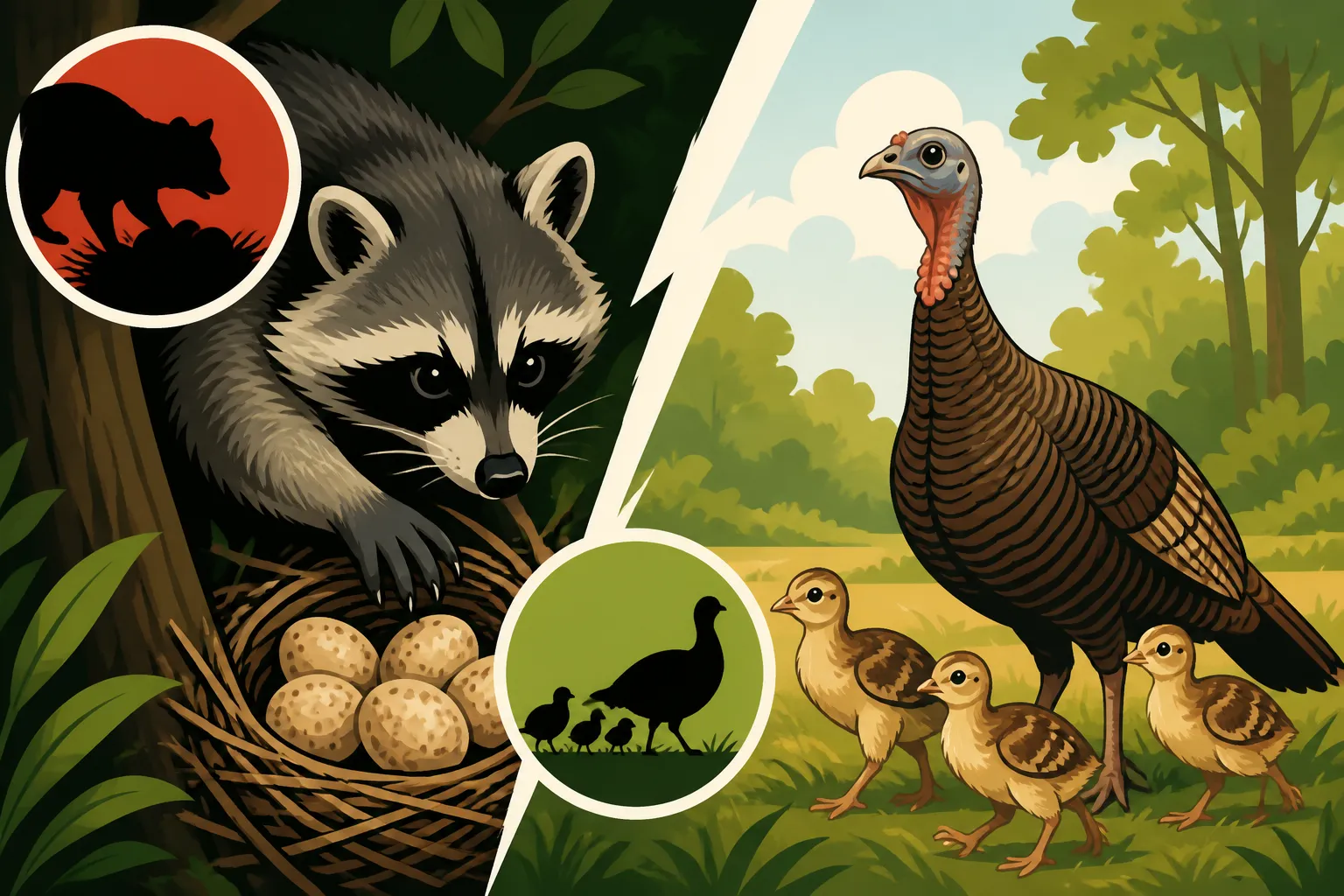
Raccoons are arguably one of the most significant turkey nest predators across much of Virginia, particularly in areas with a mix of woodlands and agricultural fields. Their nimble paws and keen sense of smell make them expert egg hunters. They'll follow scent trails left by a nesting hen, or simply stumble upon a nest during their nocturnal wanderings.
These opportunistic omnivores thrive in many Virginia habitats, from suburban fringes to deep mountain hollows. Their populations can be quite dense, especially in areas with available food sources and den sites. A raccoon might not be actively looking for a turkey nest, but if it crosses paths with one, it won't hesitate to raid it. Their impact can be substantial, often wiping out an entire clutch in one visit.
The presence of raccoons is often indicated by their distinctive tracks along muddy creek banks or their scat. They are particularly active during the spring nesting season, coinciding perfectly with the hens' most vulnerable period. Knowing the Virginia Raccoon Season Dates and participating in responsible furbearer management can sometimes help mitigate local populations, especially on private lands.
Stealthy Opossums and Skunks
Another pair of nocturnal nest raiders common in Virginia are opossums and skunks. Like raccoons, these animals are opportunistic feeders with an excellent sense of smell. They might not be as agile climbers as raccoons, but they are equally adept at rooting out a well-hidden ground nest.
Opossums are generalists, eating almost anything they can find, and turkey eggs are a high-protein, easy meal. Skunks, while known for their potent spray, are also quite efficient at digging and foraging, making them effective at unearthing nests buried in leaf litter or light cover. These animals move slowly and deliberately, relying on their noses to find food.
Their consistent presence in woodlands, brushy areas, and near human habitation means that virtually no turkey nesting habitat is entirely safe from their foraging habits. While they might not be as widespread in their impact as raccoons, local populations can certainly contribute significantly to nest losses.
Avian and Reptilian Threats
It's not just mammals that pose a threat to turkey nests and young poults. Certain birds and reptiles also play a role. Crows and jays, for instance, are intelligent birds that will readily prey on eggs if given the chance. They often work in pairs or small groups, with one bird distracting the hen while another snatches eggs.
Snakes, particularly larger species like black snakes and rat snakes common in Virginia, are also a significant, though often overlooked, threat. While they might not consume an entire clutch in one sitting like a raccoon, they can take several eggs at a time. A snake's ability to move silently and unnoticed through dense undergrowth makes them particularly insidious predators for ground-nesting birds.
Even raptors, such as great horned owls or hawks, can take young poults once they've hatched. While an adult hen is usually too large and wary for these aerial predators, newly hatched, vulnerable poults are easy targets, especially in sparse cover.
The Expanding Coyote Presence
Perhaps one of the most impactful and growing threats to turkey nests and poults in Virginia is the coyote. Virginia Coyote Range and Density has expanded dramatically over the last few decades, and with their increase, so has their pressure on ground-nesting birds. Coyotes are incredibly adaptable and intelligent predators, and they quickly learn to key in on vulnerable prey sources during the spring.
Coyotes will actively hunt nesting hens, especially when the hens are preoccupied with incubation. A hen on the nest is a relatively easy target, and the coyote gets a meal of both the hen and her entire clutch of eggs. Even if the hen escapes, the nest is lost. Once poults hatch, they too become easy prey for coyotes patrolling the woods.
The presence of coyotes can drastically alter a local turkey population's nesting success. Their year-round presence and ability to hunt both day and night mean that nesting hens and young broods face constant pressure. Managing coyote populations through hunting and trapping can be a contentious issue, but for many hunters, it's a necessary step to help improve turkey recruitment.
The Domino Effect: Factors Influencing Predation Success
It’s not just the sheer number of predators that dictates how many turkey nests survive; it's a complex interplay of environmental factors, habitat conditions, and even human activity. Think of it like a domino effect, where one small change can have a ripple impact on nesting success.
Habitat Fragmentation and Edge Effect
Modern land use often leads to habitat fragmentation, where large, continuous blocks of forest are broken up by roads, clear-cuts, or housing developments. This creates more "edge" habitat – the transition zone between two different types of environments, like a field and a forest. While turkeys do use edges, these areas are often magnets for predators.
Many common nest predators, like raccoons, opossums, and coyotes, thrive in edge habitats. They can easily move between different cover types, finding food and den sites readily available. A turkey hen trying to nest along a field edge, while seemingly offering good visibility, might actually be exposing her nest to a higher concentration of predators drawn to that very same edge.
This means that even if a habitat seems "good" on the surface, its configuration and proximity to other land uses can inadvertently funnel predators into prime nesting areas. Hens need undisturbed, dense cover to effectively hide their nests, and fragmentation often reduces the availability of such safe havens. It's something to consider when you're Scouting Virginia Public Land Before Season – look beyond just where the turkeys are, but where they can safely nest.
Food Availability and Predator Cycles
The abundance of natural food sources for predators can directly influence their populations and, consequently, their impact on turkey nests. For example, a boom year for acorns or small rodents might lead to an increase in predator populations in subsequent years. More predators mean more mouths to feed, and turkey eggs become a convenient, calorie-rich option when other food sources might dwindle.
Conversely, a lean year for mast crops could drive predators to become even more reliant on readily available prey like turkey eggs and poults. These cycles of feast and famine are natural, but they can create intense pressure on vulnerable prey species like wild turkeys. Understanding these broader ecological patterns can give us insight into why nesting success fluctuates from year to year.
This also ties into how different species interact. If one predator's primary food source crashes, they might turn their attention to alternatives, placing additional stress on turkeys. It's a delicate balance, and disruptions can have cascading effects throughout the food web.
Human Impact and Habitat Alteration
While often unintentional, human activities can also indirectly influence nest predation. Timber harvesting practices, if not carefully planned, can remove critical nesting cover. Road construction, suburban sprawl, and even poorly managed recreational activities can disturb nesting hens, causing them to abandon their nests or exposing them to predators.
Furthermore, supplemental feeding of deer or other wildlife, while well-intentioned, can inadvertently concentrate predators in an area. Predators quickly learn where easy meals can be found, and if those areas also happen to be prime turkey nesting grounds, it creates a dangerous combination. This is why many wildlife agencies discourage or outright ban feeding wildlife in certain areas.
Even the simple act of increasing access to remote areas, perhaps through new ATV trails or logging roads, can inadvertently increase human presence and disturb sensitive nesting areas. It’s crucial for us to be mindful of our footprint and consider the broader ecological impact of our actions, even when they seem harmless on the surface. When you're using an app like GoHunt to analyze land features, consider how human access points might intersect with critical nesting habitat.
Proactive Measures: Supporting Stronger Turkey Hatches
While nature will always run its course, we as hunters and conservationists aren't entirely powerless. There are proactive steps that can be taken, both at a large scale and on smaller private lands, to help improve the odds for nesting hens and their poults.
Habitat Improvement for Nesting Hens
The most effective long-term solution to nest predation is often habitat improvement. This means creating and maintaining diverse habitats that provide ample, secure nesting cover for hens. Think dense undergrowth, thickets, and areas of managed warm-season grasses. These areas offer both concealment from aerial predators and a physical barrier to ground predators.
On private land, landowners can implement practices like prescribed burning, selective timber thinning, and planting native warm-season grasses. These efforts create the ideal structure and density that turkeys need to hide their nests effectively. Hens will choose nesting sites that offer overhead concealment combined with lateral cover, making it harder for predators to spot them.
Public land managers also undertake similar habitat projects. If you're looking to help, consider volunteering with local conservation groups or supporting organizations that fund such work. Learning to Read Aerial Photos for Piedmont Deer can also help you identify similar features that would benefit nesting turkeys – look for diverse cover, water sources, and areas with less human disturbance.
Predator Management Strategies
For many, managing predator populations is a direct way to alleviate pressure on turkey nests. This often involves targeted trapping or hunting of species like raccoons, opossums, and coyotes during appropriate seasons. This isn't about eradicating predators, which is neither feasible nor desirable, but rather about bringing local populations into better balance with their prey.
On private property, landowners may work with licensed trappers to reduce predator numbers, especially in areas identified as crucial nesting habitat. For hunters, participating in Predator Calling Virginia Farm Country throughout the year can help keep coyote numbers in check. Every coyote taken potentially means fewer nests predated.
It’s important to check all local and state regulations regarding predator hunting and trapping. The goal is responsible, ethical management that supports healthy game populations. This isn't a silver bullet, but when combined with robust habitat, it can certainly make a difference.
Responsible Scouting and Hunting Practices
As hunters, our actions in the woods can also play a small but significant role. During the spring scouting phase, it's wise to be mindful of areas where hens are likely to be nesting. While locating gobblers is the goal, repeatedly disturbing a specific area or inadvertently flushing a hen from her nest can expose it to predators.
Table: Common Nest Predators and Mitigation Strategies in Virginia
| Predator Species | Primary Impact on Nests | When They're Most Active | Potential Mitigation Strategies |
|---|---|---|---|
| Raccoon | Consumes eggs, sometimes poults | Night, all year | Trapping, hunting during open seasons, secure food sources |
| Opossum | Consumes eggs, sometimes poults | Night, all year | Trapping, habitat management |
| Skunk | Consumes eggs | Night, spring/summer | Trapping, habitat management |
| Coyote | Kills hens on nest, consumes eggs/poults | Day/Night, all year | Hunting (calling, incidental), trapping |
| Crow/Jay | Consumes eggs | Day, spring/summer | Habitat density for concealment |
| Snakes | Consumes eggs | Day/Night (seasonal), spring/summer | Habitat density for concealment |
When hunting, avoiding excessive foot traffic through dense nesting cover, especially during the peak nesting period in early spring, can prevent unnecessary disturbance. Always adhere to ethical hunting practices and be aware of your surroundings, not just for the game you seek, but for the other wildlife that depends on that same habitat. Even seemingly minor disturbances can increase the vulnerability of a turkey nest.
Disclaimer
This article is for general informational purposes only and does not constitute professional advice. Laws, prices and regulations vary by location and change over time. Consult a qualified professional for guidance on your specific situation.