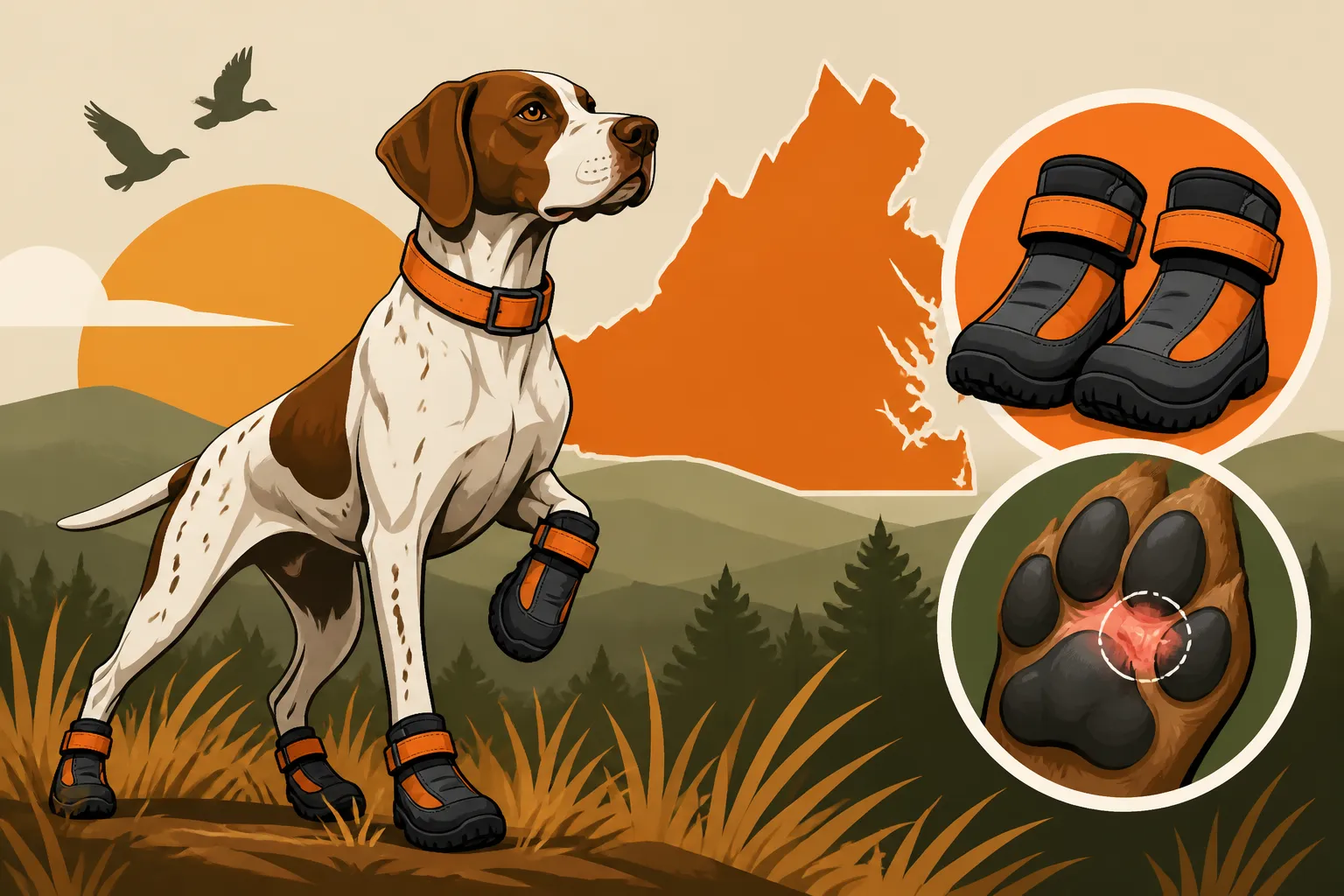
Bird Dog Boots and Cut Pads
There’s nothing quite like watching your bird dog work a field or a thicket, nose to the ground, tail wagging, absolutely in its element. But every hunter who runs dogs, especially in a state like Virginia with its incredibly diverse and often unforgiving terrain, has faced that heart-sinking moment: pulling a dog out of the cover to find a paw pad torn, cut, or bleeding. It’s a gut punch, not just for the immediate pain it causes your loyal partner, but for the sudden halt it puts on your hunt, and the worry about recovery time. This guide is all about helping you understand how to protect those precious paws, whether through durable boots, conditioning, or knowing what to do when an injury inevitably occurs, ensuring your hunting season stays on track and your dog stays happy and healthy.
The Reality of Paw Injuries in Virginia's Hunting Terrain
Virginia is a stunning state for hunting, offering everything from rugged mountain grouse cover to dense Piedmont briar patches and marshy coastal plains. While this diversity is fantastic for game, it presents a constant gauntlet for your dog's paws. Think about the sheer variety of surfaces they encounter in a single day: sharp rocks, thorny vines, abrasive stubble, freezing mud, or even hidden broken glass. It’s no wonder paw injuries are one of the most common reasons a hunting dog gets sidelined. You can try to be careful, but when a dog is focused on a scent, it's not looking down, and sometimes, even when they are, the terrain is just unavoidable.
Rocky Mountain Slopes and Stony Creeks
If you've ever chased grouse in the George Washington National Forest or woodcock along a mountain stream, you know exactly what I'm talking about. The Blue Ridge and Allegheny mountains are beautiful but brutal on paws. Imagine your dog scrambling over shale, granite outcroppings, and sharp, broken slate all day long. Then they might plunge into an icy mountain creek, where hidden rocks and submerged debris can easily nick or tear soft pads. The constant friction and impact from this kind of terrain can wear pads thin, leaving them susceptible to cuts from even smaller, sharper stones. A good friend of mine had a setter limp out of a cove off Massanutten Mountain once, its pads worn nearly raw and a deep gash from a piece of quartz. It wasn’t a fun hike back to the truck. Checking your Scouting Virginia Public Land Before Season plans on a tool like GoHunt can help you anticipate the rockiest areas and prepare your dog accordingly.
Piedmont Thickets and Fencerows
Head east to the Piedmont, and the challenges change but don't diminish. Here, you're looking at dense briar patches, honeysuckle thickets, and the remnants of agricultural fields. A dog busting through a multiflora rose tangle or a dense stand of greenbrier can come out looking like it lost a fight with a cheese grater. If you're hunting pheasants or rabbits, often you're working the edges of cut cornfields or soybean stubble, which, while seemingly soft, can be incredibly abrasive and sharp. Those dried-up stalks are like tiny razor blades, constantly jabbing at the sensitive areas between their paw pads. A hunting buddy once lost a whole morning hunt because his springer spaniel managed to get a deeply embedded thorn from a fencerow right in the webbing of its paw. These areas are prime for Rabbit Hunting Virginia Fencerows or Squirrel Hunting Virginia Bottomland Hardwoods, but require diligent paw protection.
Tidewater Swamps and Submerged Hazards
Down in the Tidewater region, whether you're chasing waterfowl along the Waterfowl Hunting the Chesapeake Bay or working a thick swamp for deer, you've got a whole new set of hidden dangers. The soft, mucky ground might seem forgiving, but it often hides broken branches, sharp oyster shells, and submerged debris that can cause deep punctures. The constant wetness also softens paw pads, making them more vulnerable to injury. Imagine a black lab joyfully retrieving a downed duck, only to step on a hidden piece of metal or a sharp stump beneath the murky surface. The combination of saturated pads and unforeseen underwater hazards makes this a particularly tricky environment for unprotected paws.
Understanding Bird Dog Boots: Selection and Fit
Given the gauntlet of terrain across Virginia, bird dog boots often go from a luxury item to an absolute necessity for many hunters. But not all boots are created equal, and getting the right pair that fits well is paramount. A poorly fitting boot can cause more problems than it solves, leading to chafing, rubbing, and even blisters. It’s all about finding that sweet spot where protection meets comfort and functionality.
Key Features to Look for in Hunting Dog Boots
When you're trying to pick out a pair of boots, it can feel overwhelming with all the options out there. Here’s what I've learned makes a real difference:
- Material and Durability: This is huge. Look for robust, puncture-resistant fabrics like Cordura or ballistic nylon. Some boots even incorporate synthetic leather or rubberized coatings for added toughness. The key is that they need to stand up to briars, sharp rocks, and constant abrasion. Think about the conditions your dog will face. A thin, canvas-like material might be fine for light use in soft grass, but it won’t last an hour in a Virginia mountain laurel thicket.
- Sole Type and Traction: The sole is your dog's grip. You want something flexible enough for natural paw movement but tough enough to prevent punctures. Rubber soles with a good tread pattern are ideal for traction on slippery leaves, wet rocks, and muddy trails. Some higher-end boots feature Vibram soles, similar to what you’d find on hiking boots, offering superior grip and durability. The sole should also be thick enough to offer genuine protection against sharp objects.
- Closure Mechanisms: This is often the make-or-break feature for keeping boots on. Velcro straps are common, but look for multiple straps or wider straps that offer more surface area for a secure hold. Some boots use elastic straps, while others employ a cinch cord system. The goal is a snug fit that won't slip or twist, but also won't cut off circulation. This is where you really need to test them out. Nothing is more frustrating than losing a boot in the first 15 minutes of a hunt.
- Breathability and Comfort: While durability is important, you don't want your dog's paws to overheat or become waterlogged inside the boot. Some materials offer better breathability, and some designs include ventilation. Waterproofing is also a consideration, especially for Hunting Chesapeake Bay Diving Ducks or working wet fields. However, remember that truly waterproof often means less breathable, so it's a balance. Comfort is key to acceptance; if the boot is stiff or rubs, your dog will let you know – usually by trying to Houdini its way out of them.
Sizing and Fitting Your Dog's Boots Properly
Getting the right size is critical. It’s not a one-size-fits-all situation, and dogs' paws vary widely even within the same breed.
- Measure Accurately: Have your dog stand on a piece of paper. Lift the opposite paw to ensure full weight is on the paw you're measuring. Trace the outline of the paw, including the nails. Measure the widest part and the length (from the back of the large pad to the tip of the longest nail). Compare these measurements to the manufacturer’s sizing chart. Don't guess. Your dog won’t thank you for it.
- Consider All Paws: Believe it or not, a dog’s front paws are often slightly larger than their hind paws. You might need to buy different sizes for front and back, or choose a boot that accommodates the larger front paws.
- Test the Fit Indoors: Once you get the boots, put them on your dog and let them walk around inside for a bit. They should be snug but not tight. You should be able to slide a finger in, but just barely. Look for any signs of rubbing or discomfort. The boot should stay in place when they walk, trot, and even run a little.
- Observe Movement: Watch your dog move. Are they walking naturally, or are they hesitant and lifting their paws awkwardly? Some initial awkwardness is normal during the acclimatization phase, but persistent discomfort means the fit is off. Are the straps staying secure? Are the boots twisting? If they are, you risk rubbing and hot spots. You can even use a mapping tool like GoHunt to mark potential trouble spots in terrain you scout, helping you select boots with the right features for those specific challenges.
Beyond Boots: Alternative and Complementary Paw Protection
While boots are fantastic for heavy-duty protection, they aren't the only option, nor are they always necessary. Sometimes, a combination of methods works best, or lighter protection is all that's needed. It's about tailoring your approach to the specific hunt and your dog's individual paw condition.
Paw Tougheners and Balms
Think of paw tougheners and balms as skin care for your dog's feet. They serve different but equally important roles:
- Paw Tougheners: These products, often containing ingredients like tannic acid or iodine, are designed to make paw pads more resilient and less prone to tearing. You apply them regularly, especially in the weeks leading up to hunting season. They help to thicken and harden the outer layer of the pads, providing a natural defense against abrasive surfaces. This can be particularly useful if you're hunting in areas with a lot of Brush Pants for Virginia Mountain Laurel or thick undergrowth where full boots might snag, but still want some added protection. However, they don't offer puncture protection like a physical boot, and they won't prevent cuts from truly sharp objects. They're more about preventing wear and tear and general abrasion.
- Paw Balms and Waxes: These are emollients, much like hand cream for humans. They keep paw pads moisturized and pliable, preventing them from drying out, cracking, and becoming brittle, especially in cold or dry conditions. They also form a protective barrier against snow, ice, salt, and hot pavement. Some balms also offer minor protection against mild abrasions. Applied before a hunt, they can help prevent ice balls from forming between pads in winter, a common problem for dogs working in snowy conditions. After a hunt, they're great for soothing tired, tender pads and promoting healing. They’re a fantastic everyday preventative measure, even if your dog wears boots occasionally.
Post-Hunt Paw Care and Injury Management
Despite your best efforts, sometimes injuries still happen. Knowing how to react quickly can minimize damage and speed recovery.
- Immediate Inspection: As soon as the hunt is over, or even during a break, lift each paw and carefully inspect all pads, including the webbing between the toes. Look for cuts, scrapes, thorns, foxtails, or any signs of tenderness, swelling, or bleeding. This is non-negotiable, especially after a tough day in the Grouse Hunting Blue Ridge Cover or a Reading a Ridge for Blue Ridge Deer expedition.
- Cleaning the Wound: If you find a cut or scrape, gently clean it with clean water, saline solution, or a mild antiseptic like diluted povidone-iodine. Remove any debris with tweezers.
- Controlling Bleeding: For deeper cuts, apply direct pressure with a clean cloth. If bleeding is profuse or doesn't stop, it's time for professional help.
- Dressing the Wound: For minor cuts, apply a small amount of antibiotic ointment and cover it with a non-stick pad. Then, wrap the paw with self-adhesive vet wrap (like Vetrap or CoFlex). Make sure the wrap is snug but not too tight – you should be able to slide a finger underneath. Change the dressing daily.
- When to See a Vet: Any deep puncture wounds, severe bleeding, limping that persists for more than a few hours, signs of infection (pus, foul odor, excessive swelling), or if you suspect a broken bone, warrants an immediate vet visit. Don't wait. Early intervention can prevent serious complications. Many hunters carry a basic first-aid kit for dogs, complete with vet wrap, antiseptic wipes, and tweezers. You can even refer to your GoHunt app for nearby vet clinics if you're in an unfamiliar area.
Training and Acclimating Your Dog to Boots
Let’s be honest: most dogs, especially those with a strong prey drive, are not naturally thrilled about wearing boots. They might do a funny high-step dance, try to chew them off, or simply refuse to move. This isn't a sign of defiance; it's just an unfamiliar sensation. Patience and positive reinforcement are key to getting your dog to accept paw protection.
Introducing Boots Gradually
This isn't something you want to spring on your dog the morning of opening day. Start well in advance of the season, even months beforehand.
- Start with Short Sessions, Indoors: Put on just one boot for a few minutes. While the boot is on, distract your dog with treats, praise, or a favorite toy. The moment they tolerate it, even for a second, remove the boot and reward them heavily.
- Increase Duration and Number of Boots: Slowly add more boots and extend the time they wear them. Gradually move from one boot to two, then three, then all four. Keep the sessions positive and short initially. Don't wait until your dog is agitated; end on a good note.
- Short Walks, Then Longer: Once they tolerate boots inside, take them for short walks around the yard or neighborhood. The goal is to make wearing boots a normal part of their routine, not a punishment.
- Introduce Hunting Scenarios: Before the actual hunt, take your dog on some scouting trips or training runs with the boots on. Let them run through brush, walk on varied terrain, and get used to the feel while actively working. This helps them associate the boots with exciting, rewarding activities. This is especially helpful if you’re doing Shed Hunting on Virginia Public Land in the off-season, as it provides a low-pressure environment to test out gear.
Making Boots a Positive Experience
The secret sauce to boot acceptance lies in positive association. Your dog needs to think boots mean good things are coming!
- Treats, Treats, Treats: Every time a boot goes on, give a high-value treat. Every time they tolerate it, more treats. Associate the act of wearing boots with delicious rewards.
- Praise and Play: Combine treats with enthusiastic verbal praise and short play sessions. Make it a fun game.
- "Boots On!" Command: You can even create a command like "Boots On!" or "Paws Up!" that signals it's time for boots and that good things will follow. Eventually, your dog will anticipate the rewards.
- Consistency: Don't only put boots on when you're going hunting. Practice during walks or training sessions. The more exposure, the less novelty, and the more acceptance.
- Check for Comfort: Regularly check the boots for rubbing or discomfort, especially in the early stages. If your dog is consistently trying to chew a particular boot or limping, it might be a poor fit, or something might be irritating them inside the boot. No amount of treats will overcome genuine pain. A comfortable dog is a cooperative dog. Knowing you're going to be in thick cover, a tool like GoHunt can help you plan your route and determine if boots are absolutely essential for a particular hunt, allowing you to prepare your dog beforehand.
Comparing Paw Protection Options
To help you decide which option or combination of options is best for your hunting companion, here's a quick comparison. Remember, the best choice often depends on the specific conditions of your hunt and your dog's individual needs.
| Protection Type | Pros | Cons | Best Use Case |
|---|---|---|---|
| Hunting Boots | Excellent physical barrier against cuts, punctures, abrasion, extreme temperatures, and chemicals. | Can be uncomfortable for some dogs, may slip, can cause rubbing if ill-fitting, less natural paw feel. | Rough, rocky, thorny, icy terrain; long hunts; preventing re-injury. |
| Paw Tougheners | Strengthens natural pads, no physical gear to lose, good for general wear and tear. | No puncture protection, requires consistent pre-season application, less effective against sharp objects. | Mildly abrasive terrain; supplementing boots; general conditioning. |
| Paw Balms/Waxes | Moisturizes, prevents cracking, forms barrier against elements, soothes dry pads. | Minimal physical protection against cuts/punctures, needs reapplication, can make paws slippery if overused. | Cold/dry weather; post-hunt soothing; preventing ice balls; general paw health. |
Ultimately, the goal is to keep your dog healthy and on the hunt. Whether you rely heavily on boots, a toughening regimen, or a combination of approaches, understanding Virginia's varied terrain and being proactive about paw care will make all the difference. Keep those tails wagging and those paws protected! You'll be glad you did when your dog is still enthusiastically retrieving late into the season, whether you’re Working a Dove Field on Opening Day or hunting later for Virginia Small Game and Furbearers.
Disclaimer
This article is for general informational purposes only and does not constitute professional advice. Laws, prices and regulations vary by location and change over time. Consult a qualified professional for guidance on your specific situation.