Layout Blinds and Marsh Boats
There’s nothing quite like the rush of a cold Virginia morning, decoys bobbing, and the distant whistle of wings heading your way. But let's be honest, hunting waterfowl in Virginia isn't always about setting up in a perfect blind next to a cozy tree line. Often, you find yourself staring at wide-open fields or expansive marshlands, wondering how on earth you're going to hide from the sharp eyes of a wary mallard or a high-flying goose. This guide is all about tackling that exact frustration, exploring how layout blinds and specialized marsh boats can be your secret weapon to staying hidden and bringing home that limit, even in the most challenging Virginia landscapes.
The Unique Challenges of Virginia Waterfowl Hunting
Virginia is a waterfowl hunter's paradise, but it's not without its specific quirks. From the sprawling agricultural fields of the Piedmont to the vast, intricate waterways of the Chesapeake Bay, hunters face a range of environments that demand specialized tactics and gear. You can't just throw on some camo and expect to disappear against every backdrop. The birds here are smart, they've seen it all, and they're quick to flare if something looks out of place.
Dealing with Wide-Open Spaces
Imagine standing in a recently cut cornfield or a vast, sprawling soybean stubble field somewhere in eastern Virginia, the wind whipping around you. There's not a single tree, fence line, or even a decent clump of brush for hundreds of yards. It's exhilarating to see those big flocks working the sky, but the immediate, gut-punching question is always: where do I hide? Traditional upright blinds stick out like a sore thumb. Ducks and geese have incredible eyesight, often spotting irregularities from hundreds of feet up. This is where the concept of becoming part of the ground itself becomes not just an advantage, but a necessity. The frustration of trying to get low enough, or scrounging for whatever meager cover you can find, is a universal experience for field hunters. It's a game of trying to outsmart birds that have evolved to spot danger from above.
Navigating Virginia's Diverse Waterways
Then there's the other side of the coin: Virginia's incredible waterways. From the brackish marshes of the Eastern Shore to the quiet creeks feeding into the James River, and of course, the immense Chesapeake Bay itself, waterfowling here often means spending your day afloat. But these aren't always calm, clear waters. You've got shallow mud flats, dense stands of spartina grass, hidden oyster beds, and unpredictable currents. Getting to your chosen spot, deploying decoys, and then having a stable, hidden platform to hunt from can be a real logistical puzzle. Trying to paddle a heavy boat through thick grass, or anchor securely in a swift tide, can test anyone's patience. The challenge is amplified when you're dealing with big water and potentially rough conditions, far from the nearest boat ramp or warm truck. You need a setup that's not only effective at concealment but also safe and maneuverable in these dynamic environments. Waterfowl Hunting the Chesapeake Bay really highlights the complexity of these environments.
Understanding Layout Blinds for Field Hunting
Layout blinds are a game-changer for field hunters, born out of the necessity to hide in places where no natural cover exists. They are essentially low-profile, coffin-like structures that allow a hunter to lie down, nearly flush with the ground, and pop up to shoot when the birds are locked in. For Virginia hunters, especially those chasing geese in cut grain fields or ducks in flooded stubble, they are often the key to success.
The Low-Profile Advantage
The primary benefit of a layout blind is its incredibly low profile. Instead of sitting or standing upright, creating a human-shaped silhouette that screams "hunter!" to approaching birds, you're practically invisible. You slide into the blind, pull the top cover down, and become one with the field. Modern layout blinds are designed to be quite comfortable, even for long waits, allowing you to recline with good back support. When birds commit and come into range, you simply push open the spring-loaded doors and sit up to take your shot. This sudden appearance from what looked like an innocuous mound of field stubble is incredibly effective at surprising birds, giving you those precious seconds needed for a clean shot. It’s the ultimate stealth approach for open country, completely nullifying the birds’ ability to spot vertical lines where there should only be horizontal.
Layout blinds are also incredibly versatile. They come in a variety of camo patterns, and more importantly, they are designed with straps and pockets to allow for natural vegetation to be added. This "stubbling" is crucial. You don't just put a camo blind in a field; you dress it up with cornstalks, soybeans, grasses, and whatever else matches the immediate surroundings. This breaks up the blind's outline and makes it virtually disappear, even to close-flying birds. For instance, hunting an Eastern Shore cornfield, you'd want to cover your blind with corn stalks and husks, making it look like just another piece of agricultural debris. This adaptation is essential, and brands often provide extra stubble straps and pockets for this very purpose. When you're Layout Blind Hunting Eastern Shore Fields, stubbling your blind properly makes all the difference.
Blending into Virginia's Agricultural Landscape
Virginia's agricultural landscape is vast and varied, from the peanut fields of the Tidewater region to the dairy farms of the Shenandoah Valley. Matching your blind to these specific environments is paramount. A layout blind covered in generic marsh grass isn't going to fool a goose flying over a winter wheat field. This is where meticulous scouting and preparation come into play. Before the hunt, you need to know exactly what kind of crop residue or field conditions you'll be dealing with.
Consider a scenario in the Piedmont, where geese might be feeding in a cut soybean field. You'd want to bring bundles of dried soybean stalks and leaves to literally weave into the stubble straps of your layout blind. The goal is to make your blind look like a natural part of the field, indistinguishable from the surrounding terrain. Many hunters will even dig out a shallow depression to nestle their blind into, further reducing its profile. This attention to detail, while time-consuming, pays off immensely when you see those birds dropping in without a second thought. It's not just about camo patterns; it's about texture, dimension, and blending into the natural contours of the land. This approach works for ducks too, particularly when they are hitting dry fields or low-water flooded areas. Understanding the specific crop cycle and what's left behind is vital intelligence, which can be gathered through careful scouting, sometimes with the help of mapping tools like what GoHunt provides, helping you identify field types and access points.
Diving into Marsh Boats for Waterfowlers
While layout blinds dominate the field hunting scene, marsh boats are the unsung heroes of Virginia's diverse aquatic environments. These specialized vessels are designed from the keel up for stealth, stability, and maneuverability in the shallow, often treacherous waters where ducks and geese thrive.
The Stealth and Versatility of Marsh Boats
Traditional boats, while functional, often sit too high, have noisy engines, and are built for speed or carrying capacity rather than concealment. Marsh boats, on the other hand, are engineered for the exact opposite. They typically feature a very low profile, often with camouflaged designs and dull finishes to minimize reflections. Many are built from lightweight materials, allowing them to be easily pushed or paddled through shallow areas where larger boats can't go. This makes them incredibly versatile for accessing those secluded pockets of marsh or narrow creek bends where ducks love to hide. You can literally push a marsh boat through dense vegetation, disappearing into the reeds, waiting for the birds to come in. The ability to navigate these hidden backwaters quietly, without spooking every bird for a mile around, is their true power.
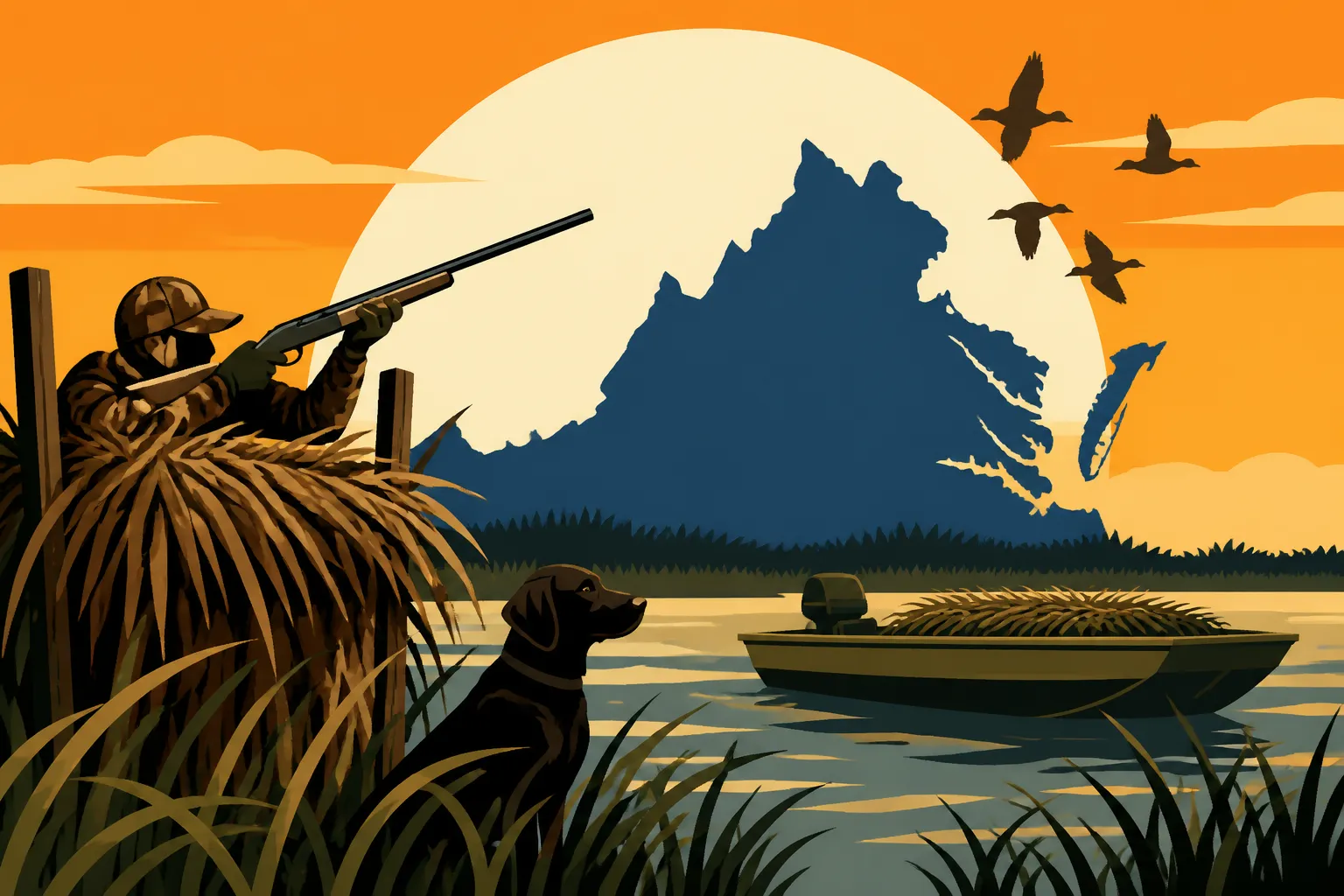
Beyond just getting there, marsh boats also serve as a mobile, floating blind. Many are designed with blind doors or pop-up covers that integrate seamlessly with natural vegetation. Once you're tucked into a cattail-lined cove, you can throw a camo net over your boat and weave in actual reeds and grasses, effectively turning your boat into an extension of the marsh itself. This means you're not just hidden in the marsh; you're part of it. This flexibility allows you to adapt to changing wind directions, shifting bird patterns, or even move to an entirely new spot if the first one isn't producing, all while maintaining excellent concealment. They offer a stable shooting platform, which is crucial when dealing with varying water depths and unstable footing that can make standing in waders a challenge. For more on these specialized vessels, check out Marsh Boats and Push Poles.
Essential Features for Virginia's Waters
When choosing a marsh boat for Virginia, there are several key features to consider that will make your hunting experience far more effective and enjoyable. First, construction materials and durability are paramount. You'll be bumping into stumps, sliding over mud, and occasionally dragging it over obstacles. Lightweight, durable materials like fiberglass, rotomolded polyethylene, or even aluminum are common, each with their pros and cons regarding weight, repairability, and noise. Second, stability is crucial. You need a boat that feels solid when you're standing up to shoot or moving around to set decoys, especially in choppy water on a big body like the Chesapeake. Wide, flat bottoms or sponsons are often incorporated into marsh boat designs for this very reason.
Maneuverability in shallow water is another non-negotiable feature. Look for designs with a shallow draft and the ability to accept a push pole or small trolling motor. Virginia's marshes are notorious for varying depths, and often the best hunting is in water barely deep enough to float a boat. Finally, integrated blind features are a huge plus. This includes built-in blind doors, stubble straps, and thoughtful storage for decoys, guns, and gear. Some models even come with dog platforms, recognizing that a good retriever is often part of the crew. Thinking about these details upfront can save you a lot of headaches later in the field, especially when you're trying to set up quietly before legal shooting light in a cold, damp marsh.
Choosing the Right Gear for Your Hunt
Deciding between a layout blind and a marsh boat, or figuring out how to combine them, really boils down to where and how you plan to hunt in Virginia. Each piece of equipment excels in different scenarios, and understanding those nuances will make you a more successful waterfowler.
Deciding Between a Layout Blind and a Marsh Boat (or Both!)
It’s not necessarily an either/or proposition. Your primary hunting locations will be the biggest determining factor. If you spend most of your season chasing Canada geese across sprawling agricultural fields in the Piedmont or ducks in flooded crop stubble in the Tidewater, a layout blind is almost certainly your first and best investment. It offers unparalleled concealment in open fields, is relatively portable, and can be camouflaged to match various field conditions. They are also generally more affordable than a specialized marsh boat, making them an accessible entry point for many field hunters.
However, if your passion lies in the vast marshes, tidal creeks, and open water of the Eastern Shore, the Chesapeake Bay, or even many of Virginia’s larger inland reservoirs, a marsh boat is indispensable. It provides the mobility and stability needed to access prime water-based hunting spots that would be impossible to reach on foot or with a traditional boat. They offer a floating, integrated blind, making them ideal for hunting over water. For those who hunt both types of terrain extensively, having both a quality layout blind and a versatile marsh boat provides the ultimate flexibility, allowing you to adapt to whatever conditions and bird movements the season throws at you. You might find yourself Hunting Chesapeake Bay Diving Ducks one weekend from a marsh boat, and then setting up for geese in a cut field the next with a layout blind.
Here’s a quick comparison to help solidify your decision:
| Feature | Layout Blind (Field) | Marsh Boat (Water) |
|---|---|---|
| Primary Use | Open fields (corn, soy, wheat), short stubble | Marshes, shallow creeks, open water, flooded timber |
| Concealment | Excellent, low-profile, blends with field residue | Excellent, low-profile, blends with marsh vegetation |
| Mobility | Easily carried/dragged by hand in fields | Paddled/pushed in shallow water, motored in open water |
| Setup Time | Quick to deploy, but requires stubbling | Moderate, may involve anchoring/brushing in |
| Comfort | Reclined position, generally comfortable | Often seated, can be cramped for larger hunters |
| Cost | Generally lower | Generally higher (boat + motor) |
| Access | Restricted to land with permission | Access to public waterways, private marsh |
| Weather | Can be exposed to wind/rain if not fully enclosed | Offers more protection from elements, higher freeboard |
| Storage | Folds down for transport | Requires boat storage/trailer |
GoHunt for Scouting and Planning
Regardless of whether you choose a layout blind or a marsh boat, effective scouting is the bedrock of successful waterfowl hunting in Virginia. This is where modern tools can truly make a difference. Mapping applications, like those offered by GoHunt, can be incredibly valuable in identifying potential hunting spots, understanding property boundaries, and even analyzing terrain features from the comfort of your home. Before you even set foot in a field or launch a boat, you can use these tools to locate cut fields, identify marsh access points, scout out potential roosting and feeding areas, and plan your entry and exit routes.
With GoHunt, you can overlay public land boundaries with satellite imagery to pinpoint secluded pockets of marsh or overlooked field corners. You can identify potential high-ground islands in flooded timber for a layout blind setup, or trace shallow channels through dense marsh grass that a marsh boat could navigate. This kind of detailed topographical and aerial information helps you pre-plan your hunt, visualize the landscape, and even anticipate where birds might fly or what food sources they might be targeting. It's an invaluable resource for understanding the complexities of Virginia's diverse hunting grounds, helping you make informed decisions about where to deploy your specialized gear for the best chance at success. Scouting Virginia Public Land Before Season becomes much more efficient with these tools.
Practical Tips for Maximizing Your Success
Having the right gear is only half the battle. Knowing how to use it effectively, coupled with a strong emphasis on safety, will turn those challenging Virginia hunts into memorable successes.
Effective Concealment and Decoy Spreads
When hunting from a layout blind, remember the golden rule: always stubble your blind. Don't just rely on the factory camo pattern. Gather local vegetation – corn stalks, soybean stubble, natural grasses – and meticulously weave it into every available strap and pocket on your blind. Your goal is to break up the blind's outline and make it disappear into the surrounding field. Many hunters will even wear a face mask or face paint, and gloves, ensuring that no bare skin is visible to wary birds. For a marsh boat, the same principle applies. Once you're in position, use natural marsh grasses, reeds, and even small branches to brush in your boat, making it blend seamlessly with the shoreline or islands. A quick survey of your surroundings from a low angle will often reveal spots you missed.
Decoy spreads are equally critical, whether you're in a field or on the water. For field hunting with layout blinds, consider using full-body decoys or highly realistic silhouette decoys that mimic geese or ducks feeding naturally. Position them upwind of your blinds, creating a landing zone directly in front of you. For marsh boats, a diverse spread of floating decoys – including puddlers, divers, and even coots if they're present – arranged to suggest a contented raft of birds will draw them in. Always pay attention to the wind direction; birds almost always land into the wind. Tailor your spread to create an inviting pocket where they can comfortably drop in. A well-placed spread, combined with excellent concealment, is the one-two punch that brings those birds within range. When you're talking about Decoy Spreads for Chesapeake Bay Divers, understanding currents and depth is also paramount.
Safety First on the Water and in the Fields
Virginia waterfowling, while thrilling, also carries inherent risks, especially when dealing with cold water and firearms. Always prioritize safety.
When using a marsh boat, especially on larger bodies of water like the Bay or its major tributaries, wear your life vest. Cold water incapacitates quickly, and even strong swimmers can be in grave danger if they unexpectedly fall overboard. Inform someone of your hunting plan, including your location and expected return time. Check weather forecasts religiously, particularly for wind and cold temperatures, and don't venture out if conditions are beyond your boat's capabilities or your comfort level. Ensure your boat is properly maintained, has all required safety equipment (like navigation lights, a whistle, and a throw cushion), and carries enough fuel. Waders for Bay Marsh Hunting are essential, but remember they can fill with water, so always be mindful of water depth and currents.
For layout blind hunting in fields, especially on private land, always communicate your presence. When hunting with a group, everyone should know where each person's blind is located and their zone of fire. Always be aware of other hunters, property lines, and potential hazards like irrigation equipment or fences. Bright blaze orange or pink is often required when walking to and from your blind, and it’s always a good idea to wear some on your person until you're safely tucked away in your blind. The sheer excitement of birds cupping their wings over your spread can lead to tunnel vision, so maintaining situational awareness and confirming your target and its background before every shot is non-negotiable.
Disclaimer
This article is for general informational purposes only and does not constitute professional advice. Laws, prices and regulations vary by location and change over time. Consult a qualified professional for guidance on your specific situation.