Layout Blind Hunting Eastern Shore Fields
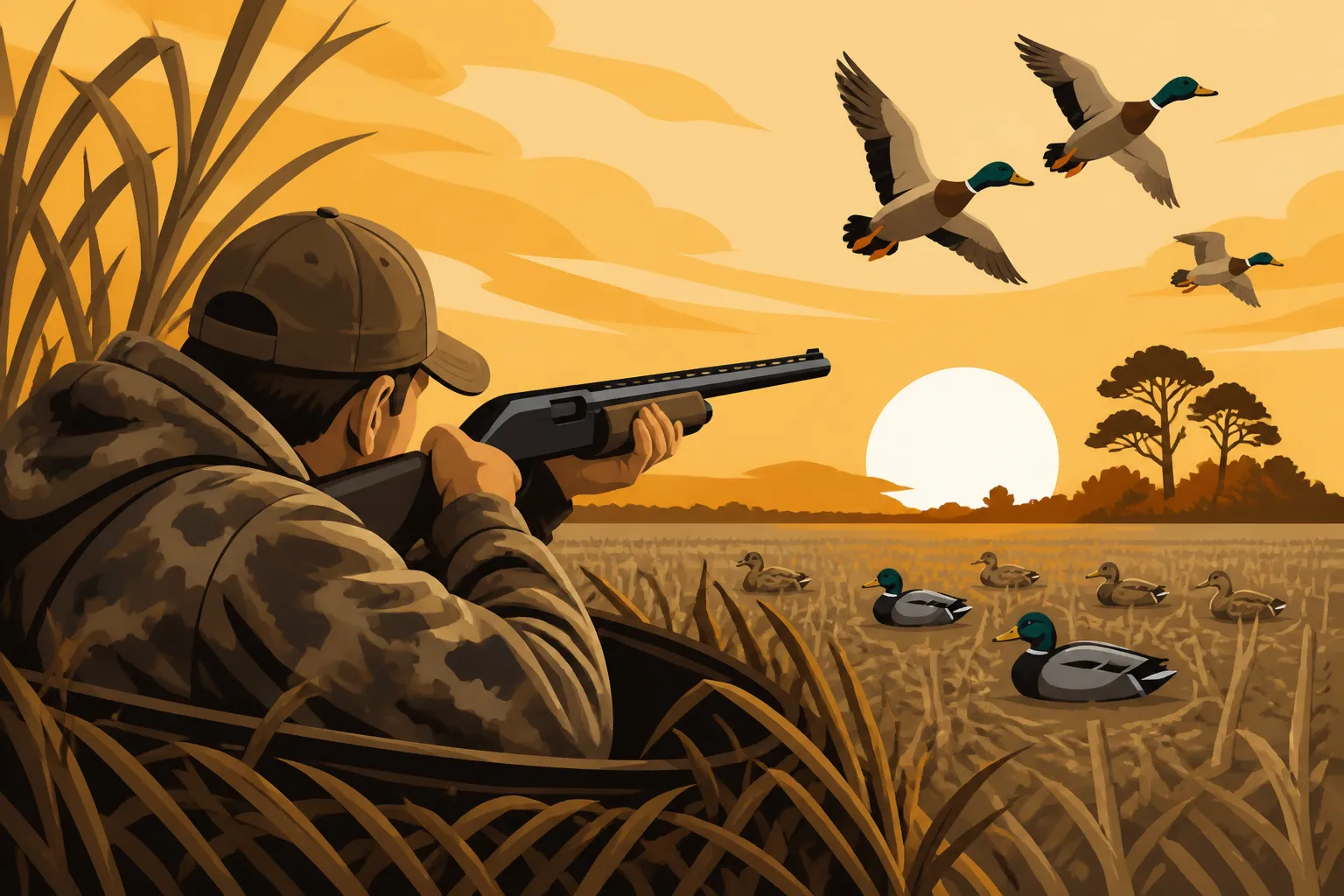
There’s nothing quite like the sight of a perfect "V" of geese silhouetted against a frosty sunrise, or a swirling flock of ducks cupping their wings for a landing, only for them to shy away at the last second, leaving you scratching your head in frustration. If you've spent any time chasing waterfowl in Virginia's sprawling Eastern Shore agricultural fields, you know this feeling all too well. This guide will walk you through the nuances of using layout blinds to successfully hunt ducks and geese in these challenging, yet incredibly rewarding, environments.
Understanding the Eastern Shore Field Hunting Environment
Hunting waterfowl in the expansive agricultural fields of Virginia's Eastern Shore is a unique beast, presenting its own set of thrills and frustrations. It's a far cry from timber hunting or sitting in a marsh blind, demanding a different approach to scouting, concealment, and decoy placement.
The Unique Challenges of Field Hunting for Waterfowl
When you're out in the middle of a vast cornfield or a cut soybean stubble, you quickly realize how exposed you are. The biggest challenge is concealment – fooling sharp-eyed ducks and even sharper-eyed geese into believing there's nothing out of the ordinary when they're inspecting your spread from hundreds of feet up. Unlike a natural blind along a creek bank or in cattails, a field offers very little inherent cover. You can't just throw on some camo and hide behind a tree that isn't there. The birds have an almost panoramic view, and any unnatural lump or shiny object is an immediate red flag that sends them peeling off. This makes effective brushing and strategic blind placement absolutely critical. Another challenge is the sheer scale of the landscape; birds might be feeding in one field today and a mile away tomorrow, driven by food sources, changing weather, or hunting pressure. You're not waiting for them to move through a natural funnel, you're trying to convince them to land right where you are.
Key Waterfowl Species Targeted in Eastern Shore Fields
While a variety of waterfowl might pass over, field hunting on the Eastern Shore primarily targets two main categories: Canada geese and dabbling ducks. Large flocks of Canada geese are a staple, often seen feeding in vast agricultural fields, especially those planted with corn, winter wheat, or soybeans. These birds can be incredibly wary, having been hunted up and down the Atlantic Flyway. Successfully luring them into shotgun range requires meticulous attention to detail.
Dabbling ducks, particularly mallards and sometimes pintails or black ducks, are also frequent visitors to fields, especially those with waste grain or shallow puddles after a rain. Unlike their diving duck cousins, dabblers prefer shallower water or even dry land to feed, making them prime targets for field setups. You might also encounter teal, widgeon, or gadwall in these settings, particularly during early season or if there’s standing water. Understanding their feeding habits and preferred field types is crucial to success. Knowing which species you're primarily targeting will also dictate your decoy spread, calling techniques, and even your choice of blind material.
The Role of Agriculture and Migration Patterns
The entire Eastern Shore ecosystem, especially for waterfowl, revolves around its agricultural landscape. The vast fields of corn, soybeans, and winter wheat provide an irresistible buffet for migrating birds. Waste grain left after harvest, new shoots of winter wheat, or even flooded sections of fields become critical feeding grounds. As hunters, our success is directly tied to understanding these agricultural cycles. When are the crops harvested? Which fields were left fallow? Where are the birds currently feeding? These are questions you'll be asking yourself daily. The timing of migrations also plays a huge role. Early season might see more local birds and teal, while the heart of winter brings in the massive pushes of Canada geese and colder-weather dabblers. Consulting resources like the Virginia DWR’s annual waterfowl surveys or platforms like GoHunt for migration forecasts can give you a significant advantage. The Atlantic Flyway funnels millions of birds right over this region, making it a prime destination, but also meaning birds are constantly on the move, forcing hunters to be adaptable.
Choosing and Preparing Your Layout Blind
A layout blind is far more than just a piece of camouflage fabric; it's your mobile fortress, your hide in plain sight. Choosing the right one and preparing it meticulously are paramount to success in the wide-open fields of the Eastern Shore.
Selecting the Right Blind for Eastern Shore Conditions
When you're literally lying flat on your back in a field, the blind you choose needs to perform. Durability is key; these blinds take a beating from repetitive setups, frosty ground, and sometimes, less-than-gentle retrievers. Look for blinds made with robust fabrics and strong aluminum frames. Comfort is also surprisingly important, especially during long, cold waits. Padded backrests and headrests, and enough interior room to shift your weight or store gear, can make a huge difference in your endurance and focus.
Most importantly, consider the profile and ease of brushing. A low-profile blind is less conspicuous, particularly when birds are circling high. However, if you're hunting in taller stubble, a slightly higher profile might allow for more comfortable viewing and shooting while still blending in. Brands like Avery, Final Approach, and Rogers Sporting Goods offer a range of blinds, each with different features. Some have built-in stubble straps that make brushing them in incredibly easy, while others have unique frame designs for quicker setup and breakdown. Think about how you'll transport it – will it fit in your truck or do you need a more compact, foldable design? The Virginia Eastern Shore can be windy, so a blind that's stable and won't flap in the breeze is a bonus.
Effective Brushing and Concealment Techniques
This is arguably the most critical aspect of layout blind hunting. A well-brushed blind is invisible; a poorly brushed one is a beacon. The goal is to make your blind disappear into the natural surroundings. Start by collecting natural vegetation from the field you're hunting. If it's a cut cornfield, use cornstalks; if soybeans, use bean stubble. Vary the lengths and angles of your brushing material, making sure to break up the hard lines of the blind. Don't just lay material flat on top; weave it into the stubble straps so it stands upright, mimicking the natural vegetation.
Pay extra attention to the edges and any areas where the blind's fabric might show through. Many hunters also use a small piece of natural sod or a clump of dirt to cover the blind's foot end, making it look like a natural rise in the ground. Remember to cover your face and hands! Facemasks and gloves are non-negotiable. Even a hint of exposed skin or a shiny watch can flare birds. Some hunters will even use a subtle layer of mud on their blinds or gear to dull any unnatural sheen. Practice makes perfect here. The more you set up and brush in, the faster and more naturally you'll be able to make your blind vanish. For specific gear choices, you might find valuable insights in articles like Clothing for a Virginia Late Season, which delves into staying concealed and comfortable.
Essential Gear to Accompany Your Blind
Beyond the blind itself, several other pieces of gear are essential for a successful and comfortable field hunt. First and foremost, you'll need good waders. Even if the field seems dry, you might encounter shallow puddles, ditches, or just extremely damp ground. Neoprene waders will keep you warm and dry. Next, a good hunting vest or blind bag is crucial. This is where you’ll keep your shells, calls, snacks, water, phone, and anything else you need within arm's reach while you're lying down. Choose one that's designed to lie flat and can be easily accessed.
A small shovel or spade can be invaluable for digging out a low spot for your blind or for gathering brushing material. Don't forget shotgun shells – always bring more than you think you'll need. Depending on the species, you'll want different shot sizes. For geese, T or BBB shot is common, while ducks usually call for 2 or 4 shot. Lastly, a reliable retriever is a game-changer. A well-trained dog can save you immense time and effort, especially when birds fall in heavy cover or in tricky locations. If you're considering hunting with a dog, an article like Dog Vests for Cold Water Retrieves might offer useful tips for protecting your canine companion. Always ensure your gear, including your shotgun, is camouflaged or dulled to prevent glare.
Decoy Spreads and Calling Strategies for Fields
Laying out a convincing decoy spread and using effective calling are the art forms of field hunting. These elements combine to paint a picture that tells passing waterfowl, "This is a safe, inviting place to land and feed."
Designing Effective Decoy Spreads for Field Ducks and Geese
The key to a successful decoy spread in a field is realism and creating an illusion of safety and abundance. For Canada geese, large numbers are often more effective. Geese are social birds, and a big flock signals security. A minimum of two or three dozen full-body goose decoys is a good starting point, but many successful hunters run spreads of 50, 100, or even more, especially when targeting wary birds. Mix in different postures: feeders, sentries, and resting birds to mimic a natural flock. For dabbling ducks in fields, a smaller spread of 1-2 dozen duck decoys (mostly mallards, with a few pintails or black ducks if appropriate) can be effective. Motion decoys, like spinning wing ducks (if legal in your area during your hunt) or even simple flags, can add a crucial element of realism.
The classic "J" or "U" shaped spread with a landing zone in the middle, or the "X" pattern, are common starting points. The open area of the "J" or "U" is where you want the birds to commit and land, positioning your blinds downwind of this zone. Place your goose decoys closer to your blinds, and duck decoys slightly further out if you're mixing species. For detailed strategies, the article Decoy Spreads for Chesapeake Bay Divers offers excellent principles that can be adapted, even if it's geared towards different species and habitat. The ground conditions also matter; avoid placing decoys in perfectly straight lines, and vary their spacing to appear natural. Consider the wind direction carefully, as birds almost always land into the wind. Your landing zone should be directly into the wind from your blinds, giving you optimal shot opportunities as they commit.
Mastering the Art of Calling from a Layout Blind
Calling from a layout blind presents unique challenges, primarily related to projection and staying concealed. Unlike standing in a marsh, your voice can be muffled, and any movement to retrieve a call or adjust your position can be fatal. For geese, a deep, resonant short-reed call is essential. Learn to produce a variety of calls: honks, clucks, murmurs, and feeding calls. The goal isn't to blast out a continuous racket, but to create a conversation that reassures approaching birds. Less is often more with geese; soft clucks and feeding murmurs can be incredibly effective when birds are close and inspecting the spread.
For ducks, a good double-reed mallard call is a must. Learn your greeting calls, comeback calls, and feeding chuckles. Again, moderation is key. Overcalling will often scare birds away. When ducks are circling high, a loud comeback call might grab their attention, but as they get closer, transition to softer quacks and feeding calls. Practice these calls while lying down, so you can maintain concealment. It’s also a good idea to have different calls on lanyards that you can access without significant movement. Integrating soft calling with the natural sounds of the wind and environment makes your presence less obvious. Remember, the call is meant to supplement the visual appeal of the decoys, not overpower it.
Adjusting Spreads and Calls to Changing Conditions
Waterfowl are incredibly sensitive to changes in weather, time of day, and hunting pressure. What worked yesterday might not work today. This requires constant observation and a willingness to adapt. On windy days, ducks and geese will fly lower and faster, and they'll likely commit harder to the decoys once they decide to come in. You might need to adjust your blinds further into the wind, or add more motion to your spread to make it visible. On calm, bluebird days, birds will fly higher and be much warier, often circling multiple times. This is when your brushing needs to be flawless, and your calling needs to be subtle and perfectly timed.
Hunting pressure is another huge factor, especially on the Eastern Shore where waterfowl hunting is popular. Birds that have been shot at repeatedly will become "educated" and avoid common setups. This might mean moving your spread to a less obvious part of the field, increasing your decoy numbers, or using unique calling sequences. If birds are flaring consistently at a certain point, evaluate your concealment, the position of your blinds, and your calling. Sometimes, simply moving your blinds 50 yards can make a world of difference. Always pay attention to how birds are reacting – are they shying away from a specific part of your spread? Are they drifting to one side? Adapt on the fly to maximize your opportunities. Knowing the general Virginia Waterfowl Migration Timing can also help anticipate shifts in bird behavior and numbers throughout the season.
Scouting and Setting Up for Success
You can have the most expensive decoys and the best calls, but if you're not in the right spot, it's all for naught. Scouting is the backbone of successful field hunting, especially in an area as dynamic as Virginia's Eastern Shore.
Importance of Pre-Season and In-Season Scouting
Scouting isn't just something you do once; it's an ongoing process. Pre-season scouting gives you a lay of the land, identifying potential hot spots, major flight lines, and landowner information. You'll want to look for fields that consistently hold birds year after year, noting crop rotations and access points. However, the real work begins in-season. Waterfowl are constantly moving based on food availability, weather, and pressure. You need to know where the birds are feeding right now. This means driving around at dawn and dusk, using good binoculars or a spotting scope to observe where birds are flying into fields, where they're landing, and what they're eating. Look for "loafing" areas too, where birds might rest mid-day.
Don't be afraid to get out and walk fields (with landowner permission, of course) to look for droppings, feathers, and feeding sign. Fresh sign is gold. If you see a massive concentration of fresh goose droppings in a particular corner of a cornfield, that's where you want to be tomorrow morning. Tools like the GoHunt app can be invaluable for pinpointing property lines and identifying potential access points for scouting without trespassing. You can also use it to mark promising spots for future reference. Without dedicated, consistent scouting, you're essentially hunting blind.
Strategic Blind Placement in Different Field Types
Where you place your layout blind within a field is just as important as how well it's brushed in. This isn't just about hiding; it's about intercepting birds efficiently. In a wide-open cornfield, look for subtle rises, depressions, or even the edge of a standing patch of corn if it's allowed. These natural breaks in the terrain can help further hide your blind. If the corn is freshly cut, use the stalks for brushing. In soybean stubble or winter wheat fields, you're often dealing with very low cover. Here, digging in your blind slightly, if permissible and practical, can make a huge difference in profile. Look for any slight undulations in the ground.
Always consider the wind direction for your setup. Birds land into the wind, so your blinds should be positioned downwind of your intended landing zone. This puts the birds facing away from you as they commit, giving you cleaner shots. Pay attention to the sun's position. Early morning hunts mean the sun will be rising in the east; position yourself so the sun is at your back, dazzling the birds as they approach, making it harder for them to see you. For more generic advice on setting up, consider how you might be Brushing In a Blind on a Field Edge, which shares principles applicable even to the wide-open fields.
Entry and Exit Routes to Avoid Spooking Birds
You've done all the hard work: scouting, getting permission, choosing the perfect spot, and brushing in your blinds flawlessly. The last thing you want to do is spook every bird in the county before legal shooting light even begins. Planning your entry and exit routes is crucial. Access your hunting spot in the dark, well before dawn. Use headlamps with a red-light setting to minimize your visibility. Walk around the edges of fields or use existing tractor paths to avoid disturbing the center of the field where birds might already be loafing.
Minimize noise as much as possible. Dragging heavy gear across frosty ground at 4 AM can sound like a freight train. Consider using a small cart or sled for your decoys and blinds to reduce noise and effort. If you’re hunting with a group, communicate silently. Once you're in your blinds, remain absolutely still and quiet. The same goes for exiting. Wait until all the birds have left the immediate area, or until you've successfully finished your hunt. Don't drive your vehicle directly into the field if it can be avoided; park discreetly and walk in. The less impact you have on the field, the more likely birds are to return to it. This kind of careful planning also applies to other types of hunting, like when planning Entry Routes Through Standing Soybeans for deer.
Safety and Etiquette in Eastern Shore Fields
Hunting is a privilege, and with that privilege comes a responsibility to act safely and ethically. This is especially true when hunting in agricultural fields, which often involve private land and proximity to other hunters or rural residents.
Practicing Safe Hunting Habits in a Layout Blind
Safety is paramount, especially when hunting from a low-profile position. One of the primary safety concerns in a layout blind is knowing the location of your hunting partners. Before the hunt begins, clearly establish shooting zones and communicate who is shooting at what. Never swing your barrel in a way that could endanger another hunter. With hunters lying flat, it’s easy to lose track of each other, especially in the heat of the moment. Many groups use specific hand signals or verbal cues (like "right side!" or "my bird!") to indicate shots.
Always keep your shotgun pointed in a safe direction. When birds are working, it can be tempting to point your gun up prematurely. Keep it down and pointed toward the sky or ground until you're ready to mount and shoot. Maintain situational awareness: be aware of other hunting parties, roads, or structures in the area. Remember, you need to know the specific Virginia Legal Firearms for Deer Hunting if you're ever contemplating using different arms, but for waterfowl, it's generally shotguns. Never consume alcohol or drugs before or during a hunt. Unload your firearm when moving to and from your blinds, and always ensure your safety is engaged until you're ready to shoot.
Respecting Landowners and Fellow Hunters
The ability to hunt private agricultural land on the Eastern Shore is often a gift from generous landowners. Treat that access with the utmost respect. Always get explicit permission before stepping foot on anyone's property. This isn't just good manners, it's the law, and vital for maintaining a positive public image for hunters. Even if you've hunted a property for years, a quick check-in before the season starts or before each hunt is a sign of respect. Offer to help with chores, share some of your harvest, or just express your gratitude.
Leave no trace. Pick up all spent shell casings, trash, and any lost decoy stakes. Drive carefully on farm roads and be mindful of crops. If you see other hunters, give them space. The Eastern Shore can be busy, and crowding another party's setup is not only rude but can spoil everyone's hunt and create unsafe conditions. Communicate respectfully if you encounter someone in your desired area. Remember, we're all out there to enjoy the outdoors, and a little courtesy goes a long way.
Ethical Shooting and Retriever Practices
Ethical shooting means taking responsible shots. Only shoot at birds within your effective range. For most shotgun hunters, this is typically within 40-50 yards, depending on your load and pattern. Shooting at birds beyond this range often leads to wounded birds that fly off and are never recovered, which is both unethical and a waste of a valuable resource. Pass on questionable shots. Wait for birds to cup their wings and commit, giving you a clean, close shot.
A well-trained retriever not only makes your hunt more efficient but is also a critical component of ethical hunting. A good dog ensures that downed birds are recovered quickly, minimizing suffering and preventing waste. Ensure your dog is under control at all times, especially in fields where there might be livestock or other wildlife. If you're using a dog, ensure they are properly trained and conditioned for cold water and field conditions. For advice on training and proper use of hunting dogs, you might look into topics like Bird Dog Gear for Virginia Cover. When a bird is down, immediately send your dog for the retrieve to minimize the chance of it running off or getting lost in thick cover.
Adapting to Weather and Pressure
The weather on the Eastern Shore can be notoriously fickle, and so can the behavior of waterfowl under constant hunting pressure. Being able to adapt on the fly is a hallmark of a successful field hunter.
Hunting in Varying Weather Conditions
Weather is perhaps the biggest wild card in waterfowl hunting. A clear, calm day might be beautiful, but it often means birds fly high and are incredibly wary. These days demand impeccable concealment, subtle calling, and patience. Conversely, blustery, overcast, or even rainy days can be some of the best for waterfowl hunting. Clouds bring birds lower, and strong winds force them to work harder and commit more readily to a decoy spread. Rain can actually help mask your presence and make birds more inclined to feed. However, foul weather also means you need to be properly prepared.
Layered clothing is crucial. You'll be lying still for long periods, so warmth is key. Good quality base layers, insulating mid-layers, and a waterproof/windproof outer shell are non-negotiable. Don't forget a warm hat and gloves. Cold, wet feet are a quick way to end a hunt, so invest in insulated, waterproof boots. If the forecast calls for snow, the hunting can be phenomenal, but visibility can also drop, making it harder to spot birds or ensure safe shooting. Always check the forecast and dress for conditions worse than predicted. This kind of preparation is universally important, as discussed in Cold-Weather Sitting Strategy in the Mountains.
Dealing with Hunting Pressure and Educated Birds
The Eastern Shore is a popular waterfowl hunting destination, and with popularity comes pressure. Birds quickly learn to associate certain fields, times, or spreads with danger. Educated birds will flare from your decoys at long ranges, circle wide, or simply avoid heavily hunted areas. To combat this, you need to think outside the box. One strategy is to move. If a field is getting hammered every day, find another one. This goes back to diligent scouting – having multiple backup spots is crucial. Another tactic is to reduce your profile even further. Digging in your blinds or using more natural cover can help.
Vary your decoy spreads. Instead of the same "J" pattern every time, try a loose family group, or a simple cluster. Sometimes, a smaller, ultra-realistic spread can be more effective than a massive one if birds are very wary. Similarly, vary your calling. Instead of aggressive calling, try quiet, reassuring murmurs and clucks. Early morning blasts on a call might work once, but educated birds will quickly shy away. Pay attention to how the birds are reacting to the pressure; they might shift their feeding times, or prefer to fly later in the morning. Being a student of their behavior under pressure is key to outsmarting them.
Late-Season Strategies for Wary Waterfowl
By late season, the migrating birds have seen it all. They've been hunted from Canada to Virginia and are incredibly difficult to fool. This is when attention to detail really matters. One effective strategy for late-season geese is to focus on smaller, hyper-realistic spreads. Instead of trying to mimic a massive flock, set up a small "family group" of half a dozen full-body decoys, impeccably brushed in. These smaller groups can appear less threatening to weary birds. Another tactic is to focus on obscure, less-pressured fields that other hunters might overlook. These could be smaller patches, or fields that are harder to access.
Food sources become critical in late season as natural waste grain diminishes. Target fields with fresh green shoots of winter wheat, or those near open water where birds might loaf. Often, the best hunting will be on the nastiest weather days – high winds, freezing rain, or snow. The birds are desperate for food and shelter, and their guard is slightly lowered. Patience is paramount. You might only get one or two opportunities, so make them count. This is also when having high-quality gear, like that mentioned in Blind Bags and Cold-Weather Gear, truly pays off, allowing you to endure the elements while staying perfectly still.
| Factor | Early Season Field Hunting | Late Season Field Hunting |
|---|---|---|
| Bird Behavior | Less wary, more curious, respond readily to calls | Highly wary, pressured, decoy-shy, respond to subtle calls |
| Decoy Spreads | Larger numbers, more aggressive motion decoys may work | Smaller, ultra-realistic spreads, minimal motion for realism |
| Calling | More aggressive, varied calls to grab attention | Subtle, reassuring clucks, murmurs, minimal loud calling |
| Concealment | Important, but birds might tolerate slight imperfections | Absolutely critical, no margin for error, dig-ins preferred |
| Weather Impact | Good hunting in mild weather, but fronts can bring birds | Best hunting often on foul weather days (wind, snow, rain) |
| Food Sources | Abundant waste grain, new shoots of winter wheat | Scarcer, focus on specific green fields or fresh stubble |
| Pressure | Less initially, but builds quickly | High, birds are highly educated |
| Shot Distances | Often closer, more aggressive approaches | Birds typically keep their distance, longer shots possible |
Disclaimer
Hunting is an inherently dangerous activity. This guide is for informational purposes only and does not substitute for proper hunter education, adherence to all Virginia Department of Wildlife Resources (DWR) regulations, and safe firearm handling practices. Always prioritize safety, obtain all necessary licenses and permits, and respect private property. Conditions and regulations can change, so always consult the latest Virginia DWR guidelines before heading afield.