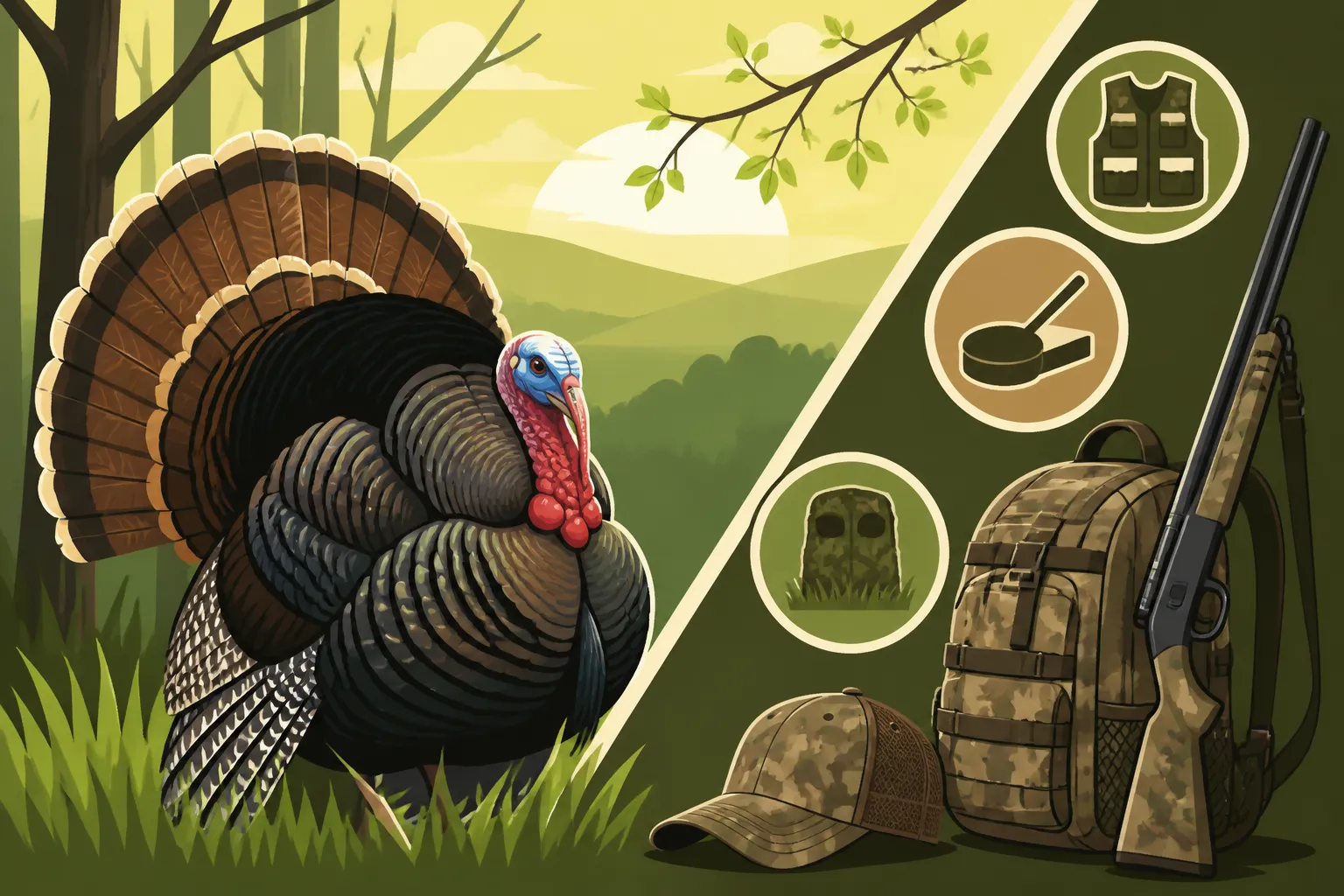
Turkey Gear for a Virginia Spring
There's nothing quite like the sound of a gobbler hammering on the roost in a Virginia spring woods, but getting him to commit often comes down to more than just luck and a good call. From the moment you step foot in the predawn darkness until you're packing out a longbeard, the right gear can make or break your hunt, often turning a frustrating silent morning into an unforgettable encounter. This guide will walk you through the essential equipment for tackling Virginia's diverse spring turkey terrain, ensuring you're prepared for whatever these wily birds throw your way.
The Foundation: Your Shotgun and Ammunition
When it comes to spring turkey hunting, your shotgun isn't just a tool; it's the anchor of your entire strategy. A well-chosen, properly patterned firearm loaded with the right ammunition gives you the confidence to make ethical, clean shots when that moment of truth arrives. You'll encounter varying shot distances and cover types in Virginia, from open field edges in the Piedmont to thick, unforgiving mountain laurel patches in the Blue Ridge, making your shotgun choice and setup paramount.
Choosing the Right Gauge and Choke
For many years, the 12-gauge reigned supreme in the turkey woods, and for good reason. Its ability to handle heavier shot charges and deliver dense patterns at extended ranges made it the go-to. However, in recent years, advancements in ammunition technology have propelled the 20-gauge into serious contention, especially with the advent of high-density tungsten loads. A 20-gauge offers a lighter carry, less recoil, and, with the right setup, can deliver patterns that rival or even surpass older 12-gauge setups. Consider the terrain you'll be hunting; a lighter 20-gauge might be a blessing during long treks up and down mountain ridges, while a 12-gauge might provide a slight edge if you anticipate longer shots across agricultural fields.
Regardless of gauge, the choke tube is arguably the most critical component for turkey hunting. You'll want a very tight constriction, typically an "extra full" or a specialized "turkey choke." These chokes are designed to squeeze the shot column into the tightest possible pattern, ensuring maximum pellet density on a turkey's head and neck. Patterning your shotgun before the season opens is non-negotiable. Don't just shoot once; try several different brands and shot sizes of ammunition at various distances (20, 30, 40, and even 50 yards) to see what your specific gun and choke combination prefers. You're looking for a consistent, dense pattern with enough pellets in the kill zone to ensure a swift harvest. This practice also helps you understand your shotgun's maximum ethical range, which is crucial for making responsible decisions in the field. Imagine calling in a hesitant gobbler that hangs up at 45 yards; knowing your gun can put enough pellets on target at that distance can be the difference between tagging out and going home empty-handed.
Ammunition for Virginia Gobblers
Once you've settled on your gauge and choke, it's time to pick your ammunition. The market offers a dizzying array of turkey loads, but they generally fall into a few categories: traditional lead shot, and various forms of high-density non-toxic shot like tungsten alloy. While lead shot remains a viable and effective option, especially in shot sizes #4, #5, or #6, many hunters are turning to the newer high-density loads. These loads, often made of tungsten, are significantly denser than lead, meaning smaller pellets carry more energy and can penetrate deeper. This allows for smaller shot sizes, like #7 or #9, to be used effectively, resulting in a much higher pellet count in the pattern. More pellets in the pattern mean a greater chance of hitting the vital head and neck area, even with slight movements from the bird.
When you're out in the Virginia woods, whether you're working a gobbler across a field or trying to pull one through thick hardwoods, knowing your ammunition can deliver a clean kill is paramount. Consider a scenario where a tom comes strutting in but stops just behind a small sapling, leaving only its head and neck exposed. A dense pattern from a high-quality tungsten load can deliver the necessary energy to cleanly dispatch that bird, even if you only have a small window. Always check local regulations regarding shot materials, particularly if hunting on certain public lands, though generally, lead shot is permissible for turkeys in most of Virginia. Remember, the goal is always a quick, humane harvest, and investing in quality ammunition that patterns well in your shotgun is a critical step towards that goal. For more on what's legal and effective, take a look at Turkey Shotguns and Chokes.
Mastering the Art of the Call
Turkey hunting is, at its heart, an immersive conversation with the wild. Without the ability to speak their language, or at least mimic it convincingly, your chances of success plummet. Carrying a versatile array of calls and knowing when and how to deploy them is a skill that separates the occasional opportunist from the consistent turkey hunter. Virginia's gobblers have heard it all, especially on public lands, so presenting a realistic and varied repertoire is key.
Essential Mouth Calls and Pot Calls
Let's start with mouth calls, also known as diaphragm calls. These small, horseshoe-shaped pieces of latex stretched over a frame fit into the roof of your mouth, allowing you to produce a variety of turkey sounds hands-free. This hands-free advantage is enormous, especially when a gobbler is closing the distance and you need to keep your gun shouldered and eyes peeled. Different cuts of latex, like batwing, ghost cut, or combo cut, produce distinct sounds, from sharp, crisp yelps to raspy, deep clucks. Mastering a mouth call takes practice—a lot of it—but the ability to yelp, cluck, purr, and cut without moving your hands is invaluable. Imagine a tom hot on your trail, cautiously approaching through a stand of pines. Being able to offer soft purrs and clucks without shifting your body can coax him the last few yards into range.
Pot calls, also known as friction calls, are another cornerstone of any turkey hunter's arsenal. These calls consist of a circular pot made of slate, glass, or aluminum, and a striker, usually made of wood, carbon, or synthetic material. By dragging or tapping the striker across the surface of the pot, you can create a wide range of turkey sounds. Each surface material has a unique sound profile: slate offers softer, more realistic purrs and clucks, while glass and aluminum tend to be louder and sharper, excellent for cutting and yelping to reach distant birds. Pot calls are often easier for beginners to learn than mouth calls, as the mechanics are more intuitive. Their volume and versatility make them perfect for setting up on a field edge or calling in thick timber where projecting sound is important. The best practice is to carry at least one mouth call and one pot call, allowing you to adapt to the bird's mood and the environment. Learning to switch between them seamlessly can make you sound like multiple hens, increasing your appeal to a lonesome gobbler.
Locator Calls and Specialty Calls
Beyond the core calling tools, locator calls are your secret weapon for finding birds, especially in vast tracts of public land. These calls mimic the sounds of other animals that often provoke a shock gobble from a tom. Owl hoots are fantastic at first light, imitating a barred owl, which often makes a gobbler sound off from his roost. Crow calls are effective throughout the day, as a loud caw can also trigger a response. Coyote howls, hawk screams, and even peacock calls can work in specific situations. The key is to use them strategically, especially early in the morning, to pinpoint a bird's location without sounding like another hen, which might make him wary. A loud owl hoot echoing through the pre-dawn darkness can often get a roosted gobbler to betray his position, giving you a starting point for your approach. Calling a Virginia Gobbler Off the Roost discusses more about this technique.
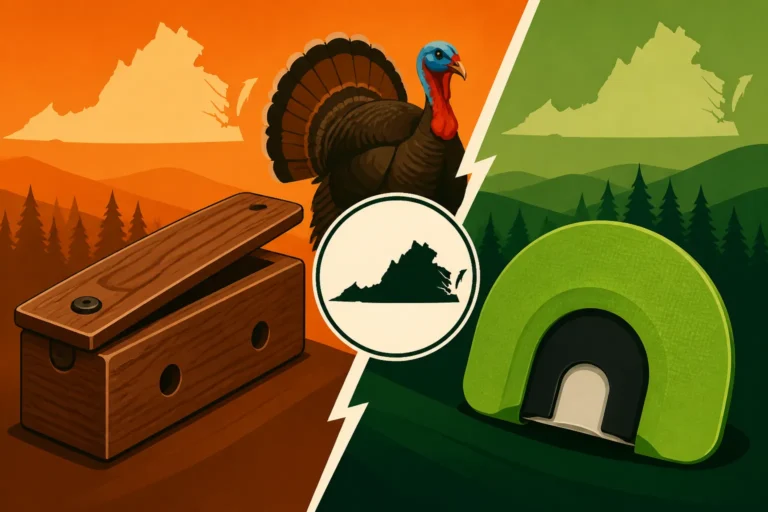
Specialty calls also have their place. Box calls, with their hinged lids and resonating chambers, are excellent for producing loud, consistent yelps and cuts, perfect for reaching out to distant birds or when windy conditions make other calls less effective. Push-button calls are incredibly easy to use, making them a great option for beginners or for those times when you need a quick, subtle cluck or purr. Gobble tubes can replicate a tom's gobble, which can be an incredibly effective, albeit risky, tactic for provoking a dominant gobbler into challenging an "intruder." However, remember that gobbling can also attract other hunters, so use it with extreme caution and always prioritize safety. The table below outlines some popular call types and their best uses.
| Call Type | Primary Use | Pros | Cons |
|---|---|---|---|
| Mouth Call | Yelps, Clucks, Purrs (hands-free) | Versatile, portable, allows hands-free use | Requires significant practice to master |
| Pot Call | Yelps, Cuts, Purrs (various tones) | Good volume, easier to learn, realistic | Requires hand movement, less portable |
| Box Call | Loud Yelps, Cuts | Excellent volume, consistent sound | Bulky, less subtle, can be damaged by water |
| Locator Call | Shock Gobbles (Owl, Crow, Coyote) | Locates distant birds, doesn't sound like hen | Can spook wary birds if overused |
| Gobble Tube | Replicates Gobble | Aggressive tactic, can draw in dominant toms | Can attract other hunters, risky |
Visual Deception: Decoys and Blinds
Sometimes, the best calling in the world isn't enough. Gobblers are visual creatures, and seeing another turkey can often be the final push they need to commit to range. Decoys provide that critical visual element, turning a hesitant tom into a committed suitor. Coupled with effective concealment, whether from a ground blind or natural cover, you can create an irresistible setup for even the most cagey Virginia longbeard.
Turkey Decoy Strategies for Virginia
The world of turkey decoys has expanded dramatically, offering hunters a range of options from minimalist fanned tails to lifelike full-body models. For Virginia hunting, simplicity and realism often win. A common and highly effective setup involves one or two hen decoys, perhaps a feeding hen and an upright, alert hen. This mimics a natural scenario and can draw in both curious and breeding-minded gobblers. Add a jake decoy to the mix, and you're appealing to the territorial nature of dominant toms, who might see the jake as a challenge to their dominance. Place the jake in a submissive posture (like half-strutting) to make it more believable. For aggressive tactics, especially if you're targeting a gobbler you know is dominant, a full-strut gobbler decoy can be a game-changer, although it might also intimidate younger or less aggressive birds.
Placement is everything. When hunting field edges or open woods, position your decoys within your effective shotgun range, typically 20-30 yards from your hidden position. Angle them so that an approaching gobbler will present a broadside or slightly quartering-away shot as he focuses on the decoys. If you're using a jake decoy, point its head slightly away from your position, as a real gobbler will often approach a rival from the front. In situations with pressured birds, such as those found on some popular WMAs, a simple, realistic hen decoy, or even just a fanned tail, can be less intimidating than a full-strut tom, encouraging a more cautious approach. Consider the wind and sun direction as well; position decoys so they are visible from the likely direction of approach and don't cast harsh shadows that might look unnatural. For creative deployment of decoys, check out Decoy Placement for Pressured Virginia Birds.
Ground Blinds and Natural Cover
While calling is auditory and decoys are visual, remaining unseen is paramount. This is where concealment comes into play, whether through the use of a ground blind or by expertly utilizing natural cover. Pop-up ground blinds have become incredibly popular for turkey hunting, particularly for those who prefer to sit still for extended periods, hunt with youth, or need extra protection from the elements. These blinds offer 360-degree concealment, allowing for subtle movements, and they often have plenty of shooting windows to adapt to different shot angles. They're excellent for setting up on field edges, in open timber, or along food plots. Their main drawbacks are their bulk and the time it takes to set them up, making them less suitable for highly mobile, run-and-gun tactics.
For hunters who prefer to move more frequently or hunt in areas where blinds are impractical, mastering the art of utilizing natural cover is essential. This involves scouting out spots with dense undergrowth, large-diameter trees, blowdowns, or thickets that can break up your outline. Always set up with a tree or large piece of cover at your back, not just for concealment, but also for safety. This prevents a bird from circling behind you undetected and helps protect your back from another hunter if they mistake your calling for a real turkey. When working a ridge in the George Washington National Forest or still-hunting through a pine plantation, your ability to quickly melt into the background against a big oak or a cluster of pines is crucial. Remember to always face the direction you expect the turkey to approach from, minimizing movement as the bird comes into view. Sometimes the best "blind" is simply a well-chosen natural ambush point.
Staying Concealed and Comfortable: Clothing and Footwear
Spring turkey hunting in Virginia is as much about enduring the elements and remaining undetected as it is about calling. One moment it can be freezing with a biting wind, the next it's a muggy, sweat-inducing climb up a mountain. Your clothing and footwear need to be versatile, comfortable, and, most importantly, provide effective concealment. A single flash of skin or a mismatched pattern can send a wary gobbler scurrying, costing you a shot.
Camouflage and Layering for Spring Conditions
Effective camouflage is non-negotiable for turkey hunting. Turkeys have incredibly keen eyesight and can pick out unnatural shapes and movements with ease. Your camo should blend seamlessly with the late spring foliage in Virginia, which typically means patterns with a mix of browns, greens, and darker tones. Don't forget head-to-toe coverage: a face mask or face paint, gloves, and a full camo pattern on your clothing. Even a bright watch face or a bit of exposed skin can be enough to spook a sharp-eyed gobbler.
Layering is the smart hunter's strategy for navigating Virginia's notoriously unpredictable spring weather. Early mornings can be crisp, especially in higher elevations or during an unseasonably cool spell. A good base layer that wicks moisture away from your skin is essential, followed by an insulating mid-layer like fleece or a light puffy jacket. Your outer layer should be a durable, quiet camouflage shell that offers protection from wind and light rain. As the day warms up, you can shed layers, stowing them in your turkey vest or pack. Consider a lightweight rain suit if the forecast even hints at showers; getting soaked can quickly end a hunt and make for a miserable experience. Remember that silence is golden; choose fabrics that don't make rustling noises when you move. The best advice is to dress as if it's 10-15 degrees colder than the actual temperature in the morning, knowing you can always remove layers.
Boots for Virginia's Varied Terrain
Virginia's hunting grounds offer a wide range of topography, from the swampy bottomlands of the Tidewater region to the steep, rocky slopes of the Appalachian Mountains. Your footwear needs to be up to the challenge, providing comfort, support, and protection from moisture. For hunting creek bottoms, marshy areas, or agricultural fields after a rain, a good pair of rubber boots is invaluable. They'll keep your feet dry when crossing shallow streams or slogging through muddy fields, and they're easy to clean. Look for models with aggressive tread for traction and comfortable insoles for long days afield.
If your spring turkey adventures take you into the rugged George Washington or Jefferson National Forests, a sturdy pair of waterproof hiking boots is a better choice. These boots offer superior ankle support, crucial for navigating uneven terrain, loose rocks, and steep climbs. Ensure they are well broken in before the season to avoid blisters. Look for features like GORE-TEX or similar waterproof membranes to keep your feet dry through dew-soaked undergrowth and unexpected puddles. Traction is also key on steep, often leaf-covered slopes. No matter your choice, prioritize comfort above all else. You'll be doing a lot of walking, stopping, and sitting still, and uncomfortable feet can quickly sour an otherwise perfect morning. Having a reliable pair of boots can be the difference between reaching that distant gobbler's roost and turning back early.
Essential Tools and Accessories for the Field
Beyond the big-ticket items like your shotgun and calls, a collection of smaller, often overlooked tools and accessories can significantly enhance your spring turkey hunt. These items contribute to comfort, safety, and efficiency, ensuring you're prepared for any situation that arises in the Virginia wilds. Being organized and having the right gear readily accessible saves time and prevents frustration, allowing you to focus on the hunt itself.
Vests, Packs, and Carry Systems
A well-designed turkey vest is more than just a piece of clothing; it's your mobile command center. These vests are specifically engineered with numerous pockets and compartments to keep your calls, ammunition, water, snacks, and other essentials organized and easily accessible. Look for vests with a comfortable, integrated seat cushion or a flip-down pad. This is a game-changer when you're sitting against a tree for hours, waiting for a bird to commit. Many vests also feature hydration sleeves, game bags, and specialized pockets for mouth calls, pot calls, and strikers, ensuring everything has its place.
For hunters who prefer a more minimalist approach or engage in highly mobile, run-and-gun tactics, a small daypack might be a better option. This allows you to carry essentials while keeping a lighter profile. However, you'll still need a comfortable, quiet way to sit. Consider a separate, foldable seat pad. The choice between a vest and a pack often comes down to personal preference and hunting style. If you plan to set up and stay put for long periods, a vest with all its amenities is hard to beat. If you intend to cover a lot of ground, constantly moving and re-positioning, a lighter pack might be more advantageous. No matter your choice, ensure it allows for quick, silent access to your calls and shotgun shells.
Optics, Navigation, and Safety Gear
While turkeys are primarily an auditory and visual hunt at close range, a good pair of binoculars can be incredibly useful, especially when Scouting Virginia Public Land Before Season or when trying to identify distant birds across open fields. An 8x or 10x magnification is usually sufficient, allowing you to scan distant wood lines for strutting toms or identify decoys without needing to move.
For navigation, especially on vast public lands like the George Washington National Forest, a reliable GPS unit or a smartphone app like GoHunt is essential. These tools allow you to mark your vehicle, potential roosting sites, property lines, and your path, ensuring you don't get lost in unfamiliar terrain. Many apps also offer satellite imagery and topo maps, which are invaluable for identifying terrain features and potential turkey hotspots. Always carry a portable power bank for your phone if relying on an app.
Safety should always be a top priority. A small first-aid kit, containing essentials for minor cuts, blisters, and insect bites, is a must-have. A good quality headlamp or flashlight is crucial for navigating to your setup in the pre-dawn darkness and for walking out after a successful hunt. A sharp knife is indispensable for field dressing your bird. Don't forget insect repellent, especially in areas prone to ticks and mosquitoes during Virginia's spring. A compass and a physical map, even if you rely on electronics, are excellent backups. Remember, being prepared means being safe and effective in the field.
After the Shot: Recovery and Field Care
The moment you pull the trigger on a gobbler is often a blur of adrenaline and excitement, but the work isn't over. Recovering your bird quickly and humanely, and then properly caring for the meat, is the final, crucial step in any successful hunt. Failing to do so can result in a lost bird or spoiled meat, negating all the effort you put into the hunt.
Tracking and Recovering Your Bird
Even with a perfect shot, turkeys can sometimes run a surprising distance. The first rule after the shot is patience. Unless the bird is clearly flopping its last breaths, resist the urge to immediately run to where it fell. Give the bird a few minutes, perhaps 10-15, to expire. This allows the bird to settle and minimizes the chance of it gaining a second wind and running off, making tracking much more difficult. Mark the exact spot where the bird was standing when you shot, as well as where you last saw it if it ran.
Begin your search at the point of impact, looking for feathers, blood, or disturbed ground. Turkeys often leave a distinctive "death flutter" of feathers, which can be a good indicator of a solid hit. Follow any blood trails or tracks carefully. If the bird ran into thick cover, slow down and grid-search the area. Many a turkey has been found tucked under a brush pile or in a dense thicket just a short distance from the shot. Always approach a downed bird with caution; even seemingly dead turkeys can still deliver a powerful kick or flap. Pin its head down before picking it up. Safety is paramount during recovery: if you're hunting with others, communicate clearly, and consider wearing a bit of blaze orange during the recovery process, especially if walking through thick cover, to make yourself visible to other hunters. For advice on another species, consider Tracking a Deer Through Virginia Leaf Litter.
Field Dressing and Transporting Your Harvest
Once you've recovered your gobbler, proper field dressing is key, especially if temperatures are warm. Turkeys, particularly in the spring, can spoil quickly if not cooled. The quickest way to cool the bird and preserve the meat is to remove the entrails as soon as possible. Make a small incision near the vent, being careful not to puncture the intestines. Reach in and remove the internal organs. You can also crop the bird by removing the esophagus and trachea from the chest cavity. This helps cool the bird from the inside out. If you plan to have the bird mounted, consult your taxidermist beforehand for specific instructions on how to field dress without damaging the feathers or skin.
For transport, avoid tossing the bird directly into the trunk of a hot car. If you have a long drive home, bring a cooler with ice to store the plucked or whole bird. If you're going to pluck the bird later, keeping it whole and cool is fine for a few hours. If you only plan to keep the breast meat and legs, you can often "breast out" the bird in the field, reducing the amount of weight you need to carry. Simply skin the breast and remove the two large breast fillets, then remove the legs. Place these cuts into game bags or a cooler immediately. This is especially useful if you're deep in the backwoods of a National Forest. Always ensure you comply with Virginia's tagging and reporting requirements as soon as you've harvested your bird, which can often be done via the Virginia DWR app. Knowing Virginia Turkey Checking Requirements is an important part of the process.
Disclaimer
This article is for general informational purposes only and does not constitute professional advice. Laws, prices and regulations vary by location and change over time. Consult a qualified professional for guidance on your specific situation.