Arrow Weight for Short Shots
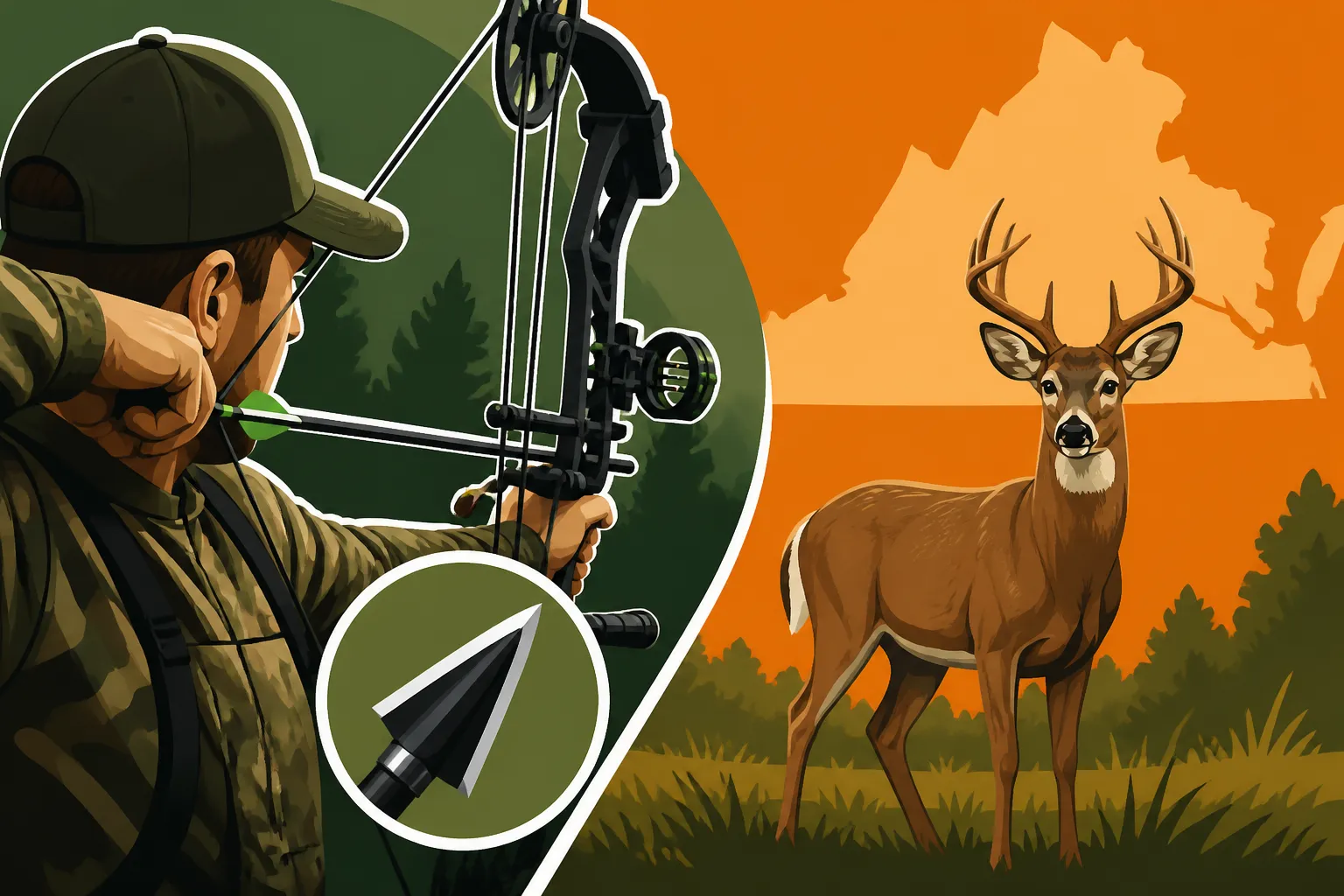
For any Virginia archer, that moment when a deer steps into your shooting lane at spitting distance – say, 15 or 20 yards – is exhilarating. But it's also a moment that can induce a sudden panic: "Is my arrow set up right for this?" The truth is, while many hunters focus on long-range accuracy, optimizing your arrow weight for those crucial short shots can make all the difference between a clean, ethical harvest and a heartbreaking recovery effort. This guide will walk you through the nuances of arrow weight, penetration dynamics, and how to fine-tune your setup to excel when deer are practically under your stand or in your urban archery zone backyard.
Understanding Arrow Weight and Its Components
When we talk about arrow weight, it's more than just the shaft itself; it's the sum of several crucial parts working together. Getting this right for those up-close encounters is a game-changer, especially in Virginia's diverse terrain.
What "Arrow Weight" Really Means
Arrow weight, often expressed in grains (gr), is the total mass of a fully fletched arrow, including the nock, shaft, insert, and the broadhead. It's not just about how heavy the bare carbon tube is. Every single component adds to that final number, and each grain contributes to how your arrow flies and, more importantly, how it penetrates. For those close-quarter shots, having sufficient total arrow weight is paramount for driving your broadhead deep, even if you hit a rib or shoulder blade. You want an arrow that has enough inertia to push through resistance without losing all its energy too quickly.
Think about the difference between throwing a ping-pong ball and a golf ball at a target; the golf ball, with its greater mass, will hit with more authority even if thrown at a similar initial speed. The same principle applies to your arrow setup. You might be shooting a fast bow, but a lighter arrow can shed its energy much faster on impact.
The Building Blocks of Your Arrow
Your complete arrow setup is a carefully engineered system. Let's break down the main contributors to its overall weight:
- Arrow Shaft: This is the backbone, typically carbon, aluminum, or a carbon-aluminum blend. Shafts come in various weights and spines (stiffness ratings), which are critical for proper flight from your specific bow setup. A heavier shaft material or a thicker wall will naturally add more mass. Many hunters choose a standard carbon shaft for a good balance of durability and weight.
- Insert/Outsert: This small piece connects your broadhead to the arrow shaft. Standard aluminum inserts are common, but heavier brass or steel inserts are available for those looking to add weight up front, which can significantly impact an arrow's Front of Center (FOC) balance, something we'll touch on later. Adding a heavy insert is a relatively easy way to increase total arrow weight without changing the shaft.
- Broadhead: The business end of your arrow, broadheads themselves come in a wide range of weights, typically from 85 to 150 grains or more. Fixed-blade broadheads, mechanical broadheads, and hybrid designs all contribute differently. A 125-grain broadhead will obviously add more to your total weight than a 100-grain one, and this is another simple way to adjust your total arrow weight.
- Fletching and Nock: While smaller components, even these add to the overall mass. Standard plastic vanes are common, but some archers prefer natural feathers, which can be lighter. The nock, too, has a minimal but present weight. Every little bit adds up to the final total.
Kinetic Energy vs. Momentum: Why Both Matter
This is where the physics lesson comes in, but don't worry, we're keeping it practical for the woods. Both kinetic energy (KE) and momentum (M) are vital for arrow performance, especially at short range.
- Kinetic Energy (KE): This is the energy of motion, calculated as (mass * velocity^2) / 450,240. Notice that velocity is squared, meaning speed has a huge impact on KE. A faster, lighter arrow might have a higher KE number than a slower, heavier arrow. High KE is fantastic for maintaining a flat trajectory over longer distances.
- Momentum (M): This is the quantity of motion, calculated as (mass * velocity) / 7,000. Here, mass and velocity have an equal weighting. A heavier arrow, even if slightly slower, often has higher momentum. Momentum is key for penetration, particularly when encountering resistance like bone or thick hide.
For those short shots in Virginia, where you're not worried about a lot of arrow drop, momentum is arguably more critical than kinetic energy. You want an arrow that will smash through anything in its path and exit the animal for a good blood trail. A super-fast, light arrow might transfer a lot of energy to the animal, but if it doesn't get a full pass-through, your recovery could be much tougher. This is why many experienced hunters lean towards a slightly heavier arrow for deer, even if it means a tiny drop in speed. You want something that punches hard.
The Dynamics of Short Shots in Virginia Archery
Virginia offers diverse hunting opportunities, from dense mountain forests to wide-open Piedmont fields, and even Urban Archery Hunting in Virginia Cities. Each environment can present those close-range, make-or-break shot opportunities.
Defining "Short Shots" in a Hunting Context
In the archery world, a "short shot" typically refers to anything within 20 to 30 yards. For many, it's even closer – think 10 to 20 yards. At these distances, factors like wind drift and significant arrow drop are minimized. What becomes paramount is quiet execution, pinpoint accuracy, and, most critically, penetration.
When a deer is close, you often don't have time for a perfect, textbook draw. You might be twisted in a treestand, drawing around branches, or trying to stay hidden as the deer closes the distance. The shot window can be small, and the angle might not be ideal. This is precisely when you need an arrow setup that is forgiving of slight imperfections and has the raw power to punch through to the vitals. A marginal hit with a light arrow might stop short, but the same hit with a heavier, higher-momentum arrow often results in a pass-through. This is why archers often consider Broadheads for Timber Shots very carefully.
Common Virginia Scenarios for Close-Range Archery
Virginia's varied landscape presents several common scenarios where you'll find yourself needing to make a short, impactful shot:
- Dense Mountain Laurel and Oak Thickets: When you're Still-Hunting Jefferson Forest Ridges or set up in a thick pocket of timber in the George Washington National Forest, deer can materialize almost silently. A buck might pop out of a dense laurel patch at 15 yards, offering only a brief window. You'll need an arrow that flies true through any incidental twig deflection and delivers maximum energy on impact.
- Treestands and Ground Blinds in Hardwoods: Whether you're in a stand overlooking a white oak flat or tucked into a ground blind on a Piedmont field edge, deer often work their way directly under or very close to your position. Shots from elevated positions or from within a blind often involve steep angles or tight spaces, demanding a robust arrow that ensures a pass-through, even if it hits the ground soon after. This is where a solid Treestand Setups in George Washington National Forest strategy comes into play, aiming for close encounters.
- Urban Archery Zones: Many Virginia cities have special urban archery seasons. These areas often feature smaller woodlots, creek bottoms, and dense suburban cover. Deer are accustomed to human presence but can be jumpy. Shots here are almost always at close range, typically under 25 yards, and often involve navigating fences, buildings, or tight corridors. An ethical, quick kill is absolutely essential, making arrow penetration a top priority. Learning how to navigate Hunting a Virginia Urban Archery Zone relies heavily on close-range precision.
In all these scenarios, a heavy, well-tuned arrow can provide peace of mind and improve your chances of a swift, ethical harvest.
The Critical Need for Penetration at Short Range
Penetration is the name of the game for successful bowhunting, especially for whitetails. A pass-through shot, where the arrow completely exits the animal, creates two wound channels and significantly increases the likelihood of a rapid bleed-out and a good blood trail. Without a pass-through, the arrow might remain in the animal, plugging the entry hole and making the blood trail sparse or nonexistent.
At short ranges, while velocity is still good, the opportunity for an imperfect shot (hitting a shoulder blade, a rib, or even just dense muscle) increases due to the proximity of the animal and your own adrenaline. This is where a higher-momentum arrow truly shines. It carries more force to overcome resistance. Imagine trying to push a nail through a board with a small hammer versus a sledgehammer. The sledgehammer, with its greater mass, will drive the nail much deeper, even if swung at a slower speed. Your heavy arrow is that sledgehammer. It's about ensuring your Fixed Versus Mechanical Broadheads choice, combined with adequate arrow weight, will get the job done.
Optimizing Arrow Weight for Close Encounters
Finding the perfect arrow weight is a balance. You want enough mass for penetration without sacrificing too much speed, which could lead to significant arrow drop at slightly longer ranges if you misjudge.
The Case for a Heavier Arrow
For short shots, the arguments for a heavier arrow are compelling:
- Superior Penetration: This is the primary benefit. A heavier arrow carries more momentum, allowing it to drive through hide, muscle, and even bone with greater ease. This dramatically increases your chances of a pass-through, leading to quicker recoveries and better blood trails. When hunting big-bodied Virginia bucks, especially during the rut when their hide thickens, this extra punch is invaluable.
- Increased Forgiveness: Heavier arrows tend to be more forgiving of shooter error or slight contact with brush. Their momentum helps them maintain a straighter flight path, even if slightly disrupted. In the tight cover often found in Virginia's woods, this can save a shot.
- Reduced Noise: A heavier arrow often flies a little quieter, especially from faster bows. This is because the bow expends its energy more efficiently, leading to less vibration and "shock." In a quiet forest, every decibel counts, and a deer is less likely to jump the string if your shot is quieter.
- Durability: Heavier arrows, often built with thicker carbon walls or heavier components, can sometimes be more durable, withstanding impacts better. This is a subtle benefit, but it can extend the life of your arrows.
Many archers aim for a total arrow weight between 450 and 550 grains for deer hunting. Some even go heavier, into the 600+ grain range, especially for larger game or those prioritizing maximum penetration.
The Case Against an Ultra-Light Arrow
While a faster arrow is appealing, going too light can introduce problems, especially for those critical short shots:
- Reduced Penetration: This is the biggest drawback. An ultra-light arrow might scream out of your bow, but it loses energy rapidly on impact. It's much more likely to get hung up in bone or muscle, preventing a pass-through and leading to a poor blood trail. You might have great kinetic energy, but if you lack momentum, your broadhead won't drive deep.
- Increased Noise: Counterintuitively, very light arrows can sometimes be louder. Your bow generates a certain amount of energy, and if the arrow is too light to absorb it efficiently, more energy is left over as vibration and sound, leading to a "twang" or "thwack" that can cause deer to jump the string.
- Less Forgiving: Lighter arrows can be more susceptible to wind drift and contact with brush, leading to inconsistent flight. While this is less of a concern at 15 yards, it's still a factor if you're slightly off.
- Arrow Damage: With less mass to absorb the impact, a very light arrow can sometimes be more prone to fracturing or bending on hard impacts.
Generally, most serious deer hunters avoid going below 400 grains total arrow weight, and many prefer a good margin above that. Remember, you want to be able to punch through.
Finding Your Sweet Spot: Balancing Performance
So, how do you find that perfect balance for your Virginia hunting style? It starts with understanding your bow, your draw weight, and the type of shots you expect to take.
- Start with a Baseline: Most bows perform well with arrows in the 400-500 grain range. This offers a good blend of speed and penetration for whitetails. If you are shooting a standard compound bow with a 60-70 lb draw weight, this range is a great starting point.
- Consider Your Draw Weight: If you have a lower draw weight (say, 40-50 lbs, perhaps for a youth hunter or someone with physical limitations), a slightly heavier arrow (relative to your draw weight) becomes even more critical for maximizing penetration. You won't have the raw power of a heavier draw weight, so you need the arrow's mass to do more of the work. For more on this, check out Bow Draw Weight for Virginia Whitetails.
- Experiment with Broadhead Weight: A simple way to adjust your total arrow weight without changing shafts is to switch broadhead weights. If you're currently shooting a 100-grain broadhead, try a 125-grain or even 150-grain. This will instantly increase your total arrow weight and often improve FOC.
- Add Weight Up Front: Utilizing heavier inserts (like brass or steel) is another excellent way to add mass and improve FOC. This puts weight where it helps most: driving the broadhead.
- Utilize Technology: Tools like GoHunt's arrow build calculators (or similar apps) can help you model different arrow components and predict total weight, FOC, kinetic energy, and momentum. This is a fantastic way to experiment with theoretical setups before spending money on components. These calculators can give you a solid starting point for your arrow selection, showing you how different shaft materials, insert weights, and broadhead choices impact your overall numbers.
- Test and Tune: There's no substitute for shooting your actual setup. We'll dive into this more in the next section.
Here’s a simplified comparison of arrow weight categories for Virginia deer hunting:
| Arrow Weight Category | Total Grains (Approx.) | Pros for Short Shots | Cons for Short Shots | Best For |
|---|---|---|---|---|
| Ultra-Light | < 350 | Very fast flight, flat trajectory (long range) | Poor penetration, louder, less forgiving | Not recommended for deer hunting |
| Light | 350-400 | Fast, good KE | Marginal penetration on bone, potential noise | Smaller deer, very precise shot placement |
| Medium/Balanced | 400-500 | Good balance of speed & penetration, quiet | May not achieve pass-through on severe bone hits | General deer hunting, varied terrain |
| Heavy | 500-600+ | Excellent penetration, very quiet, forgiving | Slower speed, more trajectory drop (long range) | Thick cover, large deer, heavy bone impact potential |
For most Virginia deer hunters, aiming for the "Medium/Balanced" to "Heavy" category will yield the best results for those critical short-range encounters.
Putting It All Together: Tuning and Practice
Having the right components is one thing; making them work together harmoniously is another. Proper tuning and consistent practice are the final ingredients for maximizing your arrow's potential on those close shots.
The Role of FOC and Broadhead Selection
Front of Center (FOC) refers to how far forward the balance point of your arrow is, expressed as a percentage of the arrow's total length. A higher FOC (generally 10-15% or more for hunting) is desirable for several reasons:
- Improved Stability: Arrows with higher FOC tend to stabilize faster in flight, which is crucial for accuracy, especially at closer ranges where the arrow hasn't had much time to settle. This can help correct for minor form errors.
- Enhanced Penetration: Putting more weight up front helps drive the broadhead deeper into the animal. It's like a dart: a heavy point helps it stick. This is particularly beneficial for fixed-blade broadheads, which can be more sensitive to FOC than mechanicals.
- Broadhead Selection: Your broadhead choice is intimately linked with your arrow weight and FOC. Fixed Versus Mechanical Broadheads is a perennial debate. Fixed-blade broadheads, especially those with smaller cutting diameters, generally require less energy to penetrate but demand a perfectly tuned arrow for optimal flight. Mechanical broadheads can be more forgiving of slight tuning issues but rely more heavily on kinetic energy and momentum to deploy and penetrate effectively. For short shots, a well-tuned fixed-blade broadhead on a heavy, high-FOC arrow can be an incredibly potent and reliable combination.
When selecting broadheads, consider matching their weight to your arrow's spine and your desired FOC. Don't just slap on a heavy broadhead without checking how it affects your arrow's flight and overall dynamics.
Tuning Your Bow for Optimal Performance
Even the best arrow setup won't perform if your bow isn't properly tuned. Tuning ensures that your arrow leaves the bow cleanly, with no unwanted oscillations or contact with the rest or cables.
- Paper Tuning: This is a classic method where you shoot through paper at a close distance (e.g., 5-10 yards) to analyze how the fletching tears the paper. Ideal tears show a small hole where the broadhead entered, with three small fletching holes around it. Tears indicate problems with cam timing, rest position, or nocking point.
- Bare Shaft Tuning: A more advanced method where you shoot an arrow without fletching alongside a fletched arrow at slightly longer distances (20-30 yards). If both arrows group together, your bow is very well-tuned.
- Broadhead Tuning: This is the ultimate test. You shoot your broadhead-tipped arrows at 20-30 yards alongside your field-point-tipped arrows. Ideally, they should hit the same spot. If they don't, it indicates a tuning issue that needs to be addressed before you head to the woods.
A properly tuned bow ensures that all the careful consideration you've put into your arrow weight and components translates into straight, true flight, maximizing the penetration potential of your chosen setup. This is non-negotiable for ethical hunting.
Practice, Practice, Practice for Short Shots
All the gear and tuning in the world won't matter if you can't execute the shot when it counts. Practicing for short shots in a hunting context is different from target shooting at 20 yards.
- Vary Your Distances: Don't just shoot at 20 yards. Practice at 5, 10, 15, 20, and 25 yards. Notice how your sight pins align and how your arrow feels. You'll quickly see that at these close distances, pin gaps are minimal, and consistent form is paramount.
- Practice from Hunting Positions: Most deer aren't shot from a perfectly flat, open range. Practice from a treestand, a ground blind, kneeling, sitting, or even simulating awkward twists. Get comfortable drawing and shooting from the positions you expect to encounter in the Virginia woods.
- Shoot with Broadheads: Once your bow is broadhead tuned, incorporate broadhead practice into your routine. This will confirm your setup's accuracy and build confidence. Be sure to use a broadhead target designed to stop them without destroying it.
- Simulate Adrenaline: While difficult, try to simulate the pressure of a hunting scenario. Have a friend call out random distances, or imagine a deer appearing suddenly. The goal is to make the close shot feel routine, even when your heart is pounding.
- Focus on a Spot: At close range, it's easy to look at the whole deer. Train your eye to pick a precise spot – a hair, a wrinkle, a specific patch of hide – and aim for that. This level of focus is what separates a good shot from a great one.
- Quiet Draw and Shot: Practice drawing your bow silently and executing the shot without unnecessary movement. When a deer is only 15 yards away, it will hear and see everything.
By meticulously building your arrow, tuning your bow, and practicing diligently, you'll be well-prepared to make those crucial short shots count, ensuring a quick and humane harvest, whether you're stalking game during Bowhunting Virginia's Statewide Archery Season or targeting deer in your local Hunting a Virginia Urban Archery Zone.
Disclaimer
This article is for general informational purposes only and does not constitute professional advice. Laws, prices and regulations vary by location and change over time. Consult a qualified professional for guidance on your specific situation.