Why Mount Rogers Draws So Many Bear Hunters
If you've ever dreamt of heading into the mountains of Virginia with your bear tag in hand, chances are you've heard the whispers about Mount Rogers. It's a name that comes up again and again among seasoned bear hunters, often with a glint in their eye and a tale of a long pack out. But for those new to the area, or even new to serious bear hunting, it can be a bit of a mystery why this specific region draws such a crowd. This guide is here to unravel that mystery, explaining exactly why Mount Rogers stands out as a premier destination for pursuing black bears in the Old Dominion.
The Mount Rogers National Recreation Area: A Bear Hunter's Paradise
Mount Rogers, nestled in the southwestern corner of Virginia within the Jefferson National Forest, is a special place. It’s part of a vast, rugged wilderness that offers an experience unlike much of the rest of the state. When you're dreaming of big woods, steep climbs, and truly wild country, this is where you envision yourself. The sheer scale and untamed nature of this area are primary magnets for bear hunters looking for a challenge and a genuine wilderness experience.
Vast, Untouched Wilderness and Rugged Terrain
One of the biggest draws to Mount Rogers is its sheer size and the wildness it represents. We're talking about a landscape dominated by high-elevation peaks, deep hollows, and dense, unbroken timber. Unlike the patchwork of smaller woodlots and agricultural fields you might find in the Piedmont, this is continuous forest, stretching for miles. This kind of extensive habitat provides everything a black bear needs: seclusion, ample food, and safety from human encroachment.
The terrain itself is no joke. You'll encounter steep inclines, rocky outcrops, and thick laurel and rhododendron thickets that can make walking feel more like crawling. This ruggedness, while challenging for hunters, is a huge benefit for bears. It means fewer casual hikers and sightseers venture into the deeper recesses, leaving vast areas largely undisturbed. For a bear, that's a sanctuary, and for a bear hunter, it means the potential to find truly unpressured animals. It also means you’re often earning every step and every glimpse of game, which is part of the allure for many who seek a demanding hunt.
Abundant Mast Crops and Diverse Forage
A healthy bear population thrives on food, and the Mount Rogers area, particularly within the Jefferson National Forest, offers a smorgasbord of natural forage. The region is rich in mast-producing trees like various oaks (white, red, chestnut), hickory, and beech, which provide crucial hard mast in the fall. When those acorns and nuts start dropping, bears know exactly where to be. These food sources are fundamental to their diet, allowing them to put on critical weight before denning season.
Beyond hard mast, the diverse ecosystem provides a wealth of soft mast throughout the warmer months. Think of wild berries, black cherry, and even insects found under logs and rocks. This consistent and varied food supply throughout the year helps maintain a robust and healthy bear population, contributing to higher survival rates and successful reproduction. When you’re Hunting Bears Over Natural Mast in the Mountains, Mount Rogers is one of the first places that comes to mind because of its reliable bounty. Hunters scouting the area will often focus on these mast-producing ridges and hollows, knowing that bears won't be far behind once the food ripens.
Virginia's Thriving Bear Population and Strategic Management
Virginia's black bear population has seen a remarkable comeback over the past few decades, and nowhere is this more evident than in the western mountains, with Mount Rogers being a prime example. The Virginia Department of Wildlife Resources (DWR) has done an incredible job of managing this resource, allowing hunters to experience a truly impressive bear hunting opportunity.
Healthy and Expanding Bear Numbers
The numbers speak for themselves: Virginia boasts one of the healthiest and fastest-growing black bear populations in the eastern United States. While bears are found across much of the state, their density is particularly high in the mountainous regions. The extensive public lands in and around Mount Rogers provide an ideal environment for bears to flourish, free from many of the pressures found in more populated areas. This translates directly to better hunting opportunities.
When you head to Mount Rogers, you're not just hoping to see a bear; you're hunting in an area where encounters are genuinely probable. This isn't a "needle in a haystack" situation, though it certainly still requires skill and patience. The sheer volume of bears means a higher chance of crossing fresh tracks, finding active feeding areas, or even spotting a bear moving through cover. For many, the confidence that bears are truly there is a huge motivating factor to tackle the challenging terrain. You're hunting in a region where success is a real possibility, not just a distant dream.
Favorable Hunting Regulations and Season Structure
The DWR implements a robust and carefully considered bear hunting season, balancing conservation with hunter opportunity. While specific dates and regulations can vary slightly year to year, the general framework in western Virginia often includes a combination of still-hunting and dog-hunting seasons, providing options for different hunting styles. It’s important to stay current with the official DWR regulations for Virginia Bear Season Rules.
The longer, more liberal seasons in areas like Mount Rogers reflect the DWR's confidence in the health of the bear population. This often means more time afield, which can be crucial for a species as elusive as the black bear. Hunters appreciate the flexibility this provides, allowing them to adapt their strategies to weather patterns, mast availability, and even hunting pressure. The ability to pursue bears over an extended period, especially in an area known for high bear numbers, naturally draws a dedicated crowd.
Hunter Experience and Tactical Advantages
It's not just about the bears and the habitat; it's also about the unique hunting experience Mount Rogers offers. This isn't a casual stroll in the woods; it's a test of endurance, woodsmanship, and strategic thinking. Hunters who come here are looking for a specific kind of challenge, and the area delivers.
Less Pressure, More Solitude (If You Work For It)
While Mount Rogers draws many hunters, the vastness and ruggedness of the terrain mean that true solitude is achievable if you're willing to put in the effort. Unlike smaller public land tracts or areas easily accessible by road, the deep wilderness of Mount Rogers quickly filters out those who aren't prepared for a serious hike. The farther you get from a trailhead or forest road, the less likely you are to encounter other hunters.
This ability to escape pressure is huge for bear hunting. Bears are intelligent and adaptable, and they quickly learn to avoid areas with heavy human activity. By venturing into the backcountry, you're increasing your chances of finding undisturbed bears, potentially leading to more consistent sightings and successful stalks. Using tools like onX Hunt to identify remote pockets or areas with challenging topography can be a game-changer, helping you pinpoint those secluded spots where bears feel safe. This kind of hunting appeals to those who truly want to immerse themselves in the wild and earn their trophy through sweat and determination.
Diverse Hunting Methods and Opportunities
Mount Rogers is versatile enough to accommodate various bear hunting styles, which contributes to its broad appeal. Whether you prefer the quiet challenge of still-hunting, glassing vast slopes, or the excitement and tradition of hunting with hounds, the area offers opportunities for both.
For still-hunters, the vastness of the forest allows for long walks, carefully tracking sign, and setting up in areas with fresh activity. The varied terrain means you can adapt your approach, whether you're slowly picking apart a mast-rich ridge or carefully slipping through a thick draw. For those who hunt with dogs, the expansive public land offers the space and opportunity to turn out a pack and pursue bears in a more traditional manner, where allowed. This flexibility ensures that a wide range of hunters can find success and enjoyment in the Mount Rogers area, each pursuing bears in their preferred method.
| Hunting Method | Primary Appeal in Mount Rogers | Key Considerations |
|---|---|---|
| Still-Hunting | Solitude, tracking, spot-and-stalk on vast terrain | Requires high endurance, deep woods navigation, excellent scouting for fresh sign |
| Hunting with Hounds | Traditional pursuit, covering large areas, thrilling chase | Legal in specific areas/seasons, requires well-trained dogs and substantial effort |
| Stand Hunting | Patience, covering key travel corridors or food sources | Best in conjunction with extensive scouting; often means longer treks to secluded spots |
The Challenge and Reward
Ultimately, Mount Rogers draws so many bear hunters because it offers a truly challenging and incredibly rewarding experience. This isn't a hunt for the faint of heart; it demands physical fitness, mental fortitude, and a deep understanding of bear behavior and mountainous terrain. But for those who embrace the challenge, the rewards are immense.
Successfully hunting a bear in such rugged, wild country is an accomplishment that stands out. It's not just about the harvest; it's about the journey, the effort, and the intimate connection with nature. Every track you follow, every ridge you climb, and every cold morning spent glassing a distant slope adds to the story. This deep sense of achievement is what keeps hunters coming back year after year, drawn by the call of the wild and the promise of another adventure in the shadows of Mount Rogers. It’s a place that tests your limits and, in doing so, reveals your capabilities as a hunter.
Planning Your Mount Rogers Bear Hunting Adventure
Before you pack your bags and head for the mountains, a successful bear hunt in Mount Rogers requires thorough preparation. This isn't a last-minute destination; it's a commitment that pays dividends when you invest in scouting, gear, and physical readiness.
Essential Scouting and Research
Scouting is paramount when hunting an area as vast and complex as Mount Rogers. Don't just show up on opening day. Spend time in the woods before the season opens, looking for bear sign: tracks, scat, rubbed trees, and most importantly, active feeding areas. Pay attention to mast crop conditions; a good acorn year in one hollow might mean bears are concentrated there. Conversely, a poor year might scatter them in search of alternative food.
Digital mapping tools like GoHunt or onX Hunt are invaluable for pre-season scouting. You can identify potential access points, pinpoint clear-cuts, locate remote saddles or benches, and mark areas of dense cover where bears might bed. These apps allow you to study contour lines to understand the terrain and plan your routes, estimating elevation changes and distances. This kind of homework can significantly reduce wasted time and energy during the actual hunt, helping you focus on high-probability areas. Knowing how to Scouting Virginia Public Land Before Season is particularly critical for a challenging area like this.
Gear Up for the Mountains
The ruggedness of Mount Rogers demands specific gear. You'll be doing a lot of walking, often on steep and uneven ground, sometimes in challenging weather conditions. Sturdy, broken-in boots with good ankle support are non-negotiable. Layered clothing is key, as mountain weather can change rapidly from chilly mornings to warm afternoons, and back again. Wool or synthetic base layers are preferred for moisture wicking and warmth.
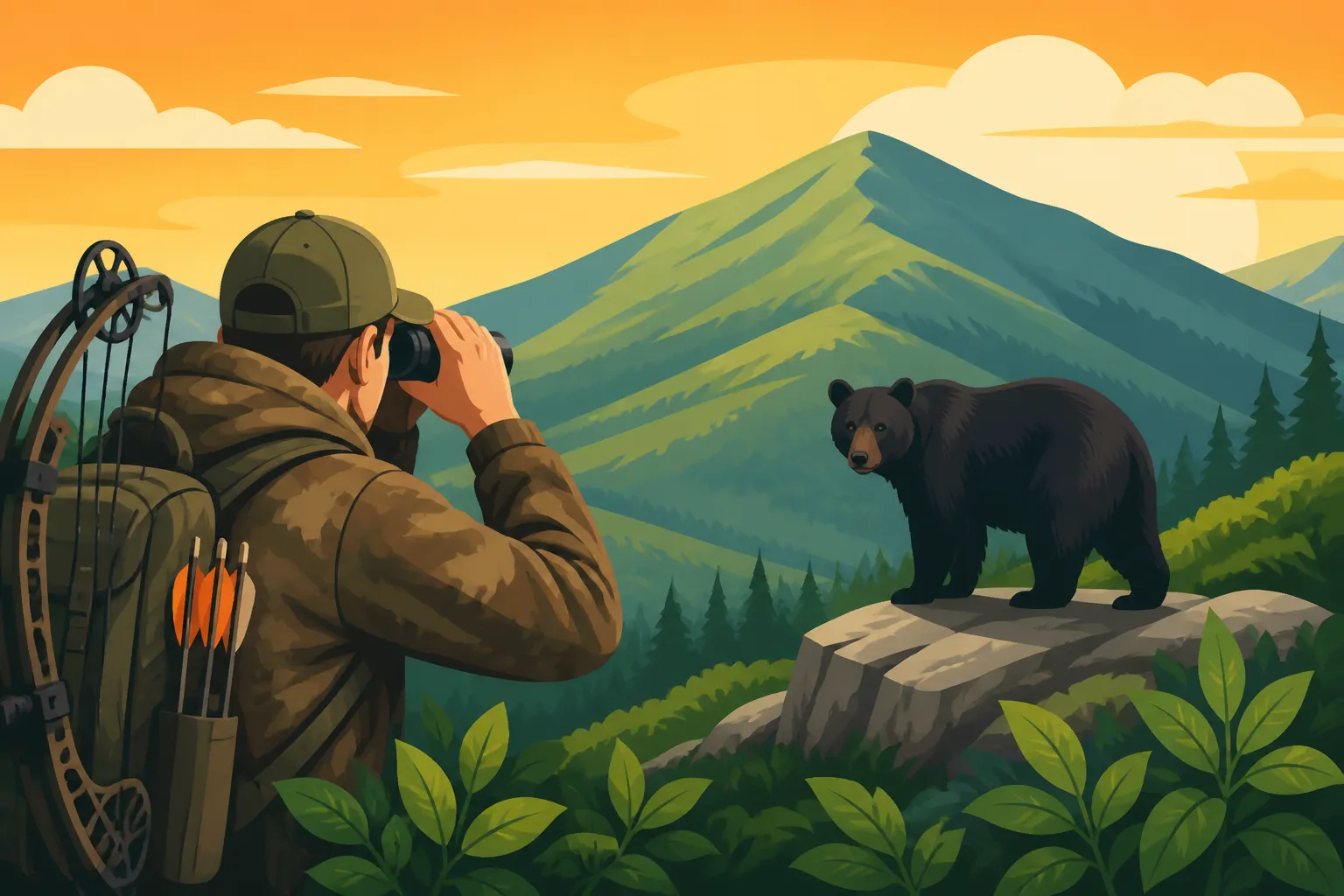
A reliable pack capable of carrying water, food, emergency supplies, and potentially meat out of the woods is essential. Consider a pack with a frame if you intend to bone out a bear deep in the backcountry. Navigation tools, whether a dedicated GPS unit or a robust mapping app on your phone (with downloaded offline maps), are crucial. Cell service can be spotty to non-existent in many parts of the forest. Don't forget a quality pair of binoculars for glassing distant slopes and a rangefinder for accurate shot placement. And, of course, your rifle or bow setup needs to be capable of handling large game at varying ranges, appropriate for Rifle Calibers for Virginia Bear.
Physical and Mental Preparedness
Finally, don't underestimate the physical demands of hunting Mount Rogers. This isn't a flatland hunt. Prepare for long hikes, significant elevation gains, and challenging pack-outs if you're successful. Start a fitness regimen well before the season to ensure you're in shape. Hiking with a weighted pack, especially on inclines, is excellent training.
Mentally, be prepared for tough days, unpredictable weather, and the possibility of going long periods without seeing a bear. Patience, persistence, and a positive attitude are just as important as physical strength. The challenge is part of the appeal, and overcoming these hurdles adds to the satisfaction. Knowing you've earned your opportunity through diligent preparation and hard work makes the entire experience of hunting Mount Rogers truly special.
Disclaimer
This article is for general informational purposes only and does not constitute professional advice. Laws, prices and regulations vary by location and change over time. Consult a qualified professional for guidance on your specific situation.