.30-30 in Thick Mountain Cover
Hunting the thick, tangled mountains of Virginia can be a real challenge, especially when you're faced with incredibly dense cover where visibility drops to mere yards. It's in these unforgiving environments, where every branch seems to conspire against your movement, that a truly dependable, fast-handling firearm makes all the difference. This guide will dive deep into why the venerable .30-30 Winchester, often considered an old-school lever-action, is still a fantastic choice for navigating and succeeding in those close-quarters, brushy conditions found across Virginia's vast mountain ranges.
The Enduring Appeal of the .30-30 for Virginia's Thick Cover
For generations, the .30-30 Winchester has been a staple in deer camps, and for good reason, especially when you're deep in the Appalachian or Blue Ridge Mountains. It's not about being the fastest or the longest-ranging cartridge; it's about being incredibly effective where most shots are under 100 yards, often much closer. In Virginia's thickest woods, you're not usually glassing across vast plains; you're picking your way through dense rhododendron thickets, navigating steep hollows, and trying to spot a flicker of white tail just thirty yards away.
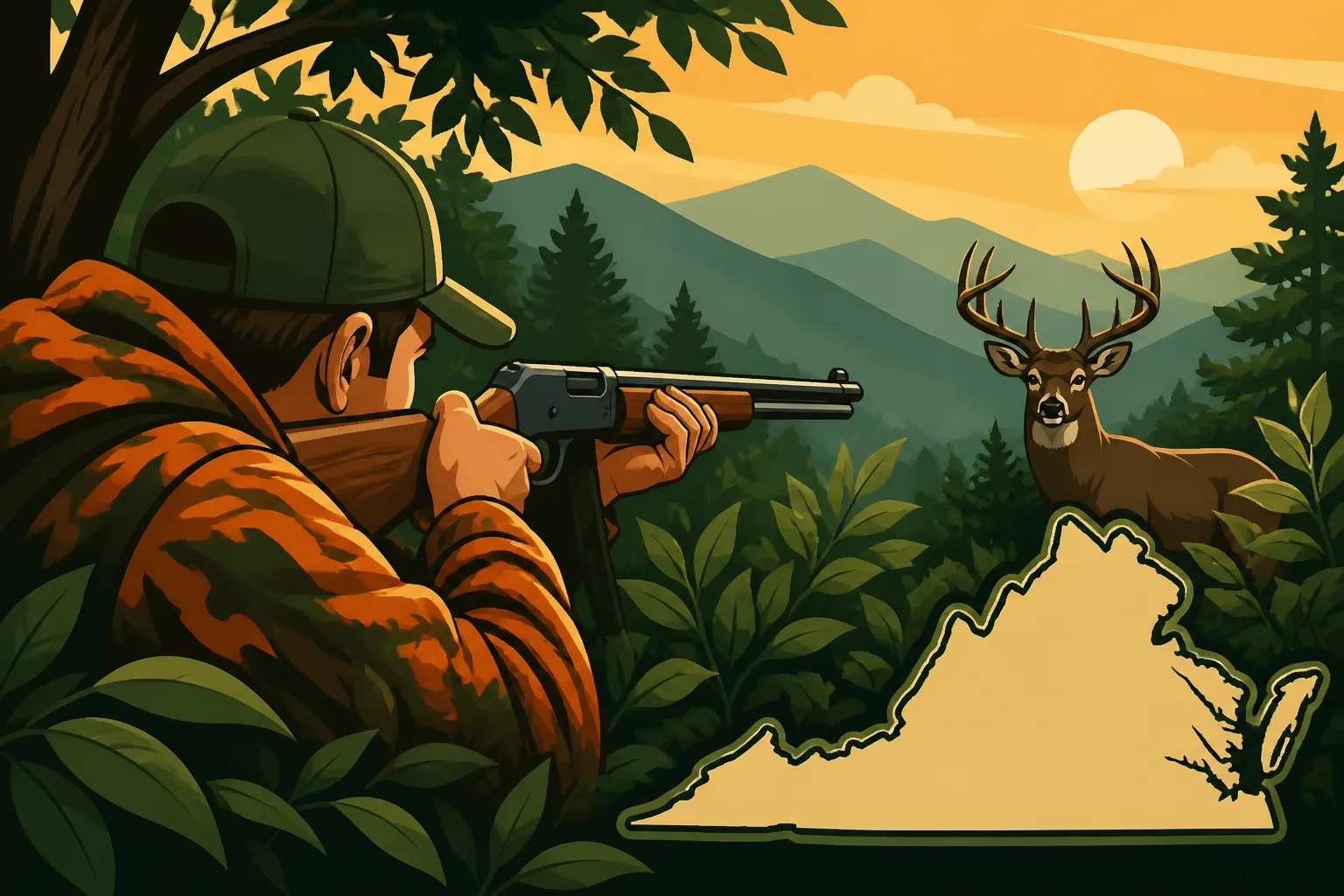
The lever-action rifle chambered in .30-30 truly shines here. Its compact design, often featuring a shorter barrel, makes it nimble and less prone to snagging on every piece of vegetation as you still-hunt through dense undergrowth. Imagine trying to maneuver a 26-inch barreled magnum bolt-action through a thick stand of mountain laurel; it's an exercise in frustration. The .30-30, in contrast, handles like an extension of your body, allowing for quick, fluid movements. The ability to cycle another round without taking your eye off the target or shifting your grip significantly is also a huge advantage if you need a fast follow-up shot on a whitetail that’s darted through a narrow opening. This is especially true when hunting areas like the George Washington National Forest Hunting or Jefferson National Forest Hunting, where the terrain can be relentlessly unforgiving.
Furthermore, the very nature of a lever-action rifle often means it's lighter than many modern bolt-action platforms, which is a blessing when you're climbing those steep mountain slopes all day long. Every ounce matters when you're miles from the truck, navigating rocky terrain and steep grades. A lighter rifle means less fatigue, allowing you to stay focused and alert for longer periods. It might seem like a small detail, but anyone who has spent a full day working those Virginia mountains understands that comfort and mobility can directly impact your success and enjoyment of the hunt.
Understanding .30-30 Ballistics and Bullet Choices in Dense Woods
While the .30-30 isn't known for its flat trajectory at extended ranges, its ballistics are perfectly suited for the close-range encounters typical of thick mountain cover. The traditional round-nose or flat-nose bullets were designed for tubular magazines, and these designs have certain characteristics that actually benefit hunting in brushy environments. They tend to be heavier for their caliber, which can help them retain energy at close distances and, more importantly, resist deflection from minor brush or twigs better than lighter, pointed bullets.
Modern advancements have also brought new life to the .30-30. Hornady's LEVERevolution ammunition, for instance, utilizes a flexible polymer tip that allows for a spitzer-type bullet shape, improving the ballistic coefficient and extending the effective range without compromising safety in a tubular magazine. While the primary advantage of this round is often touted for longer shots, the enhanced accuracy and terminal performance are still beneficial even in close quarters, ensuring a cleaner kill if you do happen to hit a small twig on the way to the target. For hunters operating in areas where shots beyond 150 yards are rare, the traditional load still performs admirably. It's all about matching the right ammunition to the specific conditions you'll encounter.
When selecting ammunition, consider the game you're after. For Virginia's white-tailed deer, a standard 150-grain or 170-grain soft-point bullet will typically do the trick with proper shot placement. For black bear, which you might encounter in the mountains, a heavier 170-grain bullet might offer a bit more penetration, though the .30-30 is generally considered on the lighter side for bear unless you're very confident in your shot and range. Knowing your chosen bullet's performance at typical mountain ranges is key. Always pattern your rifle with different loads to see what it prefers. Using tools like the range estimation features available on GoHunt can help you visualize distances in mountainous terrain and understand how your chosen bullet will perform within those specific ranges.
Here's a quick look at common .30-30 bullet types and their characteristics for thick cover:
| Bullet Type | Weight Range (grains) | Characteristics | Ideal Use Case |
|---|---|---|---|
| Traditional Flat/Round Nose | 150-170 | Excellent energy transfer at close range, less prone to deflection from brush. | Whitetail deer in thick timber, under 100 yards. |
| Flexible Polymer Tip | 160 | Improved ballistic coefficient, extends effective range, still good in brush. | Mixed terrain, longer shots (up to 200 yds), deer/hogs. |
| Hard Cast Lead | 170+ | Deep penetration, retains weight, good for larger game or heavy brush. | Black bear, wild hogs, very dense cover. |
Real-World Application: Hunting with a .30-30 in Virginia's Mountains
Putting a .30-30 to work in Virginia's mountains demands a specific approach. This isn't a long-range precision rifle, and trying to make it one will lead to disappointment. Instead, embrace its strengths: quick handling, rapid follow-up, and sufficient power for anything you'll encounter in dense woods. Whether you're still-hunting, participating in a deer drive, or sitting a stand in a tight timber pocket, the .30-30 can be your best friend.
Still-Hunting and Tracking
When you're slipping through the woods, taking two steps and stopping, constantly scanning for movement, the short, balanced nature of a lever-action .30-30 is a huge asset. It minimizes the chances of your barrel snagging on branches, which can create noise and spook game. You can keep it shouldered more easily, ready for that fleeting shot opportunity. The quick, short throw of the lever allows you to chamber another round almost instinctively, which can be critical if you're trying to stop a buck that’s trying to disappear into the next hollow. This agility is precisely what you need when you're Still-Hunting Jefferson Forest Ridges where deer often appear suddenly and close.
When it comes to tracking, especially after a shot, the .30-30's compact size and light weight continue to pay dividends. Navigating dense laurel thickets or climbing over fallen timber becomes less of a chore. And if you need to finish a downed animal, its close-quarters power is more than adequate. Just remember, even with the best brush gun, good shot placement is paramount. Focus on placing your bullet precisely into the vitals, and the .30-30 will do its job effectively. Always be prepared for Tracking a Deer Through Virginia Leaf Litter, which can be notoriously challenging.
Stand Hunting in Tight Cover
While many associate treestands with long-range shooting, plenty of prime stand locations in Virginia's mountains offer incredibly close shots. Think about those hidden benches, saddles, or creek bottoms that funnel deer movement through tight timber. In these scenarios, a .30-30 is a perfect fit. When setting up your Treestand Setups in George Washington National Forest, consider areas with dense escape cover nearby. Often, deer will feel safe moving through these areas, and your shots could be as close as 15-30 yards.
Even if you're in a ground blind brushed into thick cover, the .30-30's maneuverability inside a confined space is superior to longer rifles. You won't be banging the barrel on the blind's walls as you adjust for a shot. For optimal low-light performance in these dense areas, especially during those crucial dawn and dusk hours, pair your .30-30 with quality, low-magnification optics. A good 1-4x or 2-7x scope will give you ample field of view and gather enough light without being overly bulky. You might even consider red dot sights if your primary hunting is in truly dense areas where shots are reliably under 75 yards. Rifle Scopes for Low-Light Mountain Hollows discusses this in more detail.
Modern Considerations and Maintenance for Your .30-30
While the .30-30 is a classic, that doesn't mean it's archaic. Many hunters opt for older, cherished models, but modern production .30-30s from companies like Marlin (now under Ruger) and Henry Repeating Arms continue to offer reliable, accurate platforms. The core design remains robust, but there are always ways to optimize your setup for mountain hunting.
Optics and Accessories
Even if you prefer open sights for the ultimate in close-quarters speed, adding a low-power scope or a quality red dot sight can significantly improve accuracy and target acquisition, especially as light fades. A 1-4x or 2-7x scope on a .30-30 provides enough magnification for typical mountain ranges without hindering quick target acquisition in thick cover. Ensure your mounts are solid and your scope is zeroed for your intended range, typically 100 yards, which will give you a good point-blank range for most mountain shots.
Beyond optics, consider a comfortable sling. You'll be carrying this rifle a lot more than you'll be shooting it, especially when navigating steep terrain or hiking to a remote stand on Public Hunting Land in Virginia. A wide, padded sling will make those long treks much more manageable. Carrying extra ammunition in a buttstock cuff or pouch is also wise, offering quick access without fumbling through your pack.
Care and Longevity
Lever-action rifles, like any firearm, require proper care, especially when exposed to the elements common in mountain hunting: rain, snow, mud, and fluctuating temperatures. Keep the action clean and lightly lubricated, paying particular attention to the internal mechanisms that can collect grit. After a wet hunt, ensure you thoroughly dry and oil your rifle to prevent rust, particularly on blued finishes. The wooden stocks common on many .30-30s also need occasional attention to protect them from moisture and dings.
The .30-30, despite its age, remains a potent and highly effective tool for hunting Virginia's thick mountain cover. It might not be the flashiest rifle on the market, but its blend of compact size, handling, and adequate power makes it a reliable companion for the deer and bear hunter who understands the realities of close-quarters hunting in rugged terrain. For those who value tradition, reliability, and practicality in the challenging environments of the Blue Ridge or Appalachian mountains, the .30-30 continues to hold its own.
Disclaimer
This article is for general informational purposes only and does not constitute professional advice. Laws, prices and regulations vary by location and change over time. Consult a qualified professional for guidance on your specific situation.