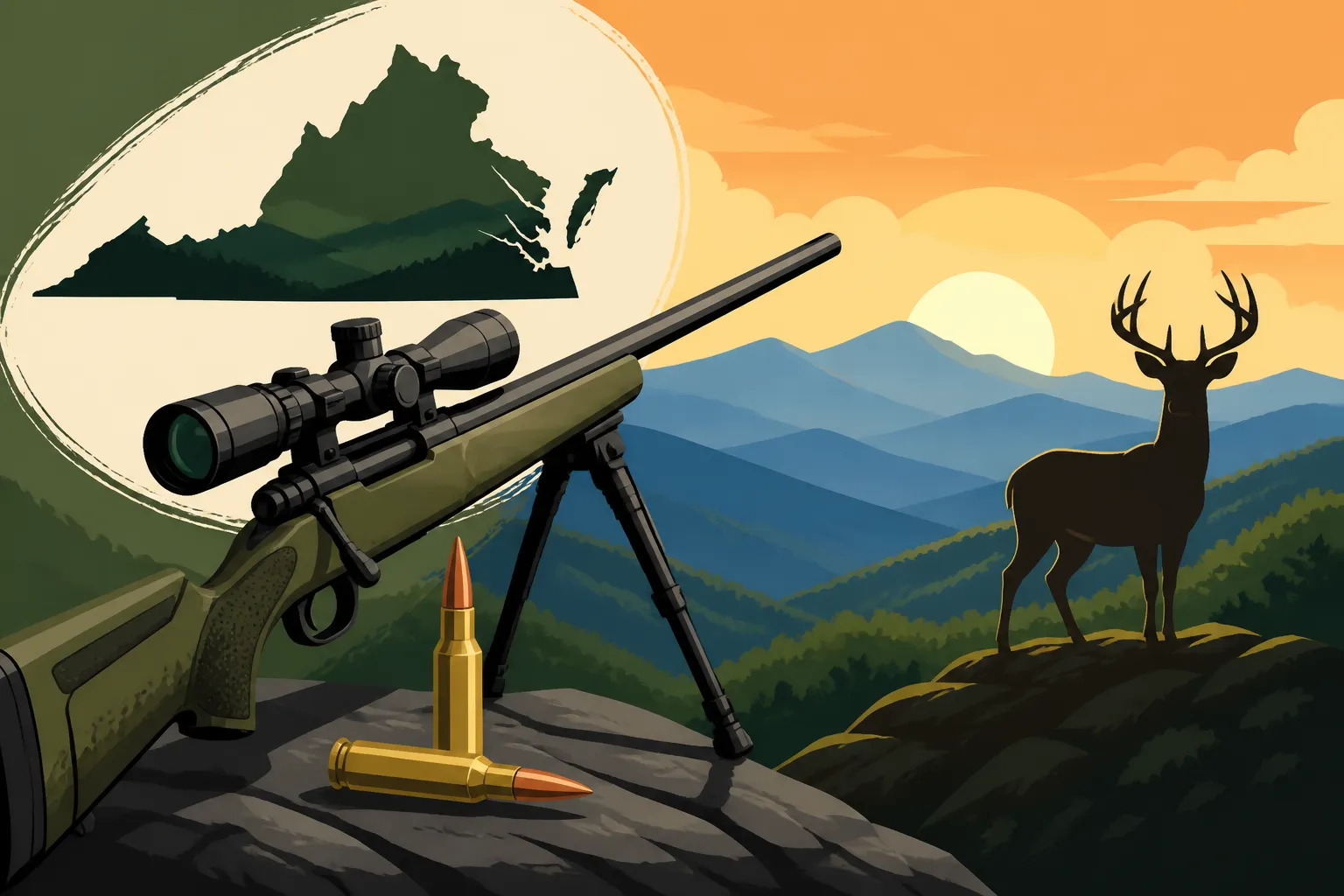
6.5 Creedmoor for Blue Ridge Ridges
Hunting the Blue Ridge Mountains of Virginia presents a unique set of challenges. The steep climbs, the dense underbrush, and the often-unpredictable shot distances can leave a hunter feeling frustrated if their equipment isn't up to the task. This guide will explore why the 6.5 Creedmoor has become such a compelling choice for navigating these demanding conditions, helping you make confident, ethical shots when opportunity knocks on a remote mountain ridge.
The Blue Ridge Challenge: What Makes These Ridges Unique for Hunters?
When you venture into the Blue Ridge, you're not just walking through woods; you're entering a landscape that demands respect and the right tools. The very nature of this terrain dictates how you hunt, where you set up, and ultimately, what kind of rifle will give you the best chance at success. Many hunters underestimate how much their environment should influence their gear choices, leading to missed opportunities or, worse, wounded game.
Terrain and Visibility
The Blue Ridge is famous for its rugged, unforgiving terrain. We're talking about steep ascents that burn your quads, followed by descents that test your knees and ankles. The timber can range from relatively open hardwoods to thick stands of mountain laurel and rhododendron so dense you can barely push through them. Visibility often changes drastically from one hollow to the next. You might be glassing an open bench from afar, only for a deer to appear suddenly at 30 yards in a thicket. This constant variability means you need a rifle that can handle both the close-quarters snap shot and the more deliberate longer shot. It's not uncommon to walk for miles, only to have your shot opportunity arise in the most unexpected and challenging of spots.
Beyond the physical obstacles, the sheer verticality of the Blue Ridge plays a significant role in hunting strategy. Deer often bed on high benches, browse in creek bottoms, and travel along contours. You're rarely shooting on flat ground. Instead, you're frequently taking shots uphill, downhill, or across a ravine, all of which introduce complexities that a flat-range shooting session simply can't prepare you for.
Shot Distances and Angles
The misconception that mountain hunting always means long-range shots couldn't be further from the truth in much of Virginia's Blue Ridge. While open cuts or long draws can present opportunities for extended distances, a great many shots occur in the 50- to 150-yard range, often through openings in the trees. However, the angles involved in these shots are what truly complicate things. A deer standing 80 yards away on a steep downhill slope is a very different shot than the same deer on flat ground. Gravity affects the bullet differently, and your aiming point needs to be adjusted.
The frustration comes when you've done everything right – found a good sign, put in the miles, and finally spotted that buck – only for the shot to be at an awkward angle or across a considerable distance. Having a rifle and cartridge that minimize the "thinking" required for holdover and lead allows you to focus on the immediate fundamentals of the shot, rather than complex ballistic calculations under pressure. This is where a forgiving trajectory can be a game-changer.
Weather and Wind Conditions
Anyone who has spent a day in the Virginia mountains knows how quickly the weather can turn. A sunny morning can give way to dense fog, rain, or even snow by midday. These conditions not only affect hunter comfort and visibility but also have a direct impact on bullet flight. Precipitation can obscure your view, and wind, especially in the mountains, can be notoriously unpredictable. Thermals often rise in the morning and fall in the evening, but crosswinds can swirl unpredictably through hollows and over ridgelines. Wind and Thermals on a Blue Ridge Slope are a constant consideration.
A cartridge that is less susceptible to wind drift can provide a significant advantage. Imagine a buck crossing a powerline cut on a gusty November afternoon; a bullet that holds its line true offers more margin for error. Furthermore, a rifle that performs reliably in wet conditions, with optics that resist fogging, is paramount. You need gear that can stand up to the elements, because the deer certainly will.
Why the 6.5 Creedmoor Shines in Virginia's Mountains
The 6.5 Creedmoor might seem like a recent phenomenon to some, but its design offers some distinct advantages that make it particularly well-suited for the kind of hunting we do here in the Blue Ridge. It’s not just hype; it’s a smart choice for hunters who understand ballistics and want to maximize their chances.
Ballistic Performance and Flatter Trajectory
One of the standout features of the 6.5 Creedmoor is its exceptional ballistic coefficient, which essentially means the bullets are designed to fly through the air with less drag. This translates to a very flat trajectory and minimal wind drift. For hunting in the Blue Ridge, where shots can vary widely in distance and often involve steep angles, this is a massive benefit. Instead of constantly calculating holdover for a deer that might be 200 yards across a hollow, or 75 yards straight downhill, the 6.5 Creedmoor maintains a relatively flat path out to considerable ranges.
This flat-shooting nature simplifies shot placement, especially for those who might not spend every weekend at the long-range facility. It provides a greater margin of error in range estimation, which is critical when a rangefinder might fail to get a reading, or you just don't have time for a precise measurement. The peace of mind that comes from knowing your bullet isn't dropping like a rock past 150 yards allows you to focus more on the aiming point and trigger squeeze, less on guessing. It's about taking the guesswork out of the shot, allowing for a more confident and ethical kill.
Recoil Management for Mountain Hunting
Let's be honest, nobody likes getting hammered by recoil, especially when you're already physically tired from climbing all day. Larger, harder-hitting calibers often come with significant muzzle jump and felt recoil, which can lead to flinching, poor form, and ultimately, less accurate shooting. The 6.5 Creedmoor strikes a near-perfect balance, offering enough power for deer and bear without the punishing kick.
The mild recoil of the 6.5 Creedmoor allows hunters to maintain better control of their rifle, even when taking shots from awkward positions that are common in the mountains – kneeling behind a blowdown, leaning against a tree on a steep slope, or even shooting offhand. This translates directly into better accuracy and more confident follow-up shots if needed. Less recoil also means less fatigue over a long day of hunting and practicing at the range, ensuring that when the moment of truth arrives, you're mentally and physically prepared to make the best possible shot. For me, after a long hike to a High Elevation Mountain Bench, the last thing I want is a rifle that fights me.
Terminal Performance on Virginia Whitetails and Black Bears
Despite its reputation for mild recoil, the 6.5 Creedmoor, when paired with the right bullet, is more than capable of taking down Virginia's whitetails and black bears. The key here is bullet selection. Modern projectile designs for the 6.5 Creedmoor are incredibly efficient at transferring energy and penetrating effectively. Whether you choose a bonded bullet for deep penetration through bone and hide or a controlled expansion bullet for maximizing tissue damage, the 6.5mm diameter offers excellent sectional density.
This means that a good hunting bullet from a 6.5 Creedmoor will penetrate deeply, often exiting the animal and creating a good blood trail. For example, a quality 140-grain bullet traveling at a respectable velocity will deliver plenty of kinetic energy for a clean, ethical harvest. I've seen firsthand how effective it can be on mature Virginia bucks and even solid black bears, provided the shot is placed well. It's not about raw power; it's about efficient, effective terminal performance that ensures a quick and humane end to the hunt.
Choosing the Right Ammunition and Setup
Having the right rifle is only part of the equation; the ammunition you feed it and the accessories you choose are just as critical for success in the Blue Ridge. Every component works together to create a reliable system that performs when it counts.
Bullet Selection for Mountain Game
When it comes to ammunition for your 6.5 Creedmoor, you'll find a dizzying array of options. For hunting deer and black bears in the Blue Ridge, you'll want to prioritize bullets designed for controlled expansion and good penetration. Think about bullets in the 120-grain to 147-grain range. Lighter, faster bullets might perform well on deer at closer ranges, but for potential shots on a larger black bear or if you encounter light brush, a heavier, more robust bullet is often a better bet.
Look for offerings like Hornady's ELD-X, Federal's Terminal Ascent, or Barnes TSX/TTSX. These bullets are engineered to retain weight, penetrate deeply, and expand reliably, even at extended ranges or when encountering bone. Remember, shot placement is king, but a well-constructed bullet ensures that good placement translates into an ethical kill. If you’re pushing through thick timber and anticipate close shots, a bullet designed for rapid expansion might be considered, but for general mountain hunting, an all-around performer is usually best.
Rifle Features for Blue Ridge Hunting
The Blue Ridge demands a rifle that is both lightweight enough to carry all day and robust enough to withstand bumps, scrapes, and unpredictable weather. A rifle weighing around 7-8 pounds (unscoped) is a good starting point. Every ounce counts when you're scaling steep ridges or Dragging a Deer Out of a Mountain Hollow. Consider rifles with synthetic stocks, which are impervious to moisture and more durable than traditional wood in rugged conditions.
Barrel length is another factor. While longer barrels can provide slightly more velocity, a 20-22 inch barrel on a 6.5 Creedmoor is often a sweet spot for maneuverability in thick cover without sacrificing too much ballistic performance. This shorter length makes it easier to navigate dense timber, swing on moving game, or carry comfortably. Don’t overlook features like a durable finish (cerakote or similar) to protect against rust and scratches, and a comfortable, ergonomic stock that fits you well, allowing for quick target acquisition.
Optics and Accessories
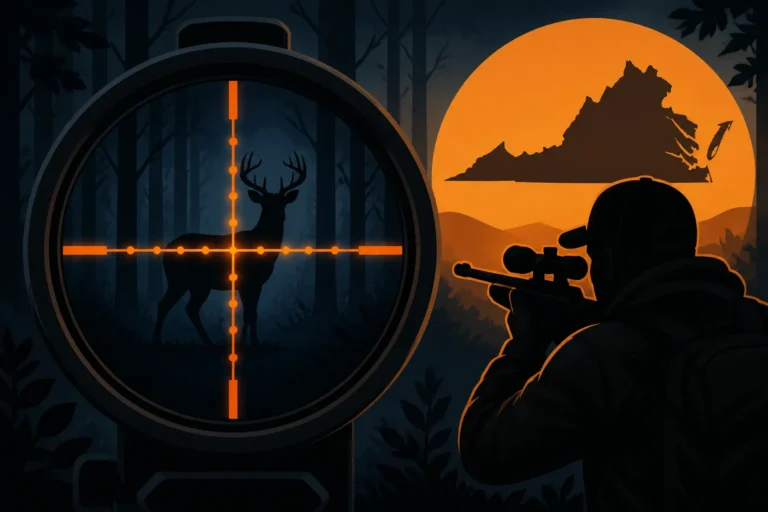
Your scope is your window to the shot, and in the Blue Ridge, good glass is non-negotiable. You'll encounter low-light conditions at dawn and dusk, deep shadows in hollows, and potential fog. A variable power scope in the 3-9x, 3.5-10x, or 4-12x range is often ideal. Look for scopes with good light transmission, a clear sight picture, and reliable adjustments. Rifle Scopes for Low-Light Mountain Hollows can make or break a hunt. An illuminated reticle can be a significant advantage in dim light, helping you place your crosshairs precisely against a dark background.
A quality laser rangefinder is another indispensable tool. As we discussed, shot angles and distances are constantly changing in the mountains. A rangefinder allows you to get precise yardage, taking the guesswork out of holdover. Make sure it can quickly and accurately read distances to trees, rocks, and animals, even in challenging conditions. Lastly, don't forget a comfortable, durable sling. You'll be carrying that rifle a lot, and a good sling distributes the weight and keeps your hands free for climbing or navigating obstacles. Carrying spare batteries for your rangefinder and illuminated reticle is also a wise move.
Practical Tips for Hunting Blue Ridge Ridges with a 6.5 Creedmoor
Owning the right gear is one thing; knowing how to use it effectively in the challenging Blue Ridge environment is another. These tips will help you maximize the advantages of your 6.5 Creedmoor and increase your chances of success.
Ethical Shot Placement and Practice
The 6.5 Creedmoor is an excellent cartridge, but it's not a magic bullet. Ethical hunting demands precise shot placement, and that requires practice. Don't just practice from a bench at 100 yards. Head to the range and practice shooting from positions you'll actually encounter in the woods: kneeling, sitting, standing, and even leaning against a tree. Practice shooting uphill and downhill to understand how your body position and the rifle’s balance change. Simulating real-world scenarios will build confidence and muscle memory.
Understanding your rifle's capabilities means knowing its exact point of impact at various distances. While the 6.5 Creedmoor has a flat trajectory, it’s still critical to know your holdover for longer shots or those extreme angles. Use a ballistic calculator to create a drop chart for your specific ammunition and practice out to the maximum range you anticipate shooting. Knowing your limits, and your rifle's, is paramount to making an ethical shot.
Reading Wind and Thermals
In the Blue Ridge, wind and thermals are constantly at play, influencing both scent control and bullet trajectory. Understanding these microclimates is crucial. As a rule of thumb, thermals generally rise in the morning as the sun heats the ground, and fall in the evening as the air cools. However, ridges and hollows can create swirling currents that defy simple rules. Always use a wind checker to constantly monitor wind direction. Even with a cartridge that resists wind drift, a strong gust can push your bullet off target, especially on an across-the-hollow shot.
Wind and Thermals on a Blue Ridge Slope are complex. When Hunting West of the Blue Ridge, where terrain can be even steeper, these considerations are amplified. Be mindful of how your scent is traveling and how a crosswind might affect your bullet. Position yourself to minimize these variables whenever possible. Sometimes, holding off on a shot for a few moments until the wind steadies is the most ethical choice.
Scouting and Stand Placement
The characteristics of the 6.5 Creedmoor can influence your scouting and stand placement strategies. Its flat trajectory means you can potentially cover more ground from a single stand location, giving you a wider effective kill zone. When Scouting Virginia Public Land Before Season, look for natural funnels, saddles, or benches that offer clear lines of sight across varying distances. If you've got a rifle that can reach out a bit, you might consider setting up on a ridge overlooking a series of benches or a long logging road.
Don't forget to study the topography. Apps like GoHunt, which provide detailed mapping layers, can be invaluable for identifying key features such as elevation changes, benches, and potential bedding areas. These tools allow you to visualize shot opportunities before you even step foot in the woods, helping you pick locations where the 6.5 Creedmoor's strengths can really shine. Thinking about your likely shot angles and distances while scouting helps you refine your setup for the most effective shot.
Navigating Public Lands with Your Setup
Hunting public land in Virginia, especially in the national forests like the George Washington or Jefferson, often means putting in miles on foot. Packs for a Jefferson Forest Day Hunt are often loaded with essentials for a full day. Your 6.5 Creedmoor, ideally lightweight, needs to be comfortable to carry. A good sling and a well-fitting pack that holds your rifle securely are essential. Consider using a quality pack that has dedicated rifle carrying capabilities or a comfortable padded sling to reduce fatigue.
Remember to comply with all Virginia Department of Wildlife Resources (DWR) regulations regarding public land use. Know your boundaries, especially when using an app like GoHunt which clearly delineates public and private land. The ability to move efficiently and quietly with your rifle is a huge asset when Hunting Pressure on Virginia Public Land pushes deer into less accessible areas. The goal is to be in a position to make the shot when it presents itself, and a comfortable, reliable rifle setup is a big part of that.
Caliber Comparison for Virginia Mountain Hunting
Choosing a rifle caliber for hunting in Virginia's Blue Ridge involves weighing several factors. Here's a brief comparison of the 6.5 Creedmoor against some other popular choices, focusing on traits relevant to mountain conditions.
| Caliber | Recoil (Relative) | Trajectory (Relative) | Wind Drift (Relative) | Effective Range (Deer/Bear) | Common Bullet Weights | Notes for Mountains |
|---|---|---|---|---|---|---|
| 6.5 Creedmoor | Low-Moderate | Very Flat | Low | 50-400+ yards | 120-147 gr | Excellent balance of power, accuracy, and manageable recoil. |
| .308 Winchester | Moderate | Flat | Moderate | 50-350+ yards | 150-180 gr | Time-proven performer, good power, slightly more recoil than 6.5 CM. |
| .270 Winchester | Moderate | Flat | Moderate | 50-350+ yards | 130-150 gr | Classic flat-shooter, powerful enough for deer and bear. |
| .30-06 Springfield | Moderate-High | Flat | Moderate | 50-400+ yards | 150-200 gr | Versatile, more recoil, excellent power. |
| 7mm-08 Remington | Low-Moderate | Flat | Low-Moderate | 50-350+ yards | 120-160 gr | Similar to 6.5 CM with slightly larger diameter, light recoil. |
As you can see, the 6.5 Creedmoor offers a sweet spot that combines a very flat trajectory and low wind drift with manageable recoil, making it a very appealing choice for the varied conditions of the Blue Ridge. While other calibers certainly get the job done, the 6.5 Creedmoor does it with an efficiency that is hard to beat.
Disclaimer
This article is for general informational purposes only and does not constitute professional advice. Laws, prices and regulations vary by location and change over time. Consult a qualified professional for guidance on your specific situation.