Virginia Firearms Discharge Setback Rules
Nothing can ruin a perfectly planned hunt faster than unknowingly violating a local ordinance or a state law concerning where you can safely and legally discharge your firearm. It’s a frustrating reality for many hunters, especially as development encroaches on traditional hunting grounds, making those vital "setback" rules a confusing maze. This guide is here to untangle Virginia's firearms discharge setback rules, helping you understand the regulations, avoid common pitfalls, and ensure every shot you take is both safe and lawful.
Understanding Virginia's Core Setback Regulations
Virginia has clear laws designed to protect public safety and property when it comes to discharging firearms. These rules aren't just suggestions; they're legal requirements that every hunter needs to know and respect. Ignoring them can lead to serious consequences, not just legally, but also ethically, as they're foundational to responsible hunting.
The General Rule: 100 Yards from Dwellings
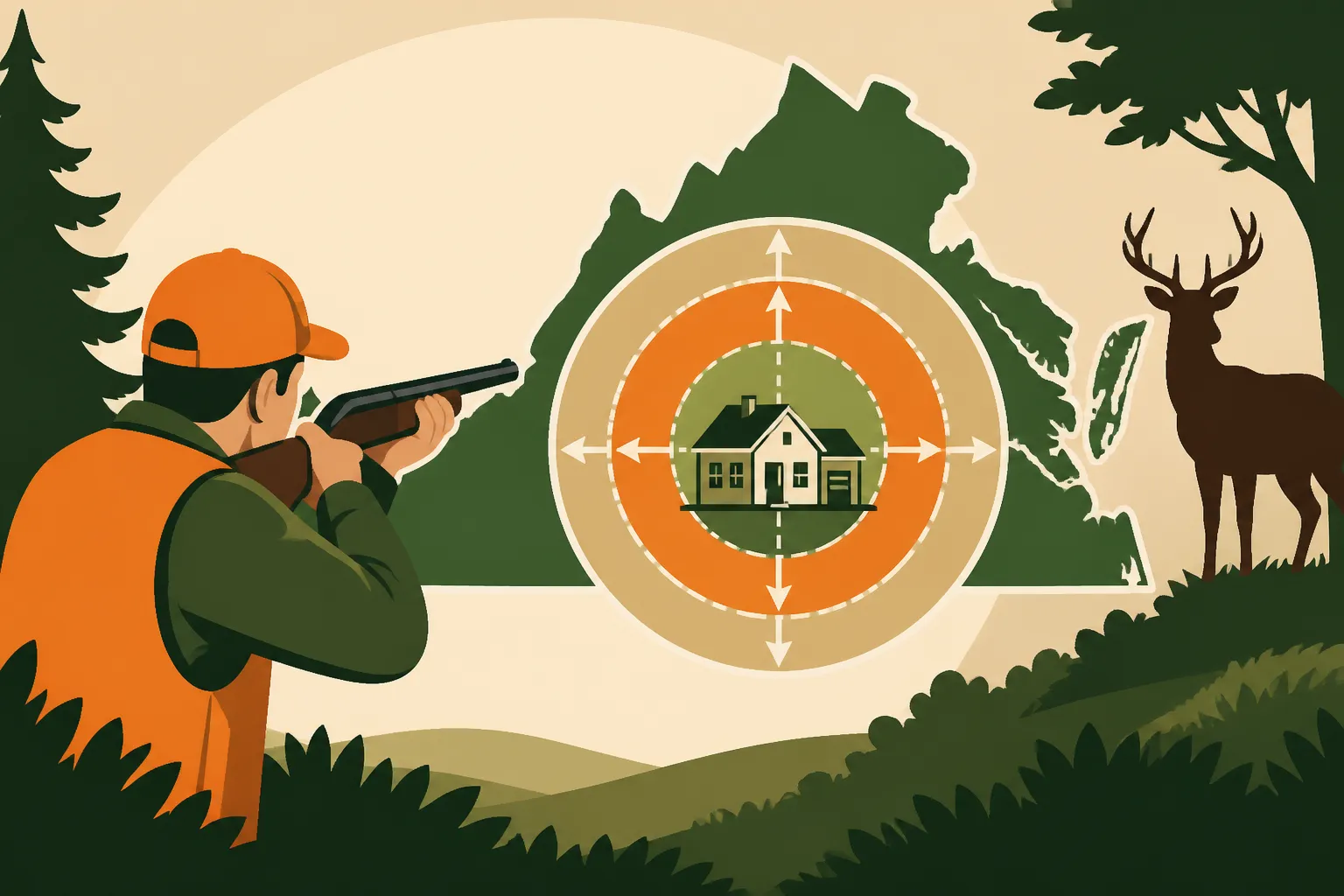
The cornerstone of Virginia's firearm discharge regulations is the 100-yard rule. Simply put, it is unlawful to discharge a firearm or shoot an arrow from a bow or crossbow within 100 yards of any occupied dwelling, building, or other structure used for human occupancy without permission from the owner or tenant. This isn't just about houses; it includes barns, sheds, and any other structure where people might reasonably be. Think of it this way: if a deer is standing 90 yards from a farmhouse, even if you’re on your own property, taking that shot could land you in hot water if you don't have explicit permission from the homeowner. The intent here is clear: create a safety buffer zone to prevent stray bullets or arrows from harming people or property. It’s about more than just the target; it’s about what’s beyond the target, and how far your projectile could travel.
The "without permission" part is critical. If you're hunting on private land that you own, or land where you have explicit permission from the owner, and you are aiming away from any other occupied dwelling, then you might technically be fine. However, you still need to be 100 yards from any dwelling not associated with your hunting party or permission. For instance, if you have permission to hunt Farmer John's back forty, but Farmer Jane lives 75 yards from the fence line in her own house, you absolutely cannot shoot in her direction or within that 100-yard buffer without her specific permission. This applies to all forms of hunting, from Virginia's General Firearms Deer Season to Bowhunting Virginia's Statewide Archery Season. It's always best to err on the side of caution and maintain an even greater distance if possible, especially with high-powered rifles, as bullets can travel for miles.
Public vs. Private Land Distinctions
The 100-yard rule applies universally across Virginia, whether you're hunting on private land or public land. However, the implications and the practicalities can differ significantly. On private land, obtaining written permission from the landowner is paramount, not just for hunting access but also to navigate any specific agreements regarding setbacks from their own structures. For example, a landowner might grant you permission to hunt a specific woodlot but stipulate that you cannot shoot in the direction of their home, even if it's technically beyond 100 yards, purely for their peace of mind. Always discuss these nuances with the landowner when asking for permission to hunt. You'll find more detailed advice on these kinds of interactions in our guide on Getting Private Land Permission in Virginia.
When it comes to public lands, like the George Washington National Forest or various Wildlife Management Areas (WMAs), the 100-yard rule from any occupied dwelling still holds true. The challenge on public land is that you might not always be aware of every cabin, camp, or even a hidden residence bordering the vast tracts of woods. This is where diligent scouting and using mapping tools become invaluable. While you might not need individual permission for access on public land, you're still beholden to statewide and local discharge regulations. Furthermore, many WMAs or National Forest regulations might have additional rules regarding shooting in designated recreation areas or near campgrounds. It's always your responsibility to verify these specific rules. Tools like the Virginia DWR App or a premium hunting app like GoHunt can display property lines and potential structures, helping you visualize these setback zones before you even step foot in the woods.
Navigating Specific Scenarios and Exceptions
While the 100-yard rule is the standard, Virginia's diverse landscape and varying population densities mean there are often additional layers of regulation to consider. It’s not always a simple yes or no, especially when you start looking at urban boundaries or specialized facilities.
Urban and Suburban Zones: Local Ordinances and Archery-Only Areas
This is where things can get particularly tricky for hunters. Many cities and counties across Virginia have enacted their own, often much stricter, ordinances regarding firearm discharge within their limits. What might be perfectly legal in a rural county could land you a hefty fine or worse in a more populated area. It’s not uncommon for municipalities to prohibit firearm discharge entirely within city or town boundaries, regardless of the 100-yard rule. These local rules often supersede or add to state regulations, so it's essential to check local laws before heading out. Sometimes, these areas are designated as Virginia Suburban Archery-Only Zones, allowing bow and crossbow hunting but prohibiting firearms altogether.
For instance, you might be hunting a small woodlot bordering a Richmond suburb, and while you might be 150 yards from the nearest house, a local ordinance could still prohibit any firearm discharge. This is precisely why research is key. The Virginia Department of Wildlife Resources (DWR) provides general information, but local county or city websites are your go-to for specific ordinances. Don’t rely on assumptions. Even seemingly small or remote communities can have these rules in place. Hunting apps like GoHunt are fantastic for overlaying parcel data and helping you identify built-up areas, but they won't always have every single municipal ordinance baked in, so a quick call to the local sheriff's department or town hall might be prudent. This diligence helps prevent accidentally violating a law designed to keep communities safe.
Shooting Ranges and Permitted Activities
Thankfully, not all firearm discharge is subject to the general 100-yard setback. Designated and properly managed shooting ranges, whether public or private, are specifically designed for safe firearm discharge and are exempt from these general rules. These facilities typically have specific safety protocols, backstops, and range officers to ensure safety. This includes both static target ranges and specific areas used for sanctioned events like trap and skeet shooting. So, when you’re out practicing for Rifle Setups for Virginia Deer Hunting or patterning your shotgun for Turkey Shotguns and Chokes, you’re in a safe and legal environment built for that purpose.
Beyond formal ranges, there are other situations where firearm discharge is permitted under specific conditions that might not strictly adhere to the 100-yard rule. These generally involve self-defense, law enforcement activities, or specific agricultural pest control measures carried out under special permits. For example, a farmer might obtain a depredation permit from the DWR to remove nuisance wildlife, such as feral hogs or deer, that are causing significant crop damage, and this might necessitate discharging a firearm closer than 100 yards to an unoccupied outbuilding or structure on their own property, provided it's done safely and away from other dwellings. However, these are highly specific exceptions and do not apply to general recreational hunting. Always understand that these exceptions are limited and require proper authorization and adherence to strict safety protocols.
Safety, Common Sense, and Ethical Considerations
While understanding the letter of the law is crucial, a truly responsible hunter goes beyond mere compliance. It’s about embedding safety and ethical decision-making into every aspect of your hunt, recognizing that legal minimums are often just that – minimums.
Beyond the Letter of the Law: Prioritizing Safety
The 100-yard setback rule is a legal boundary, but safety begins far before that line. When you're out hunting, especially with firearms, your absolute top priority must be safety. This means knowing precisely what's beyond your target. A high-powered rifle bullet can travel several miles and retain enough energy to be lethal, even after hitting its intended target or ricocheting. Just because you're 100 yards from a dwelling doesn't mean it's automatically a safe shot. You need to consider the terrain, the presence of natural or artificial backstops, and the trajectory of your bullet or arrow.
Imagine you're hunting a ridge line in the George Washington National Forest Hunting and you spot a deer on the opposite slope. While there might not be a visible dwelling within 100 yards, considering the open air behind the deer and a distant valley, taking that shot without a solid backstop like a hillside could be incredibly reckless. Always confirm your shot and the potential travel path of your projectile. This includes being keenly aware of other hunters, hikers, or even accidental trespassers who might be in the area. Our guide on Virginia Hunter Education Requirements covers these foundational safety principles, reminding us that a permit doesn’t override good judgment. True safety involves a 360-degree awareness of your surroundings and a commitment to only take shots that you are absolutely confident will be safe for everyone and everything beyond your intended target.
How to Verify Local Regulations and Avoid Issues
The best way to avoid accidental violations and ensure a safe hunt is proactive research. Before you ever head out, particularly to a new area or near a developed zone, take the time to verify all relevant regulations. Start with the Virginia Department of Wildlife Resources (DWR) website, which provides comprehensive statewide hunting regulations. However, as discussed, local ordinances are often the wild card. Check the official website for the county, city, or town where you plan to hunt. Many municipalities have their ordinances posted online, often under sections like "Public Safety," "Firearms," or "Discharge of Weapons." If you can't find clear information, a polite call to the local county clerk's office or the sheriff's department can often clarify specific rules, especially concerning discharge setbacks within town limits.
Beyond official websites, technological tools can be invaluable. Mapping apps like GoHunt and onX Hunt allow you to view property boundaries, topographic maps, and satellite imagery, helping you identify potential dwellings or population centers. These tools can even show you Where George Washington Forest Bucks Bed or aid in Reading Aerial Photos for Piedmont Deer, allowing you to plan your hunt in areas that naturally provide greater separation from occupied structures. Always cross-reference multiple sources if there's any doubt. It's far better to spend a few extra minutes researching from your home than to face the legal repercussions and ethical burden of an unsafe or unlawful shot in the field. Remember, ignorance of the law is never an excuse.
| Regulation Type | Standard Rule | Key Considerations | Where to Verify |
|---|---|---|---|
| Statewide Setback | 100 yards from occupied dwelling/structure | Applies to all firearms & bows/crossbows. Requires owner/tenant permission if closer. | VA DWR Hunting Regulations |
| Local Ordinances | Varies widely by city/county (often stricter) | Can prohibit discharge entirely within municipal limits, or designate archery-only areas. | Local City/County Websites, Clerk's Office, Sheriff's Dept. |
| Public Land Specific | Statewide rule applies, plus WMA/Forest-specific rules | Check for additional restrictions near campgrounds, recreation areas, or specific boundaries. | VA DWR WMA Maps & Regulations, National Forest Service Websites |
| Shooting Ranges | Exempt from general setback rules | Must be a designated, properly managed facility. | Range-specific Rules & Regulations |
Disclaimer
The information provided in this guide is for general informational purposes only and does not constitute legal advice. Hunting regulations, including firearm discharge setback rules, can change frequently and vary by specific location within Virginia. Always consult the most current Virginia Department of Wildlife Resources (DWR) regulations, as well as local county and municipal ordinances, before engaging in any hunting activities. It is the hunter's sole responsibility to understand and comply with all applicable laws and regulations.