Best Virginia Counties for Grouse
It’s a familiar frustration for many upland hunters in Virginia: the elusive ruffed grouse. You hear the stories from grandfathers, tales of coveys flushing from thickets, but today, finding a grouse, let alone getting a shot, feels like winning the lottery. You've walked miles of cover, your legs burning, your dog panting, only to come up empty-handed. This guide is here to shed some light on where these magnificent birds still persist in the Old Dominion, helping you understand the landscapes they inhabit and giving you a realistic roadmap to increase your chances.
Understanding Virginia's Ruffed Grouse Challenge
Let's be real, ruffed grouse hunting in Virginia isn't what it used to be. The habitat has changed dramatically over the decades, and with it, the populations of these iconic forest birds have dwindled. It's a tough pill to swallow for those of us who grew up hearing tales of abundant flushes, but acknowledging the challenge is the first step toward finding success in today's hunting landscape.
The Landscape of Decline
Virginia's ruffed grouse population has been on a downward trend for many years, a sobering reality for anyone passionate about upland hunting. The primary culprit is habitat loss and degradation. Grouse thrive in early successional forests – young, regenerating timber stands that provide dense cover and abundant food sources. Think back to areas that were logged 15-30 years ago, or old farm fields that have been left to revert to forest. These areas, characterized by thick saplings, briars, and a diverse understory, are crucial for grouse survival, offering protection from predators like hawks and owls, and a buffet of buds, berries, and insects.
Unfortunately, much of Virginia's forest land has matured beyond this ideal stage. Large tracts of timber are now older, closed-canopy forests with less undergrowth, making it harder for grouse to find both food and sanctuary. Virginia Ruffed Grouse Decline touches on some of these broader trends. This isn't just a Virginia problem; it's a regional issue across much of the grouse range. Hunters who remember the "good old days" often describe vast areas of dense, regenerating clearcuts that are now towering mature trees. Without active timber management that mimics natural disturbances like wildfires, these critical young forest habitats become scarce.
Habitat Requirements for Thriving Grouse
So, what exactly does a ruffed grouse need to thrive? It boils down to a few key elements: dense escape cover, diverse food sources, and suitable nesting sites. They are creatures of the thick stuff, preferring areas where they can melt into the shadows at a moment's notice.
- Dense Escape Cover: This is paramount. Grouse want thickets of young deciduous trees like aspen, birch, and oak, mixed with evergreen conifers such as hemlock or pine, which offer year-round thermal cover and protection. Think of a 10-25 year old timber cut, where the saplings are so thick you can barely push through them. These areas provide vertical cover from avian predators and horizontal cover from terrestrial ones. Old logging roads overgrown with briars and multiflora rose can also be magnets.
- Diverse Food Sources: Grouse are opportunistic eaters. Their diet changes with the seasons, from insects and berries in the summer to buds and catkins in the winter. Aspen buds, birch catkins, greenbrier berries, grapes, dogwood berries, and acorns are all on their menu. The best habitats will offer a mosaic of these food sources, ensuring they have something to eat throughout the year. Areas with plenty of specific mast-producing trees can be hot spots, especially if combined with that crucial dense cover.
- Nesting and Brood Rearing Sites: Hens need safe places to nest, often at the base of trees or under fallen logs, well-hidden by thick vegetation. Once the chicks hatch, they require areas rich in insects for protein, usually found in slightly more open, yet still brushy, areas adjacent to dense cover. This varied structure within a relatively small area is what makes a piece of habitat truly exceptional for grouse.
Understanding these requirements helps you bypass countless miles of unsuitable timber and focus your efforts on the limited patches that actually hold birds. It's about knowing what to look for, even before you step out of the truck.
Key Factors Influencing Grouse Presence
Beyond the general decline, specific characteristics of the Virginia landscape greatly influence where you'll find grouse. It's not just about a county, but about the types of forest within that county, and how they interact with elevation and climate. If you're looking for Ruffed Grouse in the Virginia Mountains, these factors become even more pronounced.
Forest Age and Composition
The age and composition of the forest are arguably the most critical factors for grouse. As mentioned, young, regenerating forests are king. The further a forest is from a major disturbance (like a clearcut or severe fire), the less likely it is to hold significant numbers of grouse.
- Active Timber Management: Public lands, especially National Forests and some Wildlife Management Areas, that have active timber management plans often have the best potential. These plans can include selective cuts, clearcuts, and prescribed burns, all of which create the necessary early successional habitat. The challenge is that these cuts can be scattered, small, and difficult to access. Knowing how to read a timber sale map or using a digital scouting tool like GoHunt's public land layers can be invaluable here, helping you pinpoint these regenerated areas that others might miss. Look for areas logged in the last 10-25 years. Any older, and the understory might be too open; any newer, and the cover might not be dense enough or the food sources established.
- Mixed Forest Types: While deciduous trees are vital, a good mix with conifers (pine, hemlock, spruce) provides crucial thermal cover during harsh winters and escape cover when deciduous trees lose their leaves. Imagine a south-facing slope with a mix of young hardwoods and a few scattered pines – that's grouse heaven. The diversity prevents the habitat from becoming a monoculture, which limits food and cover options. A patch of dense mountain laurel or rhododendron, particularly along creek bottoms or on steep slopes, can also act as an impenetrable fortress for grouse, especially on cold, windy days.
Elevation and Climate Considerations
Virginia is a state of varied topography, and this plays a significant role in where grouse still persist. Broadly speaking, the higher elevations and cooler climates tend to be better bets.
- Mountainous Terrain: The Appalachian Mountains, particularly west of the Blue Ridge, offer the best remaining habitat. The cooler temperatures at higher elevations slow down forest maturation, meaning that some areas might retain suitable characteristics longer. These mountains also present more opportunities for diverse terrain, with steep hollows, benches, and ridges, all of which create microclimates and varied vegetation patterns that grouse favor. Think about the George Washington National Forest or the Jefferson National Forest; these vast tracts of public land, while challenging to navigate, offer the best shot at consistent grouse encounters.
- Moisture and Snow: While Virginia doesn't get the heavy, consistent snow cover of northern grouse states, the cooler, wetter conditions in the mountains can be beneficial. Adequate moisture supports a wider variety of plant life, providing better food sources. Deep hollows and north-facing slopes, which tend to retain moisture longer, can hold birds, especially later in the season when other areas dry out. The elevation also often means less intense heat during summer, which can impact grouse survival and breeding success further east.
Understanding that grouse are a mountain bird in Virginia, preferring the wilder, higher, and more rugged terrain, helps narrow down your search considerably. Hunting West of the Blue Ridge will certainly put you in better grouse country.
Top Virginia Counties for Ruffed Grouse Hunting
Given the challenges, pinpointing the "best" counties isn't about finding places where grouse are abundant everywhere, but rather identifying regions where suitable habitat still exists in meaningful pockets. It requires patience, research, and a willingness to put in the miles.
Western Mountain Strongholds
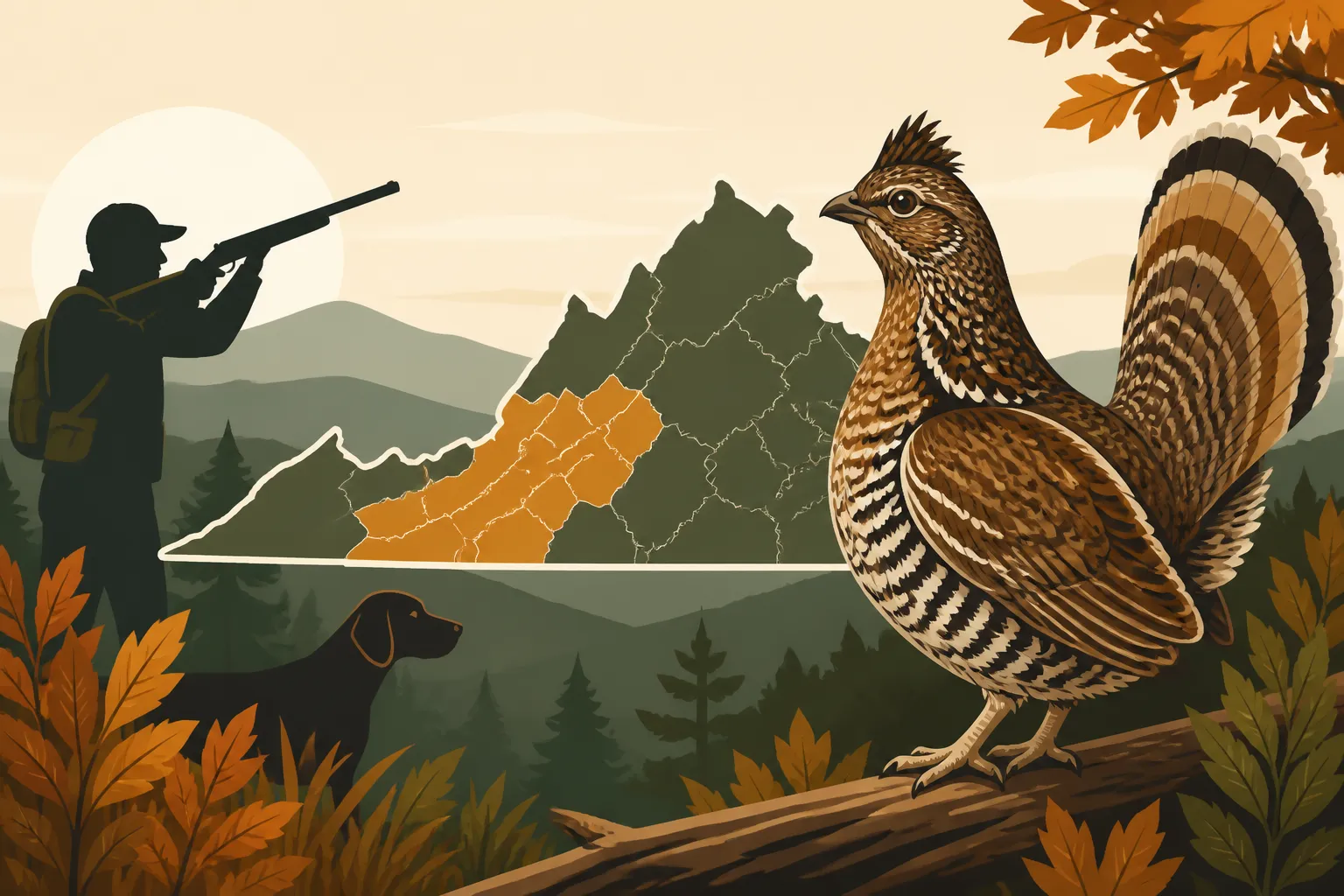
When we talk about the best counties for ruffed grouse in Virginia, our eyes immediately turn to the western mountain ranges. These are the last bastions for these birds, where the terrain, forest composition, and public land acreage combine to offer a semblance of their historical range.
- Augusta and Bath Counties: Nestled deep within the Allegheny Mountains, these counties consistently come up in discussions about Virginia grouse. They boast vast expanses of the George Washington National Forest Hunting, offering diverse terrain from deep hollows to high ridges. Look for areas with recent timber cuts (check DWR or Forest Service websites for past and current logging operations), especially those that are 10-20 years old and regenerating with thick brush. Areas with a mix of hardwoods and stands of hemlock or pine, particularly along creek bottoms or on steep, north-facing slopes, are prime targets. The sheer size of these areas means less pressure in some of the more remote sections, but it also means you'll need to be prepared for strenuous hiking.
- Highland and Rockingham Counties: Further north along the same mountain chain, Highland and Rockingham counties offer similar opportunities, particularly within the National Forest boundaries. Highland, known as Virginia's "Little Switzerland," has a high average elevation, which contributes to more favorable grouse habitat. In Rockingham, focus your efforts away from the more accessible areas and delve into the wilderness areas or less-traveled forest service roads. The key is finding that mosaic of young growth, mature timber, and a good water source.
- Smyth and Grayson Counties (Southwest Virginia): While often overlooked in favor of the more central Shenandoah Valley mountains, the southwestern counties, particularly around the Jefferson National Forest Hunting and the Mount Rogers National Recreation Area, can also hold birds. These areas are characterized by rugged, high-elevation terrain, including stands of red spruce and northern hardwoods at higher elevations, which are reminiscent of more northern grouse habitats. They often have less hunting pressure than areas closer to major population centers, but the mountains here are unforgivingly steep. It's truly wild country.
These counties aren't necessarily easy hunting, but they offer the best odds for encountering grouse in Virginia. Success often comes down to scouting, physical fitness, and persistent effort in challenging terrain.
Navigating Public Land Opportunities
Finding these pockets of grouse habitat within these large counties requires more than just pointing your truck west. You need to leverage mapping tools and local knowledge to identify promising areas on public land.
- Utilizing DWR Resources: The Virginia Department of Wildlife Resources (DWR) provides maps and information on public lands, including Wildlife Management Areas (WMAs) and National Forests. While they don't explicitly list "grouse hotspots," their timber management plans or past project reports can give clues about where recent cuts have occurred. Using the Go Outdoors Virginia Map Tool is an excellent starting point for overlaying different land ownerships and features. Many WMAs, while primarily managed for deer and turkey, may have small game management components that benefit grouse.
- Digital Scouting with GoHunt: This is where modern technology really shines. Platforms like GoHunt allow you to overlay various map layers – public land boundaries, timber harvest data, topographic maps, and even historical satellite imagery – to identify potential grouse cover without ever leaving your home. You can look for clearcuts from 10-25 years ago, identify dense evergreen thickets, and map out access points and potential travel corridors. GoHunt’s detailed satellite imagery can reveal subtle changes in vegetation density that might indicate prime cover. By meticulously scouting these digital maps, you can narrow down vast tracts of National Forest into manageable, high-potential hunt units. Pay attention to changes in elevation, creek drainages, and areas where logging roads have opened up canopy for regeneration.
- Forest Service Ranger Districts: Don't hesitate to contact the local ranger district offices for the George Washington or Jefferson National Forests. They often have information on recent timber sales, prescribed burns, or areas of active habitat management. While they can't give you "the spot," they can provide valuable insights into where habitat work is creating the conditions grouse need. Sometimes, just a casual conversation about what type of timber work is happening can point you in the right direction.
Remember, persistence is key. Grouse populations fluctuate, and what was good last year might be less productive this year. Constant scouting and adapting your strategy based on habitat conditions will yield the best results.
Here's a quick overview of top counties and their general characteristics:
| County Name | Primary Public Land | Key Habitat Features | Terrain Type | General Grouse Potential |
|---|---|---|---|---|
| Augusta | George Washington National Forest | Regenerating clearcuts (10-25 yrs), mixed hardwoods/conifers, steep hollows | Mountainous, rugged | High |
| Bath | George Washington National Forest | Similar to Augusta; strong emphasis on active timber management areas, creek bottoms | Mountainous, rugged | High |
| Highland | George Washington National Forest | High elevation, cooler climate, young deciduous thickets, some spruce/hemlock | Mountainous, steep | High |
| Rockingham | George Washington National Forest | Diverse forest age classes, often more accessible areas near roads, focus on remote | Mountainous | Moderate to High |
| Smyth | Jefferson National Forest | High-elevation spruce/fir, northern hardwoods, very rugged, less pressure | Very mountainous | Moderate to High |
| Grayson | Jefferson National Forest | Similar to Smyth, near Mount Rogers, remote wilderness characteristics | Very mountainous | Moderate to High |
Tactics for Locating Grouse in Virginia's Best Areas
Once you've identified a promising county and pinpointed some potential habitat on your GoHunt app or DWR map, it’s time to hit the ground. But finding grouse isn't like deer hunting, where you might sit and wait. It’s an active, cover-crashing pursuit that demands specific tactics. For those looking for the real deal, Grouse Hunting Blue Ridge Cover offers specific guidance on that unique challenge.
Reading the Cover
Even within a "good" county, not all cover is created equal. You need to know what to look for when you're actually walking through the woods. It's about finding those specific micro-habitats within the larger forest.
- Edge Cover is Key: Grouse love edges – where different habitat types meet. This could be the edge of a young clearcut meeting mature timber, a brushy field edge bordering a forest, or where a dense laurel thicket transitions to more open hardwoods. These edges provide the best of both worlds: thick cover for safety and more open areas for foraging. Look for areas where old logging roads have become overgrown, creating linear patches of excellent edge cover.
- Thermal and Escape Cover: Pay close attention to conifer stands (pine, hemlock, cedar, spruce). These evergreen trees provide crucial thermal cover during cold weather and dense visual obstruction year-round. If you find a patch of young deciduous growth adjacent to a dense stand of pines or hemlocks, slow down and work it thoroughly. Rhododendron and mountain laurel thickets, especially on steep slopes or in creek bottoms, are also classic grouse holding areas. They offer an almost impenetrable fortress.
- Food Sources in Season: While you're primarily looking for cover, always be mindful of food. In early fall, look for grapevines, greenbrier thickets, and areas with dogwood or hawthorn berries. Later in the season, focus on areas with birch catkins or aspen buds. An experienced grouse hunter learns to identify these key food sources and prioritizes cover that contains them. A good resource for understanding their diet more broadly might be Squirrel and Small Game Hunting in Virginia, which often shares habitat with grouse.
It's a process of elimination and pattern recognition. The more time you spend in the woods, the better you'll become at "reading" the cover and knowing where a grouse is most likely to be hiding.
The Role of Dogs and Persistence
Let's be honest, hunting ruffed grouse without a dog is an incredibly challenging endeavor, bordering on masochistic. While not impossible, a well-trained bird dog dramatically increases your chances of success and makes the experience infinitely more enjoyable.
- A Dog's Nose is Priceless: A good bird dog, especially a pointing breed, is invaluable. Their keen sense of smell can locate birds that you would undoubtedly walk past, buried deep in the thickest cover. When the dog goes on point, it allows you to get into a shooting position and be ready for the explosive flush. Without a dog, most flushes will be unexpected, giving you little time to react. The best dogs learn to work the thick cover methodically, adjusting to the wind and scent conditions, leading you directly to the birds. Proper Bird Dog Gear for Virginia Cover is essential for their safety and performance.
- Persistence and Patience: Grouse hunting is rarely about bagging a limit in an hour. It's about persistence, covering ground, and enjoying the process. You might walk for hours without seeing a feather, only to have two birds flush in quick succession from a small, overlooked thicket. Be prepared to put in the miles, navigate steep terrain, and push through dense briars. Don't get discouraged by empty stretches; focus on thoroughly working every piece of promising cover you encounter. A long walk in beautiful mountain country, even without a bird, is still a good day afield.
- Leveraging GoHunt for Real-Time Adjustments: Even with a dog, having your GoHunt app open can help. If you're consistently striking out in one area, a quick glance at the map can show you nearby timber cuts or different elevation bands to explore. It allows for on-the-fly adjustments to your route based on conditions and what you're seeing (or not seeing) on the ground. Perhaps the south-facing slopes are too dry, and GoHunt shows a deeper, north-facing hollow with a dense conifer stand just over the ridge. This dynamic scouting is crucial for making the most of your time.
Ultimately, hunting Virginia grouse is a labor of love. It’s a pursuit for those who appreciate the challenge, the rugged beauty of the mountains, and the thrill of an explosive flush. While the numbers aren't what they once were, by focusing your efforts on the right counties, understanding optimal habitat, and employing persistent tactics, you can still find success and experience the magic of the wild ruffed grouse.
Disclaimer
This article is for general informational purposes only and does not constitute professional advice. Laws, prices and regulations vary by location and change over time. Consult a qualified professional for guidance on your specific situation.