Bird Dog Gear for Virginia Cover
Hunting with a bird dog in Virginia is an incredible experience, but anyone who's spent a day busting through honeysuckle thickets, crossing rocky stream beds, or navigating dense mountain laurel knows it takes a toll on both you and your four-legged partner. It's frustrating to have a hunt cut short because your dog got a paw pad sliced or disappeared into a deep hollow without a trace. This guide is all about equipping your bird dog—and yourself—with the essential gear to stay safe, effective, and comfortable across Virginia's incredibly diverse and often challenging cover.
Essential Protection for Your Canine Partner
When you're pushing through Virginia's often unforgiving cover, your bird dog is right there with you, sometimes even deeper in the thick stuff. Their safety is paramount, and a little forethought in protective gear can prevent a lot of heartache and vet bills.
Blaze Orange Vests and Collars
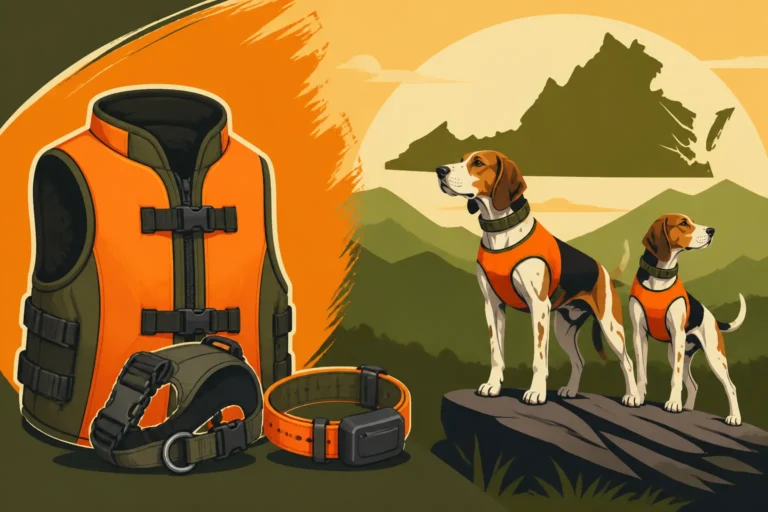
Let's face it, safety is always first, especially when you're hunting with dogs. Virginia's woods can be incredibly dense, and during certain seasons, you're sharing that space with other hunters. A flash of blaze orange isn't just a suggestion for us, it's a lifeline for our dogs, making them visible to you and anyone else in the field. It helps prevent accidental shootings, which is every hunter's worst nightmare.
Beyond just visibility, a good blaze orange vest offers a surprising amount of physical protection. Many vests are made from tough, briar-resistant materials like Cordura or tightly woven nylon, designed to deflect thorns, sharp sticks, and even barbed wire. Think about those nasty multiflora rose thickets or blackberry brambles you’ve pushed through – they can shred a dog's skin in no time. A well-fitting vest acts like a shield, protecting their chest and belly, which are especially vulnerable. You can often find a good selection of durable vests by looking through resources like GoHunt, which categorizes gear by intended use.
The key here is fit. A vest that's too loose can snag on branches, restrict movement, or allow briars to get underneath, defeating its purpose. One that's too tight will chafe and make your dog uncomfortable, hindering their performance and willingness to work. Always measure your dog accurately, usually around the chest and neck, and check manufacturer sizing charts. Remember, a collar should also be blaze orange, wide, and durable, possibly with reflective elements for low-light conditions, especially if your dog has a tendency to range far. Make sure it's snug enough not to slip over their head but loose enough for two fingers to slide underneath comfortably.
Boots and Paw Protection
Virginia's varied terrain, from the rocky slopes of the Blue Ridge to the soggy bottoms of the Piedmont, means your dog's paws are constantly at risk. A day of hunting can involve traversing abrasive gravel, sharp shale, thorny undergrowth, and frozen ground. It's heartbreaking to see a dog limp back to you with a torn paw pad, a briar embedded deep, or cracks from extreme cold. This isn't just a minor inconvenience; a serious paw injury can sideline your dog for weeks, if not permanently.
Dog boots come in a range of materials and designs, each suited for different conditions. You'll find options made from durable fabric with rubberized soles for traction and abrasion resistance, ideal for rocky trails and briar patches. Others are more akin to waterproof socks, excellent for wet, muddy, or snowy conditions, providing both protection and warmth. Getting the right size is crucial here, just like with vests. Measure your dog's paw width and length while they're standing and bear weight. It often takes some trial and error, and patience, to get a dog accustomed to wearing boots. Start with short periods around the house or yard before heading to the field.
If boots aren't your dog's thing, or if you prefer a less cumbersome option, paw waxes and balms offer another layer of protection. These products create a breathable barrier that helps moisturize pads, preventing cracking in dry, cold conditions, and offering a slight buffer against abrasive surfaces. While they won't stop a sharp thorn, they can certainly reduce friction and improve overall paw health. Always carry a small paw first aid kit with antiseptic wipes, medical tape, and perhaps a small pair of tweezers for removing embedded debris. Keeping those working paws in prime condition is vital for a successful season.
Snakebite Protection Vests
It's an unfortunate reality that Virginia is home to several venomous snakes, including copperheads and rattlesnakes, which can pose a significant threat to our curious bird dogs, especially during warmer months or in dense cover where snakes are often concealed. A snakebite can be devastating, leading to severe swelling, tissue damage, and potentially death if not treated quickly. Even a non-lethal bite can result in thousands of dollars in vet bills and weeks of recovery, impacting your dog's hunting season, or even their entire career.
Snakebite protection vests are specifically designed to shield the most vulnerable areas of a dog's body: their neck, chest, and belly. These vests are typically made from puncture-resistant materials like heavy-duty Cordura nylon or multiple layers of ballistic-grade fabric, offering a formidable barrier against a snake's fangs. They often feature an ergonomic design that allows for full range of motion while maintaining coverage, which is critical for an active hunting dog. Many vests are also highly visible, incorporating blaze orange, which as we discussed, is crucial for overall safety in the field.
While these vests provide excellent physical protection, it's important to remember they're a piece of equipment, not a foolproof guarantee. They can significantly reduce the risk and severity of a bite, but they don't cover every inch of your dog. Combining a snakebite vest with proper snake avoidance training is the most effective strategy. Teaching your dog to recognize and avoid snakes, and backing that up with the physical protection of a vest, gives them the best chance of staying safe in snake country. Always be vigilant yourself, watching where you and your dog step, and consider carrying a snakebite kit for immediate, emergency response, even if you still need to get to a vet.
Tracking and Communication Systems
In the thick woods and rolling hills of Virginia, a bird dog can disappear in a flash. Whether they're on a hot scent, pursuing a wounded bird, or simply ranging a bit too far, losing track of your dog is a terrifying experience. Modern technology offers powerful solutions to keep your hunting partnership connected.
GPS Tracking Collars
There’s nothing quite like that pit-in-your-stomach feeling when your dog has been out of sight for a little too long, and you haven't heard the bell. In Virginia's vast public lands or even large private tracts, a lost dog can quickly become a serious problem. Heavy cover, dense timber, and undulating terrain can swallow up sound and sight, leaving you frantically calling their name with no response. This is where a reliable GPS tracking collar becomes not just useful, but an absolute necessity for peace of mind and canine safety.
Modern GPS collars are incredibly sophisticated tools. Brands like Garmin and SportDOG (to name a couple in the general sphere of hunting technology) offer systems that integrate real-time location tracking with detailed topographical maps, allowing you to see your dog's exact position, direction of travel, and even how fast they're moving, all from a handheld device. Many systems even allow you to mark waypoints, set geofences, and review your dog's entire track after the hunt. This mapping capability can be invaluable when you're working remote sections of George Washington National Forest Hunting or tracking a dog across unfamiliar farm fields. You can check out GoHunt or similar outdoor retailers for reviews and comparisons of the latest models.
When investing in a GPS collar, consider factors like range, battery life, and durability. You want a system with a robust signal that can penetrate dense cover and handle the varied topography of Virginia. Check the expected battery life for both the collar and the handheld unit, as a dead battery is as useless as no GPS at all. Many hunters carry portable power banks to recharge handhelds on multi-day trips. Also, ensure the collar itself is waterproof and rugged enough to withstand the abuse of a full season in the field, as your dog will be crashing through brush and splashing through creeks. A reliable GPS collar is an investment that pays dividends in safety and confidence.
E-Collars and Training Systems
E-collars, sometimes called remote trainers, have become an indispensable tool for many bird dog handlers, offering a direct line of communication with your dog even when they are out of sight or range of voice commands. Contrary to common misconceptions, these aren't primarily devices for punishment, but rather sophisticated communication tools used for reinforcement and, when necessary, correction, especially in high-distraction environments like a busy hunting field. They allow you to fine-tune your dog's response to commands, reinforce good habits, and stop undesirable behaviors immediately, which is crucial for safety and effectiveness when working birds.
A quality e-collar system typically offers various modes of stimulation: tone, vibration, and static stimulation at multiple levels. This allows the handler to find the right level of communication for their individual dog, often starting with tone or vibration before moving to static correction if needed. The goal is always to use the lowest effective level to get the desired response, making it a nuanced tool rather than a crude shock device. Consistency and proper training are key; the e-collar is merely a remote extension of your voice commands and hand signals, used to reinforce lessons already taught through traditional methods.
Understanding the legalities and best practices for E-Collar Use on Public Ground in Virginia is crucial. While generally permitted, it's vital to use them ethically and responsibly. Never use an e-collar out of anger or frustration, and always ensure your dog understands what the stimulation means in relation to a command before using it in the field. The ability to recall your dog from a dangerous situation, like chasing a deer onto a road or approaching another hunter’s blind, makes an e-collar a powerful safety device. Investing time in proper e-collar training with a qualified professional can transform your dog's responsiveness and make your hunts safer and more enjoyable for both of you.
Whistles and Bells
While high-tech GPS and e-collars dominate the conversation, sometimes the most effective tools are the simplest and most traditional. The humble whistle and the jingle of a bell have been guiding bird dogs for generations, and they remain invaluable pieces of gear, especially for close-working dogs or in conditions where electronic devices might falter. There's a certain timeless satisfaction in a crisp whistle command cutting through the air, bringing your dog to heel.
A good whistle is more than just a noisemaker; it’s a consistent, clear signal that carries further than your voice, especially when you're winded from busting brush. Different types of whistles, like the classic Acme dog whistle or even a "silent" ultrasonic whistle, serve different purposes. The Acme is excellent for long-range commands, while an ultrasonic whistle, though less powerful, can be useful for sensitive dogs or when you want to avoid disturbing game or other hunters nearby. The key is consistency in your whistle commands, ensuring your dog associates specific blasts or cadences with specific actions like "sit," "come," or "turn." Practice, practice, practice!
Bells, often attached to the dog's collar, are fantastic for helping you keep track of your dog in dense cover without having to see them. That rhythmic jingle tells you where they are, their pace, and when they've gone on point – the silence of the bell is often the first indication your dog has locked up on a bird. They’re particularly useful in Virginia’s thick hedgerows, pine plantations, or bottomland hardwoods where visibility can be extremely limited. Just like everything else, make sure the bell is securely attached, not too heavy, and won't interfere with your dog's comfort or movement. For some hunters, the combination of a bell and a GPS collar offers the best of both worlds – immediate auditory feedback and precise digital tracking.
Health, Safety, and First Aid in the Field
Even with the best protective gear and tracking systems, accidents happen in the field. A hunting dog works tirelessly, pushing its limits, and the environment itself can be unforgiving. Being prepared for injuries and understanding your dog's physical needs is crucial for their well-being and a successful hunt.
Canine First Aid Kit Essentials
No matter how careful you are, or how well-conditioned your dog is, minor injuries are an almost inevitable part of hunting with dogs in Virginia's challenging cover. A thorn in a paw, a small cut from a sharp stick, or an upset stomach from drinking murky water can quickly escalate if not addressed. The frustration of being miles from the truck with an injured dog, knowing you could have prevented further issues with a few basic supplies, is something no hunter wants to experience. Having a well-stocked and easily accessible canine first aid kit can turn a potentially hunt-ending incident into a manageable inconvenience.
Your kit doesn't need to be massive, but it does need to contain the essentials. Think about what you'd carry for yourself, and then add dog-specific items. Antiseptic wipes or spray, gauze pads, medical tape, and self-adhering vet wrap are non-negotiable for cleaning and bandaging cuts or paw abrasions. Tweezers are invaluable for removing splinters or ticks. A small bottle of saline solution can be used to flush eyes or wounds. Include some dog-safe pain relief (always consult your vet about appropriate medications and dosages beforehand), and perhaps some anti-diarrheal medication. A small pair of trauma shears can quickly cut through fur or material, and a muzzle is a good idea for safely treating an injured or frightened dog.
Crucially, owning a first aid kit is only half the battle; knowing how to use it is the other. Consider taking a pet first aid course or at least familiarize yourself with basic canine emergency care. Understanding how to properly clean and bandage a wound, identify signs of heatstroke or hypothermia, or even perform CPR can make all the difference in a critical situation. Practice handling your dog's paws, mouth, and ears so they are comfortable with being examined, which will make administering aid much easier in the field. This preparation is part of being a responsible bird dog owner and hunter.
Hydration and Nutrition on the Go
Hunting with a bird dog is a high-energy activity for both of you, but especially for your canine partner. They are constantly running, sniffing, and pushing through tough cover, often covering many more miles than you do in a single day. Neglecting their hydration and nutritional needs can lead to exhaustion, dehydration, and a significant drop in performance, not to mention serious health risks, particularly during the warmer parts of Virginia's season or extended hunts. It's a fundamental aspect of keeping your dog happy, healthy, and effective in the field.
Always carry plenty of fresh water for your dog, even if you think there might be natural sources available. Ponds and streams can be contaminated or simply too far away when your dog needs a drink. Collapsible water bowls are lightweight and packable, making it easy to offer water frequently. On longer hunts, consider a hydration pack designed for dogs or a larger reservoir you can carry. For nutrition, high-energy dog food designed for working dogs is essential during the season. For very active days or multi-day trips, energy supplements or easily digestible snacks can provide a much-needed boost. Pack these in durable, waterproof containers.
Monitoring your dog's condition throughout the day is key. Watch for signs of dehydration (gums tacky, excessive panting, lethargy) or exhaustion (dragging, unwillingness to work). Offer water during every break, not just when you think they look thirsty. During Virginia Small Game Season Rules, especially in the early fall, heat can be a major factor. In colder months, ensuring they have enough calories to maintain body heat is important. Just like athletes, working dogs need consistent fuel and hydration to perform at their peak and recover quickly. A well-hydrated and nourished dog is a happy, productive hunting partner.
Vehicle Safety and Transport
The hunt begins long before you step out of the truck and doesn't end until your dog is safely home and settled. The journey to and from your chosen Virginia hunting spot, whether it's a distant WMA or a local field, needs to be as safe and comfortable as the hunt itself. Ignoring proper vehicle safety can lead to lost dogs, injuries, or even dangerous situations on the road. It’s a crucial, often overlooked, aspect of bird dog gear and care.
Safe and secure transport for your dog is non-negotiable. The gold standard is a sturdy kennel or crate. If your dog rides in the bed of a truck, a rugged, airline-approved kennel made from durable plastic or aluminum is essential. These should be secured to prevent sliding or tipping during transit, protecting your dog from road hazards and impacts. If your dog rides inside the vehicle, a well-secured wire or fabric crate, or even a specialized car harness that tethers to a seatbelt, can prevent them from becoming a projectile in a sudden stop or accident. Free-roaming dogs inside a vehicle can distract the driver and suffer severe injuries.
Ventilation and temperature control are also paramount, especially in Virginia's fluctuating weather. Never leave a dog in a hot car, even for a few minutes, as temperatures can quickly become lethal. On warmer days, ensure adequate airflow in the kennel or vehicle. In colder weather, provide bedding or a cover for their crate to help retain warmth. Carry extra water and a bowl for immediate hydration upon arrival and before departure. A quick pit stop for a stretch and a drink can do wonders for a dog confined during a long drive. Making the journey safe and comfortable ensures your dog arrives ready to hunt and returns home safely.
Handler Gear for Supporting Your Dog
While this guide focuses on bird dog gear, let's be realistic: a successful bird hunt in Virginia is a team effort. Your dog relies on you, and to effectively support them, you need to be properly equipped yourself. Your gear choices directly impact your ability to navigate the terrain, communicate, and stay comfortable, which in turn affects your dog's performance and safety.
Durable Apparel for Briar-Busting
Anyone who hunts birds in Virginia knows the cover here can be absolutely brutal. From greenbrier thickets that snatch at your clothes to dense multiflora rose that seems to have a personal vendetta against uncovered skin, you're going to get scratched, snagged, and poked. Trying to push through this kind of vegetation in flimsy clothing is a recipe for a miserable hunt and can even limit your ability to follow your dog through prime bird habitat. Just like your dog needs protection, you do too.
Investing in briar-resistant apparel isn't a luxury; it's a necessity for Virginia bird hunting. Look for pants, chaps, and jackets made from heavy-duty canvas, rugged nylon, or specialized thorn-resistant fabrics. Many companies design specific "briar pants" with reinforced fronts or even full chap systems that layer over your regular pants. These materials are built to withstand abuse, deflecting thorns and protecting your legs and arms from painful scratches. While they might feel a bit stiff at first, the comfort of moving through thick cover without constantly wincing is well worth it. You can browse through GoHunt's apparel section to see various durable options and materials.
Beyond briar protection, consider the overall durability and functionality of your hunting clothes. Layering is crucial for Virginia's unpredictable weather, so look for garments that can be easily added or removed as temperatures change. Waterproof and breathable fabrics are essential for staying dry in damp conditions or during a sudden rain shower, while still allowing perspiration to escape. When your dog makes a point in a particularly nasty patch of cover, you need to be able to follow them in without hesitation, and that confidence comes from knowing your gear can handle it. For more on staying warm and quiet, consider articles like Wool Versus Synthetics in Mountain Cold.
Navigation Tools for the Team
Even with your dog wearing a state-of-the-art GPS collar, you still need to know exactly where you are in relation to your dog and the surrounding terrain. Virginia's hunting grounds, particularly the expansive national forests or large WMAs, can be disorienting. Losing your bearings, even for a short time, can lead to wasted hunting time, missed opportunities, and potentially dangerous situations. Effective navigation tools ensure you can always find your way, track your dog, and retrieve your birds efficiently.
While the dog's GPS collar tracks the dog, your personal navigation system keeps you on the map. A dedicated handheld GPS unit is a robust option, often with preloaded topographical maps and the ability to withstand rough use and wet weather. Many hunters also rely heavily on smartphone apps like onX Hunt or Gaia GPS. These apps, when downloaded with offline maps, are incredibly powerful, showing property lines, satellite imagery, and your real-time location. For more details on using technology to your advantage, check out Scouting With the Virginia DWR App. Remember to carry a portable power bank if relying on a phone, as battery life can drain quickly with GPS use, especially in areas with spotty cell service.
Don't underestimate the value of traditional tools either. A good old-fashioned topographical map and a compass can be invaluable backups, especially in remote areas where electronic devices might fail due to battery issues or signal loss. Learning how to read a map and use a compass is a fundamental skill for any hunter heading into Virginia's wild places. Understanding contour lines, identifying terrain features, and plotting a course can keep you out of trouble and help you anticipate where birds might hold or where your dog might range. Having multiple navigation methods ensures you're never truly lost, allowing you to focus on the hunt and your dog's performance.
Bird Vests and Game Carriers
The ultimate goal of hunting with a bird dog is, of course, to put birds in the bag. Once your dog has made a beautiful point and you've made a clean shot, you need a way to carry your harvest comfortably and efficiently. Fumbling with birds in your hands or trying to stuff them into a regular backpack is inconvenient, messy, and can even damage the birds. A dedicated bird vest or game carrier is designed to make the post-shot phase of the hunt as smooth as the pre-shot.
A quality bird vest is typically designed with large, easily accessible game bags on the back, often lined with waterproof or blood-resistant material for easy cleaning. These bags are spacious enough to hold several birds without crushing them, allowing for air circulation to help cool the game. Beyond the game bag, a good vest will also feature multiple pockets for shells, water bottles, dog treats, a small first-aid kit, and perhaps a transmitter for your dog's e-collar. Look for vests with adjustable straps and a comfortable fit that distributes weight evenly across your shoulders and hips, as you might be walking for miles.
For lighter loads or shorter hunts, a simple bird strap or a small game pouch might suffice. These options are less bulky than a full vest but still keep your harvested birds secure and relatively clean. Whatever you choose, ensure it's made from durable material that can withstand briars and rough use, and that it's easy to clean at the end of the day. The satisfaction of collecting a hard-earned bird is immense, and having the right gear to carry it comfortably only adds to the reward of hunting over a skilled dog.
Virginia-Specific Considerations for Bird Dog Gear
Virginia isn't a monolithic hunting landscape; it's a tapestry of environments, from mountainous ridges to tidal marshes, each presenting unique challenges and requiring specific gear considerations for your bird dog team. What works perfectly in a Piedmont pine plantation might be inadequate in a southwest Virginia clear-cut.
Terrain-Specific Gear Choices
Virginia's diverse geography means that a "one-size-fits-all" approach to bird dog gear isn't always the most effective. The dense, steep, and rocky terrain found in areas like the George Washington National Forest Hunting presents different challenges than the relatively flatter, often swampy, or agricultural lands of the Piedmont or Eastern Shore. Understanding these nuances is crucial for optimizing your dog's performance, comfort, and safety.
When hunting in mountainous regions, where you might be Still-Hunting Jefferson Forest Ridges or pushing through thick rhododendron, paw protection becomes even more critical due to abrasive rocks and sharp shale. Robust boots with good traction are a must, and a highly visible, tough vest will protect against sharp branches and provide an extra layer of warmth in cooler, higher elevations. In these vast landscapes, a GPS collar with excellent range and battery life is absolutely indispensable, as dogs can easily get out of sight and sound in the deep hollows and steep draws. You'll want to ensure your e-collar has enough power to reach your dog through dense timber.
Conversely, if you're hunting the lowlands, perhaps Hunting the Eastern Shore Marsh for rail or working a field edge in the Hunting the Virginia Piedmont for quail, your gear priorities might shift. Waterproof vests, possibly with buoyancy, are important if your dog is frequently in and out of water. Paw protection might focus more on mud and thorns than sharp rocks. Visibility remains key, but tracking might involve flatter, more open ground, though still with plenty of cover to lose a dog. The type of cover also dictates how much protection your dog needs against briars – some low-lying areas can be just as thorny as the mountains. Tailoring your gear to the specific Virginia terrain you'll be hunting will lead to a more effective and safer experience for your dog.
Weather Adaptations
Virginia's weather is notoriously fickle, capable of swinging from mild autumn days to bitter cold, driving rain, or even heavy humidity, sometimes all within the same week. This unpredictability means that preparing your bird dog for a range of conditions is vital for their health and performance. Just like you layer up for the changing elements, your dog might need specific adaptations to stay comfortable and safe.
In the early parts of the Virginia Small Game Season Rules, particularly during September and October, temperatures can still be quite warm, and humidity can be high. During these times, preventing overheating is your primary concern. Cooling vests, which can be soaked in water to provide evaporative cooling, can be a game-changer for high-energy dogs. Always carry ample water and take frequent breaks in the shade. Watch for signs of heat stress, such as excessive panting, lethargy, or a refusal to retrieve. Conversely, as winter approaches and you're Hunting Into the January Second Close, cold weather becomes a significant factor. Insulated vests or jackets can help retain body heat, especially for short-haired breeds or older dogs, keeping muscles warm and preventing hypothermia during prolonged exposure or when sitting still after a retrieve.
Rain and wet conditions are also a constant threat across Virginia. A waterproof vest can help keep your dog's core dry, preventing chills. More importantly, recognizing when the weather is too extreme – either too hot or too cold – to safely hunt is critical. A dedicated bird dog loves to hunt, but it's your responsibility to know their limits. Pay close attention to their behavior and physical condition, and don't hesitate to cut a hunt short if the weather puts your dog at risk. After the hunt, always ensure your dog is thoroughly dried off and warmed up, especially if they’ve been working in wet, cold conditions.
Public Land Regulations and Etiquette
Hunting Virginia's public lands, whether a WMA or a national forest, offers incredible opportunities but also comes with a responsibility to understand and adhere to specific regulations and a strong sense of etiquette. This is particularly true when hunting with bird dogs, as their presence and activities can impact other hunters and land users. Knowing the rules and being a considerate hunter ensures a positive experience for everyone and keeps our access open for future generations.
One of the most important regulations for both you and your dog on public land is visibility. Virginia Blaze Orange Requirements typically apply to hunters during certain seasons, and it's always a good idea for your dog to wear blaze orange as well, as discussed earlier. This greatly enhances their safety, especially in popular hunting areas. Understanding the rules around E-Collar Use on Public Ground is also vital; while generally allowed for training and control, their use should always be responsible and ethical. Make sure your dog is under control and responsive to commands, whether voice, whistle, or e-collar, to prevent them from interfering with other hunters or disturbing other game.
Beyond regulations, good etiquette is key. Be mindful of other hunters, hikers, and wildlife observers. Avoid hunting too close to parked vehicles, trailheads, or established campsites. If you encounter another hunter, give them a wide berth and keep your dog close and quiet. Pick up after your dog, especially in high-traffic areas. Familiarize yourself with the specific rules of the WMA or National Forest you plan to visit, as some areas may have unique restrictions on dog training, vehicle access, or even hunting methods. Being a respectful and knowledgeable public land user helps preserve access for all of us who cherish the opportunity to hunt Virginia's wild places with our cherished bird dogs.
| Feature | Blaze Orange Vest | Paw Boots | Snakebite Vest | GPS Tracking Collar | E-Collar System |
|---|---|---|---|---|---|
| Primary Benefit | Visibility, Briar Protection | Paw Protection | Snakebite Protection | Location Tracking | Remote Communication/Training |
| Virginia Use | All hunting seasons, public land | Rocky terrain, briars, cold | Warm months, dense cover | Vast public lands, dense cover | Control, safety, training |
| Materials | Cordura, Nylon, Neoprene | Rubber, Fabric, Reinforced | Ballistic Fabric, Nylon | Durable Plastic, Rubber | Durable Plastic, Silicone |
| Durability | High | Moderate to High | Very High | High | High |
| Maintenance | Washable, check for tears | Clean, check for damage | Washable, check for damage | Recharge, software updates | Recharge, software updates |
| Key Challenge | Proper fit, dog comfort | Keeping them on, sizing | Limited full coverage | Battery life, signal in dense cover | Proper training, ethical use |
Disclaimer
This article is for general informational purposes only and does not constitute professional advice. Laws, prices and regulations vary by location and change over time. Consult a qualified professional for guidance on your specific situation.