How Mange Affects Virginia’s Bear Population
Sarcoptic mange mites cause hair loss, scabs, weakness, and hypothermia in Virginia black bears through direct contact and shared sites.
Know what you’re after.
Big game, small game, upland birds, and waterfowl — identification, behavior, rut and migration timing, and how each species moves through the season.
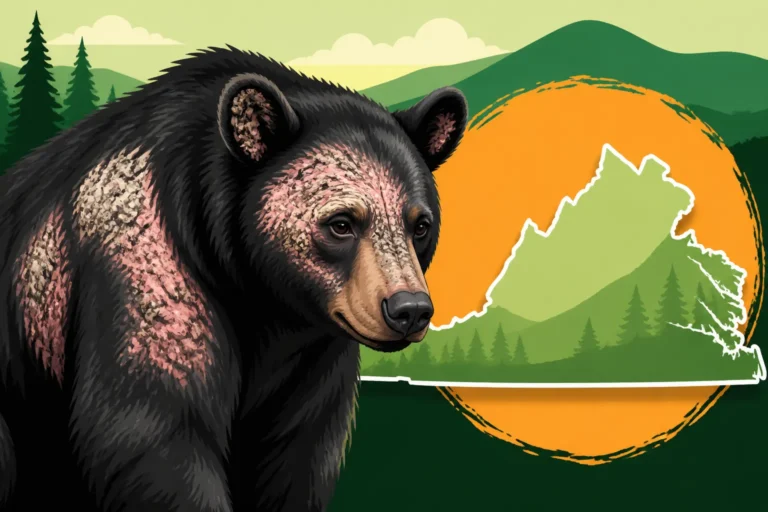
Sarcoptic mange mites cause hair loss, scabs, weakness, and hypothermia in Virginia black bears through direct contact and shared sites.

Virginia black bear harvest trends, population growth, and conservation factors influencing hunting success across the Commonwealth.
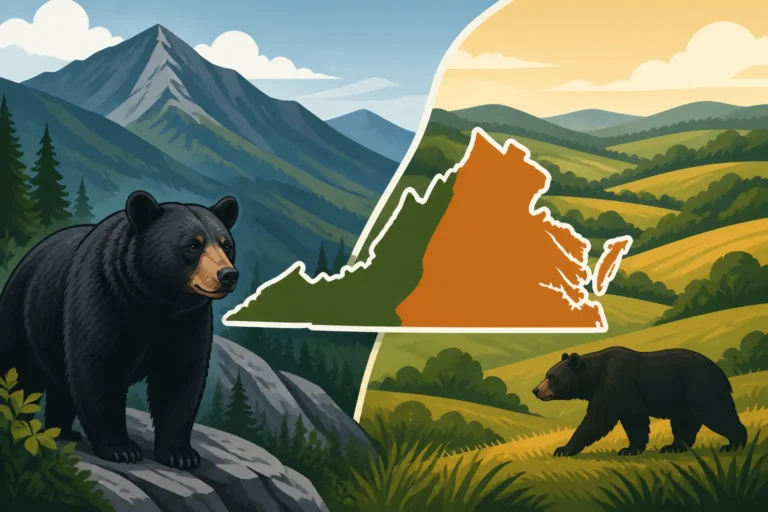
Virginia black bear distribution details explain population recovery and eastward expansion from western mountains into the Piedmont region.

Virginia black bear populations grew from historical lows to thriving numbers due to conservation efforts and natural adaptations.
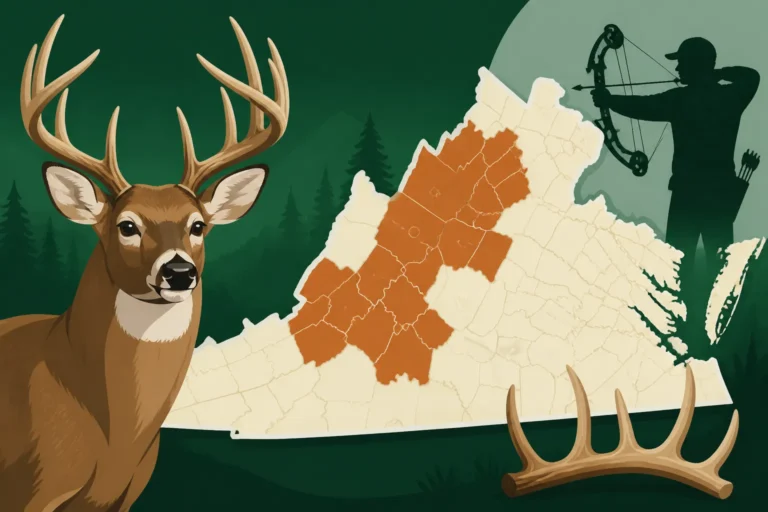
Chronic Wasting Disease in Virginia spans eighteen counties, impacting deer herds, hunting traditions, and state regulations.
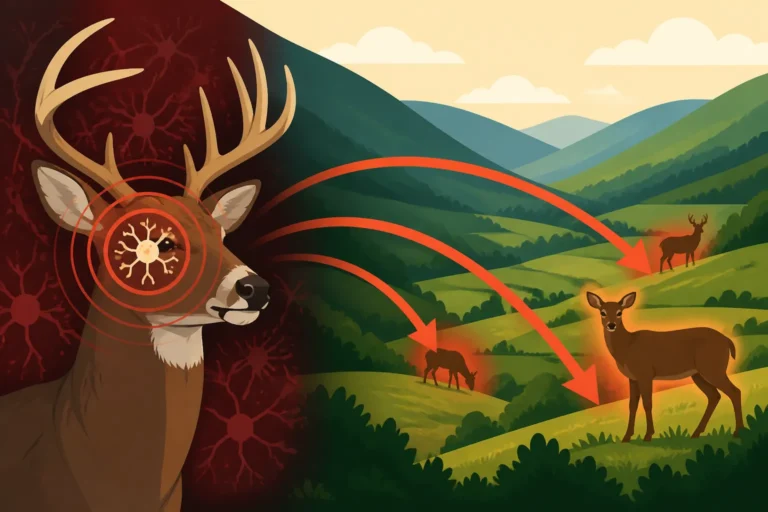
Chronic Wasting Disease in Virginia deer explains how fatal prions spread through Frederick County and the Shenandoah Valley since 2009.
Virginia deer harvest records collected by the Department of Wildlife Resources help hunters gauge herd health and improve success.
Virginia’s Piedmont region offers deer abundant year-round nutrition from crops and mast, producing trophy-caliber bucks with heavy antlers.
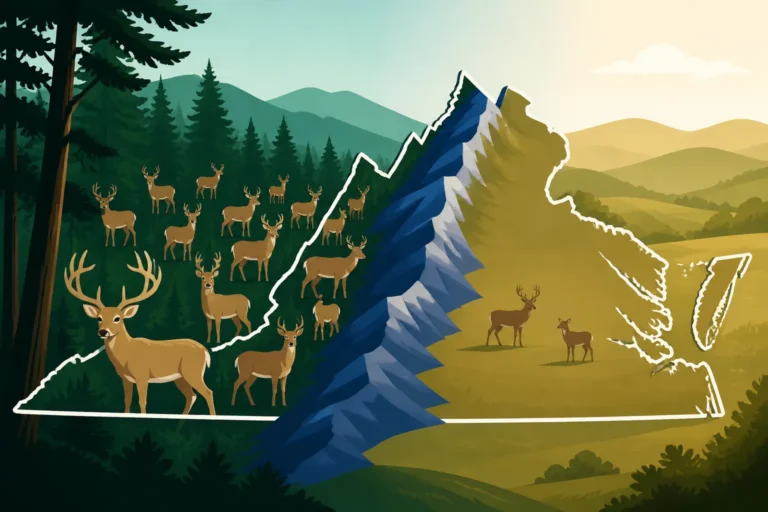
Virginia deer density east and west of the Blue Ridge explains regional habitat variations and Appalachian hunting challenges.
Virginia deer population estimates, calculated using harvest data and vehicle collisions, determine hunting seasons and bag limits.