Hunting Small Private Tracts in Virginia
Virginia hunters learn how to secure private land access, scout effectively, and employ successful tactics on small properties.
Close the distance.
Archery, muzzleloader, and firearm techniques — calling, stand placement, still-hunting, spot-and-stalk, and the weapon rules that change at the state line.
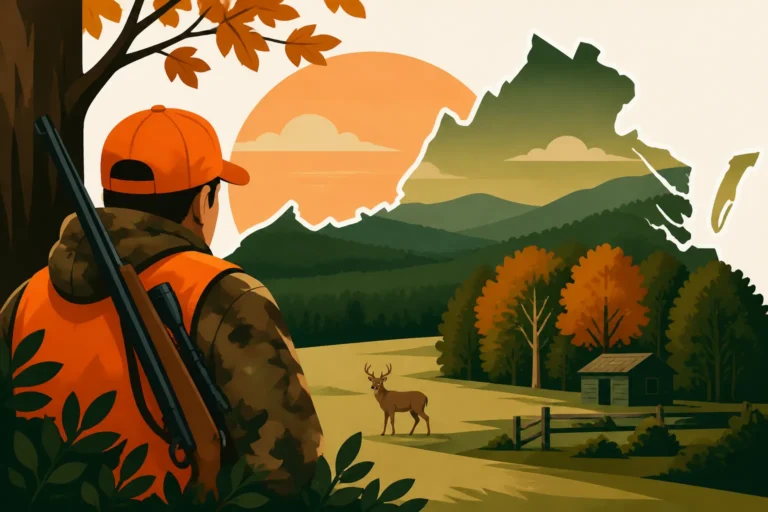
Virginia hunters learn how to secure private land access, scout effectively, and employ successful tactics on small properties.
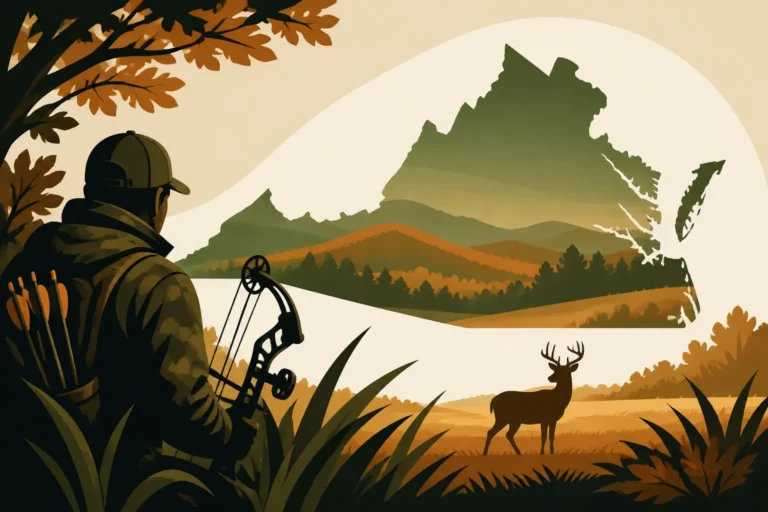
Virginia public land deer hunting spots require finding overlooked areas by targeting steep terrain and difficult topography.
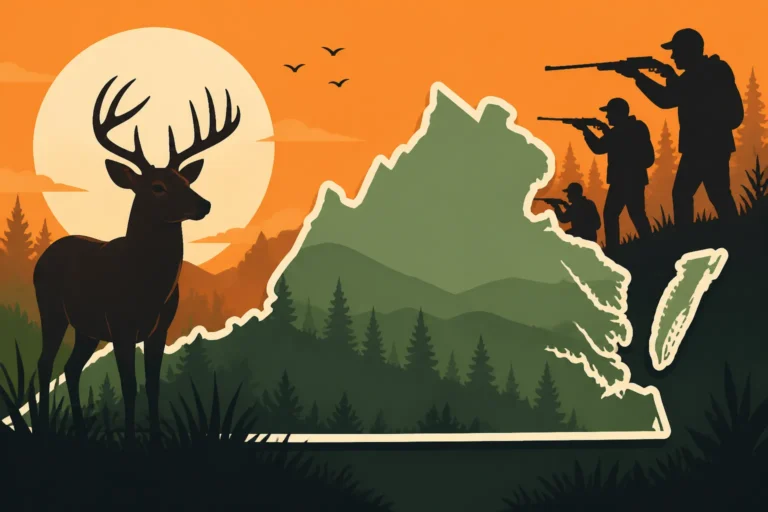
Virginia public land hunting pressure alters deer behavior, forcing white-tailed deer into thick cover and nocturnal movement patterns.
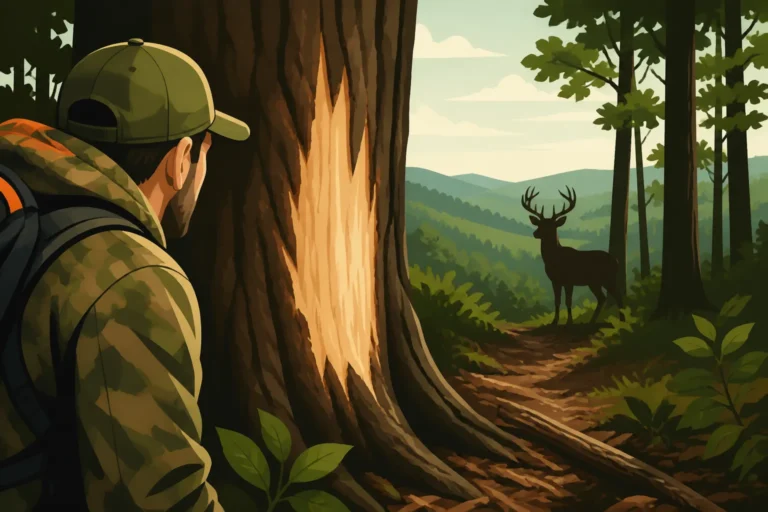
Deer sign in Jefferson National Forest reveals whitetail travel corridors across hundreds of thousands of acres of contiguous forest.
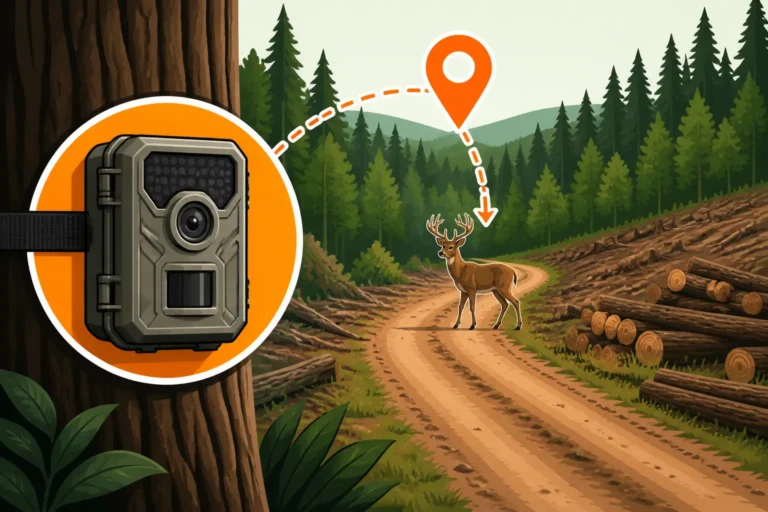
Virginia logging road trail camera placement strategies and deer behavior patterns help capture whitetail deer scouting data.
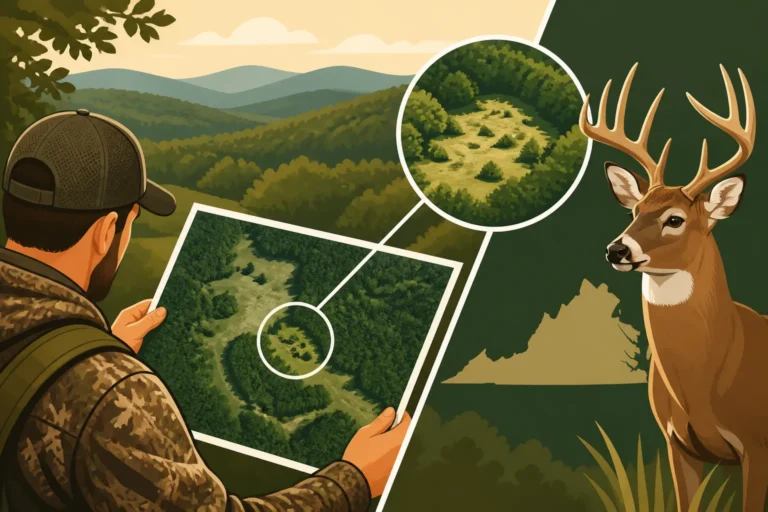
Aerial photographs of Virginia Piedmont habitats reveal deer movement, food sources, security cover, and travel corridors.
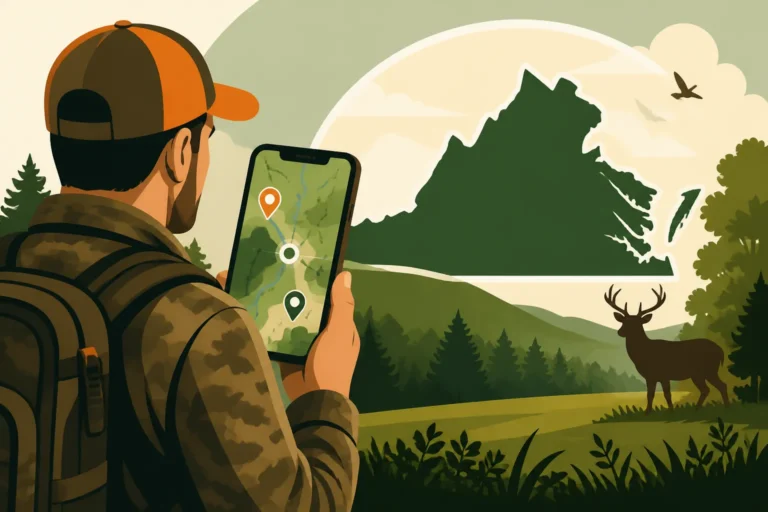
The Virginia Department of Wildlife Resources app for iOS and Android devices helps hunters examine terrain and locate game hot spots.
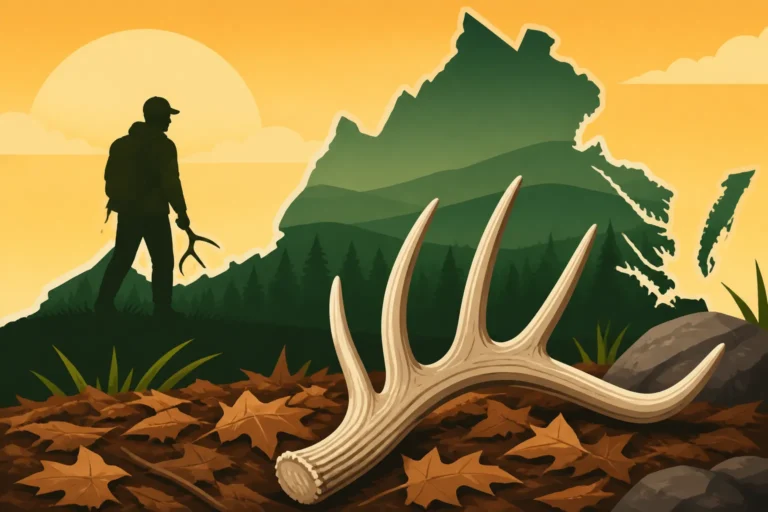
Shed hunting on Virginia public lands requires understanding buck wintering habits, antler drop timelines, and survival food sources.
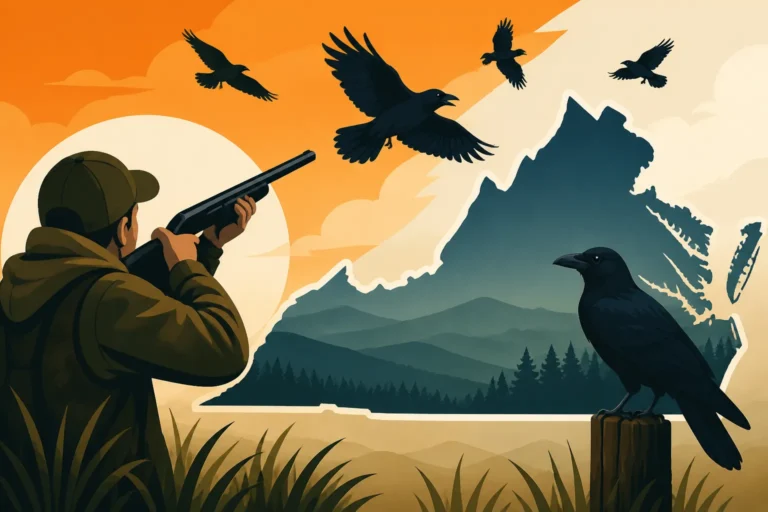
Virginia crow hunting seasons, daily bag limits, and legal shooting hours regulated under Migratory Bird Treaty Act rules.
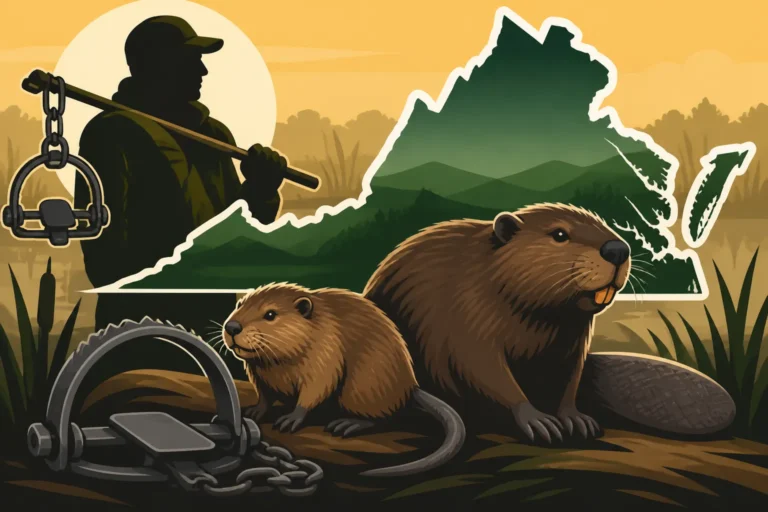
Virginia muskrat and beaver trapping regulations, license requirements, open seasons, and bag limits for property owners.