Field Dressing Knives Worth Carrying
There’s nothing quite like the feeling of success after a hard hunt in the Virginia woods or mountains. You’ve put in the work, made a clean shot, and now the real work begins: field dressing. Fumbling with a dull, flimsy knife when you’re knee-deep in a cold, muddy field and the light is fading is a hunter’s nightmare, trust me. It’s not just inefficient; it’s outright dangerous. This guide is all about helping you choose the best field dressing knives that will serve you reliably, making the task quicker, cleaner, and safer, whether you're handling a Piedmont whitetail or a big mountain bear.
Why Your Field Dressing Knife Matters More Than You Think
When you're out in the field, away from the comfort of a processing station, your knife is your most crucial tool for converting game into table fare. It's the difference between a smooth, quick process and a frustrating, messy ordeal. Too many hunters overlook this vital piece of gear, only to regret it when the moment of truth arrives.
Beyond Just "Sharp" – The Qualities You Need
While sharpness is undoubtedly the most immediate and obvious quality you need in a field dressing knife, it's far from the only one. A truly great field dressing knife goes deeper. Imagine you’ve just taken a deer on a chilly November morning deep in the George Washington National Forest. Your hands are cold, maybe a little wet, and you’re wearing gloves. In this scenario, you need a blade that holds its edge through tough hide and muscle, resists corrosion from blood and moisture, and, crucially, has a handle that provides a secure, non-slip grip.
It’s about more than just the initial cut; it’s about making multiple, precise cuts without the blade dulling to the point of becoming a liability. A superior blade maintains its keen edge longer, reducing the number of times you need to stop and sharpen during the process. This is especially important if you’re quartering an animal in the field to pack it out, a common task for successful hunters venturing into remote areas. Edge retention means less effort, less frustration, and a cleaner job overall, regardless of whether you're hunting during Virginia's General Firearms Deer Season or Bowhunting Virginia's Statewide Archery Season.
Safety First: A Good Knife Prevents Accidents
Let’s be honest, field dressing is a messy job, and your hands are going to get slippery. This is precisely why a well-designed knife is paramount for safety. A dull knife requires more force, which increases the risk of the blade slipping and causing a serious injury. A handle that doesn't provide a secure grip, especially when wet with blood or just cold, significantly amplifies that risk.
Think about the leverage you need to cut through a sternum or open the hide along the belly. If your knife is fighting you every step of the way, your chances of a slip-up skyrocket. A good field dressing knife is designed to be an extension of your hand, allowing for controlled, deliberate movements. It minimizes the need for excessive force, protecting your fingers and hands from accidental cuts. Investing in a quality knife is investing in your personal safety out in the wild, ensuring you can return home without an unexpected trip to the emergency room.
Understanding Different Blade Types for Virginia Game
The world of hunting knives offers a bewildering array of blade shapes and types, each designed with specific tasks in mind. For field dressing, understanding these differences will help you select the most effective tool for the game you pursue in Virginia.
Fixed Blades vs. Folding Blades: Pros and Cons
This is often the first decision point for many hunters, and both options have their merits, especially depending on your hunting style and the environment you’re in.
Fixed Blades: These knives feature a blade that extends through the entire handle, offering unparalleled strength and durability. When you're dealing with larger game like a deer or a bear, or if you anticipate needing to quarter an animal in the field, a fixed blade often provides the rigidity and robustness you need. They are generally easier to clean thoroughly because there are no crevices for blood or debris to get trapped in, which is a huge hygiene advantage. This is particularly relevant when you're trying to quickly process an animal on a warm early-season day. Their main drawback is their size and the need for a sheath, which can sometimes feel cumbersome when strapped to your hip or pack, especially if you're navigating dense cover or brush.
Folding Blades: On the other hand, folding knives are champions of portability and discretion. They tuck neatly into a pocket or a small pouch on your pack, making them incredibly convenient for quick tasks or for hunters who prefer a lighter load. Modern folding knives feature robust locking mechanisms that, when engaged, make them almost as secure as a fixed blade for most field dressing tasks. However, the hinge and locking mechanism create small areas where blood and tissue can accumulate, making them slightly more challenging to sterilize completely after use. For smaller game like squirrels or rabbits, or if you're primarily doing a quick gutting job before a short drag back to the truck, a high-quality folder can be perfectly adequate. The choice often comes down to personal preference, the size of game you typically hunt, and how much gear you’re willing to carry. For something like Squirrel and Small Game Hunting in Virginia, a good folder might be just fine, but for a big whitetail, many prefer the solid feel of a fixed blade.
Drop Point, Clip Point, Gut Hook: Which is Right for You?
The shape of your knife’s blade dictates its primary utility in the field.
-
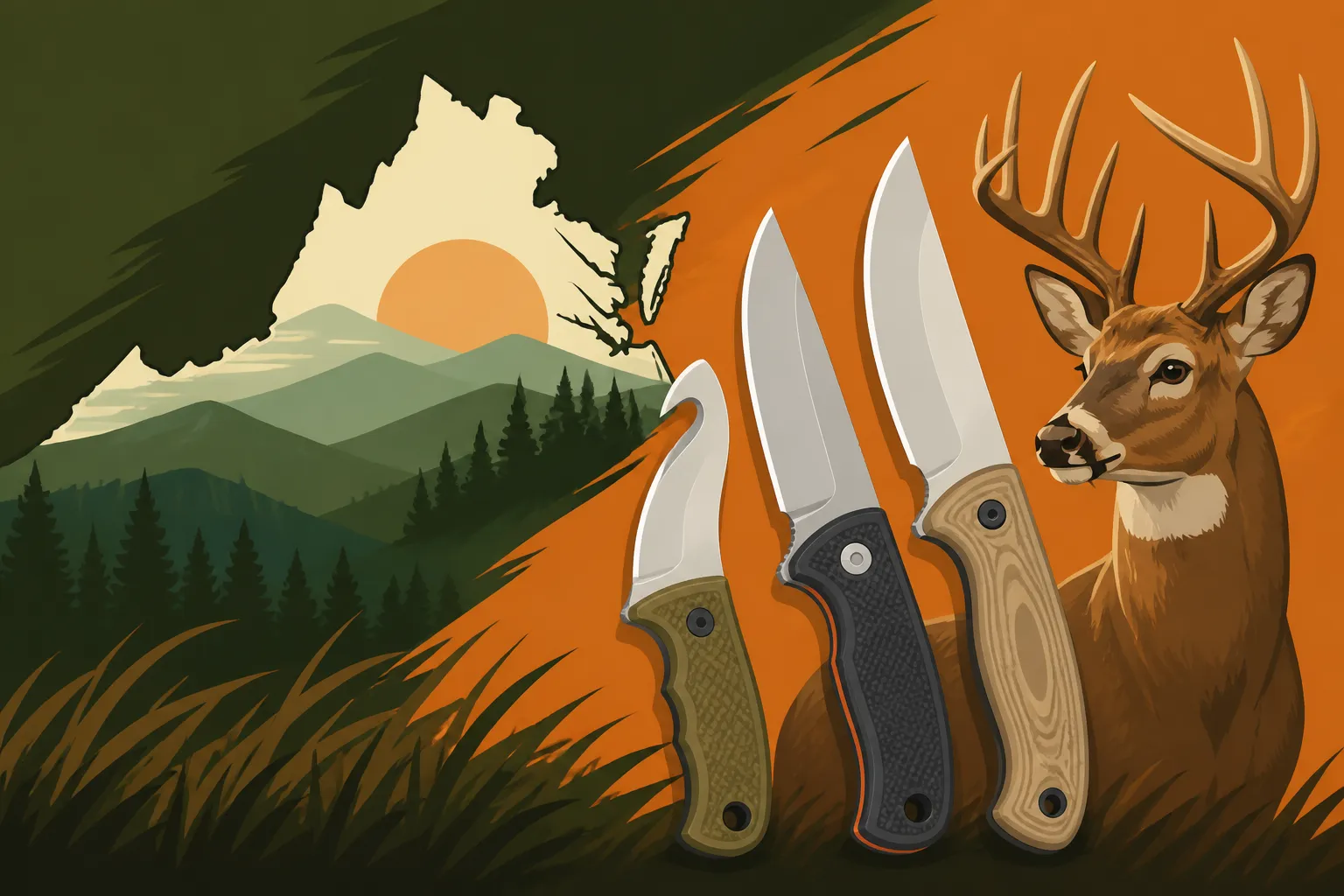
Drop Point: This is perhaps the most popular and versatile blade shape for hunting. The spine of the blade gently curves down from the handle to the tip, creating a strong, thick point that is less prone to breaking. Its broad belly makes it excellent for skinning, while the controllable point is good for detailed work. If you're looking for a single, do-it-all knife for a variety of game, from deer to perhaps even tackling a smaller Virginia Black Bear Population, a drop point is an excellent choice. It’s a reliable workhorse for general field dressing.
-
Clip Point: Characterized by a concave or straight "clip" on the top of the blade near the tip, this design creates a finer, sharper point than a drop point. This makes it exceptional for piercing and delicate tasks, such as caping around the eyes or ears. However, the finer tip can be more fragile than a drop point, making it less ideal for heavy-duty tasks where strength is paramount. Some hunters carry a clip point as a secondary, specialized knife for finer work.
-
Gut Hook: A gut hook is a small, curved protrusion on the spine of the blade, featuring a sharpened inner edge. Its purpose is to efficiently open the abdominal cavity of an animal without puncturing the internal organs, especially the stomach and intestines. This minimizes the risk of contaminating the meat with stomach contents, which is a real concern, especially in warmer Virginia weather. While highly effective for its specific job, a gut hook adds bulk to the blade and can sometimes snag on clothing or gear. Some hunters swear by them, while others find a skilled hand with a drop point or clip point can achieve the same result without the added feature. It really boils down to personal technique and preference. You might find some of the top-tier gear brands like GoHunt sometimes integrate these features or recommend specific knives for different tasks.
Blade Material: Stainless Steel, Carbon Steel, and Beyond
The material your knife is made from dramatically impacts its performance, maintenance, and longevity.
-
Stainless Steel: The most common choice for hunting knives, stainless steel alloys contain chromium, which provides excellent resistance to rust and corrosion. This is a huge advantage in the damp, often bloody environment of field dressing, particularly in humid Virginia. Stainless steel blades are relatively easy to clean and require less diligent care to prevent rust. The trade-off is that they generally don't hold an edge as long as high-carbon steels, meaning you might need to sharpen them more frequently during a long day of processing or after a particularly tough hide.
-
Carbon Steel: These blades are renowned for their exceptional edge retention and ability to take a razor-sharp edge. For hunters who prioritize maximum sharpness and don't mind a bit more maintenance, carbon steel is a fantastic option. However, carbon steel is highly susceptible to rust and requires meticulous cleaning and oiling after every use, especially when exposed to blood and moisture. If you hunt in wet conditions or are less diligent about immediate post-use care, rust can quickly become an issue.
-
Premium Alloys and Powdered Steels: In recent years, advanced powdered steels (like CPM-S30V, S35VN, or Elmax) have become popular in higher-end knives. These materials offer an impressive balance of edge retention, corrosion resistance, and toughness. They can be more challenging to sharpen initially, often requiring diamond stones, but once sharp, they hold their edge for a very long time. They represent a significant investment but can deliver superior performance for the discerning hunter who values precision and durability. When considering a long day of processing multiple animals, or if you simply demand the best performance, these modern alloys are definitely worth looking into, but remember they come with a higher price tag.
Essential Features for a Reliable Virginia Field Dressing Knife
Beyond the blade itself, the overall design and practical features of a field dressing knife are critical for its effectiveness and your comfort in the field. Every detail contributes to how well the knife performs when you need it most.
Ergonomics and Grip: Keeping Control in Any Condition
Imagine handling a fresh kill in the damp, cool air of a November morning or a warm, muggy September afternoon. Your hands are likely to be wet, possibly bloody, and definitely cold at times. This is where handle ergonomics and grip material become paramount. A knife with an ill-fitting or slippery handle is not only inefficient but also a major safety hazard.
Look for handles that are designed to fit comfortably in your hand, providing a secure and non-fatiguing grip. Materials like rubberized synthetics, textured G10, or even certain stabilized woods offer excellent purchase even when wet. A good handle will often have some form of texturing or contouring that helps your fingers lock in, preventing slippage forward or backward. A prominent finger guard is another critical safety feature, acting as a barrier between your hand and the sharp edge, particularly when making strong, downward cuts. Having a knife that feels like an extension of your hand gives you confidence and control, reducing the chance of accidental slips that could lead to injury. This is especially true when field dressing large game like deer or bear, where a strong, steady grip is essential throughout the entire process.
Sheath or Locking Mechanism: Secure and Accessible Carry
How you carry your knife is just as important as the knife itself, dictating both safety and accessibility in the field.
For fixed blade knives, the sheath is a crucial component. A good sheath should secure the knife firmly, preventing accidental loss or injury while you're hiking, climbing over fallen trees, or dragging an animal. Materials like Kydex, a rigid thermoplastic, offer excellent retention and are impervious to the elements, making them easy to clean. Leather sheaths provide a classic look and feel but require more care to prevent moisture damage. Nylon or synthetic sheaths are often a good middle ground. Whatever the material, ensure the knife clicks securely into place or is held firmly by a strap. You want to be able to draw the knife smoothly when needed, but also trust that it won't fall out when you're navigating steep terrain or performing other tasks.
For folding knives, the locking mechanism is your primary safety feature. A reliable lock ensures the blade stays open and rigid during use, preventing it from accidentally folding back on your fingers. Common and effective locking mechanisms include the liner lock, frame lock, and back lock. Test these mechanisms to ensure they engage positively and securely. A weak or unreliable lock defeats the purpose of a folding knife and can be very dangerous during field dressing. Both sheaths and locking mechanisms need to be robust enough to withstand the rigors of Virginia hunting, ensuring your knife is always ready when you need it and safely stowed when you don't. This attention to detail is part of being prepared, much like using a tool like GoHunt for scouting new areas before you even step foot in them.
Maintaining Your Blade: Sharpness and Cleanliness are Key
A great field dressing knife is only as good as its maintenance. Neglect your blade, and even the most expensive steel will fail you.
Sharpness: A truly sharp knife makes field dressing significantly easier and safer. Dull knives require excessive force, increasing the risk of slipping. You should carry a small, portable sharpening tool in your pack – a fine diamond plate, a ceramic rod, or a small pull-through sharpener – for touch-ups in the field. Before heading out, ensure your knife has a razor-sharp edge. After each use, inspect the edge and re-sharpen if necessary. Regular, light sharpening is much easier than trying to restore a completely dull or damaged edge. For a more comprehensive guide to keeping your gear in top shape, consider looking at Meat Care Gear for Virginia Hunters.
Cleanliness: After every field dressing task, clean your knife immediately and thoroughly. Blood and tissue can dry onto the blade, making it harder to clean later and potentially fostering bacteria. For stainless steel, a simple wipe-down with warm, soapy water is usually sufficient. For carbon steel, which is prone to rust, dry it meticulously and apply a thin coat of food-grade oil to the blade before storing it. Proper cleaning prevents corrosion, maintains hygiene, and ensures your knife is ready for its next use, whether it’s for Field Dressing a Deer in Cold Weather or preparing a wild turkey.
Here's a quick comparison of popular field dressing blade types:
| Blade Type | Primary Use | Pros | Cons |
|---|---|---|---|
| Drop Point | All-around field dressing, skinning | Versatile, strong tip, good belly for skinning | Not ideal for very fine detail work |
| Clip Point | Precision cuts, caping | Sharp, fine tip for detailed work, piercing | Tip can be more fragile than drop point |
| Gut Hook | Opening abdominal cavity quickly | Prevents organ puncture, fast | Adds bulk, specific use, can snag |
| Fixed Blade | Heavy-duty field dressing, quartering | Strong, durable, easy to clean | Less portable, requires sheath |
| Folding Blade | Light field dressing, portability | Compact, easy to carry | Harder to clean, lock mechanism reliability |
My Top Picks and Considerations for Virginia Hunters
Choosing the right field dressing knife isn’t a one-size-fits-all decision. Your personal preferences, the game you hunt, and your hunting style in Virginia’s diverse landscapes all play a role.
Versatile All-Arounders for Deer and Small Game
For many Virginia hunters, a single, reliable knife that can handle most situations is the ideal choice. The workhorse of field dressing is typically a fixed-blade knife with a drop-point blade, somewhere in the 3.5 to 5-inch range. This size offers enough leverage and cutting surface for a whitetail deer but isn't so large that it becomes unwieldy for smaller game or more delicate tasks.
Look for good quality stainless steel, as its corrosion resistance is a huge advantage when dealing with blood and moisture, especially during Virginia’s often humid seasons. A handle with a textured, non-slip grip (like rubber, G10, or micarta) is critical for safety and comfort, even if your hands are cold or wet. Brands like Benchmade and Outdoor Edge offer excellent options that have become favorites among hunters. Many hunters, myself included, appreciate a knife that can easily transition from field dressing a deer to helping prepare a campfire meal, or even being a part of a survival kit if you find yourself needing to stay out longer than expected while scouting on public land. Whether you're heading out for Deer Drives With Three or Four Hunters or just a solo sit, an all-arounder will serve you well.
Specialized Tools: When a Single Knife Isn't Enough
While a good all-arounder is essential, there are times when specialized tools truly shine. Many seasoned hunters will carry a small kit of knives, each designed for a particular aspect of processing.
-
Boning Knife: Once the animal is field dressed and back at camp (or at home), a flexible boning knife is invaluable for separating meat from bone, especially when you're looking to Butchering a Deer at Camp or process a bear. Their slender, often curved blades allow for precise cuts around joints and bone structures, maximizing meat yield.
-
Caping Knife: If you plan to have your trophy mounted, a small, very sharp caping knife with a fine point is crucial for intricate cuts around the eyes, ears, and nose. These knives are usually much smaller than a field dressing knife, typically with a 2-3 inch blade, allowing for extreme precision. Using a larger knife for caping can easily lead to mistakes that impact the quality of your trophy.
-
Game Processing Sets: Some companies offer comprehensive kits that include multiple knives, a saw for cutting bone or pelvic saddles, and even a sharpening steel. While you might not need the entire set in your backpack for a day hunt, having one back at your processing station can make the post-hunt work much more efficient. When you're packing out after a successful hunt, a lightweight, versatile main knife and perhaps a small folding secondary blade found using information from GoHunt might be all you need, but having specialized tools at home is a game-changer for full processing.
Budget vs. Investment: What's Worth the Money?
When it comes to field dressing knives, you absolutely get what you pay for. While it's tempting to grab the cheapest knife available, this is one area where cutting corners can lead to frustration, poor performance, and even safety risks.
A truly reliable field dressing knife should be viewed as an investment. You don't necessarily need the most expensive custom knife, but opting for a reputable brand that uses quality materials and construction techniques is a smart move. Expect to spend a bit more for a knife that will hold an edge, resist corrosion, and provide a secure grip. A knife that costs a bit more upfront will likely last for many hunting seasons, require less frequent sharpening, and perform consistently, making the field dressing process much less of a chore.
On the other hand, a cheap, poorly made knife might dull after just one animal, struggle to hold an edge, or even develop rust quickly. The frustration and potential safety hazards simply aren't worth the few dollars saved. Focus on finding a knife that offers a good balance of quality materials (good steel, durable handle), thoughtful design, and solid construction. Think about it as part of your essential Clothing for a Virginia Late Season or Packs for a Jefferson Forest Day Hunt gear — it's there to perform a critical function reliably.
Disclaimer
This article is for general informational purposes only and does not constitute professional advice. Laws, prices and regulations vary by location and change over time. Consult a qualified professional for guidance on your specific situation.