Bone Saws Versus the Gutless Method
There's nothing quite like the feeling of successfully harvesting a deer in Virginia, whether it's a plump doe from a Piedmont field edge or a mountain buck from deep within the George Washington National Forest. But once the initial excitement settles, a new challenge often emerges: getting that animal from the point of harvest back to your truck, and eventually, to your freezer. This is where many hunters face a critical decision right there in the woods: do you go the traditional route with a bone saw for field dressing, or do you embrace the increasingly popular gutless method? This guide will dive deep into both approaches, helping you understand the pros, cons, and when each method shines brightest in the varied landscapes of our Old Dominion.
The Traditional Approach: Bone Saws for Field Dressing
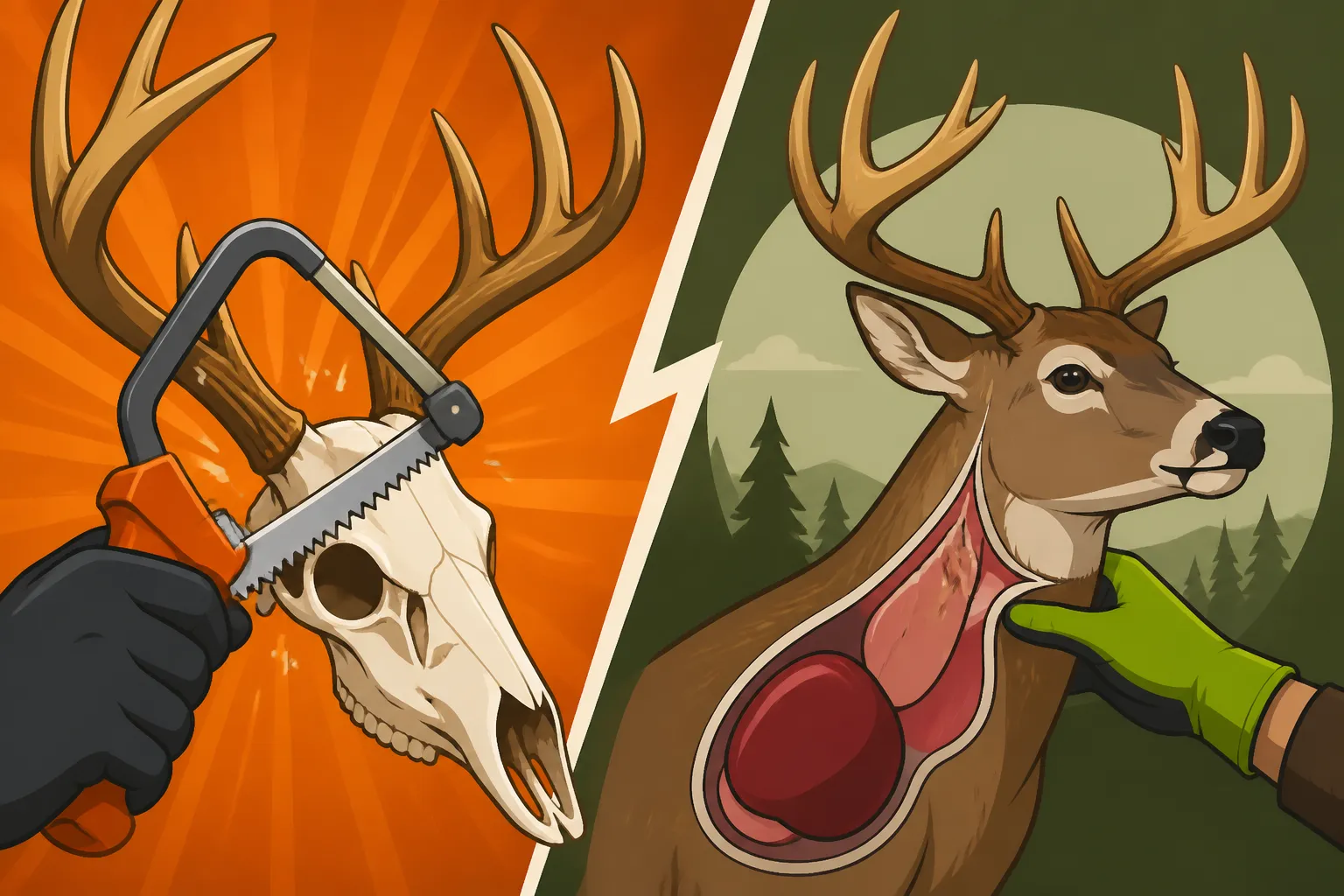
For generations, the bone saw has been a staple in many a deer hunter's pack. It's the tool that helps you open the chest cavity for a thorough evisceration and often to split the pelvis, allowing for easier cooling and transportation of the whole carcass. There's a certain ritual to it, a familiar process passed down through hunting camps and family traditions.
When a Bone Saw Shines
The traditional method, which often involves significant use of a bone saw, has its undisputed place, especially if you're dealing with a deer close to your vehicle or if you have a well-equipped butchering setup awaiting you at home or camp. Imagine you've taken a deer in an open field, perhaps near the edge of a Setting Up on a Piedmont Field Edge, and your truck is just a short drag away. In this scenario, performing a classic field dress means you can quickly get the entrails out, allow the body cavity to start cooling, and then load the intact carcass. The bone saw comes in handy for making clean cuts through the sternum to open the chest wide and often through the pelvis, which can facilitate cleaning and later butchering.
This method also works well if you plan to hang the deer whole for aging at camp, especially if you have an appropriate cooler or a spot where temperatures are consistently low. By opening the animal completely, you expose more surface area to the air, which can aid in the initial cooling process before hanging. Furthermore, if you're hoping for a shoulder mount for taxidermy, the traditional gutting method keeps the cape fully intact and avoids any unnecessary cuts that could complicate the taxidermist's work later on. It’s a classic for a reason, providing a straightforward path to an intact carcass ready for further processing.
The Realities and Drawbacks of Using a Bone Saw in the Field
While traditional methods have their place, the reality of hunting in Virginia often presents less-than-ideal scenarios. Picture this: you've finally connected with a nice buck after a long, cold morning on a Hunting a High Elevation Mountain Bench in the Jefferson National Forest. He drops, but it's a steep, rocky descent to the nearest logging road, and you're hunting solo. Now, consider hauling a bone saw into that situation. They can be bulky, heavy, and awkward to manage in tight spaces, especially when you’re already trying to balance on uneven ground while working with a large animal.
The act of sawing through a deer's sternum and pelvis, while necessary for traditional field dressing, is physically demanding. It requires significant effort, often resulting in sweat and fatigue, particularly if the deer is a large one or if you're trying to work quickly. Add to that the mess – traditional gutting involves opening the body cavity completely, exposing all the internal organs, which can be messy and attract unwanted attention from insects or scavengers, especially on warmer days. Maintaining hygiene in the field, keeping your saw clean, and preventing cross-contamination can be a real challenge. For hunters who find themselves far from a vehicle or tackling steep, unforgiving terrain, the thought of adding a bone saw to the already arduous task of Dragging a Deer Out of a Mountain Hollow can be quite daunting. It's these very challenges that have led many Virginia hunters to explore more efficient alternatives for getting their hard-earned venison off the mountain.
Embracing Efficiency: The Gutless Method
The gutless method has gained significant traction among hunters, particularly those who frequent remote, rugged public lands or who prioritize speed and efficiency in the field. It's a game-changer for many, shifting the focus from moving the entire carcass to simply packing out the valuable meat.
What Exactly Is the Gutless Method?
At its core, the gutless method is precisely what it sounds like: a way to process a deer in the field without ever opening the body cavity to remove the entrails. Instead of cutting along the belly, you leave the guts completely undisturbed within the animal. The focus is entirely on recovering the prime cuts of meat by skinning and quartering the animal from the outside in. Imagine rolling the deer onto its side, carefully making an incision along the spine, and then skinning down one side. From there, you systematically remove the front shoulder, then the hindquarter by carefully detaching the ball joint from the hip socket, and finally, the prized backstraps and tenderloins. Once one side is done, you flip the animal and repeat the process.
This approach offers numerous benefits, most notably a significantly lighter load for the pack-out, as you're only carrying boned-out meat. It's also remarkably cleaner, as you avoid the messy, odorous process of handling the internal organs. This means less blood and digestive material on your hands, clothing, and the meat itself, leading to a more hygienic field-processing experience. Furthermore, by removing the meat from the bone and getting it into game bags quickly, you facilitate much faster cooling, which is absolutely critical for meat quality, especially during Virginia's warmer early archery seasons. The primary tools required are sharp knives and quality game bags to protect the meat. If you’re looking for high-quality game bags or specialized knives, GoHunt often carries a good selection that stands up to rugged Virginia conditions, helping ensure your hard-earned venison stays clean and cool.
Step-by-Step Breakdown of the Gutless Method in Practice
Let’s walk through how the gutless method typically unfolds when you’re standing over your deer, perhaps after a successful hunt on a Ridge-Top Saddle for Rutting Bucks. First, you’ll roll the deer onto its side, say the left side up. You'll make an incision around the leg just above the knee, then extend a cut from the knee up to the armpit area and then along the backbone from the tail to the head. Carefully skin down this exposed side, pulling the hide back like a blanket. The goal is to get the hide out of the way to expose the muscle groups.
Next, you'll start removing the cuts. The front shoulder is typically the easiest: it's not attached by bone, only muscle. Simply work your knife around it, detaching it from the rib cage until it comes free. The hindquarter requires a bit more finesse. You'll separate the muscles that attach it to the pelvis, find the ball joint where the femur meets the hip, and carefully cut around it until the entire hindquarter can be removed. With both major quarters off, you'll then focus on the backstraps. These run along the spine, from the neck to the hindquarters. You can simply cut along the top of the spine and then peel the muscle off the ribs. Finally, and perhaps the trickiest part, are the tenderloins, which are located inside the body cavity, against the spine. To get these, you’ll reach into the cavity without opening the belly, feeling along the inside of the spine to carefully slice them free. Once all the meat is removed from that side, you roll the carcass over and repeat the entire process on the other side.
As each piece of meat comes off, it should immediately go into a clean game bag. This protects the meat from dirt, insects, and debris while allowing it to breathe and cool. For those longer hauls out of the deep woods, a sturdy frame pack, like some of the robust options you might find through retailers such as GoHunt, can make all the difference when carrying out boned-out quarters. This systematic approach allows you to break down a deer into manageable, packable portions very quickly, often within 30-60 minutes for an experienced hunter, leaving the unwanted carcass for scavengers while you head out with your valuable harvest. For more details on protecting your meat, check out Game Bags for Warm September Days.
Making the Call: Bone Saw or Gutless for Your Virginia Hunt?
Deciding which method to use isn't about right or wrong; it's about making the most practical choice for your specific hunting situation in Virginia. Hunters face diverse conditions, from the open farmland of the Shenandoah Valley to the dense, rugged peaks of the Blue Ridge.
Situational Advantages: When One Outshines the Other
The choice between a bone saw and the gutless method often boils down to the specific circumstances of your hunt. If you’re hunting relatively flat ground, perhaps near a county road or an easily accessible logging path, and your vehicle is close by, the traditional bone saw method might be perfectly suitable. It’s less physically demanding if you don’t have to drag the deer far, and you can get the job done quickly to transport the whole animal. For instances where you’ve got a short drag from a Setting Up on a Piedmont Field Edge, bringing out a whole, field-dressed deer might even be simpler than managing multiple game bags.
However, when you find yourself deep in the Jefferson National Forest, perhaps having navigated a steep climb for a morning sit using Saddle Hunting in Virginia Hardwoods, and you connect with a deer a mile or more from the nearest trail, the gutless method becomes an absolute lifesaver. It dramatically reduces the weight you need to carry out. Instead of dragging a 150-pound deer, you're packing out 50-70 pounds of boned-out meat. This is also the preferred method when temperatures are warm, as getting the hide off and the meat separated from the bone allows for much faster cooling, which is crucial for preventing spoilage. In scenarios where you need to Recovering a Deer From a Mountain Hollow, every ounce counts, and the gutless method ensures you’re only transporting what’s absolutely necessary. This method is also highly advantageous for solo hunters who simply don’t have the manpower to manage a full carcass extraction from difficult terrain.
Essential Gear and Preparations for Either Method
Regardless of which field dressing strategy you prefer, having the right gear and being prepared is paramount for a successful and ethical harvest. For the gutless method, your knives are your most critical tools. You'll want at least two extremely sharp knives, perhaps a fixed-blade knife for initial skinning and quartering, and a smaller, more nimble knife for separating muscle groups and extracting tenderloins. Many hunters also swear by replaceable-blade knives, ensuring you always have a razor-sharp edge. Don't forget a sharpening stone or a portable sharpener to keep your blades in top condition. High-quality game bags are non-negotiable for the gutless method; they protect the meat from dirt, flies, and debris while allowing air circulation for cooling. You can find excellent options, including those designed for extended backcountry use, through outdoor retailers.
If you opt for the traditional bone saw method, a sturdy, sharp bone saw is, of course, essential. Look for one that's comfortable to handle and can make quick work of sternum and pelvis bones. A good gutting knife with a gut-hook feature can also be very useful for opening the belly quickly and cleanly. In both scenarios, a pair of surgical or nitrile gloves is a must for hygiene, protecting both you and the meat from contamination. Always carry plenty of paper towels or wipes for cleaning your hands and gear. For either method, having a strong headlamp for working in low light, and a plan for how you’ll get the deer out, whether it’s a Deer Sleds for Mountain Country or a sturdy frame pack, can make all the difference. Remember to always check current Virginia regulations, and resources like GoHunt can sometimes offer helpful insights into gear that complies with local hunting practices. Planning ahead means you're ready for anything the Virginia wilderness throws at you. For more insights on knives, check out Field Dressing Knives Worth Carrying.
The Hybrid Approach: Combining the Best of Both Worlds
Sometimes, the most effective solution isn't one or the other, but a clever combination of both techniques. Virginia's diverse hunting landscapes often call for adaptability, and being able to pivot between methods or blend them can save you a lot of time, effort, and even venison.
For instance, consider a scenario where you've tagged a deer deep in a remote hollow, an hour's hike from the truck. Initially, the gutless method is the clear winner. You swiftly skin, quarter, and bone out the primary meat cuts—shoulders, hindquarters, backstraps, and tenderloins—stuffing them into breathable game bags. This lightens your load significantly, making the arduous trek back to the vehicle far more manageable. However, once you get the bagged meat back to your camp or home, you might still want to process some specific cuts, like the ribs or neck, that are easier to handle with a bone saw. Instead of discarding the entire remaining carcass in the woods, you could, if practical and legal, bring out the rib cage and other bone-in sections to precisely cut them using a bone saw in a more controlled environment. This allows you to maximize your meat yield without compromising the efficiency needed for the initial field recovery.
Another example might be a deer that drops close to an old logging road, but it's a warm, early season day, perhaps during When Virginia's Statewide Archery Season Opens. You could quickly gut the deer traditionally to begin the internal cooling process, but then immediately proceed to skin and quarter it using the gutless method, getting the boned-out meat into game bags to hang and cool even faster. This blend ensures the rapid cooling that is essential in warmer weather, while still giving you the option to recover specific bone-in cuts later if desired. The key is to be flexible and equip yourself with the knowledge and tools for both scenarios. Having a sharp knife set for the gutless approach and a compact folding bone saw can make you ready for anything. Knowing how to adapt your processing based on distance, temperature, and terrain ensures you're always making the best decision for your harvest. For comprehensive processing tips at camp, refer to Butchering a Deer at Camp.
Disclaimer
This article is for general informational purposes only and does not constitute professional advice. Laws, prices and regulations vary by location and change over time. Consult a qualified professional for guidance on your specific situation.