Fixed Versus Mechanical Broadheads
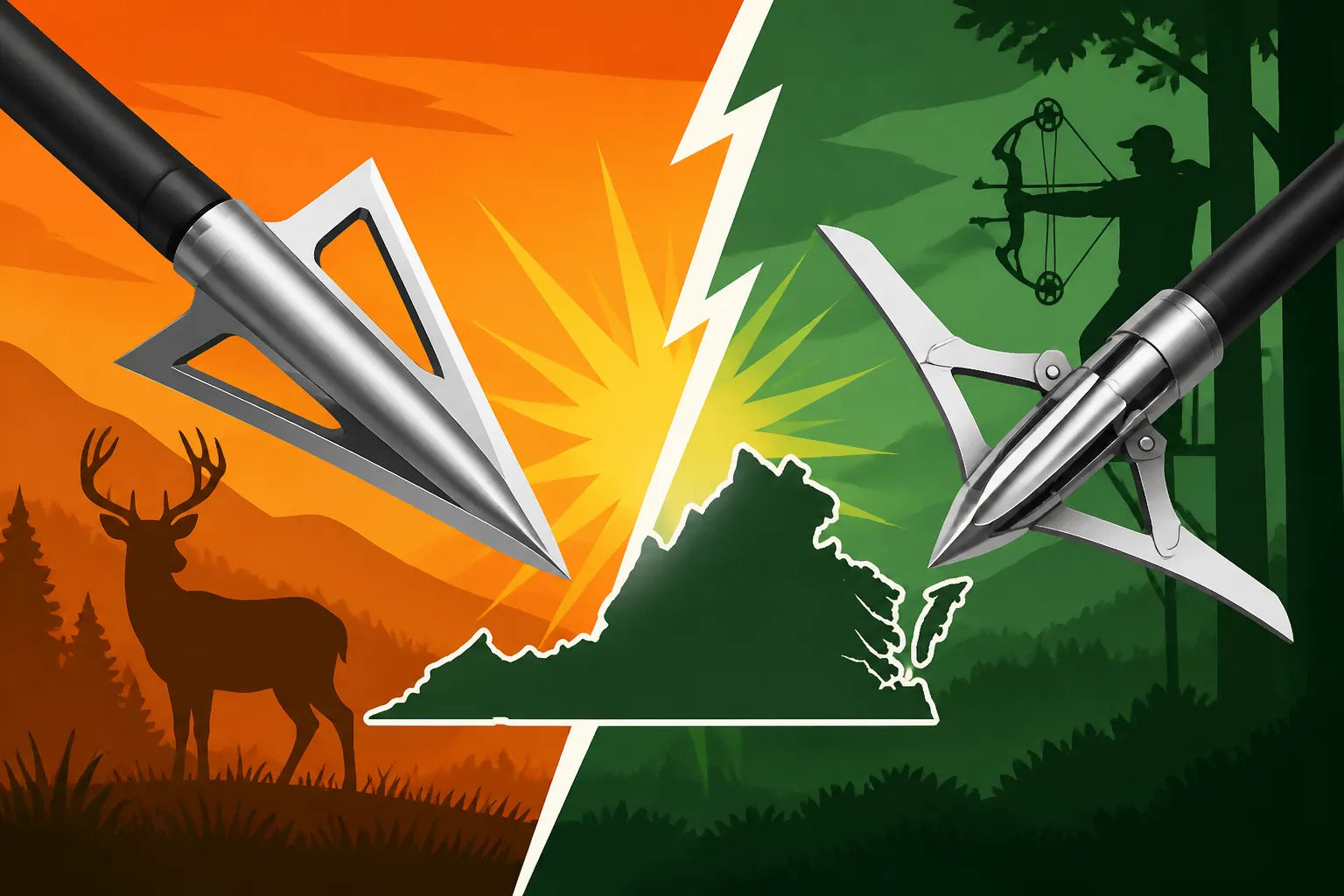
There are few debates in the bowhunting world as passionate and persistent as the one between fixed-blade and mechanical broadheads. It’s a decision that weighs heavily on every archer’s mind, knowing that the broadhead is the final, critical piece of equipment responsible for an ethical, clean kill. For Virginia hunters navigating everything from dense Blue Ridge timber to wide-open Piedmont fields, choosing the right broadhead can feel like an overwhelming task, but this guide is here to break down the nuances and help you make an informed choice for your next hunt.
Understanding Fixed-Blade Broadheads
Fixed-blade broadheads are the veterans of the archery world, the tried-and-true workhorses that have been around since the dawn of bowhunting. They feature blades that are rigidly attached to the ferrule and remain in a fixed position throughout the shot, impact, and penetration. There's no moving parts to deploy; what you see is what you get.
The Enduring Appeal of Fixed Blades
For many seasoned Virginia bowhunters, the appeal of fixed-blade broadheads lies in their simplicity and unwavering reliability. There's an inherent trust in a design that doesn't rely on hinges, O-rings, or spring mechanisms to function. When that arrow leaves your string and streaks towards a deer bedded in a mountain laurel thicket, you know exactly what that broadhead is going to do upon impact.
Fixed blades are celebrated for their incredible strength and penetration, especially on less-than-ideal shot angles or when encountering bone. Imagine a situation in the deep woods of the Jefferson National Forest: a mature buck steps out, but the angle is slightly quartering-to, requiring your arrow to punch through a rib and potentially the opposite shoulder. A well-designed fixed blade, with its solid construction, is built to bust through bone and continue driving forward, maximizing your chances of a pass-through. This kind of dependability offers immense peace of mind, particularly when hunting in areas where blood trails might be scarce in thick leaf litter. This strength is a huge factor for many, especially when considering the robust nature of Virginia whitetails.
The Tuning Challenge with Fixed Blades
Now, let's be realistic: fixed-blade broadheads aren't without their quirks. The biggest "frustration" many archers face is the tuning process. Because the blades extend beyond the ferrule, they can catch air differently than a field point, leading to erratic flight if your bow isn't perfectly tuned. This isn't just a minor annoyance; it can be the difference between a pin-perfect shot and a frustrating miss. I’ve spent countless hours on the range, meticulously tweaking my rest and nocking point to get my fixed blades to fly exactly like my field points. It's a commitment, no doubt about it.
It's not uncommon for a new archer to buy a pack of fixed blades, screw them on, and be immediately disheartened by arrows flying like wounded ducks. This often leads to the conclusion that fixed blades are "bad" or "don't fly well," when in reality, it's a testament to the fact that they demand a well-tuned bow. If your bow setup isn't generating clean arrow flight with field points, fixed blades will only amplify those issues. But once you achieve that harmonious flight, the confidence you gain in their accuracy and devastating effectiveness is truly unmatched. For anyone serious about Bow and Crossbow Setups for Virginia, mastering fixed-blade tuning is a crucial skill.
Diving into Mechanical Broadheads
Mechanical broadheads, often called "expandable" broadheads, are the newer kids on the block, designed to offer superior field-point accuracy combined with a larger cutting diameter. Their hallmark feature is that their blades are tucked away during flight and deploy upon impact, creating a wider wound channel than most fixed blades.
The Allure of Field-Point Accuracy and Wider Cuts
The primary draw for mechanical broadheads is their promise of field-point accuracy. Because their blades are folded back or contained during flight, they present a smaller profile, reducing wind plane and resistance. This means that, for many archers, an arrow tipped with a mechanical broadhead will fly much closer to the trajectory of their practice field points right out of the box, often requiring less tuning effort. This can be a huge confidence booster, especially for hunters who might not have the time, experience, or equipment to meticulously tune a fixed blade setup. When you're standing on a Treestand Setups in George Washington National Forest and need to make a critical shot, knowing your broadhead flies exactly where your practice arrow went is invaluable.
The second major benefit is the larger cutting diameter upon expansion. A mechanical broadhead can create a wound channel significantly wider than a typical fixed blade. This wider cut leads to more tissue damage and, crucially, a much better blood trail. In the dense woods and swamps of Virginia, a clear blood trail is a bowhunter's best friend. A good blood trail can mean the difference between recovering a deer quickly and spending hours, or even days, searching. This increased cutting surface often translates to faster, more ethical harvests, which is the ultimate goal for any responsible hunter. Many archers attest to how much easier tracking becomes when they hit a deer with a mechanical, especially in areas with thick cover or sparse ground visibility.
The Risks and Considerations with Mechanical Broadheads
While mechanicals offer compelling advantages, they also come with a unique set of considerations. The biggest concern revolves around their deployment mechanism. What happens if the blades don't open fully, or at all? While modern mechanicals are incredibly reliable, there's always a slim chance of mechanical failure, whether it's due to a glancing blow, striking dense material like bone, or simply a malfunction. A broadhead that doesn't open properly can result in poor penetration and a superficial wound, potentially leading to a lost animal. This is a real worry for many, and it's why some archers will always default to fixed blades for maximum peace of mind.
Another factor is energy transfer and penetration. While mechanicals create a wider cut, they also require kinetic energy to deploy their blades. This means that some of your arrow's energy is used to open the broadhead, rather than solely driving it through the animal. For bows with lower draw weights or for archers using lighter arrows, this can sometimes lead to reduced penetration, especially on hard quartering shots or if heavy bone is encountered. When you're considering Bow Draw Weight for Virginia Whitetails or Arrow Weight for Short Shots, it’s important to understand how these factors interact with mechanical broadheads to ensure adequate penetration for a clean kill. In contrast to the bone-busting power of a fixed blade, a mechanical might glance off a shoulder blade instead of penetrating, leaving you with a difficult tracking job, if any trail at all.
Factors to Consider When Choosing Your Broadhead
Okay, so you've got the lowdown on both types. Now, how do you actually make a choice that's right for you and your Virginia hunting conditions? It’s not a one-size-fits-all answer, and honestly, many experienced hunters even carry both types depending on the specific hunt.
Your Bow Setup and Tuning Comfort
First and foremost, consider your bow and your comfort with tuning. If you shoot a finely tuned compound bow with a relatively high Bow Draw Weight for Virginia Whitetails and you're confident in your ability to meticulously tune for fixed blades, then you open up a world of options. If you're using a crossbow, which generally provides very consistent flight, both fixed and mechanical broadheads can perform exceptionally well, though Crossbow Rules During Virginia Archery Season might have specific broadhead requirements to be aware of.
However, if you're a newer archer, or if you simply don't have the time or patience for extensive tuning, the field-point accuracy of mechanicals might be a better starting point. They can quickly get you into the woods with confidence in your arrow flight. The key here is honest self-assessment. Don't force yourself into a tuning nightmare if you know it's not your strength. It's better to be proficient with a mechanical than frustrated and inaccurate with a fixed blade. Using resources like GoHunt to scout areas and understand shot distances can also help you prepare your setup accordingly.
Hunting Environment and Game
Think about where and what you'll be hunting in Virginia. Are you primarily chasing deer in open agricultural fields where longer shots might be common? Or are you focused on Still-Hunting Jefferson Forest Ridges where shots are often up close, dense, and potentially involve navigating thick brush? The terrain and cover can influence your choice.
For dense cover, where arrows might encounter twigs or brush before hitting the animal, some hunters prefer fixed blades, believing they are less likely to deflect or prematurely open. For larger game, like Virginia black bears (if hunting them with a bow), the deep penetration and bone-crushing ability of a fixed blade might be prioritized by many. For typical Virginia whitetails, both broadhead types are highly effective when placed correctly. I often use GoHunt to study aerial photos of my hunting areas, paying close attention to cover density and likely shot windows, which sometimes influences whether I grab my fixed-blade quiver or my mechanical one. Hunting the Rut East of the Blue Ridge often means deer are moving more, offering different shot opportunities than a static food plot hunt.
Confidence and Ethical Responsibility
Ultimately, the best broadhead is the one you have the most confidence in and can shoot most accurately and ethically. If you can group your mechanicals tightly at hunting distances and trust their deployment, they are an excellent choice. If you've meticulously tuned your fixed blades and know they'll fly true and punch through anything, then that's your winner. Ethical hunting means making a quick, clean kill, and your broadhead plays a huge role in that.
Practicing with your chosen broadhead is non-negotiable. Don't just screw them on the day before the season. Shoot them, understand their flight characteristics, and ensure your setup is dialed in. This is especially true for fixed blades, as even a slight wobble can impact accuracy. For mechanicals, test a few to ensure they deploy correctly. Your commitment to practice will pay off handsomely in the field.
Key Differences Between Fixed and Mechanical Broadheads
To help visualize the distinctions, here's a table summarizing the core differences you'll encounter between fixed and mechanical broadheads.
| Feature | Fixed-Blade Broadheads | Mechanical (Expandable) Broadheads |
|---|---|---|
| Blade Configuration | Blades are permanently rigid and exposed during flight. | Blades are folded or contained during flight, deploy on impact. |
| Flight Characteristics | Can be more susceptible to wind drift; requires precise bow tuning to match field points. | Generally flies like a field point; less wind-sensitive due to smaller profile. |
| Penetration | Excellent penetration, especially through bone; all energy goes towards driving forward. | Good penetration, but some energy is used for blade deployment; can be less effective on heavy bone. |
| Cutting Diameter | Typically smaller (1" – 1.25"), consistent wound channel. | Larger (1.5" – 2" or more) upon expansion, creating a wider wound channel. |
| Reliability | Very high; no moving parts to fail. | High, but potential for mechanical failure (non-deployment) exists, though rare with modern designs. |
| Tuning Effort | Requires more dedicated bow tuning to achieve perfect flight. | Generally requires less tuning; often flies "true" with field points. |
| Durability | Often very robust, blades can sometimes be resharpened or replaced. | Favorable for blades, but ferrule may be designed for single use after impact. |
| Blood Trails | Good, but wound channel may be smaller. | Often excellent due to larger cutting diameter. |
Making Your Final Broadhead Decision for Virginia Hunts
Choosing between fixed and mechanical broadheads isn't about one being inherently "better" than the other. It's about finding the best tool for your specific setup, hunting style, and the conditions you expect to encounter while hunting in Virginia. Many hunters, myself included, have a quiver full of different options, depending on the season and the game. For instance, I might grab a robust fixed blade when still-hunting thick cover where potential bone strikes are a concern, knowing its penetrating power. On the other hand, for a more open stand setup over a food plot, a mechanical might give me that extra confidence in a wide-open shot and a great blood trail. Using apps like GoHunt for scouting and mapping your hunting areas can significantly inform these decisions by helping you visualize shot scenarios.
Remember, the goal is an ethical and efficient harvest every time. That comes from accurate shooting, proper shot placement, and a broadhead that performs reliably. Don’t just pick one because your buddy does; experiment, practice, and gain confidence in your choice. Whether you opt for the steadfast reliability of a fixed blade or the accuracy and wide cut of a mechanical, ensure you are proficient and confident with it before you step into the woods this season. Virginia offers incredible hunting opportunities, and being prepared with the right gear is part of maximizing your success. Scouting your areas before the season, perhaps with the help of GoHunt, and understanding game movements can also help confirm your gear choices, like when you're focusing on Scouting Virginia Public Land Before Season or Reading Aerial Photos for Piedmont Deer. Understanding Virginia Deer Harvest Records and typical deer size can also influence broadhead selection if you're aiming for larger animals.
Disclaimer
This article is for general informational purposes only and does not constitute professional advice. Laws, prices and regulations vary by location and change over time. Consult a qualified professional for guidance on your specific situation.