Bow Draw Weight for Virginia Whitetails
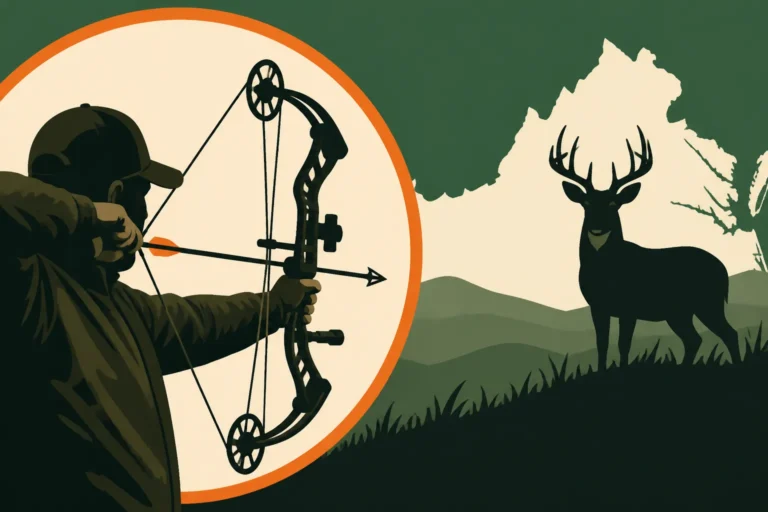
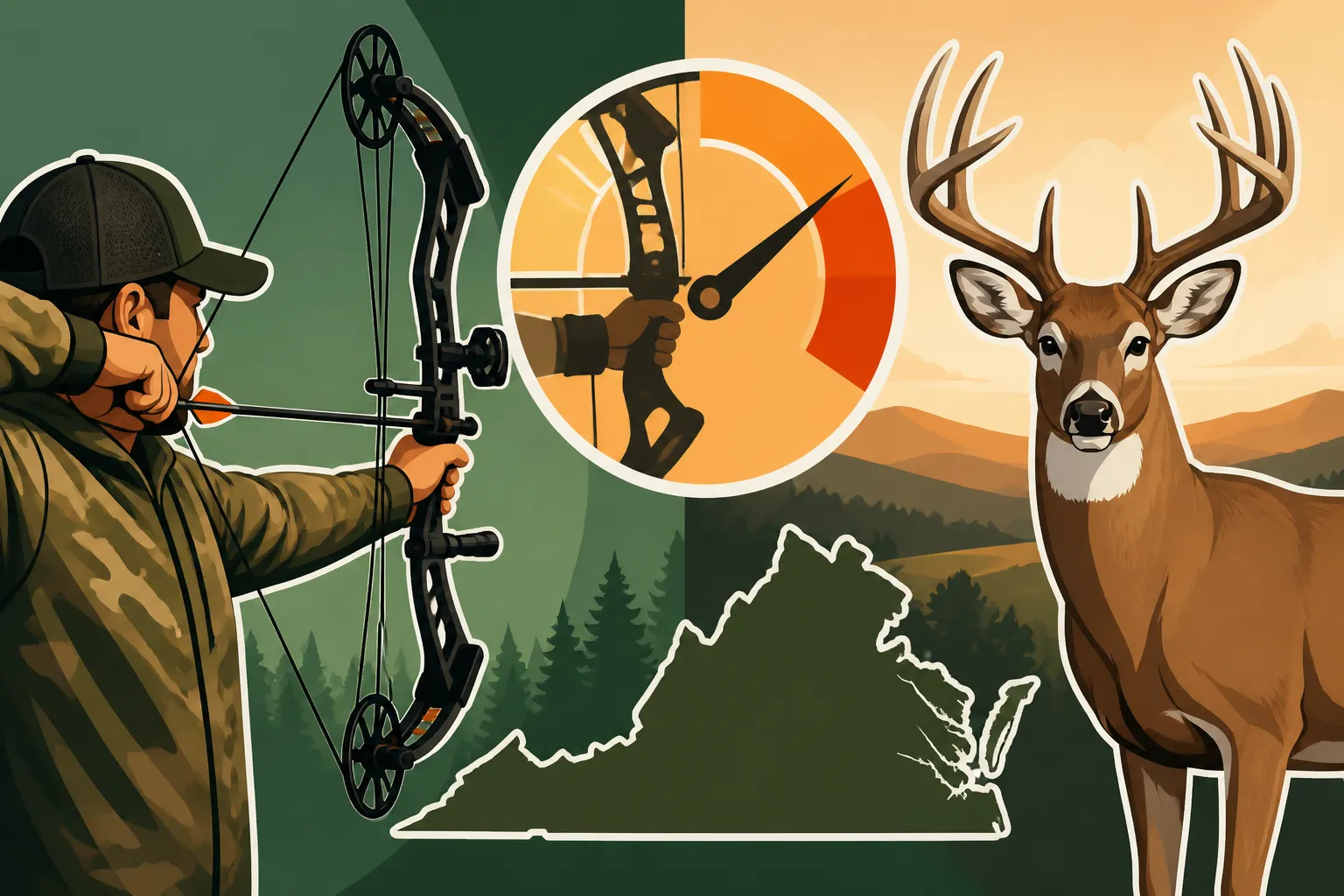
One of the most common questions I get from archers, especially those new to hunting Virginia's whitetails, is all about draw weight. There's this nagging feeling of wanting enough power for an ethical kill, but also the very real frustration of not wanting to overdo it and struggle to draw your bow smoothly when a buck steps out. It's a delicate balance, and this guide is here to walk you through everything you need to consider to find the perfect draw weight for your Virginia deer hunts, ensuring both ethical shots and confident execution in the field.
Virginia's DWR Draw Weight Minimums and Why They Matter
When you're first getting into bowhunting, or even if you've been at it a while and are considering a new setup, the Virginia Department of Wildlife Resources (DWR) has some basic guidelines. These aren't just arbitrary numbers; they're set to ensure that hunters have enough power to deliver a lethal blow to a deer, promoting ethical hunting practices.
Understanding the Legal Baseline
For archery hunting deer in Virginia, the DWR mandates a minimum draw weight for compound bows and recurve bows. Currently, for compound bows, it's typically 35 pounds. For recurve bows and longbows, it's often slightly higher, around 45 pounds. These are the absolute lowest you can legally go. Think of it as the minimum passing grade on a test – it gets you by, but it doesn't mean you'll ace it. For some, especially youth hunters or those with physical limitations, these minimums are a blessing, allowing them to participate in the sport.
However, just because it's legal doesn't mean it's ideal for every situation. Virginia's deer can range from small yearlings to large, mature bucks, and the terrain can present all sorts of shot angles and distances. While 35 or 45 pounds will get an arrow to the target, the real question is whether it will penetrate deeply enough for a quick, humane kill on a larger animal or at a less-than-perfect angle. Always double-check the latest DWR regulations before heading afield, as rules can occasionally be updated.
The Ethical Imperative Beyond the Minimum
Beyond the legal minimums, there's a profound ethical responsibility we carry as hunters. We owe it to the animal to make the cleanest, quickest kill possible. This means having a draw weight that generates sufficient kinetic energy and momentum to push a broadhead through hide, muscle, and bone to reach the vital organs. A marginal draw weight might mean an arrow only partially penetrates, leading to a wounded animal and a difficult, if not impossible, recovery.
Consider a hypothetical situation: you're sitting in your stand during Hunting the Virginia Rut in November, and a mature 8-point buck steps out. He's broadside, but slightly quartering away. You release a perfect shot, but with a minimum draw weight, the arrow might not fully exit, or worse, it could hit a rib and deflect without reaching the far lung. Now you're facing a tough tracking job, potentially into the dark, and the outcome is uncertain. This is where choosing a draw weight above the minimum, if physically possible, becomes a moral obligation. It increases your margin of error and the likelihood of a clean pass-through, which provides a much better blood trail and a quicker end for the deer. Remember, confidence in your equipment and your ability to use it is paramount.
Finding Your Personal Peak: Physical Considerations for Draw Weight
The "perfect" draw weight isn't just about what the law says or what your buddies shoot; it's deeply personal. It hinges on your physical capabilities, your shooting form, and ultimately, your accuracy. Don't fall into the trap of thinking a higher draw weight automatically makes you a better hunter.
Assessing Your Strength and Form
Being able to draw your bow isn't the same as being able to shoot it accurately and repeatedly under pressure. When you're assessing your ideal draw weight, you need to be honest with yourself. Can you draw your bow smoothly and silently without jerking or having to point it skyward? Can you hold it at full draw for 15-20 seconds if a deer pauses behind a tree, waiting for a clear shot? Can you do this multiple times over a hunting session, especially when you're cold, tired, or pumped with adrenaline?
Many hunters make the mistake of choosing a draw weight that feels manageable in the comfort of their backyard range, but becomes a monumental struggle when a big buck is standing at 30 yards. A draw weight that causes you to shake, rush your shot, or compromise your form is too heavy. Accuracy will suffer, and ethical shot placement will become inconsistent. It's always better to shoot a slightly lower draw weight with perfect form than to struggle with a higher weight and risk a poor shot. Consider using a tool like the GoHunt app to log your practice sessions, noting how many arrows you shoot before fatigue sets in, which can be a valuable indicator of your real-world capability.
The Impact of Bow Type and Let-Off
The type of bow you shoot significantly impacts how a given draw weight feels. Modern compound bows, with their cam systems, offer a substantial "let-off" percentage once you reach full draw. This means that while you might be pulling 60 pounds to get to full draw, you're only holding a fraction of that, perhaps 15-20 pounds, at the peak of the draw cycle. This let-off makes it much easier to hold steady on target, aim precisely, and manage nerves. A high let-off (e.g., 80-90%) means you can often comfortably handle a higher peak draw weight than you might think.
Traditional bows, like recurves and longbows, have no let-off. If you're shooting a 50-pound recurve, you're holding all 50 pounds at full draw. This requires considerably more strength and stamina and usually means traditional archers gravitate towards lower peak draw weights compared to their compound-shooting counterparts. When choosing between Bow and Crossbow Setups for Virginia, understand these differences thoroughly. A 45-pound recurve feels much heavier to hold steady than a 60-pound compound with 85% let-off.
Training and Building Strength for Higher Weights
If you're determined to increase your draw weight for more kinetic energy and a flatter trajectory, it's absolutely possible, but it requires dedication and a smart approach. Don't just crank up your bow's limbs overnight. Gradual increases are key, allowing your muscles, tendons, and ligaments to adapt.
Focus on exercises that strengthen your back, shoulders, and core, as these are the primary muscle groups used in drawing and holding a bow. Resistance bands, pull-ups, rows, and shoulder presses are excellent choices. Incorporate specific bow training by drawing your actual bow (or a training aid) repeatedly at your current comfortable weight, holding at full draw, and slowly letting down. This builds the exact muscles needed. Think of it like training for a marathon; you wouldn't just jump into a 26-mile run. Incremental progress is what prevents injury and builds lasting strength. Many hunters find that focusing on their overall physical fitness, not just bow-specific exercises, greatly enhances their ability to manage draw weight and endure long days of Hunting a High Elevation Mountain Bench or navigating challenging terrain.
Kinetic Energy and Penetration: What Your Draw Weight Delivers
At the end of the day, what truly matters for an ethical kill is the arrow's ability to penetrate. Draw weight is a major factor in this, as it directly influences kinetic energy (the energy of motion) and momentum (the force of motion).
The Science Behind Arrow Performance
Kinetic energy (KE) and momentum are both important in archery, though momentum is often considered more critical for penetration. Higher draw weight, combined with a heavier arrow, contributes to both. KE is calculated as ½mv², where 'm' is mass and 'v' is velocity. Momentum is mv. While a faster, lighter arrow might have high KE, a heavier, slightly slower arrow might have more momentum, which helps it bust through tough tissue and bone.
For deer hunting, you generally want an arrow that has enough KE to drive through the animal, and enough momentum to keep pushing even after encountering resistance. A good rule of thumb for whitetails is to aim for at least 40-50 foot-pounds of kinetic energy, but many seasoned hunters prefer to be well above that, especially if they anticipate shots on larger bucks or at steeper angles. Remember, this energy needs to be transferred into the deer via the broadhead. If you're using a lighter draw weight, a heavier arrow can compensate somewhat by increasing momentum, provided your bow can tune it. Fixed Versus Mechanical Broadheads also play a role, as mechanical broadheads require more energy to deploy and penetrate effectively than fixed-blade designs.
Broadhead Choice and its Relationship to Draw Weight
Your broadhead choice is intricately linked to your draw weight. If you're shooting a lower draw weight (say, 35-50 pounds), a fixed-blade broadhead with a smaller cutting diameter is often recommended. These broadheads require less energy to penetrate because there's no mechanical deployment; they simply cut through. Their robust design also makes them less prone to failure on bone impacts.
For higher draw weights (60+ pounds), mechanical broadheads become a more viable option. The extra energy can reliably deploy their blades and still achieve pass-throughs. Mechanicals often offer a larger cutting diameter, which can create a more devastating wound channel and a better blood trail. However, if your draw weight is borderline, a mechanical broadhead might "rob" too much energy deploying, leading to reduced penetration. Always test your broadheads with your specific setup. Shoot them into a suitable target (like a block target or sand) to observe penetration depth and flight characteristics. This hands-on testing is crucial before you're in a situation where Shot Placement on a Virginia Black Bear or a whitetail matters.
Real-World Scenarios for Adequate Penetration
Let's talk about those tricky, real-world scenarios. Imagine you're hunting in the Treestand Setups in George Washington National Forest. A buck might be slightly quartering-to, or you might need to take a shot through a dense, brushy lane. A higher draw weight, coupled with a well-constructed arrow and broadhead, gives you a greater margin of success in these less-than-ideal situations. An arrow with solid momentum is less likely to deflect off a twig or stop short after hitting the shoulder blade.
Or consider a deer that's standing on a steep incline or decline. The shot angle will be different, requiring the arrow to travel through more tissue or potentially encounter more bone. In these cases, having ample penetration capability is not just a luxury, it's a necessity for ensuring a humane kill. While you always strive for the perfect broadside shot, hunting often throws curveballs. Your draw weight should be chosen to handle not just the ideal, but also the plausible challenges you might face in the diverse Virginia landscape.
Balancing Accuracy and Power for Virginia Whitetails
This is perhaps the most critical point: you can have the most powerful bow in the world, but if you can't shoot it accurately, it's useless. The goal is to find the maximum draw weight you can consistently shoot with precision, without compromising your form or ability to hold steady.
Practicing at Your Chosen Draw Weight
Once you've settled on a comfortable and effective draw weight, practice, practice, practice! It's not enough to shoot a few arrows a week. You need to simulate hunting conditions as much as possible. Practice from your treestand or ground blind. Practice in different weather conditions – cold, windy, even light rain. Practice with your hunting clothes on. These factors all affect how your bow feels and your ability to draw and shoot smoothly.
The goal is muscle memory. You want the act of drawing and aiming to be so natural that when adrenaline kicks in, your body responds automatically and correctly. Focus on proper Bow Sights for Timber Shots and target acquisition. If you find yourself consistently pulling shots or struggling to hold your pin steady, it might be a sign that your draw weight is still too high, or that you need more dedicated strength training. A good way to gauge this is to shoot groups until you notice your accuracy beginning to degrade. That's your fatigue point, and it tells you a lot about your endurance for a real hunting scenario.
When Less Draw Weight Means More Success
It's a common misconception that "more power is always better." For many hunters, especially those new to archery or getting back into it after a break, a slightly lower draw weight actually leads to more success. How? Because it allows for better form, more comfortable holding, and ultimately, greater accuracy. A well-placed arrow from a 45-pound bow is infinitely more effective than a poorly placed arrow from a 70-pound bow.
If you can draw your bow smoothly, hold it steady, and put your arrow consistently into a tight group, you've found your sweet spot. Don't let ego dictate your draw weight. Ethical hunting is about precision, not brute force. If you're debating between two draw weights, always err on the side of the one you can shoot most accurately. That confidence in your shot, knowing you can place that broadhead exactly where it needs to go, is worth more than any extra foot-pound of kinetic energy. Remember, Virginia deer are not armor-plated. A sharp broadhead in the vitals from a moderate draw weight will do the job beautifully.
Draw Weight in Different Virginia Hunting Environments
Virginia's diverse landscape, from the steep, rocky Appalachian Mountains to the flat, swampy Tidewater, presents unique challenges and opportunities for bowhunters. Your draw weight choice, while personal, should also consider these environmental factors.
Mountain Laurel Thickets vs. Piedmont Field Edges
Hunting in the dense, steep terrain of the Blue Ridge or Jefferson National Forest means you'll likely be dealing with closer shots, often through thick brush or in low light conditions. In these environments, quick, smooth draws are paramount. A draw weight that causes you to struggle or make excessive movement could blow your chance when a deer appears suddenly at 20 yards in a mountain laurel thicket. While a higher draw weight might help power through a small twig, it's generally better to focus on shot lanes and precise placement. For this kind of close-quarters, quick-reaction hunting, choose a draw weight you can manage effortlessly.
Contrast this with hunting a Piedmont field edge, where shots might be longer and more open. Here, a slightly higher draw weight can offer a flatter trajectory, making range estimation a bit less critical on those 30-40 yard shots. You might have more time to draw and settle, reducing the strain factor. However, even on a field edge, a struggling draw will lead to target panic and rushed shots. Whether you're hunting Reading a Ridge for Blue Ridge Deer or Setting Up on a Piedmont Field Edge, the principle remains the same: accuracy trumps raw power.
Treestand Angles and Challenging Shots
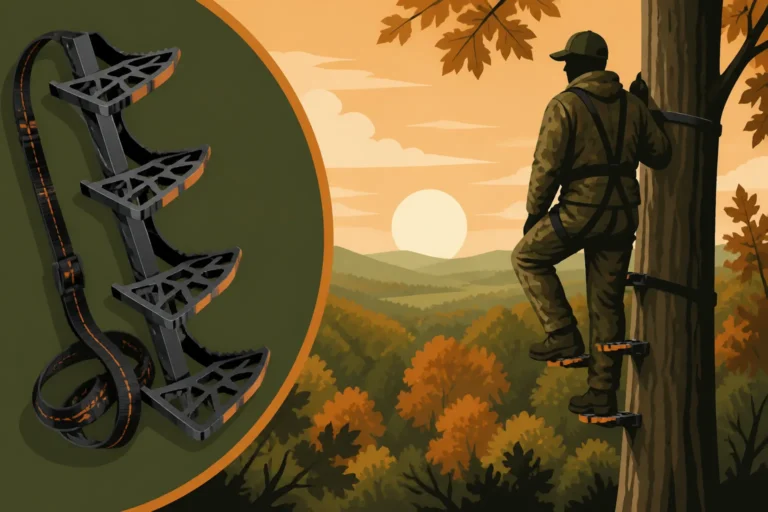
Hunting from a treestand, which is common practice for Bowhunting Virginia's Statewide Archery Season, introduces new considerations for draw weight. When you're elevated, the angles change significantly. A deer directly below you at 10 yards requires a very steep downward shot. Drawing your bow smoothly and silently while twisted in a harness, maintaining your balance, and executing a steep downward shot can be far more challenging than a level shot on the ground.
A draw weight that feels fine standing on flat ground might feel incredibly heavy and awkward when you're trying to pivot and draw in a treestand, especially if you're using a Saddle Hunting in Virginia Hardwoods setup that allows for unique body positions. Always practice drawing and shooting from your treestand at various angles before the season. This will reveal if your chosen draw weight is truly manageable under hunting conditions, particularly on those tough, steep-angle shots. The goal is to avoid contorting your body or making noise while drawing, which can easily spook a wary whitetail.
Considering Gear and Accessories
Finally, think about how your draw weight interacts with your other gear. A heavier arrow can help carry momentum, even with a lower draw weight, ensuring better penetration. Your release aid should be smooth and reliable, allowing for a clean, consistent release without adding to the perceived draw weight.
Also, consider the weight of your overall bow setup. A heavier bow might feel steadier to hold at full draw, but it also adds to the effort of drawing and holding. Conversely, a very light bow might be easier to draw but could be harder to hold steady, especially on windy days. It's a system, and every component plays a part. When you're out Scouting Virginia Public Land Before Season, use your bow to get a feel for what works best with your overall hunting strategy and the type of ground you'll be covering.
Ultimately, the best draw weight for Virginia whitetails is the one you can shoot with utmost confidence and precision, shot after shot, under realistic hunting conditions. It's about being an ethical, effective hunter, not about bragging rights at the camp.
| Draw Weight Range (Lbs) | Common Use Case | Pros for Virginia Deer Hunting | Cons for Virginia Deer Hunting |
|---|---|---|---|
| 35-45 (Compound) | Youth, beginners, hunters with physical limitations | Easier to draw, better for developing form, less fatigue. | Lower kinetic energy/momentum, potentially reduced penetration, less forgiving on poor shots. |
| 45-55 (Compound) | Intermediate hunters, general whitetail hunting | Good balance of power and shootability, solid ethical performance. | May still require careful shot placement on larger bucks or tougher angles. |
| 55-65 (Compound) | Experienced hunters, maximum performance | High kinetic energy/momentum, excellent penetration, flatter trajectory. | Can be harder to draw smoothly, may lead to fatigue if not conditioned, requires dedicated practice. |
| 45-55 (Recurve/Longbow) | Traditional archers | Deep penetration with proper form and broadhead, rewarding challenge. | No let-off, requires significant strength/stamina, limited range, demanding accuracy. |
Disclaimer
This article is for general informational purposes only and does not constitute professional advice. Laws, prices and regulations vary by location and change over time. Consult a qualified professional for guidance on your specific situation.