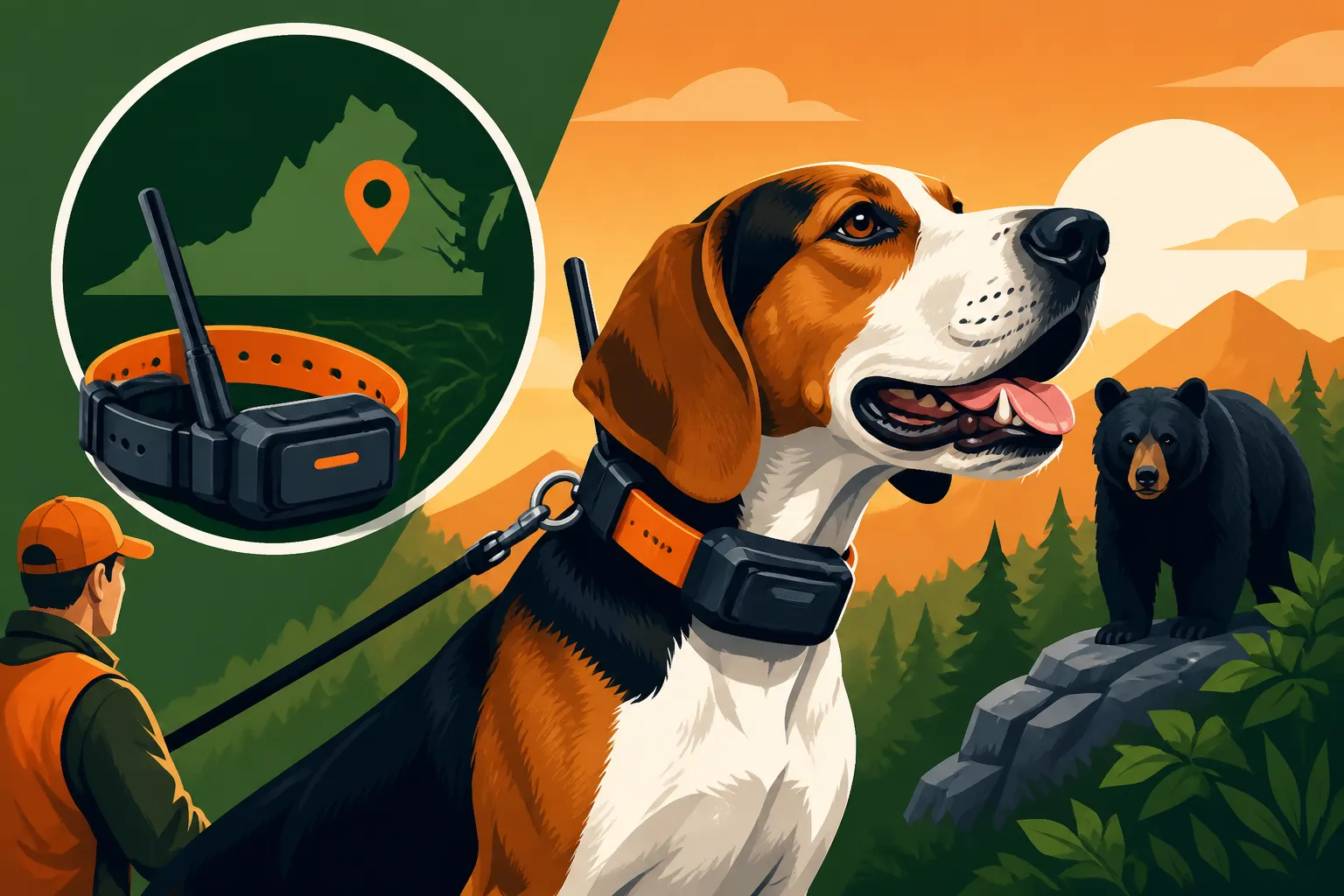
GPS Collars for Bear Hounds
There's nothing quite like the thrilling sound of hounds hot on a bear's trail echoing through the Virginia mountains, but with that excitement comes the ever-present anxiety of keeping track of your valuable dogs. Losing a hound, even temporarily, is every bear hunter's nightmare, especially in the vast, rugged terrain of our state. This guide is all about equipping you with the knowledge to choose and effectively use GPS collars, ensuring your pack stays safe and accounted for, no matter how far the chase leads.
The Indispensable Role of GPS Collars in Virginia Bear Hunting
For generations, bear hunters have relied on the grit and determination of their hounds, but modern technology has brought a critical tool into the field: the GPS collar. These devices have transformed how hunters manage their packs, offering peace of mind and significantly improving retrieval rates in the challenging landscapes Virginia offers.
Why Tracking is Critical for Bear Hounds
Bear hunting with hounds in Virginia often takes you deep into some of the most remote and unforgiving terrain, from the steep slopes of the Blue Ridge Mountains to the dense thickets of the Piedmont. Bears are formidable animals, capable of covering vast distances quickly, and your hounds will follow them wherever they go. This means dogs can get out of earshot rapidly, disappear over a ridge, or cross private land boundaries before you even realize it. Without a reliable way to track them, retrieving a scattered pack can become an exhaustive, multi-day ordeal, not to mention the dangers your dogs face from other wildlife, vehicles, or getting stuck. GPS collars provide that vital link, allowing you to know their exact location even when they're miles away and deep in cover.
Evolution from Traditional Telemetry to GPS
It wasn't that long ago that "tracking" a hound meant listening intently for the distant bay, or perhaps using an antiquated telemetry system. Traditional telemetry collars operated on radio frequencies, requiring a handheld receiver and directional antenna. You'd sweep the antenna, listening for a signal strength increase, and slowly triangulate a dog's general direction. This method was often limited by line of sight, terrain, and range, making it a painstaking process that gave you only a direction, not a precise location. Modern GPS systems, however, are a game-changer. They communicate with satellites to pinpoint a dog's exact coordinates, transmitting that data to a handheld device or even your smartphone. This leap in technology provides real-time, precise locations, dramatically reducing the stress and time involved in keeping tabs on your hounds, and is especially useful when integrating into methods like Hunting Bears With Hounds Where Virginia Allows It.
Key Features to Look For in a Virginia Bear Hound GPS System
Choosing the right GPS collar system for your Virginia bear hounds is a significant investment, and not all systems are created equal. The unique challenges of our state's varied hunting grounds demand specific features to ensure reliability and performance.
Range and Connectivity
When your hounds are chasing a bear through the sprawling expanses of the George Washington or Jefferson National Forests, or even the extensive private timberlands, they can quickly cover miles. A GPS system's effective range is paramount. You need a system that can maintain a connection and transmit location data even when dogs are deep in hollows, behind mountains, or far out of typical radio range. Many modern systems leverage cellular networks where available, or use proprietary long-range radio signals that create their own mesh network between collars and the handheld device. Companies like GoHunt often design their systems with extended range capabilities, understanding that bear hounds don't stay put. Before investing, research real-world range reports, especially from hunters operating in mountainous or heavily wooded areas similar to what you'll find west of the Blue Ridge, like when you're Hunting West of the Blue Ridge.
Durability and Waterproofing
Virginia's hunting seasons can throw anything at you: scorching early fall days, torrential rain, freezing rain, and even snow. Bear hounds are not delicate creatures; they crash through briars, swim across creeks, and roll in mud. Their collars need to be built like tanks. Look for collars constructed from robust materials that can withstand punctures, abrasions, and extreme temperatures. Complete waterproofing is non-negotiable. An IPX7 or IPX8 rating means the collar can be submerged for extended periods without failing, which is crucial for dogs crossing streams, plunging into swamps, or simply enduring a full day of rain. A collar failing due to water ingress or physical damage in the middle of a chase could mean a lost dog.
Battery Life and Reliability
Bear hunts can be all-day affairs, often extending into the night, especially if a bear runs far or decides to bay up in a remote location. A GPS collar is useless if its battery dies halfway through the pursuit. Prioritize systems with exceptional battery life, often boasting 24 hours or more of continuous tracking on a single charge. Some advanced systems offer power-saving modes or the ability to adjust update frequency to conserve battery. Furthermore, the battery itself needs to be reliable in fluctuating temperatures. Cold weather, in particular, can drain batteries faster. Always consider bringing portable charging solutions or extra battery packs for your handheld device, just in case.
Mapping and User Interface
Having real-time location data is only truly useful if you can easily interpret it. A good GPS system for bear hounds will feature clear, detailed mapping on its handheld device or accompanying smartphone app. This should include topographical maps, satellite imagery, and the ability to mark waypoints, property lines, and vehicle locations. The user interface, whether on a dedicated handheld or a phone app like what GoHunt provides, needs to be intuitive and easy to navigate, even with gloved hands or in low light conditions. The ability to see your dogs' tracks, their speed, and whether they are moving or "treed" or "bayed" at a glance is invaluable. Features that allow you to quickly switch between dogs, see their relative distance, and get instant updates are critical.
Practical Application and Best Practices in the Field
Owning a GPS collar system is one thing; using it effectively in the field is another. Maximizing the benefits of your investment requires a disciplined approach, both before and during the hunt.
Pre-Hunt Preparation and Setup
The success of your hunt, and the safety of your hounds, often starts long before you ever cast the dogs. Thorough pre-hunt preparation with your GPS collars is non-negotiable. First, ensure all collars and handheld devices are fully charged. There’s nothing worse than getting to your release point only to find a critical piece of gear dead. Next, power on all units and confirm they are communicating. Many systems allow you to test connectivity and even see individual dog statuses. Familiarize yourself with the mapping features, set up any geofences if your system allows, and ensure you have up-to-date maps for the specific area you'll be hunting in Virginia. This is also a good time to double-check that your Packs for a Jefferson Forest Day Hunt include all necessary spare batteries or charging banks.
Monitoring Hounds During the Hunt
Once the chase is on, your GPS collar system becomes your eyes and ears on the pack. Continuously monitor the handheld device or app. Pay attention not just to their location, but also their movement patterns. Are they moving fast, indicating a hot pursuit? Are they slowing down, possibly working a cold trail? Or have they stopped and gathered in one spot, signaling a bay or a tree? Many systems provide visual cues or distinct alerts for these behaviors. Observing their speed and direction can help you anticipate where they might be headed, allowing you to move yourself into a better position to intercept or support them. This constant vigilance is key to staying connected with your valuable hounds and avoiding situations where they might get into trouble.
Locating Hounds Post-Bay or Tree
This is where the GPS system truly shines. When your hounds finally corner a bear, whether it's treed or bayed on the ground, the GPS will lead you directly to them. No more wandering aimlessly, trying to follow faint barks. The precise coordinates allow you to navigate through dense cover, over rugged terrain, and directly to your dogs. Use the mapping features to identify the easiest approach, considering topography and obstacles. This direct route can save valuable time and energy, especially if the bear has led the dogs miles away. It also helps you assess the situation quickly and safely. After an intense chase, knowing exactly where to go is a massive relief and ensures you can reach your dogs and the bear efficiently.
Training Hounds with GPS Collars
GPS collars aren't just for hunting; they're incredibly valuable training tools too. During off-season training runs, you can let young hounds gain experience and confidence, knowing you can always retrieve them. The data collected can also offer insights into how individual dogs run a track, their range, and their tendencies. Are they staying with the pack, or are they consistently ranging too far? This information can help you tailor your training regimen. Some systems, including those that GoHunt offers, even have training features like e-collar functions integrated, allowing for remote corrections or commands, which can be immensely helpful in reinforcing desirable behaviors in various scenarios. Remember that integrating this technology with strong obedience training is vital.
Virginia-Specific Considerations for GPS Collar Use
Hunting in Virginia comes with its own set of unique landscapes, regulations, and challenges. Understanding these specifics will help you get the most out of your GPS collar system.
Legalities and Regulations
When using any hunting technology in Virginia, it’s always crucial to be aware of the Virginia Department of Wildlife Resources (DWR) regulations. Generally, GPS tracking collars are perfectly legal for the purpose of locating and retrieving your hunting dogs. However, it's important to differentiate this from using electronic devices to directly locate or pursue game animals themselves, which is typically prohibited. For hounds, the GPS collar is seen as a tool for dog management and safety. Always double-check the current DWR regulations before the season starts, as rules can sometimes be updated. This ensures you're operating within the law, particularly when dealing with topics like Virginia Bear Hound Training Season Rules.
Terrain Challenges
Virginia’s diverse geography presents distinct challenges for GPS signal reception. The western part of the state, home to much of the prime bear habitat, is dominated by the Appalachian and Blue Ridge Mountains. Deep hollows, steep ridges, and dense hardwood forests can create "dead spots" where satellite signals struggle to penetrate. While modern GPS systems are much improved, line-of-sight issues can still occur. Conversely, in the Piedmont, you might encounter thick, brushy clear-cuts or extensive pine plantations that absorb signals. Understanding these limitations is important. Knowing the topography of your hunting area, perhaps by studying maps or using apps like GoHunt's mapping features beforehand, can help you anticipate potential signal loss areas and strategize your approach.
Integrating with Virginia Bear Hound Training Season Rules
The DWR has specific rules regarding bear hound training seasons. These periods are excellent opportunities to test your GPS collars and ensure both you and your dogs are proficient with the system before the actual bear season begins. During training, you can simulate real-hunt scenarios, letting dogs run on a scent trail (where permitted) and then using the GPS to track and retrieve them. This practice helps hounds get accustomed to wearing the collars and allows you to iron out any kinks with your equipment or understanding of the system's interface. It’s also a good time to test battery life under realistic conditions and assess how well the collars hold up to the rigors of the field.
Comparing GPS Collar System Features
To give you a clearer picture of what to consider, here's a brief comparison of general feature categories you'll find across different GPS collar systems designed for hunting hounds. Remember that specific performance metrics will vary by manufacturer and model.
| Feature Category | Description | Key Considerations for Virginia Hunters |
|---|---|---|
| Typical Range | How far the handheld device can receive signals from the collar. | Look for systems boasting multiple miles, especially in mountainous regions or dense forests. |
| Battery Life (Active Use) | Duration the collar can transmit location data before needing a recharge. | Aim for 20+ hours for long days or multi-day efforts; cold weather can reduce this. |
| Durability Rating | Resistance to impact, abrasion, and environmental stressors. | IPX7/IPX8 waterproofing is essential for creek crossings and wet weather; robust housing for rough terrain. |
| Mapping Features | Type and detail of maps available (topo, satellite, etc.). | Detailed topo maps for mountain navigation; ability to mark waypoints and property lines. |
| Subscription Required? | Whether a recurring fee is needed for cellular data or advanced features. | Factor this into your long-term cost; important for systems relying on cell networks for extended range. |
| Real-time Updates | How frequently the collar's location is sent to the handheld/app. | Faster updates (e.g., every 2.5-5 seconds) provide more precise tracking of moving dogs. |
| Weight and Size | Physical dimensions and mass of the collar. | Should be comfortable and secure for your hounds without hindering movement or causing discomfort. |
When navigating Virginia's vast public lands, such as George Washington National Forest Hunting or Jefferson National Forest Hunting, the importance of reliable tracking cannot be overstated. From the dense cover to the rugged topography, knowing precisely where your hounds are at all times is not just a convenience, it's a critical safety measure and a core component of responsible hunting. Investing in a quality GPS collar system means you can focus more on the hunt itself and less on the anxiety of a lost dog. It's a tool that pays dividends in peace of mind, efficiency, and ultimately, the successful retrieval of your dedicated hunting partners.
Disclaimer
This article is for general informational purposes only and does not constitute professional advice. Laws, prices and regulations vary by location and change over time. Consult a qualified professional for guidance on your specific situation.