Are Cheap Binoculars Good Enough?
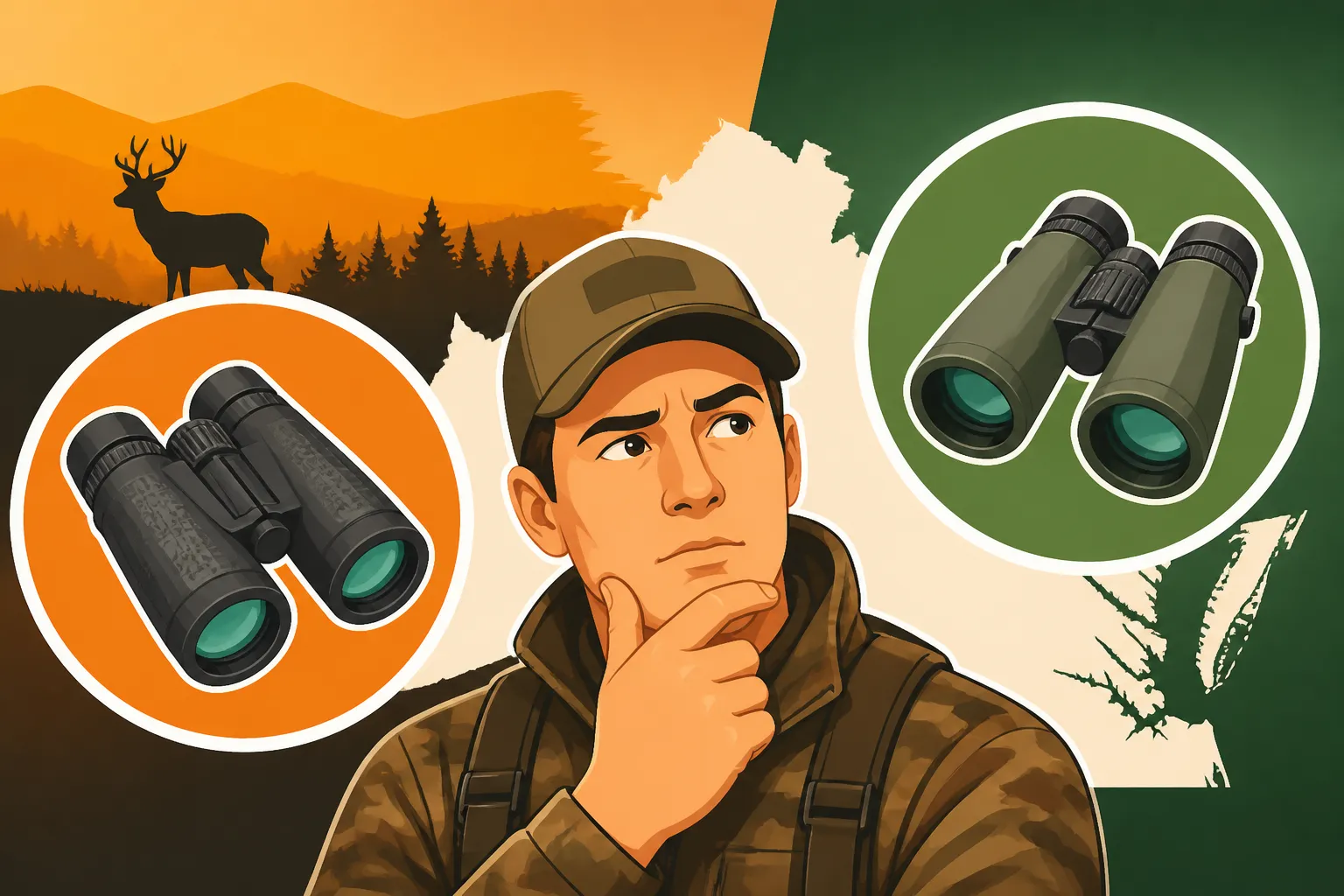
We've all been there, standing in the sporting goods aisle, staring at the row of binoculars. One pair is priced like a small car, gleaming with exotic glass, while another sits modestly on the bottom shelf, asking for little more than pocket change. A common question pops into every Virginia hunter's head: "Are those cheap binoculars really good enough, or am I just setting myself up for disappointment when deer season rolls around?" It's a valid concern for anyone trying to balance a passion for the outdoors with a sensible budget, and this guide is going to dive deep into exactly that.
The Allure of Budget Binos: Why We Even Ask This Question
Let's be honest, hunting is an expensive passion. Between licenses, tags, firearms, bows, treestands, and all the other necessary gear, the costs can pile up faster than leaves in a November windstorm. So, it's natural to look for areas where you can save a few bucks, and optics often seem like a prime candidate. After all, if they both magnify, they both work, right? The idea of getting by with "good enough" binoculars is a powerful one, especially for new hunters or those who only get out a few times a year. We see the big numbers on the zoom, feel the lightweight plastic, and think, "This could do the trick."
The "Good Enough" Mindset and Its Appeal
For many, the initial appeal of cheap binoculars stems from a practical place. Maybe you're just starting out, testing the waters of deer hunting in Virginia, and aren't ready to drop a huge sum on gear you might not fully appreciate yet. Or perhaps you're primarily a close-range hunter, focusing on thick Piedmont woodlots where you expect to see deer at 50 yards or less, making the need for extreme optical clarity seem less urgent. Setting Up on a Piedmont Field Edge could be one such scenario. There's also the "loaner" factor – a cheap pair is perfect for a buddy who occasionally tags along, or for a child learning the ropes, where bumps and drops are inevitable. The immediate gratification of having some magnification in hand for minimal investment is hard to argue with, and for casual observation or very close-range spotting, they genuinely do work.
Common Features Found in Entry-Level Optics
When you pick up a pair of binoculars at the lower end of the price spectrum, you'll often find a few common characteristics. They're typically lightweight, sometimes almost surprisingly so, due to extensive use of plastic in the housing and internal components. The lenses might have basic anti-reflective coatings, but usually not the multi-layer, phase-corrected coatings found on higher-end glass. Magnification ranges like 8×42 or 10×42 are popular, mimicking the specifications of premium models. They usually come with a basic neck strap and a soft case, offering minimal protection. For a quick scan of a distant field or a general look at the landscape, these basic features can get the job done. You can see things further away, identify basic shapes, and get a general lay of the land, which is exactly what many new hunters expect.
Where Virginia's Demanding Terrain Challenges Cheap Glass
Now, here's where the rubber meets the road. Virginia's hunting grounds are incredibly diverse, from the wide-open agriculture fields of the Eastern Shore to the deep, dark hollows of the Blue Ridge and Allegheny Mountains. What might be "good enough" for spotting doves over a field on opening day is a completely different story when you're trying to pick apart a shadowed clear-cut for a deer at last light or glassing distant ridges for bear sign. This is where budget binoculars often reveal their limitations, and where a hunter can quickly become frustrated. Optics for Blue Ridge and Piedmont Hunting is a whole different ballgame.
Low-Light Performance: A Critical Factor in Dense Virginia Timber
One of the most critical aspects of any hunting optic, especially in Virginia, is its low-light performance. Think about it: deer and bear are most active at dawn and dusk. In the dense, mature timber of the George Washington or Jefferson National Forests, or even in a thick Piedmont bottomland, legal shooting light can feel incredibly brief, and shadows lengthen quickly. Cheap binoculars simply don't gather light efficiently. Their objective lenses might be 42mm, but the quality of the glass, the prism design, and the often-minimal lens coatings mean that less light makes it to your eye. Instead of seeing a clear image, you get a dim, fuzzy picture where distinguishing antler points from branches, or even seeing an animal clearly enough to know if it's a legal target, becomes nearly impossible. You're left squinting, frustrated, and potentially missing out on critical moments because your glass just can't cut through the gloom. This can be especially true when you're in a stand early morning, trying to identify targets as the sun barely begins to lighten the woods. Rifle Scopes for Low-Light Mountain Hollows face similar challenges.
Image Clarity and Edge-to-Edge Sharpness
Beyond just brightness, the overall clarity and sharpness of the image are paramount. Imagine you're glassing a distant ridge, trying to confirm if that brownish lump under a distant oak is a stump or a bedded deer. With cheap binoculars, you'll often find that only the very center of the image is remotely sharp, while the edges are blurry and distorted. This "edge-to-edge" clarity is a hallmark of quality optics and it's almost always absent in budget models. Details become blobs, and defining features vanish. Trying to pick apart a thick honeysuckle patch or a distant clear-cut for an antler tine or the flick of an ear becomes an exercise in futility. You might see something, but you won't see it clearly enough to make an informed decision. This lack of resolution can cost you precious seconds when trying to identify game, leading to missed opportunities or, worse, ethical concerns about target identification.
Ruggedness and Weatherproofing for the Old Dominion Outdoors
Virginia weather is notoriously unpredictable. One day it's sunny and mild, the next you're facing a cold, driving rain, or a misty, humid morning where everything fogs up. Cheap binoculars are rarely built to withstand these conditions. Their seals might not be fully waterproof, leading to internal fogging or even moisture penetration that can ruin the optics. The plastic housing, while light, often feels flimsy and might not stand up to an accidental drop on rocky terrain or a bump against a tree in a thick laurel patch. The focus wheel might be stiff, or too loose, making fine adjustments difficult, especially with cold, wet hands. When you're spending all day in the elements, from the wet lowlands of Tidewater to the steep, rocky slopes of the Allegheny Mountains, having gear that can take a beating and keep performing is non-negotiable. Many hunters rely on Boots for Virginia Swamps and Ridges and other durable gear; optics should be no different.
Striking a Balance: What to Prioritize in Affordable Binoculars
So, if cheap binoculars have their drawbacks, but the top-tier options are out of reach, what's a budget-conscious Virginia hunter to do? The good news is that there's a fantastic middle ground. Many reputable brands offer binoculars that deliver significantly better performance than the absolute cheapest models without demanding a second mortgage. It's about being a savvy shopper and understanding which features truly enhance your hunting experience.
Key Specifications That Truly Matter
When looking at binoculars, a few specifications are worth prioritizing, even on a budget.
- Objective Lens Size: The second number (e.g., 42 in 10×42) indicates the objective lens diameter in millimeters. Larger lenses gather more light, which is crucial for low-light conditions. For deer and bear hunting, a 42mm objective lens is a good baseline.
- Magnification: The first number (e.g., 10 in 10×42) is the magnification. 8x and 10x are most popular for hunting. While 10x brings things closer, it also amplifies hand shake, which can reduce perceived clarity. For steady glassing in dense cover, 8x can often be more practical and comfortable. Consider your primary hunting environment: 8×42 Versus 10×42 in the Woods.
- Lens Coatings: Look for terms like "fully multi-coated" (FMC). This means all air-to-glass surfaces have multiple layers of anti-reflective coatings, significantly reducing light loss and glare, leading to brighter, clearer images.
- Prism Type: Roof prisms are more compact and durable, while Porro prisms often offer a wider field of view. For hunting, roof prisms are generally preferred for their streamlined shape.
- Waterproof and Fogproof: This is non-negotiable for Virginia hunting. Look for binoculars that are O-ring sealed and nitrogen or argon purged to prevent internal fogging and moisture damage.
Here's a quick comparison of general features you might find across different price tiers:
| Feature | Budget Binoculars (Under $100) | Mid-Range Binoculars ($100-$500) | High-End Binoculars ($500+) |
|---|---|---|---|
| Optical Quality | Basic glass, often single-coated | Better glass, fully multi-coated (FMC) | Premium ED glass, multi-coated |
| Low-Light | Poor, dim, fuzzy in shadows | Decent, usable at dawn/dusk | Excellent, bright, crisp |
| Clarity | Soft, blurry edges, limited detail | Good center sharpness, fair edges | Razor-sharp edge-to-edge |
| Durability | Mostly plastic, not fully sealed | Rubber armored, waterproof/fogproof | Robust, armored, shock-resistant |
| Eye Relief | Variable, sometimes short | Adequate, good for glasses-wearers | Long, comfortable |
| Field of View | Moderate | Good, wide for scanning | Very wide, immersive |
| Ergonomics | Basic, sometimes uncomfortable | Comfortable, good grip | Superb, balanced, precise focus |
Smart Shopping Strategies and Trusted Value Brands
You don't have to mortgage the farm to get a decent pair of binoculars. Several brands have earned a reputation for offering excellent value for money. Companies often have different tiers within their product lines, so even a well-known brand might have a budget-friendly option that outperforms a no-name brand's "premium" offering. Before making a purchase, spend some time reading reviews from other hunters. Websites like GoHunt often feature comprehensive reviews and comparisons that can shed light on real-world performance. Talking to hunters at your local sporting goods store or even asking around at your Virginia Deer Camp Traditions can also provide invaluable insights into what works in Virginia's specific conditions. Sometimes, saving a little more and stepping up to the next price bracket, say from $50 to $150, can offer a disproportionately large jump in quality and performance.
Maximizing the Performance of Your Existing Optics
Even if you're stuck with a pair of less-than-stellar binoculars for now, there are ways to get the most out of them. First, keep them clean. Dirt, dust, and smudges on the lenses will drastically reduce light transmission and clarity, making cheap optics even worse. Invest in a good lens cleaning kit and use it regularly. Second, use a binocular harness. A harness distributes the weight evenly, keeps your binoculars secure against your chest, and most importantly, makes them readily accessible. This means you'll actually use them more often instead of fumbling in your pack. Binocular Harnesses Worth Wearing are game-changers. Third, brace yourself. When glassing, try to rest your elbows on your knees, a tree, or even use a shooting stick to steady the image. Even a cheap pair will seem clearer if you eliminate handshake. Finally, understand their limitations. Don't expect to resolve a deer at 500 yards in low light with a $50 pair; adjust your expectations and hunting tactics accordingly.
Real-World Scenarios: When "Good Enough" Just Isn't Enough (and when it is!)
Ultimately, whether cheap binoculars are "good enough" boils down to your specific hunting style, the terrain you frequent, and your personal expectations. There are definitely scenarios where a basic pair will suffice, and others where they will actively hinder your success and enjoyment.
Scouting Wide-Open Fields vs. Dense Mountain Thickets
If your hunting primarily involves glassing large, open agricultural fields in the Piedmont or watching power line cuts at dusk, a relatively inexpensive pair of binoculars might do the trick for general observation. You're mostly looking for large, obvious shapes, and in good light, even basic optics can accomplish that. However, if you're Hunting West of the Blue Ridge, picking apart dense mountain laurel thickets, scrutinizing the shadows in a deep hollow, or trying to identify subtle movements in a vast, timbered landscape, then cheap binoculars quickly become a liability. The nuances of light, shadow, and distance in these environments demand superior optical performance to truly distinguish game from cover. Trying to find a shed antler after season, for example, is much harder with poor optics.
From Casual Observer to Dedicated Hunter
For the casual observer, or someone who uses binoculars more for birdwatching than hardcore hunting, inexpensive options are often perfectly acceptable. You're enjoying the outdoors, making general observations, and not under pressure to make a critical identification. However, as you transition to a more dedicated hunter, your needs evolve. You're investing significant time, effort, and money into your season. You need to be able to identify legal game, assess antler size, and ensure a clear shot path. These are critical decisions that require confidence in your vision. Missing an opportunity because your binoculars were too dim or blurry is incredibly frustrating, but making an identification error is far worse. A reliable pair of binoculars becomes an indispensable tool for ethical and successful hunting. Before investing in a full setup, many people use resources like GoHunt to learn about different types of gear and what might best suit their evolving needs.
The Long-Term Investment in Quality Glass
Think of binoculars as a long-term investment. Unlike a new rifle or bow that might see upgrades every few years, a truly good pair of binoculars can last decades if properly cared for. The cost per year of ownership for a mid-range pair often ends up being far less than continually replacing cheap, underperforming optics. While the initial sticker shock of a $200-$400 pair might feel significant, consider the value of clarity, brightness, and durability over many seasons. A quality pair will enhance your experience, reduce eye strain, and give you the confidence to make quick, accurate decisions in the field, whether you're Scouting Virginia Public Land Before Season or waiting in a treestand during the Hunting the Virginia Rut in November. They can truly transform how you interact with the landscape and the game within it.
Disclaimer
This article is for general informational purposes only and does not constitute professional advice. Laws, prices and regulations vary by location and change over time. Consult a qualified professional for guidance on your specific situation.