Ground Blind Anchoring in Wind
There's nothing quite like meticulously setting up your ground blind before a hunt, only to return the next morning and find it crumpled, torn, or worse, completely gone, thanks to an unexpected gust of wind. It's a frustrating experience that can ruin a planned hunt and damage expensive gear, and it's a reality many Virginia hunters face with our unpredictable weather. This guide is all about helping you anchor your ground blind effectively, ensuring it stays put no matter what the wind throws at it, keeping your setup solid and your hunt on track.
The Silent Enemy: Why Wind is a Ground Blind's Nemesis
You might think a little breeze is no big deal, but for a ground blind, wind can be a significant adversary, often underestimated until it's too late. It's not just about hurricanes or massive storms; even persistent moderate winds can cause damage and compromise your hunting efforts. Understanding why wind is such a problem is the first step to truly effective anchoring.
Understanding Wind's Impact on Blind Integrity
Ground blinds, with their large fabric panels, act like sails. The moment wind catches them, it exerts immense pressure. This pressure can twist frames, tear fabric, rip seams, and pull out any flimsy stakes you might have used. Imagine the force on a sail when a boat is moving at speed; a stationary blind can experience similar stress in a strong gust. A blind that's constantly shifting, flapping, or even just vibrating in the wind isn't going to hold scent as well, and it's certainly not going to provide the quiet, steady platform you need for a shot. Beyond the immediate structural damage, a poorly anchored blind can also create noise, spooking game long before you even get a chance to see them. That constant rustling or creaking is a dead giveaway to any sharp-eared deer or turkey within earshot.
The Unpredictability of Virginia Weather Systems
Virginia weather, from the mountains of the Blue Ridge to the flatlands of the Eastern Shore, can be incredibly fickle. You might start your day with calm, clear skies, only for a cold front to blow through, bringing with it unexpected high winds and even squalls. These sudden shifts are particularly prevalent during transitional seasons like fall and spring, exactly when many of us are out chasing deer and turkeys. A sunny, mild morning can turn into a blustery, bone-chilling afternoon, and a blind that felt secure at dawn can become a liability by midday. Relying solely on short-term forecasts is a gamble; true preparedness means anchoring your blind for the worst, even if you hope for the best. Considering how quickly conditions can change, especially in those mountain hollows or exposed field edges, it's never overkill to over-anchor.
Essential Anchoring Methods for Ground Blinds
When it comes to keeping your ground blind rooted to the earth, there's no single magic bullet. A combination of methods, tailored to your specific blind and the terrain, is often the most effective approach. From the simple to the more robust, understanding your options will help you choose the best strategy for your hunting spot.
Heavy-Duty Stakes and Guy Lines
The standard stakes that come with most ground blinds are, frankly, often inadequate. They're usually thin, short, and easily pulled from soft soil or even broken in harder ground. Investing in heavy-duty stakes is step one. Look for stakes made of sturdy steel or reinforced plastic, with a good helical twist or a wide anchor head to give them more bite in the ground. Tent stakes designed for high winds or rocky terrain are a good starting point.
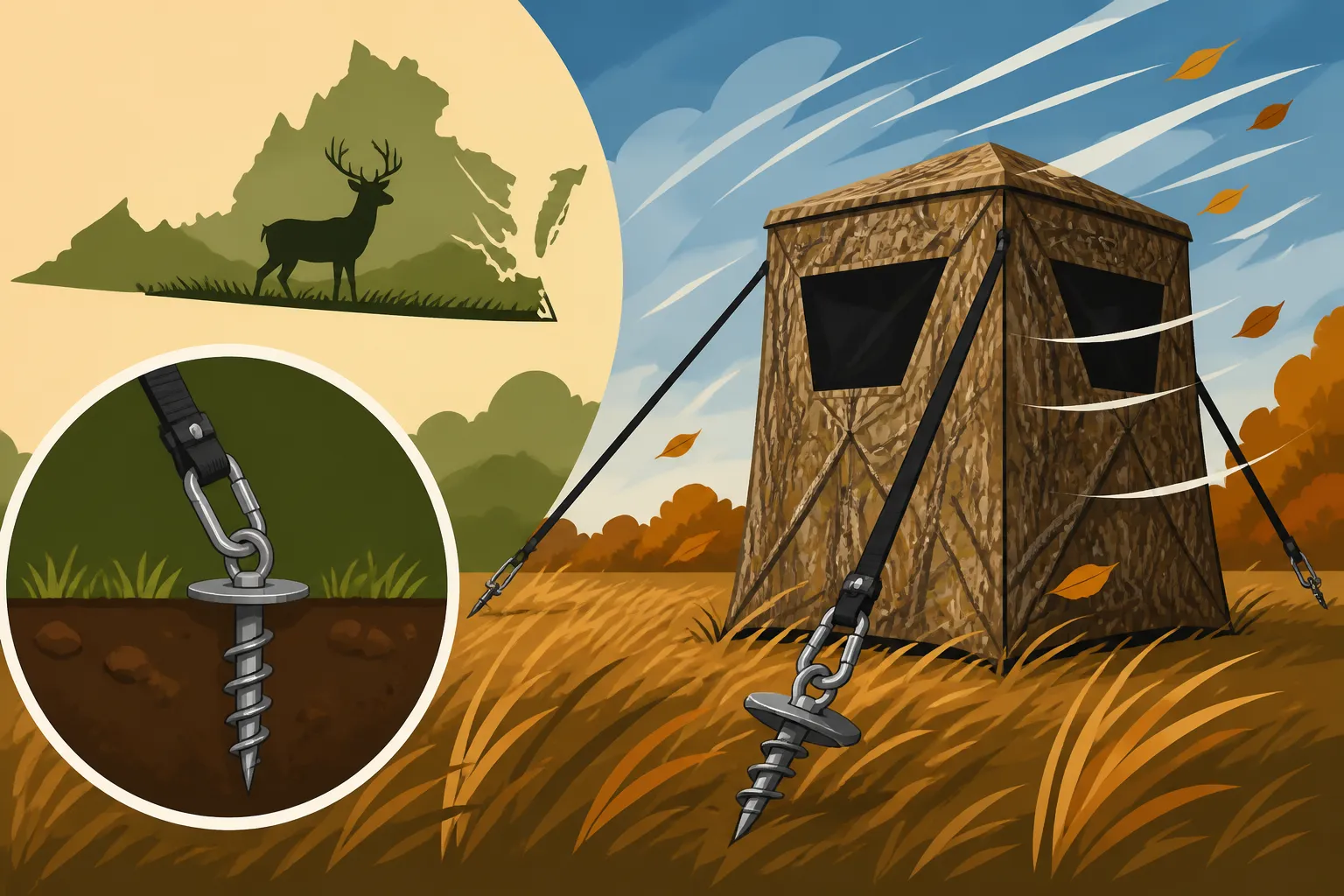
Coupled with these stronger stakes, guy lines are indispensable. These are ropes or cords that extend from points on the blind's frame (often reinforced loops or D-rings) outwards to stakes driven into the ground. Think of how a tent is secured. By creating multiple anchor points that pull away from the blind in different directions, you distribute the wind's force and prevent the blind from lifting or collapsing. Position these lines strategically, often at the corners and mid-points, pulling them taut and securing them firmly. This is especially important if you're hunting an exposed area, like a field edge in the Piedmont or an open ridge line in the George Washington National Forest, where winds can really whip.
Sandbags, Water Jugs, and Rocks
Sometimes, driving stakes isn't feasible. You might be hunting an area with incredibly rocky soil where stakes won't penetrate, or perhaps on a gravel pad near a Hunting a Green Field Planted for Deer. This is where dead weights come into play. Sandbags are a classic solution. You can purchase purpose-built sandbags, fill your own durable cloth bags with sand, or even use heavy-duty Ziploc bags inside a larger burlap sack. The key is weight. A 20-pound sandbag at each corner of your blind, tied securely to the frame, can make a huge difference.
If sand isn't readily available, get creative. Water jugs, filled from a nearby stream or brought in, can work in a pinch. Just be sure they're sturdy and won't leak or burst. Rocks, if plentiful and large enough, can also serve as effective dead weights. Place them inside the blind on the corners, or tie them to the blind's loops and position them outside. The advantage of dead weights is that they don't require penetration into the ground, making them versatile for various terrains. The downside is the effort to transport them, especially for those longer walks into remote areas like within the Jefferson National Forest. For effective use, ensure the weight is truly heavy enough to resist strong gusts and that it's physically connected to the blind's frame so it can't simply be blown away from the blind.
Specialty Anchors and DIY Solutions
Beyond standard stakes and weights, there are specialized anchoring systems and clever DIY hacks that can provide extra security. Screw-in anchors, similar to those used for dog tie-outs or small boat anchors, can be very effective in varied soil types. They offer a much stronger hold than traditional stakes and are less likely to pull out. Simply twist them into the ground at each corner and attach your guy lines.
For particularly problematic spots, or if you're leaving a blind up for an extended period, consider heavier-duty options. Small rebar stakes, driven in with a sledgehammer, can provide an almost unyielding anchor point. You can then loop rope through the rebar's top curve. Some hunters even construct small, discreet stone cairns around their blind's corners, integrating natural elements to both anchor and camouflage. Always remember to check Ground Blind Rules on Virginia WMAs as some specific public lands may have restrictions on what types of permanent or semi-permanent anchors are allowed. When using any DIY solution, prioritize safety and ensure the materials are robust enough to withstand the elements without breaking or creating sharp hazards.
Here's a quick comparison of common anchoring methods:
| Anchoring Method | Pros | Cons | Best Use Case |
|---|---|---|---|
| Heavy-Duty Stakes | Stronger than stock stakes, good ground bite | Still can pull out in soft/muddy soil; require driving | Most common, versatile for various soil types |
| Guy Lines (with stakes) | Distributes wind force, prevents lifting | Can be trip hazards, require multiple anchor points | Paired with stakes for maximum stability in open areas |
| Sandbags | Versatile on rocky/hard ground, easy to move | Heavy to transport, can be bulky, may need filling afield | Rocky terrain, temporary setups, minimal ground impact |
| Water Jugs | Readily available, weight can be adjusted | Can leak, less dense than sand, can burst in cold | Emergency anchoring, near water sources |
| Screw-In Anchors | Superior holding power, less likely to pull | Can be difficult in extremely rocky ground, slower setup | Long-term setups, high-wind areas, varied soil |
| Rebar Stakes (DIY) | Extremely strong, durable, permanent solution | Difficult to install/remove, can be a tripping hazard | Very long-term setups, private land, maximum security |
Pre-Hunt Scouting and Placement Strategies
Before you even think about anchoring, the location and orientation of your ground blind play a massive role in its stability. A well-chosen spot can mitigate wind issues, while a poorly chosen one will magnify them, making even the best anchoring system struggle.
Reading the Terrain for Wind Protection
When you're out Scouting Virginia Public Land Before Season, pay close attention to the topography. Ridge lines and hilltops, while offering great visibility, are often wind tunnels. If you must be on a high point, try to position your blind just below the crest on the leeward (downwind) side, where the terrain itself offers some natural protection. Conversely, hollows and depressions might seem like sheltered spots, but they can sometimes funnel wind with surprising force.
Look for natural windbreaks. A thick stand of pines, a dense hedgerow, or the side of a large rock outcrop can significantly reduce the wind's impact on your blind. When hunting the Piedmont, for example, placing your blind just inside a wood line bordering an open field can shield it from direct winds sweeping across the open ground. Use a mapping app like GoHunt to analyze elevation changes and potential wind corridors before you ever set foot on the property. This digital reconnaissance can save you a lot of grief and ensure you don't pick a spot that's destined to catch every gust.
Facing the Wind: Strategic Blind Orientation
The way your blind faces relative to the prevailing wind direction is crucial. Generally, you want the smallest profile of your blind facing the strongest winds. This often means orienting a corner of the blind directly into the wind, rather than a broad, flat side. Think about how boats are designed to cut through water; you want your blind to "cut" through the wind as much as possible, minimizing the surface area that catches the full force.
However, consider your shot opportunities as well. If the wind is consistently coming from the west, and you expect deer to approach from the east, you might angle the blind slightly to present a smaller profile to the west, while still allowing a good shooting lane to the east. The goal is a balance: minimize wind exposure while maximizing your hunting effectiveness. Always check the forecast for the general wind direction on your hunt days, but be prepared for shifts. Remember that Wind and Thermals on a Blue Ridge Slope can be incredibly complex, swirling and shifting with the sun and terrain, making a perfectly wind-proof setup a constant challenge.
Setting Up Your Blind for Maximum Stability
Once you've chosen your spot and oriented your blind, it's time for the actual setup. This isn't just about popping up the frame; it's a careful process that integrates anchoring from the very beginning.
Step-by-Step Anchoring During Setup
Don't wait until your blind is fully assembled and flapping in the wind to start thinking about stakes. Integrate anchoring into your setup routine:
- Deploy the Frame: Get the blind's frame popped out and standing, but don't zip up windows or doors yet, which allows some wind to pass through rather than creating a solid sail.
- Initial Corner Anchors: Immediately drive at least one heavy-duty stake at each corner of the blind. Even if the wind isn't blowing hard, this foundational step prevents the blind from shifting while you work. If using sandbags, place one at each corner and attach it to the blind's corner loops.
- Attach Guy Lines: If using guy lines, attach them to the designated loops on the blind (usually midway up the sides or near the top of the frame). Extend them outwards at a 45-degree angle from the blind and drive stakes securely into the ground. Pull them taut. The more guy lines you use, the better the wind distribution.
- Add Interior Weights (Optional but Recommended): For extra security, especially in truly windy conditions, place additional sandbags, rocks, or even your hunting pack filled with gear inside the blind at the corners or against the frame. This internal weight helps keep the base grounded.
- Secure All Openings: Once everything is anchored, zip up any windows or doors you won't be actively using. This prevents the blind from acting like a parachute and helps maintain scent control.
When working in rocky ground, you might need to try a few spots to find soft enough earth for your stakes. Don't force a flimsy stake; that's how they bend or break. Have a small mallet or hammer in your pack to drive stakes effectively. For those longer hauls into the woods, consider a dedicated game cart to help transport heavier anchoring gear.
Brushing In for Added Stability and Concealment
Brushing in your blind serves a dual purpose: it helps to break up the blind's silhouette, making it blend more naturally into its surroundings, and it can also provide an additional layer of wind resistance. By strategically placing branches, small logs, and natural vegetation around the base and sides of your blind, you're not just camouflaging it; you're creating a denser barrier against the wind.
When you Brushing In a Blind on a Field Edge, for example, you can weave tall grasses and small saplings into the blind's exterior loops or tuck them under its skirting. This creates a more solid, less "sail-like" structure. Ensure that any brushing-in material is securely fastened or heavy enough not to blow away itself, creating debris that might spook game or simply negate your efforts. Be mindful of making too much noise while brushing in, as deer and turkeys are incredibly sensitive to unusual sounds in their environment. Do it quietly, thoughtfully, and well in advance of your hunt, if possible.
Maintenance and Long-Term Blind Care
Leaving a ground blind out for an extended period, especially on private land or within specific public land allowances, requires a different level of commitment to anchoring and maintenance. Virginia's weather can be harsh, and neglect will lead to damage.
Regular Checks and Re-Securing
If your blind is going to be deployed for more than a few days, make it a point to check on it regularly, especially after any significant weather events like heavy rain, strong winds, or even snow. Soil can loosen, stakes can shift, and ropes can stretch. A quick visit every few days or once a week can save your blind from catastrophic failure. During these checks:
- Inspect Stakes: Make sure they're still firmly in the ground. Re-drive any that have loosened.
- Check Guy Lines: Ensure they're taut. Re-tie or adjust as needed.
- Fabric Condition: Look for any rips or tears, especially near zippers or tie-down points. Small tears can quickly become large ones in the wind. Patch them promptly.
- Internal Weights: Confirm that any sandbags or rocks inside are still in place and haven't shifted.
These routine inspections are critical for any long-term deployment, whether you're targeting deer during Hunting the Rut East of the Blue Ridge or anticipating late-season cold fronts in December. Ignoring these checks is a recipe for disaster.
Protecting Your Blind from the Elements
Anchoring isn't just about wind; it's also about protecting your investment from other elements. Heavy rain can saturate the fabric, making it heavier and more susceptible to wind damage, not to mention promoting mildew. Prolonged sun exposure can degrade fabric and fade camouflage patterns.
Consider a rain fly or tarp specifically designed for ground blinds if your blind will be exposed for a long time. While not always practical for public land due to potential restrictions or visibility concerns, on private land, a well-secured tarp over the top can extend the life of your blind significantly. During the off-season, if you're leaving a blind out, ensure it's completely dry before zipping it up tightly to prevent mold and mildew growth. Even better, take it down, clean it thoroughly, and store it in a cool, dry place. While Packs for a Jefferson Forest Day Hunt might get thrown in the truck after a short trip, a long-term blind needs a bit more TLC to stay effective for seasons to come.
Disclaimer
This article is for general informational purposes only and does not constitute professional advice. Laws, prices and regulations vary by location and change over time. Consult a qualified professional for guidance on your specific situation.