Safety Harnesses and Lifelines
Imagine this: you've finally set up your treestand in that perfect spot, way up high where the big buck is sure to pass. You climb up, the air is crisp, and the woods are starting to wake up. Suddenly, a foot slips, a strap snaps, or you simply lose your balance, and in a heart-stopping second, you're plummeting towards the unforgiving ground. This nightmare scenario is, tragically, a leading cause of serious injury—and even death—for hunters every season, right here in Virginia. This guide isn't about scaring you; it's about empowering you with the knowledge and confidence to make every hunt a safe one by truly understanding and utilizing safety harnesses and lifelines.
The Grave Reality of Treestand Falls for Virginia Hunters
It's easy to get caught up in the excitement of hunting season. We obsess over deer sign, scout new public lands, and fine-tune our bow or rifle. But often, the most critical piece of gear—our safety equipment—gets overlooked or, worse, ignored. The truth is, gravity doesn't care if you've been hunting for 50 years or 5. A fall from a treestand can happen to anyone, and the consequences in Virginia's varied terrain can be particularly severe.
More Than Just a Scare: Why Falls Happen
You might think, "I'm careful. I check my straps." But the statistics paint a sobering picture: the vast majority of treestand accidents happen from less than 20 feet, and they often occur during ascent or descent. It's not usually a catastrophic equipment failure, but rather a moment of inattention, a slippery step, or simple fatigue that leads to disaster. Imagine you’re climbing up a stand on an oak tree in the George Washington National Forest Hunting as the first light breaks, your breath visible in the cold air. The bark is slick with morning dew, and you're still half-asleep. One misstep, one hurried movement, and your hunt could end in tragedy.
Virginia’s diverse landscape adds its own challenges. In the mountains, uneven terrain can make setting up a stand difficult, leading to unstable platforms. Down in the Piedmont, older, sometimes decaying trees might not offer the solid anchor points you expect. And along the swampy edges of Eastern Virginia, slick mud and dense undergrowth can make footing treacherous even before you start your climb. Complacency is our biggest enemy, and believing "it won't happen to me" is a dangerous thought that many hunters have regrettably learned from.
The Silent Dangers Beyond the Drop
Even if you manage to avoid a direct impact with the ground, a fall from a treestand can still have life-threatening consequences. If you fall and are left suspended by your harness, you face the silent, insidious threat of suspension trauma. This isn't just discomfort; it's a serious medical condition where the pooling of blood in your legs can lead to organ damage, unconsciousness, and even death within a relatively short period. Your legs, constricted by the harness straps, aren't pumping blood back to your core and brain effectively.
Furthermore, many treestand falls happen in remote locations. You could be miles deep into a national forest after Scouting Virginia Public Land Before Season, far from cell service or anyone who might hear your calls for help. A broken leg or head injury could leave you incapacitated, exposed to the elements, and in critical need of rescue. This makes not only preventing the fall, but also having a clear plan for what to do if you fall, absolutely vital.
Deciphering Your Treestand Safety Gear
Let's break down the essential components of your treestand safety system. It's more than just a belt; it's a carefully designed series of components meant to work together to keep you safe. Understanding each piece and how it functions is the first step towards truly embracing treestand safety.
Your Full-Body Harness: A Hunter's Essential Armor
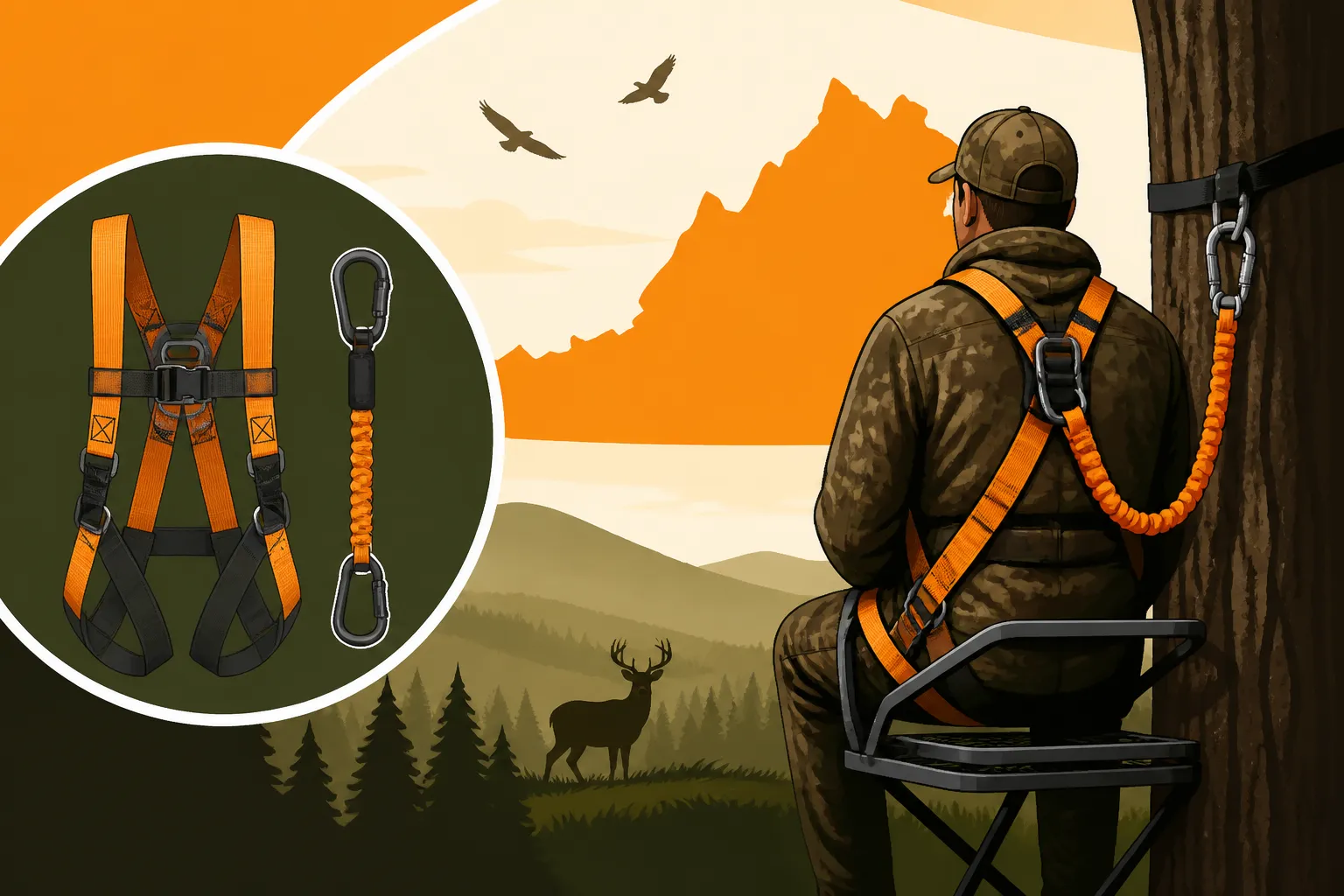
Forget those old, flimsy waist belts. Today's standard, and indeed the only acceptable piece of equipment, is a full-body harness. This isn't just a recommendation; it's a necessity. A full-body harness distributes the impact and suspension forces across your entire body – chest, back, and legs – rather than concentrating them on your waist or groin. It’s designed to keep you upright and prevent you from flipping upside down if you fall.
Your harness consists of several key elements:
- Shoulder Straps: These go over your shoulders, often crossing your chest or back.
- Leg Straps: These secure around your upper thighs.
- Chest Buckle: This connects the shoulder straps across your chest.
- D-Ring: Typically located on the center of your back, between your shoulder blades, this is the primary attachment point for your lifeline. Some harnesses might have additional D-rings for a lineman's belt.
Proper fit is paramount. Your harness should be snug but not restrictive, allowing for full range of motion without excessive slack. Think about the layers you'll be wearing – will it still fit properly over that heavy jacket in December? Always inspect your harness before each season and before every hunt. Look for frayed straps, cuts, tears, or rust on buckles. If anything looks suspicious, replace it. Many hunters consult resources like GoHunt for detailed reviews and comparisons of different harness models, helping them choose one that balances comfort, durability, and quiet operation for Virginia's diverse hunting conditions.
The Lifeline and Lineman's Belt: Your Vertical Lifelines
While the harness is what you wear, the lifeline is what connects you to the tree, ensuring continuous contact from the moment your feet leave the ground until you're back down.
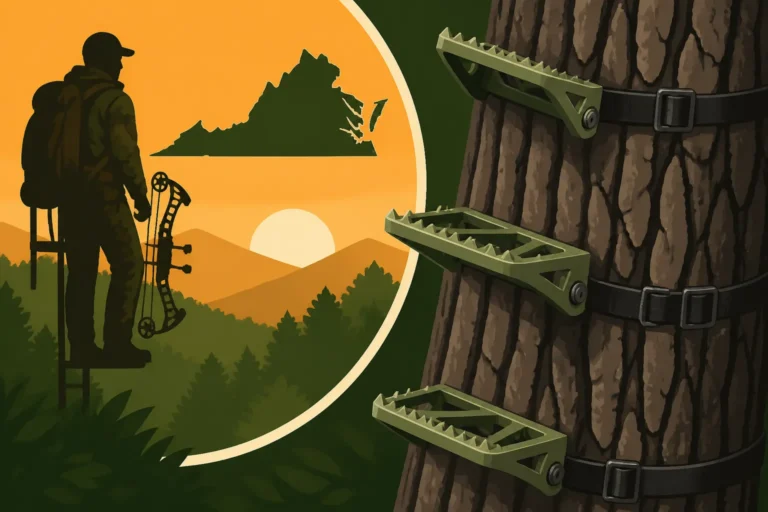
A typical treestand lifeline consists of a length of rope that runs from the base of the tree up to your stand, secured at both ends. Crucially, it has a Prusik knot (or similar sliding knot system) and a carabiner. You attach your harness's D-ring to this carabiner. As you climb, you slide the Prusik knot up the rope with you. If you slip, the knot instantly cinches tight, holding you securely. This continuous attachment is non-negotiable for safety. Remember the cardinal rule: always be connected. From the moment your feet leave the ground until they are firmly back on it, you should be tethered to the tree. This is especially important when you consider the Treestand Rules on Virginia Public Land, which often emphasize safety and ethical hunting practices.
A lineman's belt (or climbing belt) is a separate strap with two clips. It’s designed to wrap around the tree and clip into two loops on the sides of your harness. This allows you to lean back safely while ascending or descending with climbing sticks or screw-in steps, freeing both hands to manage your stand, climbing aid, or bow. It provides stability and safety during the most dangerous part of your climb. Think of it as a temporary, secondary connection that allows you to work hands-free while ensuring you don't fall.
Preventing Suspension Trauma: The Relief Strap
This small, often overlooked, but absolutely vital piece of gear can save your life. A suspension relief strap is a loop of webbing that typically comes with your harness, or can be purchased separately. If you fall and are suspended, you deploy this strap, creating a loop for your feet. By standing in this loop, you relieve the pressure on your femoral arteries and prevent blood from pooling in your legs. This buys you precious time to self-rescue or wait for help.
Even if you only hang for a few minutes, suspension trauma can begin. Always ensure your harness has an easily accessible suspension relief strap and know how to deploy it quickly. Practice using it at ground level. It might feel like an extra step, but that small strap could mean the difference between a scary story and a tragedy.
Mastering Safe Operations: From Ground to Stand and Back
Knowing what your gear is for is only half the battle. The real safety comes from consistently and correctly using it every single time you hunt from an elevated position. There's no room for shortcuts when your life is on the line.
Pre-Season Checks and Practice
Before the season even begins, take your harness, lifeline, and all other treestand accessories out. Inspect everything thoroughly. Check straps for cuts, fraying, or sun damage. Look at buckles and carabiners for cracks, bends, or corrosion. Ensure all moving parts operate smoothly. Many harnesses have a lifespan, often printed on a tag, usually around 5 years. If yours is old or showing signs of wear, replace it. It's a small investment for your safety.
Once you’ve inspected your gear, practice. Don’t wait for opening day to figure out how to clip into your lifeline or deploy your relief strap. Hang your stand a few feet off the ground in your backyard (or a safe, controlled environment) and practice every step of the process: attaching the lifeline, climbing, connecting, and even simulating a fall and deploying your relief strap. This muscle memory will be invaluable if you ever find yourself in a real emergency. This kind of preparation is just as important as the Virginia Hunter Education Requirements themselves, which instill fundamental safety principles.
Connecting Safely: Ascent, Hunting, and Descent
This is where the rubber meets the road. Your safety depends on continuous connection.
- At the Base of the Tree: Attach your lifeline to the tree above your stand. Ensure it's secured according to the manufacturer's instructions, typically with a knot or strap at both the top and bottom of the section you'll be climbing. The Prusik knot and carabiner should be attached to the D-ring on your harness before you even start climbing. Many hunters use the GoHunt app to mark their stand locations, which can be invaluable for finding your way back in the dark or pinpointing your spot if you need emergency assistance.
- During Ascent: As you climb using climbing sticks, screw-in steps, or a climbing stand, slide the Prusik knot up the lifeline with you. Keep it as high as comfortably possible, minimizing potential fall distance. If you're using climbing sticks, a lineman's belt allows you to clip into the tree on both sides, keeping you secure while you hang and adjust each stick. This is crucial for safely performing tasks like Hanging a Stand on a Jefferson Forest Ridge where stability is key.
- In the Stand: Once you reach your stand platform, adjust your Prusik knot so that if you were to fall off the platform, it would catch you before you hit the ground. You should be able to stand comfortably, but with minimal slack. You should remain connected to your lifeline the entire time you are in the stand. No exceptions.
- During Descent: Reverse the process, carefully lowering the Prusik knot as you descend. Again, keep it as high as possible, maintaining continuous connection until both feet are firmly on the ground.
Whether you're using a traditional hang-on stand, a climber, or even embracing alternative methods like Saddle Hunting in Virginia Hardwoods, the principle remains the same: always be tied to the tree.
Emergency Protocol: When a Fall Occurs
Despite all precautions, falls can happen. Knowing what to do in that terrifying moment can save your life.
- Remain Calm: Easier said than done, but panic will only make things worse. Take a deep breath.
- Deploy Your Suspension Relief Strap: Immediately get your feet into that strap. Stand up in it to relieve pressure on your legs. This is your most critical immediate action. You cannot afford to delay.
- Assess Your Situation: Are you injured? Can you reach your phone? Is anyone nearby?
- Call for Help: If you have cell service, call 911 or a trusted contact immediately. Clearly state your location (this is where mapping apps like GoHunt, with pre-marked stand locations, can be a lifesaver). Even if you feel fine after a short suspension, it's wise to get checked out by medical professionals to rule out any underlying issues from suspension trauma.
- Self-Rescue (If Possible): If you are uninjured and able, assess if you can safely climb back onto your stand or descend to the ground using your climbing method. Only attempt this if you feel absolutely confident and strong enough. If not, wait for help while continuously using your relief strap.
- Cutting Your Lifeline (Absolute Last Resort): Only consider cutting your lifeline if you are trapped, cannot self-rescue, and absolutely must get to the ground, knowing full well the severe risk of injury from impact. This is a desperate measure for an extreme emergency, often considered only if the relief strap fails or cannot be deployed, and help is not coming. This is why a sturdy knife, easily accessible, is often recommended as part of your First Aid Kits for Remote Mountain Ground.
Tailoring Safety Gear to Virginia's Hunting Environments
Virginia is a state of incredible topographical diversity, from the rugged Appalachians in the west to the flat, swampy Tidewater region. Your approach to safety, and even the specific features of your gear, might subtly shift depending on where you're hunting.
Mountain Terrain Demands: Durability and Quietness
Hunting in the Hunting West of the Blue Ridge means encountering steep inclines, rocky outcrops, and dense cover. Treestands often get dragged over rough ground or bumped against unforgiving trees. For this reason, durability in your harness and lifeline is key. Look for robust webbing and strong stitching that can withstand the abuse of rugged country.
Quietness is also paramount. In the quiet solitude of the mountains, a squeaky buckle or a noisy carabiner can ruin a hunt. Seek out harnesses with coated metal parts or silent buckles. The last thing you want is for a mature buck to hear you shifting in your stand while it's still 100 yards out. Consider harnesses designed for comfort during long hikes; lightweight materials that don't chafe will be appreciated after hauling your Packs for a Jefferson Forest Day Hunt through elevation changes.
Piedmont and Eastern Virginia: Weather and Accessibility
The rolling hills of the Piedmont and the flat, often marshy areas of Eastern Virginia present their own set of challenges. Here, weather can be more of a factor, with higher humidity, more rain, and sudden temperature swings. Look for harnesses and lifelines made from weather-resistant materials that won't absorb water, stiffen in the cold, or degrade quickly from sun exposure.
Ease of adjustment is important when you might be layering up or down throughout the day. A harness that's simple to loosen or tighten over different clothing thicknesses will be more comfortable and safer. In areas with high hunting pressure, such as some public lands in the Piedmont or near urban zones, you might also consider harnesses with elements of blaze orange or pink for added visibility during ascent and descent, especially during busy times of the Virginia Public Land Hunting Hours.
Practical Accessories for Enhanced Safety
Beyond the harness and lifeline, a few other items can significantly enhance your safety:
- Headlamp: Absolutely essential for navigating in and out of the woods in low light, especially when you might be Blood Trailing After Dark in Virginia. Make sure it's reliable and has fresh batteries.
- Communication Device: A fully charged cell phone (in a waterproof case) is a must. Consider a satellite messenger or two-way radio if you hunt in areas with no cell service. Let someone know where you're going and when you expect to be back.
- Signaling Device: A whistle or personal locator beacon can help rescuers find you if you're injured or disoriented.
- First Aid Kit: A compact but comprehensive kit should always be in your pack.
- Knife: A sharp, easily accessible knife, preferably with a serrated edge, could be a last-resort tool for cutting a tether if absolutely necessary.
When choosing these accessories, just like with your main safety gear, it pays to do your research. The GoHunt platform often features buyer's guides and product comparisons that can help you select reliable and field-tested gear that holds up to Virginia's conditions.
Remember, safety isn't just about avoiding a fall; it's about being prepared for every eventuality. Whether you're chasing deer in the mountains or Hunting East of the Blue Ridge in the flatter terrain, these considerations are vital.
| Feature / Type | Full-Body Harness (General) | Treestand Lifeline | Lineman's Belt | Suspension Relief Strap |
|---|---|---|---|---|
| Primary Function | Distributes fall impact | Continuous connection | Hands-free climbing aid | Prevents trauma |
| Attachment | Worn on body | Attaches to tree & harness | Attaches to tree & harness | Integrated/Attached |
| Key Components | Straps, buckles, D-ring | Rope, Prusik knot, carabiner | Adjustable strap, clips | Webbing loop |
| Critical For | Any elevated hunting | Ascent, descent, hunting | Climbing, stand setup | Post-fall safety |
| Inspection Points | Fraying, cuts, rust | Fraying, knots, carabiner | Clips, webbing | Tears, easy deployment |
| Frequency of Use | Every elevated hunt | Every elevated climb/hunt | Every climb/descent | Emergency only |
| Virginia Relevance | Essential for all terrains | Adaptable to tree size | Navigating thick cover | Remote rescue times |
Hunting in Virginia is an incredible experience, offering opportunities for Bowhunting Virginia's Statewide Archery Season to Virginia's General Firearms Deer Season across diverse landscapes. But no buck or gobbler is worth risking your life over. Take the time to understand your safety harness and lifeline, practice with them, and make them an undeniable part of your hunting routine. Your life, and the peace of mind of your loved ones, depend on it. Stay safe out there.
Disclaimer
This article is for general informational purposes only and does not constitute professional advice. Laws, prices and regulations vary by location and change over time. Consult a qualified professional for guidance on your specific situation.