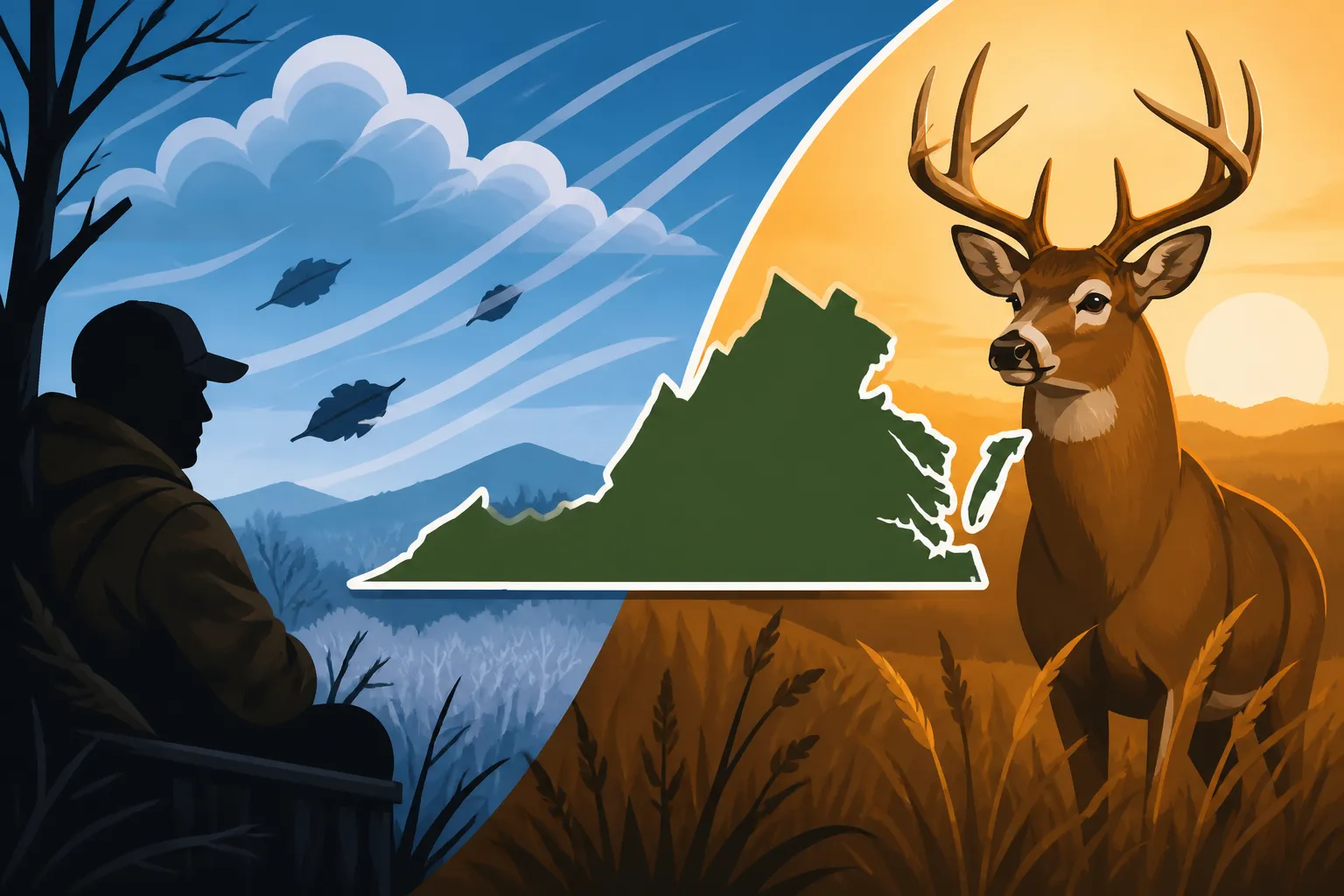
Hunting Deer After a Cold Front
You've been watching the weather, and that sharp cold front finally rolled through. Great, right? Crisp air, clear skies – it feels like quintessential hunting weather! But then you get out there, and the woods can feel eerily quiet, or the deer are behaving completely differently than you expected. It’s a common frustration to have deer seemingly disappear or alter their patterns dramatically after a significant temperature drop. This guide is all about helping you understand why deer react this way and, more importantly, how to adapt your Virginia hunting strategies to find success when the mercury plummets.
Understanding the Cold Front's Influence on Virginia Deer
A cold front isn't just a drop in temperature; it's a dynamic shift in atmospheric pressure, wind, and often precipitation that profoundly impacts deer behavior. While it might seem counterintuitive to some, deer don't always immediately go on a full-blown feeding frenzy right after a front passes. Their reactions are more nuanced, influenced by the severity of the front, the duration of the cold snap, and the availability of food and cover.
Before a significant cold front hits, deer often sense the change in barometric pressure and will typically go into a flurry of activity, feeding heavily to stock up on calories. This is their biological preparation for the impending chill. As the front passes and the high-pressure system moves in, the air clears, and temperatures drop sharply. This is when many hunters assume deer will be up and moving, but often, the immediate aftermath can be a period of reduced movement, especially if the temperature plunge is severe or accompanied by strong winds. Deer might hunker down in thick thermal cover, conserving energy.
The key is to recognize that the initial hours right after a powerful front can sometimes be slow, but this usually gives way to increased activity in the following days. Deer need to replace those lost calories and will eventually be forced to move, particularly around prime food sources. Factors like the amount of daylight, lunar phases, and even hunting pressure in areas like the George Washington National Forest can also interact with these weather changes, making deer movement a complex puzzle. Using data from tools like GoHunt can help you cross-reference weather patterns with historical deer sightings, offering a more complete picture of how deer in your specific hunting area typically respond.
Predicting Deer Movement After the Chill Sets In
Once the initial shock of a cold front passes, deer movement tends to stabilize, but with noticeable shifts from their pre-front routines. Your ability to predict these changes is paramount to post-front success.
Immediate Post-Front Response: Recovery and Recalibration
For the first 12-24 hours immediately following a sharp temperature drop, deer may be less active. They're recovering from the pre-front feeding binge and adjusting to the new, colder conditions. During this time, they prioritize conserving energy. This means they'll often seek out the densest thermal cover available – think thick pine plantations, creek bottoms with heavy undergrowth, south-facing slopes that catch more sun, or even deep draws in areas like the Blue Ridge. If you're hunting areas with significant elevation changes, understanding how Wind and Thermals on a Blue Ridge Slope affect deer comfort and movement becomes critical. They'll bed down in these areas, perhaps making short, cautious movements within the cover to browse minimally. Don't be surprised if your morning hunt immediately after a severe cold front feels slower than usual; it's often a waiting game for the deer to recalibrate.
Sustained Activity: Food is King
As the cold weather persists for a day or two after the front, deer will inevitably need to feed. This is when opportunities often open up. Their metabolic needs increase significantly to maintain body temperature, driving them towards reliable food sources. Look for increased midday movement, especially if daytime temperatures remain chilly but the sun is out. Deer will often leave bedding areas later in the morning and return later in the evening, sometimes even feeding during the middle of the day.
This increased focus on feeding means concentrating your efforts around prime Late-Season Food Sources for Virginia Whitetails. This could be white oak acorns in a good mast year, standing agricultural fields (corn, soybeans, winter wheat, brassicas), or even persistent green browse in creek bottoms. In managed areas, deer might hit a clover plot at first light, or a green field planted for deer, making these areas high-traffic zones. Using a mapping application from GoHunt can help you pinpoint these food sources, analyze historical satellite imagery for changes, and predict primary travel corridors between bedding and feeding. Scouting for fresh sign, like tracks and droppings in the Reading Virginia Mud for Fresh Deer Movement, will confirm their renewed activity.
Strategic Hunting Approaches for Post-Front Conditions
To consistently tag a deer after a cold front in Virginia, you need to adjust your tactics beyond just hoping they move. It’s about being where they want to be and staying there when they move.
Optimal Stand Placement
Your stand placement becomes paramount when deer are focusing on thermal cover and calorie intake. Forget the sparse timber on windy ridges; instead, look for the thickest, nastiest cover you can find that offers protection from the cold and wind. Creek bottoms are often excellent choices, providing both cover and sometimes persistent food sources. South-facing slopes that absorb maximum sunlight can be natural thermal hubs where deer will congregate to warm up. Look for the edges of these thickets, travel corridors leading into and out of them, and pinch points where deer are funneled by topography or dense vegetation.
If you're hunting public lands like the Jefferson National Forest, consider areas where a thick, regenerating clear-cut meets older timber, or a dense laurel thicket meets a more open hardwood ridge. These transition zones provide security and warmth with proximity to potential food. For example, a stand positioned to overlook a funnel between two hollows, especially one with a southern exposure, can be highly productive. Remember that deer are trying to conserve energy, so their travel routes might be shorter and more direct between bedding and food. Scouting for rub lines or scrape lines along a logging road can indicate established travel routes.
Timing Your Hunt and Patience
After a cold front, deer activity often peaks during the midday hours. Don't make the mistake of leaving your stand at 9 AM; instead, plan for all-day sits, or at least extend your morning hunt well into the late morning and start your evening hunt earlier. The period between 10 AM and 2 PM can be incredibly productive as deer slowly emerge from bedding to feed or stretch their legs before settling into another bedding location for the afternoon. This is a prime time to capitalize on the deer's increased metabolic needs.
Patience is truly a virtue here. When you’re putting in long hours in the stand, especially during chilly conditions, having the right Cold-Weather Sitting Strategy in the Mountains is crucial. Dress appropriately, bring snacks and water, and mentally prepare for extended waits. Even if the first few hours are slow, the deer will eventually move. Using the precise weather forecasting features offered by a platform like GoHunt can give you the confidence to know when those prime movement windows are most likely to occur, helping you decide whether to commit to an all-day sit or focus on specific midday opportunities.
Essential Gear and Mindset for Cold Weather Deer Hunting
Hunting after a cold front demands specific gear and a resilient mindset. Being comfortable is not just about personal enjoyment; it's about being able to stay on stand longer, move quieter, and remain focused when the moment of truth arrives.
Layering for Comfort and Adaptability
The most crucial aspect of cold weather hunting gear is proper layering. Virginia weather, especially after a cold front, can be unpredictable. You might start your morning hunt in freezing temperatures, but by midday, the sun could be beating down, and you'll be sweating if you're not properly dressed. A good layering system allows you to add or shed clothes as conditions change, regulating your body temperature.
Start with a moisture-wicking base layer against your skin. This is vital to keep sweat away and prevent chilling. Next, add an insulating mid-layer, like fleece or wool. Finally, your outer layer should be windproof and water-resistant. Wool, in particular, is an excellent choice for cold Virginia weather because it retains its insulating properties even when wet. Don't forget insulated headwear, gloves, and a good neck gaiter. Your feet are also critical; invest in quality, insulated boots. For guidance on specific clothing choices, check out resources on Layering for a Virginia Deer Stand and selecting Insulated Boots for All-Day Sits. Staying warm and dry directly correlates with your ability to stay focused and still on stand.
Staying Prepared and Mentally Resilient
Beyond clothing, ensure you have all the necessary small items that make a cold hunt bearable: hand warmers, a thermos of hot coffee or soup, and high-energy snacks. A good headlamp is essential for safe entry and exit routes, especially when Hunting Into the January Second Close. Make sure your rifle or bow is zeroed for the anticipated conditions, and practice shooting in layers.
Lastly, cultivate a mindset of patience and persistence. Cold fronts can be challenging, but they also offer some of the most rewarding hunting experiences. Understand that deer are also adjusting, and they won't always follow a predictable script. Be flexible with your plans. If one area isn't producing, use your knowledge of deer behavior and your GoHunt app to quickly identify alternative bedding or feeding areas that might be more productive under the prevailing conditions. Remember that deer, especially mature bucks, often seek out thick, secluded spots where others don't want to go. Don't be afraid to put in the effort to find those overlooked pockets. While regulations don't specifically detail cold front tactics, understanding broader rules like Virginia Deer Season Overlap With Small Game helps you be aware of other hunter activity, which can also influence deer movement in public areas.
| Cold Front Stage | Deer Behavior | Optimal Hunter Strategy | Key Focus Areas |
|---|---|---|---|
| Pre-Front | Intense feeding, high activity, sense of urgency | Scout heavily, prepare for immediate post-front | Established food plots, open fields, travel corridors |
| Front Passage | Drop in pressure, increased wind/precipitation | Often slow, deer seeking cover, movement limited | Thermal cover, dense bedding areas |
| Immediate Post-Front (0-24 hrs) | Reduced movement, seeking thermal cover, conserving energy | Hunt thick cover edges, midday sits, extreme patience | South-facing slopes, dense pine thickets, creek bottoms |
| Sustained Post-Front (24+ hrs) | Increased feeding, midday movement, replenishing calories | Focus on active food sources, extended sits, travel routes | Late-Season Food Sources for Virginia Whitetails, bedding-to-food funnels |
Disclaimer
Always consult the most current Virginia Department of Wildlife Resources (DWR) regulations before heading afield. Hunting laws and seasons are subject to change, and it is the hunter's responsibility to be fully informed and compliant.