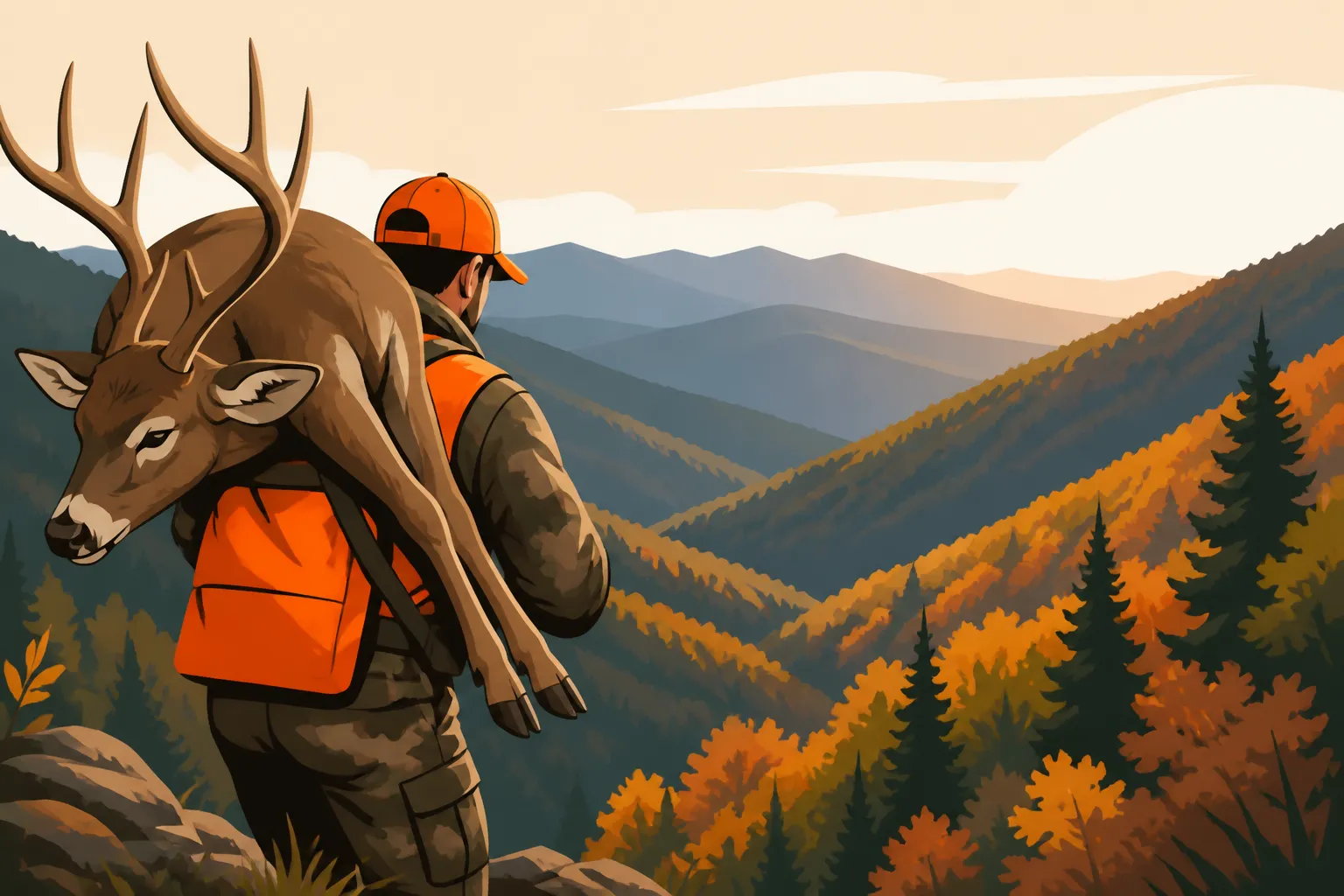
Recovering a Deer From a Mountain Hollow
That moment when you make a great shot, see your deer stumble, or hear that satisfying crash, only for the euphoria to be quickly replaced by the sinking feeling that it's just plunged into a deep, unforgiving mountain hollow. It's a common, incredibly frustrating scenario for Virginia hunters, especially in the rugged terrain of the Blue Ridge and Allegheny mountains. Getting a deer out of such a spot safely and efficiently can feel like an impossible task, but this guide is here to walk you through the practical steps and considerations for a successful recovery, even from the steepest, most remote hollows.
Assessing the Situation Before You Descend
Before you even think about scrambling down into that abyss, a calm, thorough assessment is absolutely crucial. Rushing in can lead to injury, loss of the animal, or even getting lost yourself. Virginia's mountain hollows are notorious for being steeper and more treacherous than they appear from above, often filled with jagged rocks, downed timber, and dense rhododendron thickets.
Pinpointing the Last Known Location
The very first thing you need to do, before anything else, is mark the precise spot where you last saw the deer or heard it crash. Don't rely on memory alone, especially in thick woods where every tree looks the same. Use your GPS device, your phone's mapping app (like GoHunt, which is excellent for marking waypoints), or even bright flagging tape if you have it. This waypoint is your anchor point, a reference for where the search should begin. Without it, you're essentially looking for a needle in a haystack. Many hunters make the mistake of assuming they know exactly where it went, only to find themselves completely disoriented once they actually enter the steep, broken terrain. Taking a few extra minutes here can save hours of frustration later.
Evaluating the Terrain and Potential Hazards
Once you've marked your starting point, take a few minutes to look down into the hollow from your vantage point. What do you see? Are there sheer drops, rock faces, or unstable scree slopes? Is there a creek or a stream at the bottom that might complicate retrieval? How dense is the undergrowth? This initial visual assessment, perhaps with the aid of a good pair of binoculars, can inform your approach. Pay attention to the angle of the slope; sometimes what looks like a manageable grade from above becomes a near-vertical wall when you're on it. You're trying to identify the safest path down and anticipate any obstacles. Remember, these hollows can become extremely slick after rain, and even dry leaves can create a deceptively slippery surface on a steep incline. For those hunting in areas like the George Washington National Forest, familiarizing yourself with Wind and Thermals on a Blue Ridge Slope can sometimes even help predict where a deer might try to bed down or travel, offering clues to its final resting place.
Assembling Your Recovery Team and Gear
Attempting a mountain hollow recovery solo is generally ill-advised. It's physically demanding, risky, and significantly increases your chances of getting hurt or losing the deer. A successful recovery often hinges on having the right help and the right tools.
Calling for Reinforcements
Always try to get at least one, ideally two, other people to help you. A team not only makes the physical task of dragging much easier but also provides an invaluable safety net. If someone gets hurt, or if the deer is in a truly awful spot, having extra hands and eyes is critical. Communicate clearly with your team about the situation, the terrain, and what you expect the challenges to be. This is not the time for heroics; it's the time for teamwork. If you're on public land, like many hunters are in Virginia, be mindful that other hunters might be around, especially during peak times like the general firearms season. You might even stumble upon someone else's carefully chosen Treestand Setups in George Washington National Forest, so maintain awareness.
Essential Gear for the Task
Your regular hunting pack might not cut it for this kind of recovery. You'll need some specialized items to make the job safer and more efficient:
- Ropes: At least 50-100 feet of sturdy rope (static rope is best, but a good quality dynamic climbing rope works too). This is for lowering the deer or even yourself, or for creating a basic pulley system.
- Gloves: Heavy-duty work gloves are a must to protect your hands from sharp rocks, briars, and potential bone fragments.
- Headlamps/Flashlights: Even if it's daylight, the bottom of a deep hollow can be surprisingly dark, and recovery often takes longer than expected, pushing you into dusk or even night. Strong, reliable headlamps are non-negotiable, especially if you anticipate Blood Trailing After Dark in Virginia.
- First-Aid Kit: A well-stocked First Aid Kits for Remote Mountain Ground is essential. Scrapes, cuts, sprains, and even worse injuries are a real possibility in this terrain.
- Water and Snacks: This is going to be strenuous work. Stay hydrated and keep your energy up.
- Mapping Device/GPS: Even if you marked the spot, having a reliable navigation tool with topo maps (like the ones available through GoHunt) is vital for navigating the hollow itself and finding the easiest path out. Consider downloading offline maps, as cell service can be spotty or nonexistent in deep hollows across Virginia. See Using Go Outdoors Virginia Without Cell Service for tips on preparing your devices.
- Sharp Knives: For field dressing, if that's your plan.
- Game Bags: If you decide to quarter the animal.
- Deer Drag/Sled: While not always practical in the steepest part of a hollow, a good deer sled can be invaluable once you get the animal to a more manageable slope or flat ground. They help immensely with Dragging a Deer Out of a Mountain Hollow once you are clear of the worst terrain.
- Proper Footwear: Sturdy, waterproof boots with excellent ankle support and aggressive tread are non-negotiable. Trying to navigate steep, uneven terrain in flimsy boots is an invitation to injury. If you've ever had to hike out of a hollow with a sprained ankle, you know the value of good boots. Consider options specifically designed for Boots for Walking Virginia Ridges.
The Recovery Process: From Finding to Field Dressing
With your plan in place and your team and gear ready, it's time to actually get down to the deer. This phase requires patience, caution, and clear communication.
The Careful Descent and Grid Search
Descend slowly and deliberately. Maintain three points of contact whenever possible (two feet and one hand, or two hands and one foot). Test your footing before committing your weight. If the slope is exceptionally steep or unstable, one person can use a rope to brace or belay another. Once you reach the general area of your marked waypoint, begin a systematic grid search. Don't just wander aimlessly. Have your team spread out in a line, maintaining visual contact, and slowly work your way through the expected impact zone. Look for blood, disturbed leaves, broken branches, or the deer itself. The goal is to maximize your chances of finding the deer quickly and efficiently, minimizing the time it spends lying there, especially if it's not cold out. Hunters know the tell-tale signs, and often Finding Sign in Big Jefferson Forest Timber involves more than just blood; it's about subtle changes in the environment.
Field Dressing in Challenging Conditions
Once you locate the deer, you have a decision to make: field dress it on the spot or try to move it whole.
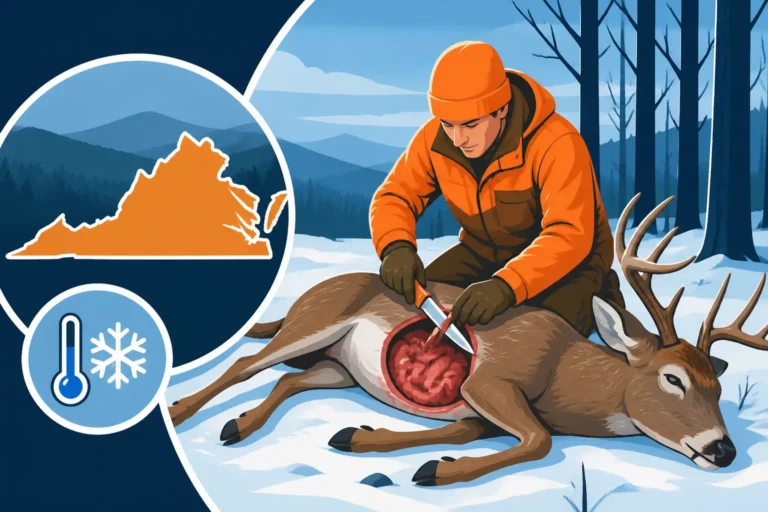
- Field Dressing on the Spot (Gutting): This is often the most practical choice in a deep hollow. Removing the viscera significantly reduces the animal's weight, making it much easier to drag or move. It also helps cool the meat, which is critical in Virginia's early archery season or during a warm spell in October or November. If the deer is in an awkward position, you might have to roll it carefully to complete the gutting process. Be extra cautious with your knife work in cramped, unstable conditions.
- The Gutless Method (Quartering): For truly extreme terrain or very large deer (like a mature Virginia buck), the gutless method can be a game-changer. This involves skinning the deer and removing the quarters, backstraps, and tenderloins without opening the body cavity. Each piece is then placed in a game bag and packed out individually. While it requires more time and skill on site, carrying out several lighter loads is often far easier and safer than dragging one heavy carcass up a mountain. This method is especially popular with backcountry hunters and is an excellent skill to learn for challenging recoveries. GoHunt's guides often recommend specialized game bags for this purpose to keep the meat clean and protected.
Remember that even if it's cold, getting the deer cooled down quickly is paramount. For general advice on preserving your harvest, our guide on Field Dressing a Deer in Cold Weather offers useful insights.
Extraction Strategies: Getting Your Prize Out
Now for the real grunt work: getting the deer out of the hollow and back to your vehicle. This is where teamwork, planning, and sometimes a little ingenuity come into play.
Dragging: Solo vs. Team Effort
If the slope isn't too extreme, and you've field-dressed the deer, dragging it might be feasible.
- Solo Drag: A solo drag is incredibly tough, even on flat ground. In a hollow, it's almost impossible uphill. If you absolutely have to do it alone, use a drag harness that goes around your chest and shoulders, not just your arms. This engages your core and legs, which are much stronger. Look for the path of least resistance, even if it adds some distance. Zigzagging up a slope is always easier than a straight pull.
- Team Drag: With two or more people, a team drag becomes much more manageable. One person can pull from the front using a drag rope, while others push or pull from the sides and rear, helping to guide the deer over obstacles. Communication is key: "Lift on the left!" or "Watch that rock!" Take frequent breaks, especially on steep ascents.
Using Ropes and Pulleys
For very steep sections, ropes are your best friend.
- Lowering: If the deer is high up on a steep slope, and there's a more accessible path below, you might be able to tie a rope to the deer's antlers or neck and carefully lower it down to a flatter section. This requires at least two people: one to guide the rope, another to control the descent.
- Hauling/Pulley Systems: To bring a deer up a steep incline, a simple 2:1 or 3:1 pulley system can multiply your pulling power. This involves using the rope, a carabiner, and a sturdy tree as an anchor point. Attach one end of the rope to the deer, run it through a carabiner attached to a tree higher up, and then back down to your pulling team. Each time the rope changes direction, you add mechanical advantage. This can make an otherwise impossible pull manageable. Ensure your anchor points are strong and secure.
Employing Game Carts and Sleds (Once You're Clear)
While you likely won't be pushing a game cart through the bottom of a steep, rocky hollow, they are invaluable once you reach more forgiving terrain. If you can get the deer to a logging road, an old jeep trail, or even a relatively flat section of woods, a sturdy game cart can drastically reduce the effort of the final haul back to your vehicle. Deer sleds, which are essentially heavy-duty plastic tarps with handles, are also excellent for pulling a deer over snow, mud, or through brush once you're on more stable ground. They lift the deer above debris and reduce friction.
Safety, Logistics, and Ethical Considerations
Beyond the physical challenge of recovery, there are important safety and logistical points to keep in mind, as well as your ethical responsibilities as a hunter.
Communication and Emergency Preparedness
Mountain hollows often mean no cell service. Before heading into such areas, especially if you're on public land like parts of the Jefferson National Forest, ensure your team has a communication plan. This might involve two-way radios, or simply agreeing on a designated check-in time and location. Always inform someone not with you about your hunting location and expected return time. In case of an emergency, a personal locator beacon (PLB) or satellite messenger (like a Garmin InReach) can be a lifesaver, allowing you to call for help even without cell service. Virginia's wilderness can be unforgiving, and injuries can quickly become critical without timely assistance.
Respecting Property Lines and Reporting
In the heat of the moment, it's easy to lose track of boundaries. Before you head down, consult your mapping app (GoHunt's property line layers are excellent for this) to confirm you're on legal hunting ground and won't be trespassing. If the deer crosses onto private land, you must gain permission from the landowner before attempting retrieval. Ignoring this could lead to serious legal trouble under Virginia law. Our guide on Retrieving Game From Private Land in Virginia provides detailed information on this often tricky aspect of hunting.
Once your deer is out and safely transported, remember your legal obligation to report the harvest to the Virginia Department of Wildlife Resources (DWR). This can be done via the DWR website or the Go Outdoors Virginia mobile app. Our article on Reporting a Deer Through Virginia's App walks you through the steps. This data is vital for wildlife management in the Commonwealth.
Environmental Responsibility
As hunters, we are stewards of the land. When you're in a hollow, try to minimize your impact. Pack out all your trash, including flagging tape, food wrappers, and any field dressing remnants that might attract scavengers near public access points. Leave the area as clean, or cleaner, than you found it.
Table of Recovery Tools and Their Best Use
| Tool/Method | Best Use Case | Pros | Cons |
|---|---|---|---|
| GPS/Mapping App | Pinpointing deer, navigation, property lines | Essential for orientation, accurate marking | Battery life, signal loss in deep hollows |
| Rope (50-100ft) | Lowering deer, creating pulley systems, emergency use | Versatile, multiplies pulling power, essential for steep terrain | Requires training to use safely, can be cumbersome |
| Field Dressing | Reducing weight for easier dragging | Significantly lightens load, cools meat faster | Messy, can be difficult in awkward positions |
| Gutless Method | Extreme terrain, large deer, solo extraction | Maximum weight reduction, allows carrying out in pieces | Time-consuming, requires skill, more trips for pieces |
| Deer Sled/Drag | Hauling over snow, mud, or less steep ground | Reduces friction, protects meat from debris | Not suitable for very steep, rocky hollows |
| Game Cart | Transport on logging roads, flat trails | Reduces effort for long hauls on accessible terrain | Impractical in steep, thick, or rocky hollows |
| Team of Hunters | Any recovery, especially in challenging terrain | Increases safety, multiplies physical strength, shared effort | Requires coordination, multiple schedules |
| Headlamp | Dusk/night recovery, dark hollows | Essential for visibility and safety | Battery life, can attract bugs |
Recovering a deer from a mountain hollow is undoubtedly one of the most physically demanding and mentally challenging aspects of hunting in Virginia. It tests your resolve, your physical limits, and your planning skills. But with careful preparation, the right gear, a good team, and a commitment to safety, you can successfully retrieve your hard-earned prize and bring that venison home, no matter how deep the hollow.
Disclaimer
The information provided in this guide is for general educational purposes only and is not a substitute for professional advice, local regulations, or hands-on experience. Always prioritize safety, adhere to all Virginia Department of Wildlife Resources (DWR) regulations, and obtain appropriate licenses and permissions before hunting or retrieving game. Terrain, weather, and individual circumstances can vary greatly, and hunters are responsible for their own safety and actions.