Sabot Versus Conical for Deer
Navigating the world of muzzleloader projectiles for deer hunting can feel a bit like stepping back in time, yet with modern twists that can make your head spin. Many Virginia hunters, especially those new to muzzleloading or looking to optimize their setup, grapple with the age-old question: sabot or conical? It's a choice that impacts everything from accuracy and range to how your bullet performs on game, and this guide is here to cut through the confusion and help you make an informed decision for your next hunt.
Understanding Muzzleloader Projectiles
Before we dive into the nitty-gritty of which is "better," let's truly understand what we're talking about with sabots and conicals. These aren't just fancy terms; they represent fundamentally different approaches to projectile design for muzzleloaders, each with its own strengths and weaknesses that can significantly impact your hunting experience in Virginia's diverse landscapes.
What Exactly is a Conical Bullet?
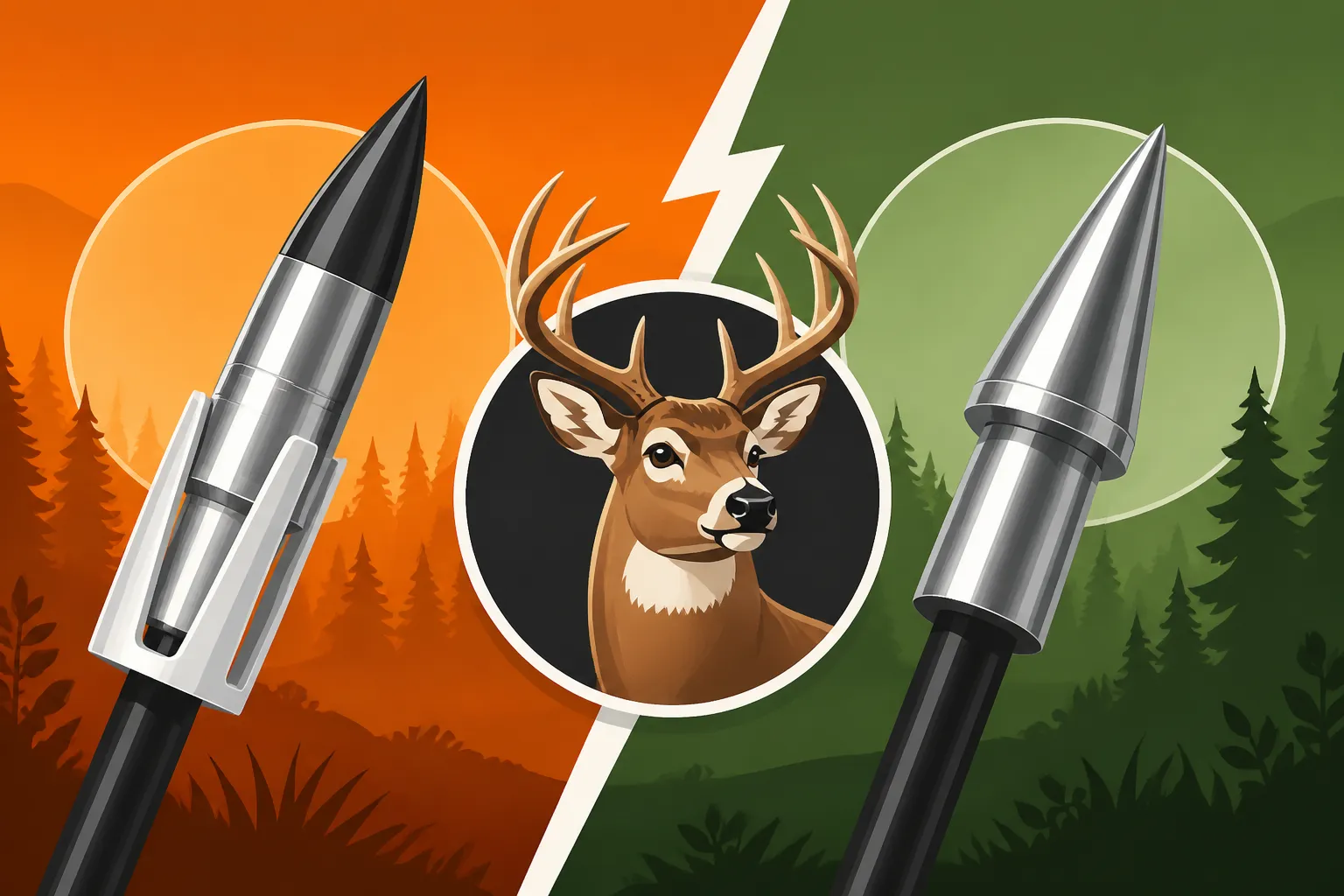
Think about the earliest muzzleloaders, those old flintlocks and percussion rifles that our ancestors used to put meat on the table. They fired solid lead projectiles, often round balls, but eventually, hunters and gunsmiths developed conical bullets. A conical bullet is essentially a solid, elongated piece of lead that loads directly down the bore, often requiring a patched or lubed base to create a tight seal. They're typically heavier than the actual bullet part of a sabot setup, making them excellent at retaining energy at closer ranges.
Historically, conicals were the workhorses of muzzleloading. They rely on their sheer mass and a relatively wide meplat (the flat nose of the bullet) to transfer energy and create a wound channel. In the dense timber of the Jefferson National Forest Hunting or the thick cover found in many parts of Hunting the Virginia Piedmont, where shots are often measured in dozens of yards rather than hundreds, a heavy conical can smash through brush and deliver a devastating blow to a whitetail. They tend to have a slower velocity compared to sabots, and their ballistic trajectory isn't as flat, meaning they drop more significantly over longer distances. However, for a hunter embracing the traditional aspect of muzzleloading, or one who anticipates close-range encounters, the simplicity and raw power of a conical bullet remain incredibly appealing.
The Modern Sabot Explained
Now, let's fast-forward to the more modern era of muzzleloading, largely driven by the popularity of inline muzzleloaders. This is where the sabot comes into play, and it's a game-changer for many. A sabot (pronounced "SAY-bow" or "SA-boh," derived from the French word for "shoe") isn't the bullet itself, but rather a plastic sleeve or cup that encases a smaller, typically jacketed, bullet. This bullet is often the same type you'd find in a modern centerfire rifle, like a .45-caliber bullet inside a .50-caliber sabot. The plastic sabot does two crucial jobs: it creates a tight gas seal in the larger muzzleloader bore, allowing the smaller bullet to be propelled at much higher velocities, and it protects the bullet's rifling from the slower twist rates of some muzzleloaders. Once the projectile leaves the muzzle, the sabot peels away, sending the smaller, more aerodynamically efficient bullet downrange.
Sabots allow for significantly higher velocities and flatter trajectories than conicals. This means they're capable of much greater accuracy at extended ranges, making them a favorite for hunters who might find themselves with longer shots across open fields in parts of Hunting the Shenandoah Valley or on clear-cuts. The bullets themselves are designed for controlled expansion, much like modern rifle bullets, often leading to excellent terminal performance on deer. For hunters seeking to maximize their effective range and leverage the performance of modern inline muzzleloaders, sabots are usually the top recommendation. However, they can be a bit trickier to load in some rifles, often requiring more force than a conical, and their performance can sometimes be more sensitive to barrel fouling.
Performance in the Field: Virginia Specifics
When you're out in the Virginia woods, whether it's chasing a mature buck through the Blue Ridge or sitting over a field edge in the Piedmont, the theoretical differences between sabots and conicals translate directly into real-world performance. Understanding these nuances can mean the difference between a clean harvest and a challenging tracking job.
Terminal Performance on Virginia Whitetails
The way a bullet performs after it hits a deer is paramount, and both conicals and sabots have distinct characteristics. Conical bullets, being heavy and typically made of soft lead, deliver a massive punch. They penetrate deeply, creating a substantial wound channel through crushing tissue. Because they are often pure lead, they can deform significantly upon impact, sometimes even fragmenting, which can be effective at closer ranges. The sheer momentum of a heavy conical often leads to excellent pass-through potential, leaving a good blood trail. For the robust Virginia whitetails, especially those thicker-bodied bucks, a heavy conical can be a real equalizer in dense cover.
Sabots, on the other hand, usually carry jacketed bullets designed for controlled expansion, much like their centerfire counterparts. This means they expand to a larger diameter, creating a wider wound channel, while still retaining a good portion of their weight for penetration. The higher velocity of a sabot-fired bullet can also contribute to hydrostatic shock, potentially causing more immediate incapacitation. For a shot through the ribs on a broadside deer, a well-placed sabot bullet will often perform exceptionally, creating both a wide wound channel and an exit wound for a robust blood trail. However, if a sabot hits heavy bone, like a shoulder blade, some of the lighter, faster bullets might fragment more, potentially reducing penetration compared to a solid conical. It truly boils down to balancing kinetic energy with controlled expansion.
Accuracy and Range Limitations in Virginia's Diverse Terrain
Virginia's hunting landscape is incredibly varied. You might be hunting a tight, timbered hollow in the western mountains one day, and a sprawling soybean field in eastern Virginia the next. This diversity plays a huge role in your projectile choice.
Sabots typically offer superior accuracy and flatter trajectories, making them the preferred choice if your hunting scenarios involve shots beyond, say, 75-100 yards. Modern inline muzzleloaders with faster twist rates (often 1:28" or 1:32") are engineered to stabilize these smaller, faster projectiles, allowing for impressive groupings at 150-200 yards, or even a bit more in capable hands. If you’re carefully Scouting Virginia Public Land Before Season and identify open areas, power lines, or vast agricultural fields, a sabot can certainly extend your ethical shot distance. You can use tools like GoHunt to visualize terrain and potential shooting lanes. However, even with sabots, remember that Muzzleloader Deer Hunting in Virginia has its own unique challenges, and practice at these extended distances is non-negotiable.
Conical bullets, due to their lower ballistic coefficient and slower velocities, have a more arcing trajectory. Their effective accurate range is generally shorter, often topping out around 100-125 yards for most setups. Beyond that, the drop becomes significant, and wind can have a greater impact. That said, within their effective range, a good conical can be incredibly accurate, especially in muzzleloaders with slower twist rates (like 1:48" or 1:66") designed for them. For hunters working through thick hardwood forests, still-hunting creek bottoms, or in areas where a 50-yard shot is the norm, such as when Still-Hunting Jefferson Forest Ridges, a conical can be absolutely lethal and completely sufficient. Don't underestimate the power of a heavy lead slug at close quarters. The key is to match your projectile choice to the realistic shot distances you'll encounter in your specific hunting area.
Loading and Handling Considerations
Beyond the ballistics and terminal performance, the practical aspects of loading and maintaining your muzzleloader also factor heavily into the sabot versus conical debate. A bullet that's a struggle to load, or causes excessive fouling, can diminish your enjoyment and confidence in the field.
Ease of Loading and Barrel Fouling
One of the most immediate differences you'll notice between sabots and conicals is during the loading process. Sabots, by design, are meant to create a very tight seal in the bore to ensure maximum pressure buildup and consistent velocity. This often means they require considerable force to seat properly down the barrel. It's not uncommon to really lean into your ramrod to get a sabot bullet started and pushed all the way down, especially after a few shots have built up some fouling in the barrel. This tightness can be a good thing for consistency, but it can be physically demanding, especially if you're trying to reload quickly in the field during a follow-up shot situation.
Conical bullets, particularly those that are slightly undersized and used with a lubed patch, often load much more easily. The patch takes up the slack, and the lead itself is softer, allowing it to conform to the rifling more readily. While a tight fit is still important for accuracy and a good gas seal, many hunters find conicals less strenuous to load. In terms of barrel fouling, the plastic sleeve of a sabot can sometimes leave plastic residue in the rifling, which can accumulate and eventually degrade accuracy. Conicals, being lead, leave lead and powder residue. Both require diligent cleaning, but the nature of the fouling can differ. For consistent accuracy with either, especially in a long hunting session or at the range, bringing along some cleaning patches and a bore solvent for a quick swab between shots (or every few shots) is a smart practice. It's important to know how to effectively clean your barrel, especially when considering Keeping Powder Dry in Wet Weather and the associated residue.
Muzzleloader Twist Rates and Projectile Compatibility
This is perhaps one of the most critical, yet often overlooked, aspects of choosing between a sabot and a conical: your muzzleloader's twist rate. The twist rate refers to how many inches of barrel it takes for the rifling to complete one full rotation (e.g., 1:28" means the rifling makes one full turn in 28 inches). This rate dictates what type of projectile your rifle is designed to stabilize for optimal accuracy.
| Twist Rate | Projectile Preference | Best For | Typical Muzzleloader Type |
|---|---|---|---|
| 1:28" | Sabots (lighter, faster) | Longer range, flatter trajectory | Modern inline |
| 1:32" | Sabots (mid-weight) | Versatile, good for most sabots | Modern inline |
| 1:48" | Both (often conicals or lighter sabots) | Good compromise, often older inlines | Older inline, some traditional |
| 1:66" | Conicals (heavier, slower) | Close range, traditional accuracy | Traditional side-lock |
Generally, modern inline muzzleloaders, which are quite popular for Muzzleloader Deer Hunting in Virginia, tend to have faster twist rates like 1:28" or 1:32". These faster twists are ideal for stabilizing the shorter, lighter, and faster jacketed bullets that are encased in sabots. If you try to shoot a heavy, long conical bullet out of a fast-twist barrel, it might over-stabilize, leading to reduced accuracy. Conversely, older, more traditional muzzleloaders, or some that seek to bridge the gap, might have slower twist rates like 1:48" or even 1:66". These slower twists are perfect for stabilizing heavier, longer conical bullets, but they will struggle to accurately shoot the shorter, faster bullets found in sabots. The sabot itself doesn't offer enough surface area for the rifling to properly engage, and the bullet inside is usually too short to be stabilized by the slower twist.
It is absolutely crucial to check your specific muzzleloader's twist rate. This information is often stamped on the barrel or can be found in your rifle's owner's manual. Shooting the wrong projectile for your twist rate will lead to poor accuracy and frustration, no matter how much you practice.
Making the Right Choice for Your Virginia Hunt
Ultimately, the best projectile for your Virginia deer hunt isn't about one being inherently "superior" to the other in all situations. It's about aligning your gear with your specific hunting style, the terrain you'll encounter, and the capabilities of your muzzleloader.
Assessing Your Hunting Style and Location
Before you even step foot in a sporting goods store, take a moment to honestly evaluate your hunting habits and the places you typically pursue deer in Virginia. Are you the type of hunter who meticulously scouts a small woodlot, anticipating a shot at 40 yards as a deer slips through a thicket? If so, the deep penetration and raw stopping power of a heavy conical might be your perfect match. Its robust nature is well-suited for the close-quarters, brush-busting potential of dense cover found in many Virginia Wildlife Management Areas or private woodlots.
Alternatively, do you prefer to hunt from a static stand overlooking a sprawling field, or position yourself on a high ridge where longer shots of 100+ yards are possible? In these scenarios, especially common when hunting wider agricultural areas or mountainous clearings, the flatter trajectory and enhanced accuracy of a sabot-loaded projectile will give you a distinct advantage. Consider areas like some of the larger public land tracts or private farm country where fields and power line cuts offer longer visibility.
Your specific muzzleloader also plays a significant role. Is it an older, more traditional model with a slower twist rate, or a modern inline designed for performance? As discussed, matching the projectile to your rifle's twist rate is non-negotiable for accuracy.
The Importance of Practice and Testing
Regardless of whether you lean towards sabots or conicals, the single most important factor in your success will be practice. You can have the most expensive, technologically advanced setup, but if you haven't put in the time at the range, it's all for naught. Every muzzleloader is a law unto itself; what shoots great in one rifle might be wildly inaccurate in another, even if they're the same make and model.
Start by trying a few different brands and weights of both sabots and conicals that are compatible with your rifle's twist rate. Take careful notes on group sizes, point of impact, and ease of loading. Don't be surprised if your rifle shows a clear preference for one type or another. Consistency in loading — using the same amount of powder, the same seating pressure, and swabbing the barrel regularly — is key to achieving tight groups. Make sure you practice at realistic hunting distances for your chosen terrain. If you anticipate a 100-yard shot, you should be comfortably grouping shots at that distance and beyond.
Remember, the goal isn't just to hit the target, but to consistently place your shot in the vital zone. Knowing your muzzleloader, understanding its capabilities with your chosen projectile, and being proficient with it will build confidence that translates directly to ethical and successful hunting. Tools like GoHunt can help you scout and understand the topography, but only time at the range will make you truly ready for Hunting the Virginia Rut in November or any other part of the Virginia Deer Season Structure Explained.
Disclaimer
This article is for general informational purposes only and does not constitute professional advice. Laws, prices and regulations vary by location and change over time. Consult a qualified professional for guidance on your specific situation.