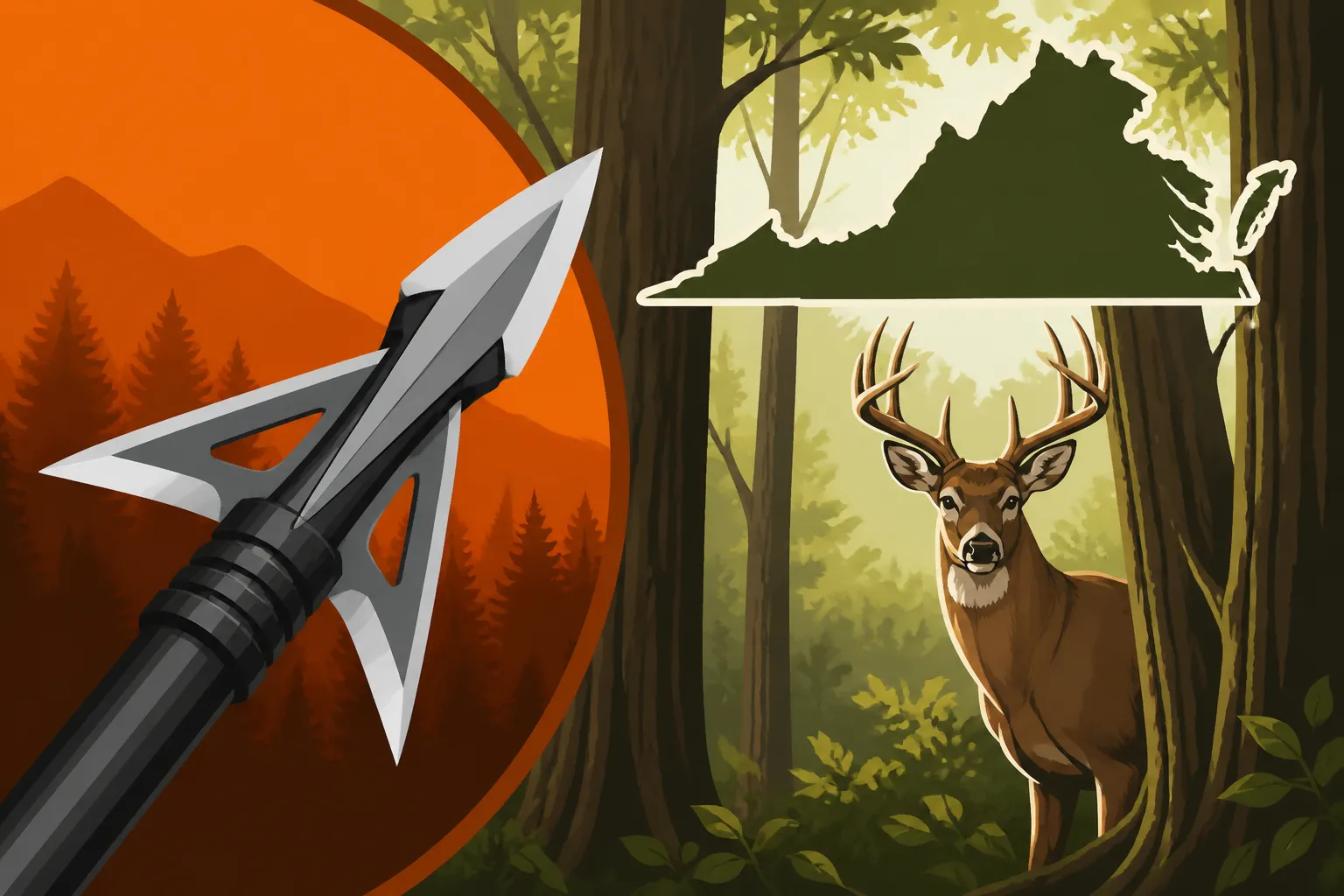
Broadheads for Timber Shots
Hunting in Virginia's dense timber and thick cover presents unique challenges, especially when it comes to arrow flight and broadhead performance. Many bowhunters struggle with inconsistent shots or poor penetration when their arrow clips a branch or encounters heavy bone, leading to frustrating outcomes and lost game. This guide will walk you through everything you need to know about selecting, tuning, and effectively using broadheads specifically designed to excel in these demanding timber shot scenarios.
Understanding the Challenges of Timber Shots in Virginia
Virginia's diverse landscape offers incredible hunting opportunities, from the sprawling hardwoods of the Blue Ridge to the thick bottomlands of the Piedmont and the dense swamps of the Tidewater. Each of these environments, however, often means hunting in heavy cover, where a clear, unobstructed shot at a deer or bear can be a rare luxury. It's not like hunting wide-open plains; here, every little twig can alter your shot, and understanding this reality is the first step to choosing the right gear.
Dense Cover and Limited Shot Windows
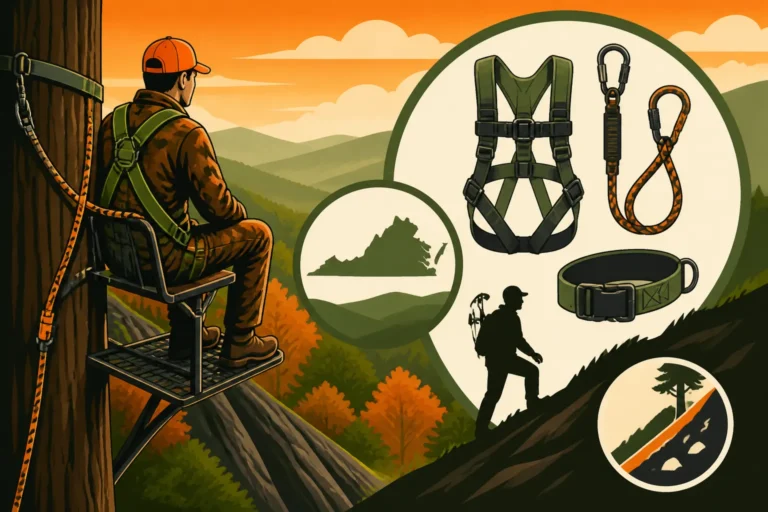
Picture yourself perched in a Treestand Setups in George Washington National Forest, sunlight dappling through the canopy, and a mature buck steps out, silently weaving through a thick stand of saplings at 25 yards. Your shot window might be no bigger than a dinner plate, framed by branches and vines. The anxiety of taking that shot, knowing that even a slight deflection could mean a wounded animal, is a common experience for Virginia bowhunters. The sheer volume of vegetation, from multiflora rose thickets in the Piedmont to mountain laurel in the high country, means your arrow's path must be as straight and unforgiving as possible. You need a broadhead that maintains its integrity and flight path, even if it glances off an unseen obstruction.
This isn't just about deer; Virginia's Black Bear Population has grown substantially, and encountering one in tight timber demands the same, if not more, consideration for shot integrity. A bear's heavy bone structure and thick hide amplify the need for a broadhead that can drive deep without compromise. Limited shot windows also mean you often can't afford to wait for that "perfect" broadside shot in a clearing. You might have a quartering-away or quartering-to angle, necessitating excellent penetration to reach vital organs. Your broadhead choice needs to give you the confidence to capitalize on these fleeting opportunities, knowing it will perform as intended.
The Impact of Branches and Obstructions
We've all been there: you make what feels like a perfect shot, only to find your arrow barely nicked the deer, or worse, completely missed. Later, you find a small twig with a fresh cut mark. Even a tiny branch can significantly alter an arrow's trajectory, especially with certain broadhead designs. Mechanical broadheads, with their deployable blades, can sometimes open prematurely upon contact with a branch, leading to erratic flight and drastically reduced penetration. Fixed blades, while generally more forgiving, can still be affected, but their robust construction tends to maintain a more stable flight path through minor obstructions.
Think about the sound, too. A broadhead that snags or catches on a branch can create noise that spooks the animal mid-flight. The goal is a silent, lethal delivery. Furthermore, if your broadhead's ferrule (the body of the broadhead) isn't strong enough, a branch strike could bend or break it, rendering the broadhead useless for penetration if it does manage to reach the animal. This is why durability, not just sharpness, is paramount. Hunting a Funnel Between Two Hollows can be incredibly effective, but these natural travel corridors are often choked with brush, making broadhead resilience a top priority.
Anatomy of a Virginia Deer and Bear
Understanding the anatomy of the game you pursue in Virginia is crucial for broadhead selection. White-tailed deer, while not massive animals, possess surprisingly tough hides and bone structure. A shoulder blade hit, even a glancing one, can stop a poorly constructed broadhead dead in its tracks. You're aiming for the lungs and heart, which are protected by ribs. A broadhead needs to be able to shear through ribs with minimal energy loss.
For Virginia's Black Bear Population, the challenge is even greater. Bears have incredibly dense muscle and thick fat layers, especially as they bulk up for winter. Their bone structure is heavier and more robust than a deer's. A broadhead for bear hunting in Virginia's mountains must be designed for maximum penetration, retaining its integrity through hide, fat, muscle, and bone. Without that deep penetration, you risk a superficial wound and a long, difficult, if not impossible, tracking job. It’s not just about cutting a big hole; it's about pushing that cutting surface as far as possible into the vitals.
Fixed-Blade Broadheads: The Timber Workhorses
When I think about hunting the thick hardwoods of Virginia, particularly during Bowhunting Virginia's Statewide Archery Season, my mind almost immediately goes to fixed-blade broadheads. They've been around forever for a reason, and in heavy cover, their reliability is tough to beat. They might not always advertise the massive cutting diameters of some mechanicals, but what they lack in flashy numbers, they make up for in sheer, unadulterated toughness and dependable performance.
Why Fixed Blades Excel in Tough Conditions
The primary advantage of fixed-blade broadheads in timber is their unwavering stability and structural integrity. Since the blades are rigidly attached to the ferrule, they are far less prone to deflection or premature deployment when encountering obstacles like twigs, small branches, or even denser brush. Imagine your arrow flying through a tight gap, and a tiny sapling catches a blade. A fixed blade will often power through, or at least maintain a more predictable flight path, whereas a mechanical might open, creating drag and sending your arrow wildly off course. This is critical for maintaining accuracy when your shot isn't perfectly clear.
Furthermore, fixed blades are generally built with strength and durability in mind. The forces encountered upon impact with bone are immense, and a fixed blade's solid construction is designed to withstand these stresses without breaking or bending. This translates to superior penetration, especially on quartering shots or when hitting heavy bone. When you're trying to Fill a Five-Deer Western Limit or even just get your first deer of the season, knowing your broadhead will perform predictably, regardless of what it hits, provides a huge confidence boost. This inherent strength makes them the go-to choice for many seasoned hunters navigating Virginia's challenging terrain.
Key Features to Look For in Fixed Blades
Not all fixed blades are created equal, and discerning hunters should look for specific characteristics when gearing up for timber shots. First and foremost, consider the number of blades. Two-blade broadheads, known for their exceptional penetration, are often favored for very thick-skinned or heavily boned animals, or simply for maximizing pass-throughs. They offer less surface area, reducing friction, and can drive deeper. Three- and four-blade designs offer a larger cutting diameter and more wound channels but may sacrifice a tiny bit of penetration compared to a two-blade. It's a trade-off many are willing to make for the increased hemorrhage.
Next, look at the ferrule material and design. A strong, non-vented ferrule (the body of the broadhead) made from high-grade aluminum or steel is preferable. Venting can sometimes weaken the ferrule, making it more susceptible to bending or breaking on hard impacts. The blades themselves should be thick, razor-sharp, and securely anchored to the ferrule. Many top brands like QAD Exodus, GrizzlyStik, and Iron Will are known for their robust designs, often featuring stout blades and solid ferrules. Finally, ensure the broadhead is easy to sharpen. Maintaining a keen edge is critical for maximum cutting ability. A quick check with GoHunt reviews or user forums can often give you insights into the real-world durability of different models.
Single Bevel vs. Double Bevel Designs
The world of fixed-blade broadheads offers a fascinating distinction between single bevel and double bevel designs, each with its own fan base and unique advantages for timber shots. Most broadheads you encounter are double bevel, meaning both sides of the blade are ground to create the cutting edge, much like a traditional knife blade. These are incredibly effective, create excellent wound channels, and are generally easy to resharpen. They push through tissue and bone, cutting as they go.
Single bevel broadheads, on the other hand, are ground on only one side of the blade, creating a chisel-like edge that twists upon impact. This twisting motion is believed to enhance penetration by spiraling through tissue and bone, causing more internal damage and a larger wound channel than their cut might suggest. For example, if you hit a deer's shoulder blade, a single bevel broadhead is designed to torque and split the bone rather than just push through it, potentially leading to deeper penetration. This can be a huge advantage when aiming for vital organs that might be obscured or protected by heavy bone, especially on quartering shots where the arrow needs to drive through a lot of material. The choice often comes down to personal preference and what gives you the most confidence, but for ultimate bone-splitting penetration in tough timber, many traditional archers swear by single bevels.
Mechanical Broadheads and Their Place (or Lack Thereof) in Timber
Mechanical broadheads burst onto the scene promising massive cutting diameters and field-point accuracy, and for many open-country hunters, they deliver. However, when we talk about hunting the thick, gnarly timber of Virginia, their role becomes a lot more nuanced, often fraught with potential pitfalls. It's not to say they're entirely useless, but understanding their limitations is key to making an ethical and effective broadhead choice.
The Risks of Deploying Mechanicals in Thick Cover
The biggest concern with mechanical broadheads in dense Virginia cover is the risk of premature deployment or deflection. Most mechanicals are designed with spring-loaded or slip-cam blades that deploy upon impact with the animal. But what happens if your arrow nicks a small branch, a vine, or even heavy grass before reaching your target? Those blades can spring open prematurely. When this occurs, the broadhead suddenly presents a much larger surface area to the air, creating massive drag and dramatically altering the arrow's flight path. A shot that was perfectly aimed might now be pushed wildly off course, resulting in a clean miss or, worse, a wounding shot that leaves you with a difficult Blood Trailing After Dark in Virginia.
Even if the blades don't fully deploy, any contact with an obstruction can bend or damage the delicate components of some mechanical designs. If the ferrule or blades are compromised before impact with the animal, the broadhead's ability to penetrate effectively is severely reduced. You've sacrificed the reliability of a fixed blade for a potential cutting diameter that never even gets to be utilized. This uncertainty is why many experienced timber hunters shy away from mechanicals, preferring the consistent, unyielding performance of a fixed blade, especially when chasing big game like Virginia's Black Bear Population where maximum penetration is non-negotiable.
When (and Where) Mechanicals Might Still Be Considered
Despite the risks, there are specific, limited scenarios where a mechanical broadhead might still be considered in Virginia, though with significant caveats. If you're hunting from a tower blind or a very elevated stand overlooking a well-maintained food plot or open field, where you have 100% confidence in an unobstructed shot, a mechanical broadhead can offer its advertised benefits of a large cutting diameter and potentially quicker kills through massive hemorrhage. These are typically not "timber shot" scenarios in the traditional sense, but more open-field engagements.
Another consideration might be for hunters with lower Bow Draw Weight for Virginia Whitetails or those using crossbows with high kinetic energy. Some mechanicals are designed to require less energy to deploy and pass through an animal, potentially maximizing the cutting diameter on a good hit. However, even in these cases, the risk of deflection in timber remains. For a hunter focused on optimal penetration and minimal risk in challenging environments, especially on public land where you can't control the shooting lanes as much, fixed blades are almost always the safer bet. When preparing for your Virginia Statewide Archery Opening Day, it's vital to critically assess your hunting area and typical shot opportunities before settling on a broadhead type.
Hybrid Designs: A Compromise?
Recognizing the drawbacks of traditional mechanicals in tough conditions, some manufacturers have developed "hybrid" broadhead designs. These often feature a small, fixed cutting blade or a chisel tip combined with a larger, deployable mechanical blade. The idea is to provide the initial penetration and structural integrity of a fixed blade, allowing it to punch through hide and potentially bone, while the mechanical blades then open to create a wider wound channel.
The success of these hybrid designs in timber shots can vary greatly by brand and specific model. Some hunters report excellent results, finding them to be a good compromise between penetration and cutting diameter. Others argue that they still retain some of the weaknesses of full mechanicals, with the deployable blades being susceptible to deflection or damage. If you're considering a hybrid, rigorous testing is absolutely essential. Practice shots with your chosen broadhead are critical to ensuring it flies true from your bow and performs reliably. Always remember, the goal in timber hunting is consistent, predictable performance, and any broadhead that introduces an element of doubt should be approached with caution.
Broadhead Construction and Materials: What Really Matters
Beyond just fixed versus mechanical, the actual construction and materials used in a broadhead are paramount, especially when you're asking it to perform under pressure in Virginia's dense cover. A broadhead isn't just a sharp tip; it's a carefully engineered projectile designed to withstand incredible forces. Skimping on quality here can mean the difference between a clean harvest and a frustrating, unethical outcome.
Blade Material and Sharpness Retention
The blades are, quite literally, the business end of your broadhead. Their material and ability to retain a razor-sharp edge are critical. Most quality broadheads use stainless steel blades, often hardened for increased durability. You'll find different grades of stainless steel, and generally, the harder the steel, the better it will hold an edge, but it might also be more difficult to sharpen from scratch. Look for blades that are not only sharp out of the package but can be re-sharpened effectively. Dull blades push tissue aside rather than cutting cleanly, significantly hindering penetration and creating a less effective wound channel.
Some premium broadheads, like those from Iron Will Outfitters or GrizzlyStik, use high-carbon steel or tool steel, known for exceptional edge retention and strength, though they may require more care to prevent rust. Regardless of the material, a broadhead needs to be surgically sharp to cut through hide, muscle, and ideally, bone. When you're making a precision shot through a small gap in the woods, you need every bit of cutting power you can get. A broadhead that dulls on initial hide contact will struggle to penetrate deeply into the vitals.
Ferrule Strength and Durability
The ferrule is the core of the broadhead, the part that connects it to your arrow shaft. Its strength and durability are just as important as the blades themselves, especially when hunting in timber. A weak ferrule can bend or break upon impact with bone or a solid obstruction, causing the broadhead to fail catastrophically. Imagine your arrow hitting a deer's shoulder blade; if the ferrule buckles, the broadhead can't drive forward, and your shot becomes superficial.
Look for ferrules made from solid, high-grade aluminum, titanium, or steel. Many reliable fixed-blade broadheads feature a one-piece ferrule design, where the ferrule and tip are machined from a single piece of metal, eliminating potential weak points. This construction offers superior strength and resilience. Vented ferrules, while sometimes aiding in flight characteristics by reducing wind planing, can be weaker at the vents. For timber shots, where brute strength and resistance to deflection are paramount, a solid, robust ferrule is almost always the better choice. When you're setting up for Hunting East of the Blue Ridge or even targeting a larger animal like a black bear, you need gear that won't let you down.
Weight and FOC Considerations for Penetration
Broadhead weight, in conjunction with arrow weight, plays a significant role in penetration. A heavier overall arrow, combined with a heavier broadhead, will generally carry more momentum and kinetic energy, leading to deeper penetration. For timber shots, where bone hits are a real possibility and deep penetration is critical for a quick, ethical kill, many experienced hunters opt for heavier broadheads (125 grains and up) and heavier arrows.
Beyond just total weight, Front of Center (FOC) is a crucial factor. FOC refers to the percentage of an arrow's total weight that is located in the front half of the arrow. A higher FOC (typically 12-19% for hunting arrows) helps the arrow stabilize faster in flight and improves penetration. It's like throwing a dart; the weight is in the front, making it fly true and hit hard. Combining a heavy, fixed-blade broadhead with a heavier arrow system will naturally increase your FOC, giving you the best chance for a pass-through on a tough animal in thick cover. This is particularly important for maximizing the effectiveness of your Arrow Weight for Short Shots in dense timber. Websites like GoHunt often have calculators or articles discussing FOC, helping you dial in your setup for optimal performance.
Tuning Your Bow and Broadheads for Optimal Performance
Choosing the right broadhead is only half the battle; ensuring it flies perfectly from your bow is the other, equally critical, component. An improperly tuned bow or broadhead can negate all the advantages of even the best broadhead, leading to frustrating misses or poor penetration. This step is non-negotiable for serious Virginia bowhunters.
Achieving Perfect Arrow Flight with Broadheads
Paper tuning is often the first step to achieving perfect broadhead flight. By shooting through paper, you can analyze how your arrow is leaving the bow and make micro-adjustments to your rest or nocking point to ensure a clean tear, indicating a straight arrow flight. This means your arrow is leaving the string with no fletching contact or vertical/horizontal nock travel issues. Once paper tuning is satisfactory, move on to bare shaft tuning. This involves shooting a fletched arrow and an unfletched (bare) arrow at the same target, typically around 20-30 yards. If both hit the same spot, or very close to it, you're in excellent shape.
Finally, and most importantly for broadheads, comes broadhead tuning. This is where you shoot your chosen broadhead alongside a field point of the same weight. At 20-30 yards, they should impact in the same spot. If your broadheads are consistently hitting differently than your field points, you likely have a tuning issue that needs addressing. This could be anything from fletching contact to cam lean or even an issue with the broadhead itself. It's a meticulous process, but getting your broadheads to fly exactly like your field points instills immense confidence, especially when you know you might have a tight shooting lane. Many hunters also use tools like a broadhead square or an arrow spinner to ensure their broadheads are perfectly aligned and not wobbling on the arrow shaft, which can significantly affect flight.
Practicing with Your Chosen Broadhead
I can't stress this enough: practice with the actual broadheads you plan to hunt with. Shooting field points all summer is great for form, but broadheads, especially fixed blades, can fly differently due to their larger surface area and blade aerodynamics. What looks like a perfect shot with a field point might be a miss with a broadhead if you haven't confirmed their flight. Start at close range (10-20 yards) to confirm they're hitting where you aim. Once comfortable, push it out to your maximum ethical hunting range.
This practice isn't just about accuracy; it's also about reinforcing your confidence. When a big buck steps out in a thick patch of timber, you want zero doubt in your mind that your broadhead will fly true. Practicing with your broadheads also gives you a feel for their sound and trajectory. You'll learn if they tend to plane a little in the wind (some fixed blades do) or how they respond to different release techniques. Use dedicated broadhead targets that won't damage your expensive blades. This diligent practice will make all the difference when your Virginia General Firearms Opening Day arrives, but you're out with your bow.
Sharpening and Maintenance for Peak Performance
Even the best broadhead is useless if it's dull. Sharpness is directly correlated with penetration and effective wound channels. Many broadheads come "shaving sharp" out of the package, but sometimes they need a touch-up. If you're using reusable fixed-blade broadheads, you absolutely need to learn how to sharpen them effectively. Diamond stones, ceramic rods, and strops are excellent tools for maintaining a keen edge. Check your blades before every hunt. Run your fingernail across the edge – if it slides, it's not sharp enough. If it catches, you're good to go.
Beyond sharpening, proper maintenance extends the life and performance of your broadheads. Store them properly, away from moisture, to prevent rust. Check the screws and ferrules for tightness before each use. If your blades are replaceable, keep a fresh set handy. A bent blade or a loose ferrule can lead to erratic flight or outright failure. Think of your broadheads as precision instruments; they require care and attention. This level of detail in maintenance ensures that when you find a prime Scrape Lines Along a Logging Road and a buck steps into view, your broadhead is ready to do its job flawlessly.
Ethical Considerations and Shot Placement in Timber
Hunting is a privilege, and with that comes the responsibility to make the most ethical kill possible. This becomes even more critical when hunting in dense timber, where shot opportunities can be fleeting and obstacles abundant. Choosing the right broadhead is a big part of that, but so too are your shot selection and recovery efforts.
The Importance of a Clean Kill
The ultimate goal of any hunter is a quick, clean kill that minimizes animal suffering. In timber, where visibility can be limited and tracking challenging, this ethical imperative is magnified. A broadhead designed for maximum penetration and a good wound channel contributes significantly to this goal. Fixed-blade broadheads, with their robust construction, are typically favored for their ability to achieve pass-throughs, creating both an entry and exit wound. This helps maximize blood loss and, crucially, provides a much better blood trail for tracking.
A pass-through also means the arrow isn't left in the animal, which can further impede its movement and potentially cause infection. This commitment to a clean kill influences everything from your practice regimen to your equipment choices. It's why seasoned hunters spend so much time tuning their bows, sharpening their broadheads, and waiting for the right shot. It's not just about taking an animal; it's about doing it respectfully and efficiently. This dedication is at the heart of Bowhunting Virginia's Statewide Archery Season.
Aiming for Maximum Penetration
In timber, you might not always get that perfect broadside shot in a clearing. Sometimes, you'll have a slight quartering-away angle, or the animal might be partially obscured. This is where your broadhead choice and aiming strategy for maximum penetration truly come into play. With a fixed-blade broadhead designed for deep cuts, you can confidently aim for the vital triangle of the lungs and heart, even if it means driving through a shoulder blade or the sternum on certain angles.
Understanding where to aim for the best chance of a pass-through is critical. On a broadside shot, aiming just behind the shoulder, in the "pocket," is usually ideal, avoiding the heavy shoulder bone. For a quartering-away shot, aim to exit the opposite shoulder, angling your shot forward to hit the vitals. For quartering-to, it’s a much riskier shot, often aiming for the leading edge of the opposite shoulder to break bone and penetrate. Always prioritize a shot that offers the best chance of hitting vitals and exiting, especially on deer and Virginia's Black Bear Population. If the shot doesn't present itself, it's always better to wait, or even pass, than to take a low-percentage shot that could result in a wounded animal.
Tracking in Dense Cover After the Shot
Even with a perfect shot and a great broadhead, tracking in dense Virginia cover can be a monumental task. This is where the emphasis on broadhead performance truly pays off. A broadhead that delivers a clean pass-through, creating two holes, maximizes blood loss and provides a clearer, more consistent blood trail. Thick underbrush, deep leaves, and uneven terrain can make even a good blood trail hard to follow.
Having a strong, consistent blood trail is your best friend when Tracking a Deer Through Virginia Leaf Litter or through a thick rhododendron thicket. Always mark your shot location, listen for the deer's reaction and direction of travel, and give the animal time before beginning your track. If you're hunting with a buddy, have them watch where the animal goes. A tracking dog, if legal and available, can be an invaluable asset in these conditions. The goal is to recover your animal quickly and cleanly, and every decision you make, from broadhead choice to shot placement, contributes to that successful recovery.
Broadhead Comparison for Virginia Timber Shots
To help visualize the differences, here's a quick comparison of broadhead types often discussed for timber shots.
| Feature | Fixed-Blade Broadheads | Mechanical Broadheads (Rear-Deploy) | Mechanical Broadheads (Front-Deploy) | Hybrid Broadheads |
|---|---|---|---|---|
| Blade Design | Blades fixed in open position | Blades fold back, deploy upon impact | Blades fold forward, deploy upon impact | Small fixed blades + larger deployable mechanical blades |
| Timber Resilience | Excellent. Very low risk of premature deployment or deflection. Highly durable. | Poor. High risk of premature deployment on obstructions. Can deflect easily. | Moderate. Some designs are more robust, but still a risk of deployment. | Moderate to Good. Fixed blades offer initial stability; mechanical can still snag. |
| Penetration | Excellent. High energy retention, strong bone-splitting. | Good (if deployed cleanly). Can lose energy on deployment. | Good (if deployed cleanly). Can lose energy on deployment. | Good. Fixed tip aids penetration, mechanical creates larger wound. |
| Accuracy | Good to Excellent (with proper tuning). Can sometimes plane slightly. | Excellent (like field points) until deployment. | Excellent (like field points) until deployment. | Good. Fixed blades generally fly well. |
| Wound Channel | Good. Consistent, two-sided cut. | Excellent. Very large cutting diameter when deployed. | Excellent. Very large cutting diameter when deployed. | Good to Excellent. Combination of cuts. |
| Strength/Durability | High. Built for toughness and repeated use. | Moderate. Components can be delicate; one-time use often. | Moderate. Components can be delicate; one-time use often. | Moderate to High. Depends on fixed blade components. |
| Best Use | Dense timber, heavy cover, large game (deer/bear), bone-heavy shots, maximum pass-throughs. | Open fields, thin-skinned game, high kinetic energy setups, guaranteed clear shots. | Open fields, thin-skinned game, high kinetic energy setups, guaranteed clear shots. | Combination hunting, hunters wanting larger cut but more resilience than full mechanicals. |
This table clearly illustrates why fixed-blade broadheads are typically the hero for those challenging timber shots where reliability and penetration are non-negotiable.
Disclaimer
This article is for general informational purposes only and does not constitute professional advice. Laws, prices and regulations vary by location and change over time. Consult a qualified professional for guidance on your specific situation.