Scrape Lines Along a Logging Road
Finding those prime deer hunting spots, especially on public land or in areas with fluctuating timber operations, can often feel like searching for a needle in a haystack. We’ve all walked countless miles, seen sparse sign, and wondered where the bucks are truly moving. This comprehensive guide will peel back the mystery of scrape lines along logging roads in Virginia, helping you identify, understand, and effectively hunt these often overlooked, high-potential areas.
Understanding Deer Behavior Around Logging Roads
Logging roads, whether active or long-abandoned, are often underestimated by hunters. Many assume they're just noisy pathways for equipment, but for deer, they offer a host of advantages that make them prime locations for communication and travel, especially when the rut is approaching.
Why Logging Roads Attract Deer
Deer are creatures of efficiency, just like us. When given the option, they prefer the path of least resistance. A logging road provides exactly that: a relatively clear, flat, and often quiet travel corridor through dense timber or thick underbrush. Imagine trying to push through a Virginia clear-cut all day versus walking a well-worn path; deer choose the path.
These roads aren't just easy trails; they also function as vital edges in the landscape. An edge, where two different habitat types meet, is almost always a hotspot for wildlife. A logging road creates a linear edge between mature timber and the cleared roadbed, or perhaps between older clear-cuts and new growth. These transitions offer diverse food sources and security cover, attracting deer. For example, deer might browse on tender young shoots and forbs growing in the sun-drenched roadbed during the cooler hours, then slip back into the thick timber for bedding as the sun rises higher. Furthermore, older, less-used logging roads often become overgrown with natural forage like honeysuckle, greenbriar, or various soft mast producers, turning them into subtle food plots that deer regularly visit. You can often see this when you’re out Scouting Virginia Public Land Before Season It's all about how these linear breaks in the forest provide both easy passage and access to resources that might be harder to reach elsewhere.
The Purpose of Scrapes and Their Location
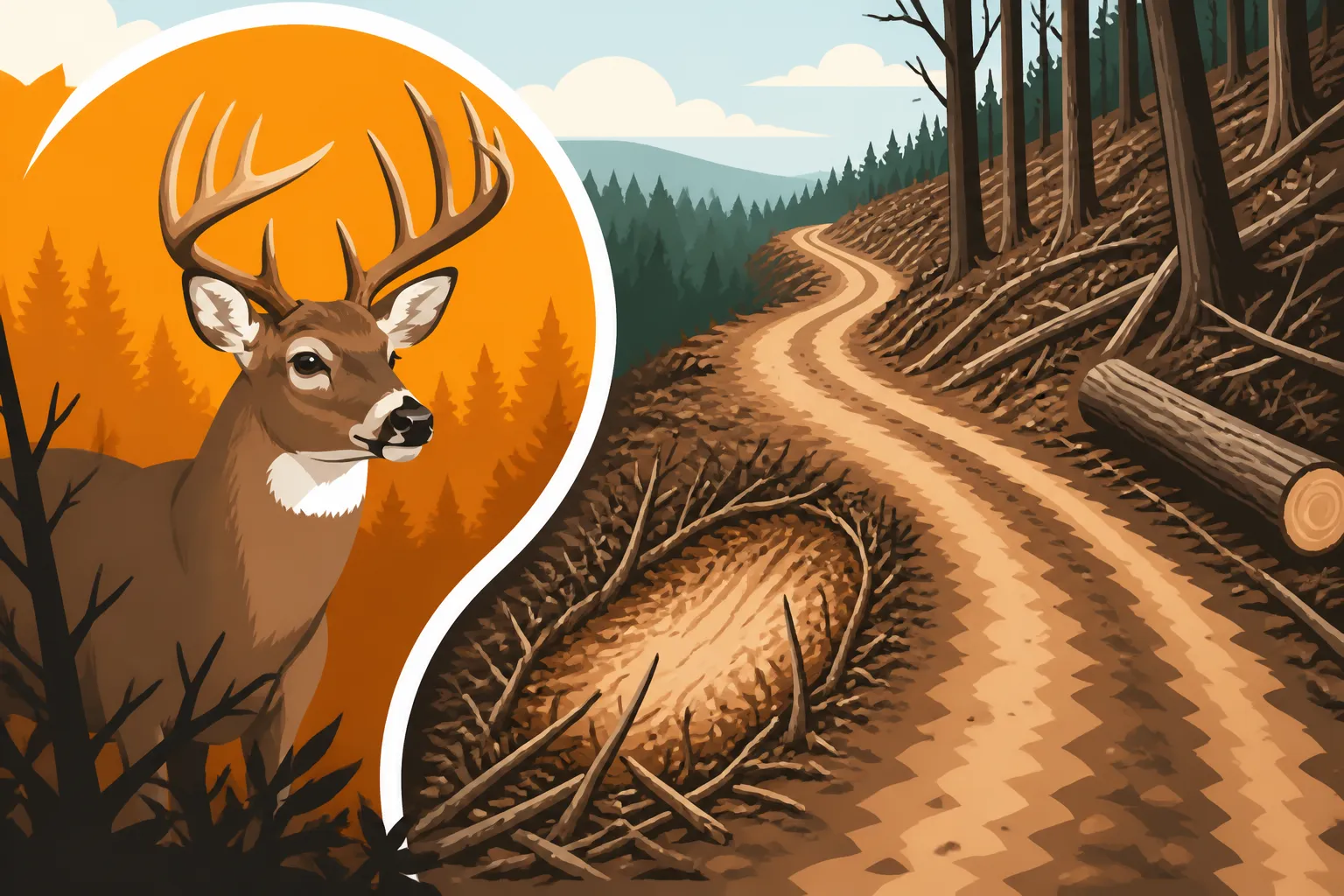
Scrapes aren't just random paw marks in the dirt; they are vital communication hubs, a deer's version of a bulletin board or a social media feed. Bucks create scrapes primarily during the pre-rut and rut to broadcast their presence, dominance, and breeding readiness. Does also visit scrapes to signal their receptiveness. Each scrape typically involves three key components:
First, there's the pawed-up dirt, where a buck paws away the leaf litter and exposes the bare soil. He then urinates into this bare patch, often rubbing his tarsal glands together to deposit his unique scent. This tells other deer, "I was here, this is who I am, and I'm looking for love."
Second, and perhaps most crucially, is the licking branch directly overhead. This branch, usually hanging 3-5 feet off the ground, is rubbed by the deer's pre-orbital and forehead glands, depositing more scent. Deer will also chew and break these branches. The licking branch is just as important as the pawed earth, as it provides a higher point for scent dispersal and often signals the buck's size. Scrapes without a distinctive licking branch are often less significant.
Third, scrapes are usually found along natural travel corridors or areas where deer feel secure enough to stop and communicate. Logging roads fit this perfectly. They're often slightly elevated, offering better scent dispersal, and provide a clear line of sight and an easy escape route. A buck doesn't want to create a scrape in the middle of a dense thicket where his message might get lost or where he might feel trapped. A logging road offers the perfect blend of visibility, accessibility, and security. You’ll often find these scrape lines connected to Scrape Lines Along a Logging Road.
Identifying Productive Scrape Lines
Not all scrapes are created equal. Some are casual, one-off visits, while others are continually worked, hotbeds of activity. Knowing the difference is key to hunting them effectively.
What to Look For Beyond the Dirt
When you stumble upon a scrape, don't just glance at the torn-up dirt and assume it's a winner. You need to become a detective, looking for clues that indicate its true potential. Start with the freshness of the scrape itself. Is the dirt still moist? Are there fresh track impressions in the exposed soil? If the scrape is covered in leaves or dry, it might not have been visited recently.
Next, pay close attention to the licking branch. Is it freshly broken or chewed? Can you smell a distinct musky odor from the pre-orbital glands? Bucks will also often rub their antlers on the bark of the licking branch. A well-worked licking branch, often ragged and with visible rub marks, is a huge indicator of consistent activity.
Beyond the scrape itself, look for associated sign in the immediate vicinity. Are there fresh rubs on nearby trees? Are the rubs polished and shiny, indicating recent activity? Multiple rubs leading into or away from the scrape suggest a consistent travel pattern. Also, scout for deer tracks along the logging road itself. Are they fresh? Are there multiple sets, perhaps indicating several deer using the corridor? An active scrape usually isn't an isolated incident; it's part of a larger pattern of deer movement and communication. While using scouting tools, apps like GoHunt can be really helpful here, allowing you to mark specific scrape locations, note freshness, and even log other signs you discover.
Timing and Seasonal Changes
The activity of scrape lines isn't constant; it ebbs and flows with the different phases of the deer season, particularly in Virginia.
- Early Scrapes (Pre-Rut): As early as late September and into October, bucks will start laying down "mock scrapes" or initial scrapes. These are often less intense, perhaps just pawed dirt with a slight sniff of a licking branch. They're like early advertisements for the rut, testing the waters. During Virginia's statewide archery season, you might find these initial scrapes, but they're not usually the high-octane magnet they'll become later. These early scrapes are more about establishing territory and letting does know that the breeding season is on the horizon.
- Peak Rut Activity (Mid-to-Late October through November): This is when logging road scrapes truly become hot. Bucks are actively seeking does, and these scrapes become crucial communication points. During the peak of Hunting the Virginia Rut in November, you'll see intense activity, with scrapes being freshened daily or every other day. The licking branches will be torn, the ground soaked with urine and glandular scent. Multiple bucks might visit and even fight over dominant scrapes, especially community scrapes where several deer communicate. This is prime time for hunting these areas.
- Waning Activity (Post-Rut/Late Season): As the rut winds down in December, scrape activity typically diminishes. Bucks are exhausted, and most does have been bred. While you might still find an occasional freshened scrape, they lose their intense magnetic pull. At this point, deer shift their focus more towards late-season food sources and bedding cover, and while they might still use logging roads for travel, the scrapes themselves aren't the primary draw.
Understanding this seasonal progression is critical. Hunting an early, casual scrape with the same intensity as a hot, mid-rut community scrape would likely lead to frustration.
Here's a quick look at scrape activity across the Virginia deer season:
| Season Phase | Timeframe (Approx.) | Scrape Activity Level | Characteristics | Best Hunting Strategy |
|---|---|---|---|---|
| Pre-Rut (Early Bow) | Late Sep – Mid-Oct | Low to Moderate | Initial scrapes, mock scrapes, less intense scent | Primarily scouting |
| Peak Rut (Bow/Gun) | Mid-Oct – Late Nov | High | Actively worked, fresh scent, heavy rub lines | Aggressive hunting |
| Post-Rut (Late Gun) | Dec – Early Jan | Low to Minimal | Fading activity, deer focused on food/cover | Shift focus to food |
Hunting Strategies for Logging Road Scrapes
Once you've identified a promising scrape line along a logging road, the real work begins: formulating a solid hunting strategy to capitalize on that deer activity. It's about more than just sitting and waiting; it's about smart placement and understanding deer movement.
Stand Placement and Wind Considerations
The cardinal rule of hunting is wind direction, and it becomes even more critical when hunting a scrape, which is essentially a giant scent post. You must position yourself downwind or crosswind of the scrape. This isn't just about keeping your scent out of the scrape itself, but also out of the travel corridors leading to and from it. Deer will typically approach a scrape from downwind to scent-check for other deer and potential danger.
Think about the prevailing winds in your specific Virginia region. If you're Hunting East of the Blue Ridge, for instance, you might experience different wind patterns than someone hunting in the western mountains. Use weather apps to predict the wind, but also pay attention to how terrain features, like hills, hollows, or even dense stands of pines along the logging road, might funnel or swirl the wind.
When choosing a stand site (whether a treestand or ground blind), consider these points:
- Downwind Advantage: Position your stand 20-30 yards downwind of the scrape. This allows your scent to blow away from the approaching deer and gives you a shot opportunity before they hit your scent cone.
- Entry and Exit Routes: Plan your approach and departure paths carefully. Can you get to and from your stand without crossing major deer trails or alerting deer to your presence? This is particularly challenging on logging roads, which are often used by deer. Use terrain features, dense cover, or even waterways to conceal your movements.
- Backdrop and Concealment: Ensure your stand offers good concealment. A treestand should be set against a larger tree or clump of trees to break up your silhouette. A ground blind should be brushed in naturally, blending into the surroundings.
- Shooting Lanes: Clear any necessary shooting lanes towards the scrape and common approach routes before the season, if possible, or well in advance of your hunt to allow deer to get comfortable with the changes.
Ignoring wind or having a poor entry/exit route can quickly bust even the hottest scrape, sending those bucks packing.
Calling and Decoying Tactics
While a hot scrape is a draw on its own, strategic use of calls and decoys can sometimes tip the odds further in your favor, especially during the peak rut.
- Rattling and Grunting: These calls simulate buck communication or confrontation. During the pre-rut, light grunting or a few soft rattles can pique a buck's curiosity. As the rut heats up, more aggressive rattling sequences, especially if combined with loud grunts, can challenge a dominant buck or attract a curious younger buck looking for action. Remember that Virginia deer, especially on public land, can be pretty call-shy. Start softly and gauge the reaction. If you're on a logging road that allows for some sound travel, the calls can carry further. Knowing Rattling and Grunting in Virginia, and when to use these techniques, is a skill that takes practice.
- Decoys: A buck decoy can be highly effective near a scrape, but it's also a high-risk, high-reward strategy. A buck seeing another "buck" on his scrape line might come in aggressively to investigate or challenge. However, a wary buck might spot the decoy from a distance, feel pressured, and skirt the area. If you use a decoy, position it so the buck can see it from a distance, but also so it offers you a shot opportunity when he approaches. Consider an estrous doe decoy as well, which can sometimes be less intimidating. Always position the decoy downwind of your stand so the approaching buck focuses on the decoy, not your scent. Ensure your decoy looks natural and is free of unnatural scents.
The key with both calling and decoying is to read the situation. If deer are already moving naturally, sometimes less is more. If activity is slow, or you know a dominant buck is in the area, a well-timed call or decoy presentation might be the spark you need.
Using Technology for Scouting and Setup
In today's hunting world, technology can be a huge asset in dissecting logging road scrapes. Integrating tools like satellite imagery, GPS apps, and trail cameras can give you an invaluable edge.
- Mapping Applications: Tools like GoHunt or other popular mapping apps are indispensable. Before you even step foot in the woods, you can use satellite imagery to identify potential logging roads, old clear-cuts, and areas where habitat changes create those critical edges. Mark potential scrape locations, access points, and stand sites directly on the app. This allows you to create a detailed plan and navigate efficiently, especially when trying to pinpoint Where George Washington Forest Bucks Bed.
- GPS Tracking: Many hunters use these apps to track their movements, ensuring they don't get lost and allowing them to revisit productive areas. You can pinpoint the exact location of a hot scrape, measure distances for stand placement, and record wind directions for future reference.
- Trail Cameras: This is where the real intelligence gathering happens. Placing a trail camera on an active logging road scrape can tell you:
- Activity Levels: How often is the scrape being visited? Is it daily, or every few days?
- Time of Day: Are deer hitting the scrape during legal shooting hours (daylight) or primarily at night?
- Individual Bucks: You can identify specific bucks visiting the scrape, giving you an idea of their size and patterns.
- Doe Presence: Are does visiting the scrape? This is a strong indicator that the buck's communication is working, and the rut is progressing.
When setting up trail cameras, be mindful of your scent. Check cameras strategically, preferably during midday when deer activity is lower, and always approach from a direction that minimizes spreading your scent into the hunting area. Use GoHunt to keep track of your camera locations and the intel you gather.
Common Mistakes and How to Avoid Them
Even with the best intentions and the hottest scrapes, hunters can inadvertently sabotage their chances. Being aware of common pitfalls is half the battle.
Overhunting and Scent Contamination
This is perhaps the biggest mistake hunters make when they find a hot scrape line: they get excited and hunt it too frequently or without enough regard for scent. A logging road scrape is a communication hub, and deer are highly attuned to their surroundings there.
- Too Much Pressure: Imagine a popular coffee shop. If people are constantly opening and closing the door, making noise, and leaving behind strong odors, eventually people will find another, quieter spot. Deer are no different. If you hunt a scrape every single day, or even several times a week, especially if you're making noise or leaving excessive human scent, you're essentially telling every deer in the vicinity to find a new route. Bucks, especially mature ones, are incredibly wary of human intrusion.
- Scent Contamination: Every time you walk to and from your stand, check a trail camera, or even just lean against a tree, you're leaving behind a scent signature. On a logging road, which often has less dense cover, your scent can disperse easily. Deer use their noses to detect danger, and human scent is a huge red flag.
- Solution: Practice minimal intrusion. Limit your visits to a hot scrape. If you're using trail cameras, check them perhaps once a week, and only when conditions (like a strong rain) might help wash away your scent. Always approach and exit with the wind in your face or crosswind, never blowing into the scrape or common deer travel routes. Utilize scent-eliminating sprays, wear clean hunting clothes, and store them in airtight containers. If you use the GoHunt app for marking your stands and scrapes, make sure to also mark your low-impact entry and exit routes. Think of it as a stealth mission every time you step foot in the woods. Sometimes, just sitting near a scrape, perhaps 50-70 yards away, and letting the scent carry the message to the deer, can be more effective than being right on top of it.
Misinterpreting Scrape Activity
Another common error is equating any scrape with a "hot" scrape. Not all scrapes are created equal, and misinterpreting their significance can lead to wasted hunting time or putting unnecessary pressure on less productive areas.
- Casual Scrapes vs. Community Scrapes: Some scrapes are simply individual bucks pawing at the ground once or twice, leaving a quick scent mark. These are "casual" scrapes, often seen during the early pre-rut, and may not see consistent daylight activity. "Community scrapes," on the other hand, are often larger, show signs of multiple visits (multiple sets of tracks, heavily worked licking branches, fresh rubs nearby), and may be visited by multiple deer, including does. These are the ones you want to focus your hunting efforts on.
- Reading the Sign Correctly: A dry, leaf-covered scrape with old tracks and a faded licking branch is not a hot scrape. A freshly exposed patch of dirt, damp with urine, with a tattered, actively worked licking branch that still smells musky, and fresh rubs nearby? That's your honey hole. Don't waste time on cold scrapes when there might be a more active one just around the bend.
- Daylight vs. Night Activity: Trail cameras are crucial here. A scrape might look great, but if your camera only shows activity between 10 PM and 4 AM, it's not a spot to hunt during daylight hours. This indicates that the deer using it are nocturnal or highly pressured. Adjust your strategy to focus on scrapes that show consistent daylight activity, or consider hunting nearby bedding or feeding areas that lead to the nocturnal scrape. Use the GoHunt app to analyze the timestamps of your trail camera photos and determine if the activity aligns with hunting hours. Sometimes, a scrape that's only hit at night can tell you that the buck is in the area but needs to be intercepted closer to his bedding area before he ventures out under the cover of darkness.
By learning to differentiate between various levels of scrape activity and understanding when and how deer use them, you can dramatically increase your chances of success on Virginia's logging roads.
Disclaimer
Hunting is an inherently dangerous activity. Always adhere to all Virginia Department of Wildlife Resources (DWR) regulations, practice firearm safety, and obtain the necessary licenses and permits before heading afield. This guide is for informational purposes only and does not replace official hunting education or local laws. Always be aware of your surroundings and hunt responsibly.