Virginia Rabbit Season Opening Day
Hunters often feel frustrated trying to pin down the exact dates and rules for Virginia's various hunting seasons, especially for fast-paced small game like rabbits. It feels like every year there's a new nuance or a subtle change that can throw a wrench in your plans, making it hard to confidently plan that first outing. This comprehensive guide will meticulously break down everything you need to know about the Virginia rabbit season opening day, covering dates, bag limits, licensing, and practical tips to ensure you're fully prepared and legal when you head afield.
Understanding Virginia's Rabbit Season Opening Day
There's something uniquely satisfying about chasing cottontails in the crisp Virginia air. It’s a tradition for many, often involving beagles, good company, and plenty of laughs. But before you dust off your shotgun and leash up the hounds, it's absolutely crucial to know the precise dates and regulations governing the season. Misinformation or outdated details can quickly turn a fun day into a frustrating one, or worse, a costly mistake.
When the Season Kicks Off Across the Commonwealth
For most hunters in Virginia, when we talk about "rabbit season," we're almost exclusively referring to the pursuit of the ubiquitous eastern cottontail rabbit. These little dynamos are found in just about every corner of the state, from the tidewater farmlands to the mountain foothills. The Virginia Department of Wildlife Resources (DWR) consistently sets a generous season for cottontails, allowing ample opportunity for hunters to get out.
The rabbit season for eastern cottontails typically opens on the first Saturday in November and continues through the last day of February. This consistent timeframe means that once deer firearms season is in full swing, you can usually start chasing rabbits too, offering a fantastic opportunity for mixed-bag days or simply a different kind of hunting challenge when the deer aren't moving. It's a long season, stretching well into the colder months, which is perfect for those of us who appreciate hunting over snow or during the post-holiday lull. Always double-check the current year's DWR regulations, which you can find on their website or within their handy mobile app. While the dates are generally consistent, it never hurts to verify, especially if you're planning a trip to an unfamiliar county or Wildlife Management Area (WMA).
Daily Bag Limits and Possession Rules
Virginia's DWR manages game populations carefully to ensure sustainable hunting opportunities for years to come. For eastern cottontails, the daily bag limit is generally quite generous, reflecting their healthy population across the state. Hunters are permitted to harvest six rabbits per person, per day. This allows for a good morning or afternoon hunt to yield a decent haul for the stew pot, especially if you're hunting with a group.
Beyond the daily limit, there's also a possession limit to consider. This refers to the maximum number of game animals you can have in your possession at any given time, whether they're in your cooler, freezer, or hanging in the game shed. For eastern cottontails, the possession limit is typically twelve rabbits, which is twice the daily bag limit. This allows you to hunt for two consecutive days and keep your harvest, or accumulate game over a longer trip without running afoul of the regulations. It's important to remember that these limits apply regardless of how many days you've been hunting; if you exceed the possession limit, you're breaking the rules. Always keep a mental tally, especially if you're successful.
Regional Nuances and Special Considerations
For the most part, the eastern cottontail season dates and bag limits are uniform across Virginia. Unlike deer or bear seasons, which often have different regulations depending on whether you're hunting East Versus West of the Blue Ridge Bag Limits or in specific counties, rabbit hunting is much simpler in its statewide application. You don't generally need to worry about different zones or different opening and closing times for cottontails. This makes planning a lot easier, as you can focus more on finding good habitat and less on deciphering complex maps.
However, it's worth a brief mention that Virginia is home to another, much rarer species: the snowshoe hare. These fascinating animals are found exclusively in very high-elevation mountain habitats in a few specific western Virginia counties. If you're specifically targeting snowshoe hare, their season is exceptionally short and has very stringent limits, often just a few days in December with a tiny bag limit. But again, for the vast majority of Virginia hunters and what is commonly referred to as "rabbit season," you'll be focused on cottontails, and the straightforward statewide rules will apply. Always consult the DWR's annual hunting regulations pamphlet or their website for the most up-to-date and specific information, especially if you venture into less common hunting pursuits or areas.
Essential Licenses and Hunter Education for Rabbit Hunters
Heading out for rabbit season isn't just about knowing the dates and limits; it’s also about ensuring you’re legally equipped to hunt. Virginia has clear requirements for licenses and hunter education, designed to promote safety and fund conservation efforts. Overlooking these steps is an easy way to get into trouble, and nobody wants their opening day joy to be overshadowed by a citation.
What Permits You'll Need Before Hitting the Fields
First and foremost, every hunter needs a valid Virginia hunting license. For residents, there are a few options, but the most common is the Virginia Resident One-Year License Cost for basic hunting privileges. This permit covers small game like rabbits, along with squirrels and other species. If you're a non-resident, you'll need to purchase a Virginia Nonresident License Cost, which typically costs more but grants the same privileges.
Beyond the basic hunting license, you generally won't need any additional specific stamps or permits solely for hunting rabbits, unlike migratory birds that require federal and state stamps. This simplifies things considerably. You can easily purchase your licenses online through the Go Outdoors Virginia portal, which many hunters find incredibly convenient, or at various DWR agents and sporting goods stores across the state. When you use the online system, it's a good idea to create an account, as it makes future purchases and compliance with requirements like Virginia Deer Reporting Requirements much smoother. Always carry proof of your license while afield, whether it's a physical copy or stored digitally on your phone through the Go Outdoors Virginia app.
Navigating Hunter Education and Apprentice Options
Virginia takes hunter safety very seriously, and for good reason. Before you can purchase a hunting license, most individuals are required to complete a hunter education course. This course covers firearm safety, wildlife identification, hunting ethics, and Virginia's specific regulations, ensuring everyone afield has a foundational understanding of responsible hunting. You can find more details on Virginia Hunter Education Requirements on the DWR website. There are both in-person and online options available to fit various schedules.
However, Virginia also offers an excellent pathway for those new to hunting or looking to try it out before committing to the full hunter education course: the Apprentice Hunter License. This special license allows an individual to hunt legally for a limited period (usually two license years) without first completing hunter education. The critical condition is that the apprentice hunter must be accompanied and directly supervised by a fully licensed and experienced hunter (their mentor) at all times while hunting. The mentor must be at least 18 years old and possess a valid Virginia hunting license. This program is fantastic for introducing newcomers to the field, allowing them to experience the excitement of a rabbit hunt with a seasoned veteran who can teach them the ropes, like the subtle art of Rabbit Hunting Virginia Fencerows. It’s a low-barrier entry point that prioritizes hands-on learning and safety under expert guidance.
| License Type | Required For | Cost (Resident, approximate) | Notes |
|---|---|---|---|
| Resident Hunting License | All resident hunters | $23 | Covers small game, deer, bear, turkey (specific stamps needed for big game) |
| Nonresident Hunting License | All non-resident hunters | $111 | Covers small game, deer, bear, turkey (specific stamps needed for big game) |
| Apprentice Hunter License | New hunters (ages 12+) who haven't completed hunter education | $23 | Must be accompanied by a licensed mentor; valid for two license years |
| Hunter Education Certificate | Required for most hunters to purchase a license | Free to low cost | One-time requirement; various course formats available |
Note: Costs are approximate and subject to change. Always verify current prices with the Virginia DWR.
Tactics and Preparations for a Rewarding Opening Day
Opening day of rabbit season is about more than just legalities; it's about strategy, preparation, and having the right mindset. Cottontails are fast, wily, and masters of concealment, so a little forethought can significantly increase your chances of success and make your hunt more enjoyable. Don't just show up and hope for the best; put some effort into understanding their habits and habitats.
Scouting and Identifying Prime Rabbit Habitat
You can't just walk into any patch of woods and expect to jump rabbits. Cottontails thrive in specific environments that offer both food and escape cover. When you're scouting for opening day, you'll want to focus on areas that provide a mix of these elements. Think about the edges of agricultural fields, especially those bordered by thick briar patches, honeysuckle, or fallen timber. Rabbits love to feed on tender shoots and clover in fields but need immediate access to dense cover to escape predators, be they hawks, coyotes, or hunters.
Look for areas where thick brush meets more open ground. Old abandoned farmsteads with overgrown fence rows, brush piles, and thickets of multiflora rose are absolute rabbit magnets. Creeks and drainages often create linear strips of dense cover that rabbits use as travel corridors and bedding areas. Don't overlook clear-cuts that are a few years old and have grown up into a tangled mess of saplings and briars; these can be phenomenal spots. While deer hunters might be focused on Late-Season Food Sources for Virginia Whitetails, rabbit hunters are looking for security first, then food. Using tools like the GoHunt mapping app can be incredibly helpful here. You can identify potential hot spots from aerial photos, noting changes in vegetation, dense fencerows, and brushy edges where rabbits are likely to concentrate. Then, a quick pre-season walk-through will confirm if the sign—like droppings, clipped vegetation, or rabbit tracks in soft soil—is fresh.
Gear Essentials and Safety Considerations
When heading out for rabbits, a few key pieces of gear will make your day much more comfortable and productive. A good, lightweight shotgun is paramount. Many hunters prefer a 12 or 20 gauge, often with a more open choke like improved cylinder or modified, which provides a wider pattern for quick shots at flushing rabbits. Loads of 6 or 7 ½ shot are standard. Remember to pattern your shotgun before the season to know how it performs at typical rabbit ranges.
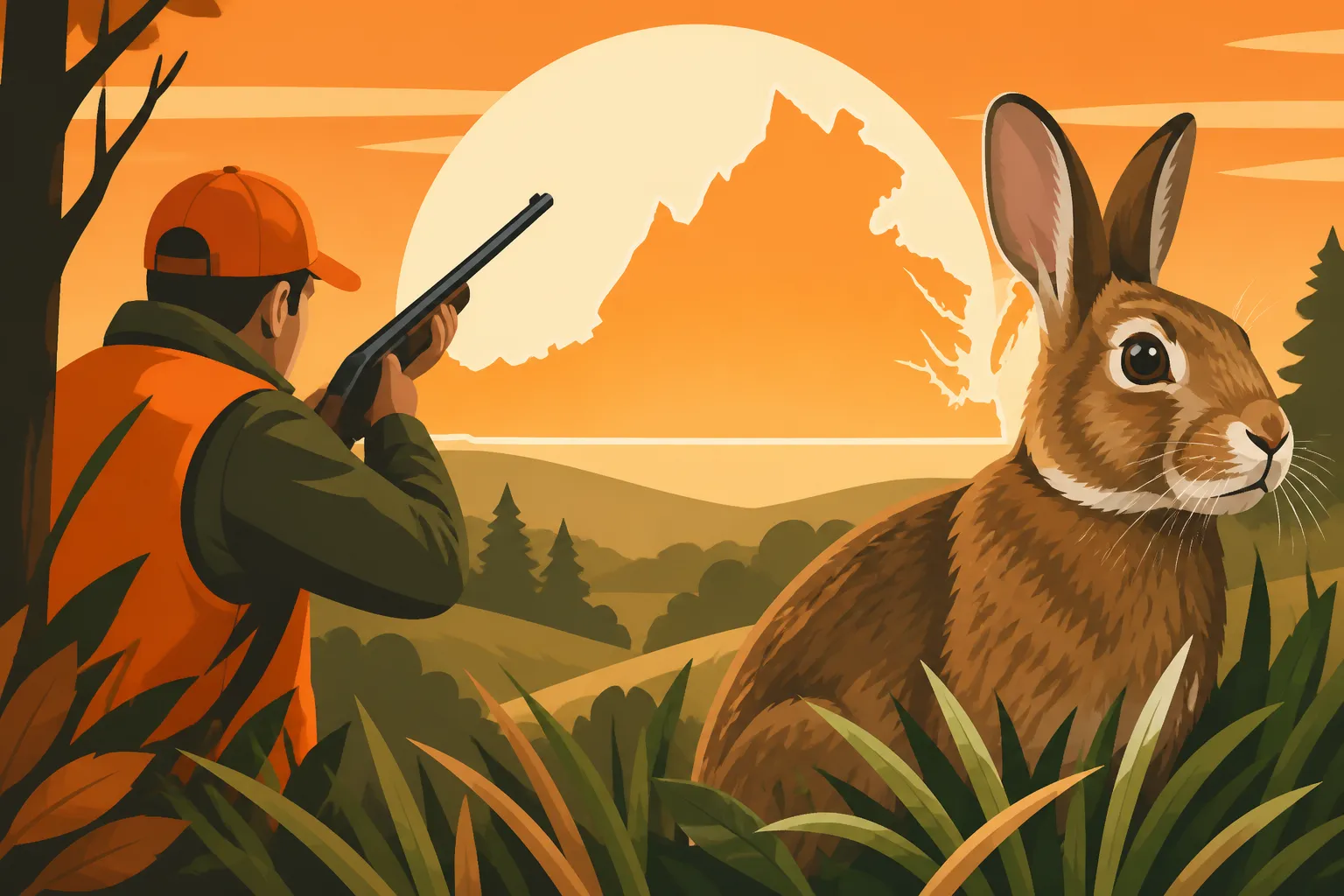
Safety, as always, is non-negotiable. Virginia requires all hunters (and anyone accompanying them) to wear blaze orange during firearms deer season, and since rabbit season overlaps, this rule applies to rabbit hunters as well. Specifically, you need to wear at least 100 square inches of solid blaze orange (or blaze pink) above the waist and visible from 360 degrees. This is absolutely critical, especially if you're hunting with a group or in areas where deer hunters might also be present. It reduces the risk of accidents dramatically. Good boots that can handle briars and wet conditions, along with durable brush pants or chaps, are also highly recommended to protect you from thorns and dense cover. A game vest with a large pouch will be invaluable for carrying your harvest, and don't forget water, a first-aid kit, and a compass or GPS (your phone with a mapping app like GoHunt works great) to keep you oriented, especially if you're Finding Ground That Sees Fewer Hunters in larger public areas.
Hunting Methods: Beagles, Walk-Ups, and Ground Blinds
There are several effective ways to hunt rabbits in Virginia, and your chosen method will often dictate your success.
- Hunting with Beagles: This is, for many, the quintessential Virginia rabbit hunting experience. A good pack of beagles, bred and trained to track and chase rabbits, is incredibly effective. The dogs will flush rabbits from thick cover and then 'jump' them, running them in circles. Hunters position themselves strategically along known rabbit escape routes, listening to the music of the hounds. When the rabbit circles back, it presents a shot opportunity. If you're lucky enough to Running Beagles on Virginia Cottontails, you're in for a treat, but it requires well-trained dogs and often good teamwork among hunters.
- Walk-Up Hunting: This method involves one or more hunters slowly walking through prime rabbit cover, often kicking or tapping brush piles, to flush rabbits. It's a more active and physical hunt, often done solo or with a partner. You need to be ready for quick, instinctive shots as rabbits burst from cover. This is a fantastic way to cover a lot of ground, and it doesn't require dogs. It's especially effective in smaller, isolated patches of cover, such as those found when Hunting Small Private Tracts in Virginia.
- Still Hunting/Ground Blinds: While less common for rabbits, still hunting or using a ground blind can be effective in areas where rabbits are concentrated, especially if you're trying to ambush them as they move from heavy cover to a feeding area at dawn or dusk. This requires patience and a good understanding of rabbit movement patterns. You might set up on the edge of a field where rabbits are feeding and wait for them to emerge, or position yourself along a well-used game trail in thick cover. If you plan on Using a Ground Blind on Virginia Public Land, make sure to check specific WMA rules on their use and placement.
No matter your method, always prioritize safety, communicate with your hunting partners, and be aware of your surroundings and what's beyond your target.
Addressing Common Rabbit Hunting Questions in Virginia
Even seasoned hunters can have questions when it comes to the nuances of specific game seasons or unique scenarios. Rabbit hunting, while seemingly straightforward, still presents a few common points of confusion for folks heading out in Virginia.
Sunday Hunting and Public Land Access
One of the most frequently asked questions in Virginia hunting pertains to Sunday hunting. For many years, Sunday hunting was severely restricted in Virginia, often only allowed for certain species on private land. However, regulations have evolved. As of recent changes, Sunday hunting for most game, including rabbits, is now permitted on private lands across the Commonwealth. This means if you have permission to hunt rabbits on a private farm or woodlot, you can do so on a Sunday within the legal season dates.
However, a crucial distinction exists for public lands. Sunday hunting is generally not permitted on most public lands managed by the Virginia DWR (WMAs) or federal lands (National Forests, National Wildlife Refuges). There can be specific exceptions for certain designated areas or quota hunts, but as a general rule, plan your public land rabbit hunts for Monday through Saturday. Always check the specific regulations for the WMA or federal land you intend to hunt, as rules can vary. The Go Outdoors Virginia platform or their mobile app is an excellent resource for checking WMA-specific rules and finding Public Hunting Land in Virginia and their individual access requirements.
Beyond Cottontails: Other Small Game Opportunities
While the focus here is undoubtedly on Virginia's rabbit season, it's worth noting that rabbit hunting often overlaps with other fantastic small game opportunities, making it possible to enjoy a true mixed-bag hunt. Many of the same habitats that hold cottontails will also hold squirrels, which have an extended season that often runs concurrently with rabbits. This means you might jump a rabbit and then move on to Squirrel Hunting Virginia Bottomland Hardwoods in a nearby oak stand.
Virginia also has seasons for grouse and quail, though their populations are much more localized and challenging to find than rabbits or squirrels. If you're hunting in specific mountain habitats, you might encounter grouse, but they are a distinct and difficult quarry. Virginia Grouse Season Status will give you more details on that, but it's a completely different kind of hunt. For most hunters pursuing small game in Virginia, rabbits and squirrels will be the primary targets, offering abundant opportunity and delicious table fare. Understanding Virginia Small Game Season Rules will help you maximize your time afield and take advantage of all the opportunities the Commonwealth offers during the cooler months.
Disclaimer
Please remember that hunting regulations, season dates, and license requirements can change. While every effort has been made to provide accurate and up-to-date information in this guide, it is ultimately the hunter's responsibility to verify all current rules and regulations with the Virginia Department of Wildlife Resources (DWR) before heading afield. Always consult the official DWR website or their annual hunting and trapping regulations pamphlet for the most current and precise information. Stay safe and hunt ethically.