Virginia Minimum Rifle Caliber Rules
Many Virginia hunters get tangled up in the specific legal requirements for rifle calibers, especially with varying seasons and regions. It's frustrating to sort through the rules, wondering if your favorite rifle is even legal for that prized whitetail or black bear. This guide will cut through the confusion, clearly laying out Virginia's minimum rifle caliber rules so you can hunt with confidence and stay on the right side of the law.
Understanding Virginia's General Rifle Regulations
Navigating hunting regulations can feel like deciphering an ancient scroll, but Virginia’s Department of Wildlife Resources (DWR) has established clear guidelines for rifle calibers when it comes to big game. It's all about ensuring ethical and humane harvesting while prioritizing safety.
Caliber Minimums for Big Game
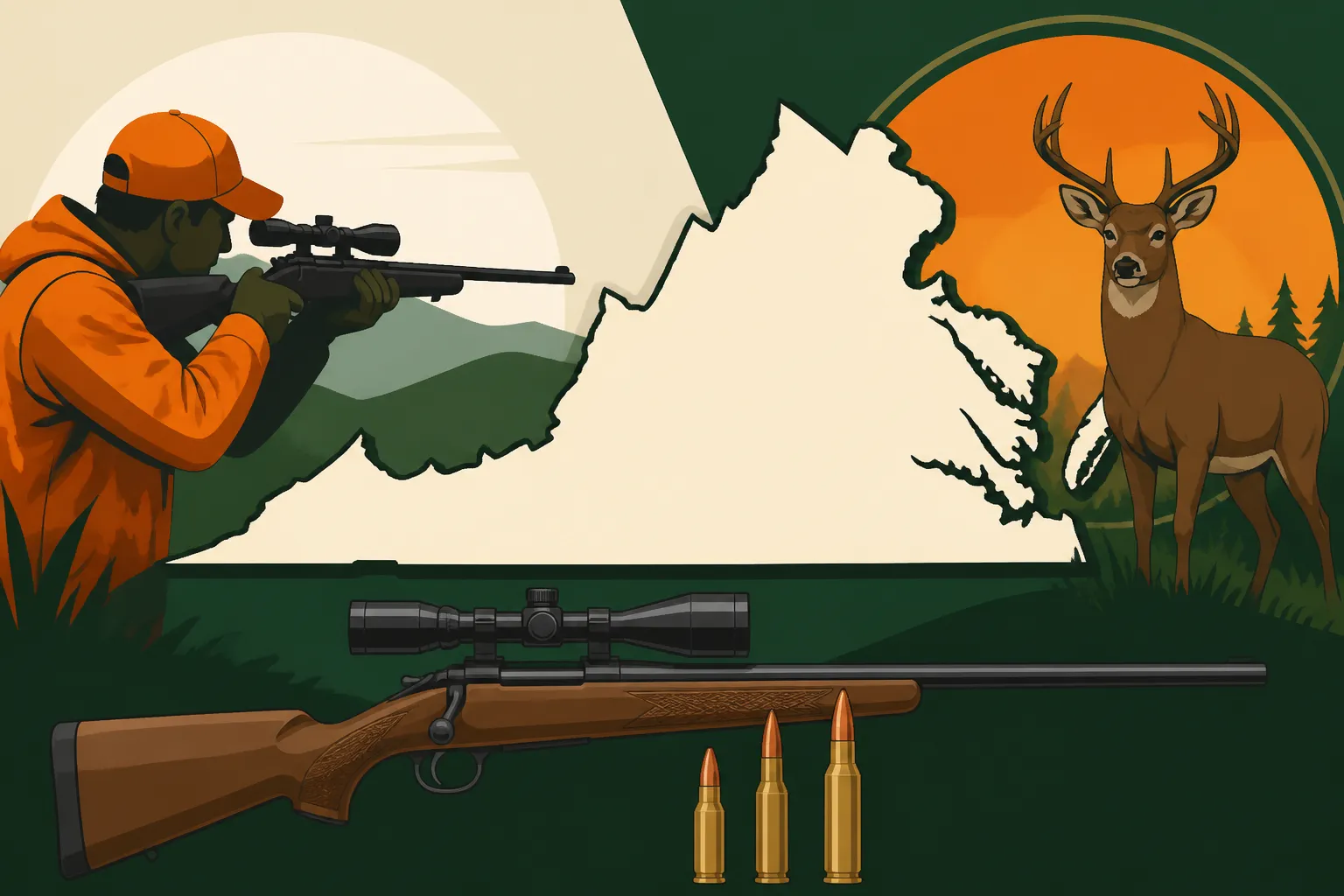
When you're planning to pursue deer or bear in Virginia with a centerfire rifle, the DWR mandates a bullet of .23 caliber or larger. This is the baseline, and it’s a pretty generous one, encompassing a vast array of popular hunting cartridges. So, if you’re wielding a .243 Winchester, a .270, a .30-06, a .308, or even a popular modern round like the 6.5 Creedmoor, you’re generally good to go from a statewide perspective.
The reasoning behind this minimum is straightforward: sufficient kinetic energy and knockdown power are crucial for a quick, humane kill. Nobody wants to wound an animal, leading to unnecessary suffering or a lost game animal. This .23 caliber minimum ensures that, when properly placed, your shot has the best chance of ethical dispatch. This fundamental rule applies broadly across the state, especially during the general firearms season, which sees the highest participation. If you're wondering about specific dates, our guide on Virginia's General Firearms Deer Season covers all the details.
Straight-Walled Cartridges and Their Role
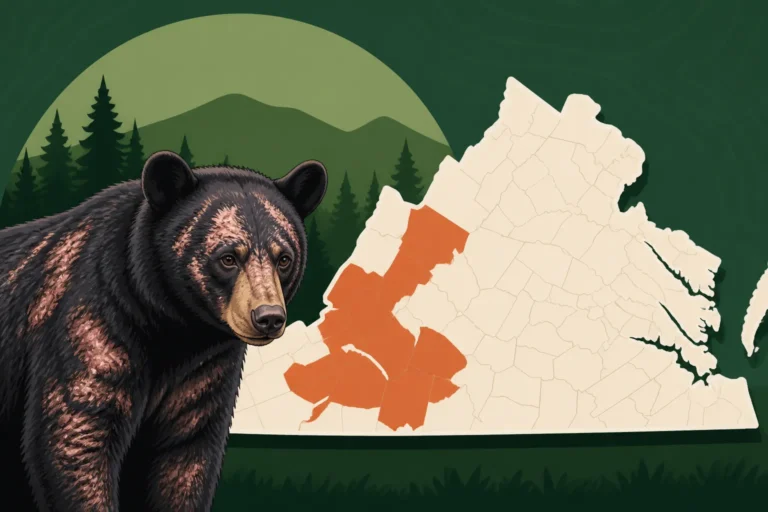
Here's where Virginia's regulations introduce a layer of nuance that often trips up even experienced hunters. While the statewide minimum is .23 caliber for bottlenecked rifle cartridges, several counties, predominantly in the Eastern Region, have specific restrictions. These areas often mandate the use of shotguns or straight-walled rifle cartridges only. These rules are typically implemented in response to higher population densities and smaller private land parcels, where the trajectory and maximum range of bottlenecked rifle bullets could pose a greater safety risk.
For hunters in these specific counties, a .23 caliber bottlenecked rifle, like a .30-06, might be illegal for big game. Instead, you'd need to consider options like the .350 Legend, .450 Bushmaster, .444 Marlin, or the classic .45-70 Government. These cartridges deliver powerful performance at typical hunting ranges but tend to have less potential for long-distance travel, making them safer in more populated landscapes. It's absolutely critical to verify your specific county's regulations. A quick check of the DWR regulations, or using a scouting app like GoHunt to verify local ordinances, can save you from a potential violation. Understanding these county-specific rules is a key part of hunting effectively in areas like Hunting East of the Blue Ridge.
Handguns and Shotguns as Alternatives
It's important to remember that centerfire rifles, while popular, are not the only legal firearms for big game hunting in Virginia. Many hunters opt for shotguns with slugs or handguns, particularly in areas with rifle restrictions or for personal preference. Shotguns, especially 12 or 20 gauge models firing modern sabot or rifled slugs, are highly effective at typical whitetail ranges and are legal statewide for deer and bear. They offer excellent knockdown power at 100-150 yards, making them a formidable tool in dense cover.
Handguns also offer a unique challenge and are a viable option for those who master them. For hunting deer and bear with a handgun, Virginia requires a minimum caliber of .35, a barrel length of at least 2 inches, and the cartridge must develop at least 500 foot-pounds of muzzle energy. This ensures that only powerful handgun cartridges, such as .357 Magnum, .44 Magnum, .45 Colt (loaded to appropriate levels), or larger, are used. These alternatives provide flexibility for hunters, allowing participation in seasons or areas where traditional rifles may not be permitted. For a full breakdown of all your firearm choices, check out our comprehensive guide on Virginia Legal Firearms for Deer Hunting.
Navigating Specific County and Weapon Restrictions
Virginia's hunting landscape is incredibly diverse, stretching from the rugged Appalachian Mountains to the flat, agricultural Eastern Shore. This geographical variety often translates into localized hunting regulations that require careful attention.
East vs. West of the Blue Ridge Nuances
Virginia is geographically divided by the iconic Blue Ridge Mountains, and this natural boundary often serves as a practical line for many DWR regulations. Generally, west of the Blue Ridge, where the terrain is typically more mountainous and population densities are lower, hunters have more leeway with traditional bottlenecked rifle cartridges, provided they meet the .23 caliber minimum. This region is prime for longer shots across hollows and ridges, and the freedom to use common high-powered rifle calibers is a real advantage.
However, once you move east of the Blue Ridge, the landscape often transitions to rolling hills, extensive farmlands, and more densely populated areas. This is where those county-specific straight-walled cartridge or shotgun-only regulations become much more prevalent. It’s not a blanket rule for the entire eastern half, but rather a patchwork of individual county ordinances. Always consult the DWR county listings for your specific hunting location. This regional distinction isn't just about rifle calibers; it also impacts other rules, such as Eastern Region Antlered Buck Limits, which differ from the Western Region.
I’ve heard stories, and even seen it firsthand, where hunters from the western side of the state travel east to visit family or explore new hunting grounds, only to realize their beloved hunting rifle isn't legal. Imagine driving several hours for a weekend hunt, only to discover you're out of compliance! That's why cross-referencing DWR regulations with a reliable mapping tool, perhaps even an app that overlays local rules like GoHunt, is invaluable.
Public Land and WMA Specifics
Hunting on Virginia’s extensive public lands, including Wildlife Management Areas (WMAs) and the vast George Washington and Jefferson National Forests, is a fantastic opportunity for many. While these areas generally follow statewide and regional regulations, it's crucial to be aware that some specific public land units may have their own additional restrictions.
For instance, certain WMAs, especially those closer to urban centers or those managed for specific species or hunting types, might designate archery-only zones, shotgun-only areas, or even have unique requirements for firearm types or ammunition. These localized rules are put in place for safety, habitat management, or to manage hunting pressure. It’s never a good idea to assume that because the county allows a certain rifle, a specific WMA within that county will too.
Before you head out, always check the specific regulations for the WMA or National Forest you plan to hunt. The DWR website provides detailed maps and regulatory summaries for each WMA, and the Go Outdoors Virginia app is a handy resource. For example, if you're planning Treestand Setups in George Washington National Forest, you'll want to ensure not only that your treestand adheres to forest rules, but that your chosen firearm is also explicitly permitted for that particular section of public land. Similarly, knowing the rules for specific entry and exit procedures, such as those covered in Virginia WMA Access Permit Sign-In Process, can prevent unnecessary issues.
Archery and Muzzleloader Season Overlaps
While our focus here is on rifle calibers, it's worth briefly touching on Virginia’s other popular hunting seasons for big game: archery and muzzleloader. These seasons typically precede or run concurrently with portions of the general firearms season, but they come with their own distinct weapon requirements.
During the Virginia Statewide Archery Season Dates, only archery equipment (traditional bows, compound bows, and crossbows) is permitted. Similarly, the Virginia Early Muzzleloader Tactics period is exclusively for muzzleloading firearms. These seasons offer fantastic opportunities to pursue deer and bear, often with less hunting pressure, and without the complexities of modern rifle caliber restrictions. However, they demand a different set of skills and, of course, adherence to their specific weapon types and associated rules (e.g., minimum draw weights for bows, specific powder types for muzzleloaders). Understanding these separate seasons can provide more hunting opportunities throughout the year, distinct from the rifle-specific regulations.
Practical Considerations Beyond the Law
Meeting the minimum legal rifle caliber in Virginia is just the first step. For truly ethical and successful hunting, there are several practical considerations that every hunter should weigh.
Ethical Considerations for Shot Placement
A legal caliber doesn't automatically equate to an ethical kill. The goal of every hunter should be a swift, humane dispatch of the animal. This means that factors beyond just the caliber size, such as bullet construction, muzzle velocity, and most importantly, precise shot placement, are critical. While a .243 Winchester (which meets the .23 caliber minimum) is perfectly legal and capable of taking deer and even bear, it demands a higher level of precision compared to, say, a .30-06.
Responsible hunting means understanding your rifle’s capabilities, your ammunition’s performance, and your own shooting proficiency. On larger game animals like black bears or big-bodied Virginia whitetails, having a caliber that offers a bit more margin for error, delivering ample energy and penetration even on slightly less-than-perfect shots, can be a comforting and ethical choice. We owe it to the animals we pursue to make every effort for a clean harvest. When hunting something as formidable as a black bear, as discussed in Bear Hunting Virginia's Mountains and Piedmont, having adequate stopping power is paramount.
Choosing the Right Caliber for Your Hunt
With the legal options broad, how do you pick the "right" caliber for your specific hunt? This often comes down to matching your equipment to the anticipated conditions and your personal preferences. Are you hunting wide-open fields in the Piedmont where shots might reach 200-300 yards? A flatter-shooting cartridge like a 6.5 Creedmoor, 6.5 Creedmoor for Blue Ridge Ridges, or a .270 Winchester might be ideal. These calibers minimize bullet drop over longer distances and carry excellent energy.
Conversely, if you're deep in the dense mountain timber or thick bottomlands, where shots are typically under 100 yards, a slower, heavier bullet with less recoil might be more comfortable and effective. A .30-30 or one of the straight-walled cartridges like a .450 Bushmaster, if legal in your area, excels in these close-quarters scenarios. Consider your comfort with recoil, your accuracy with different firearms, and the typical shot distances you expect. Our article on Rifle Setups for Virginia Deer Hunting offers more in-depth advice on making these choices, including comparisons like .308 Versus .270 for Whitetails.
Ammunition Type and Availability
The specific bullet within your chosen caliber is just as vital as the caliber itself. Modern ammunition offers a vast array of bullet designs, each engineered for different performance characteristics—from rapid expansion to deep penetration. For big game hunting, you'll generally want a bullet designed for controlled expansion and good weight retention to ensure adequate penetration of vital organs and maximum energy transfer. A varmint bullet, for instance, even in a legal caliber, is entirely unsuitable for deer or bear, as it's designed to fragment violently on smaller targets, not penetrate tough hide and bone.
While Virginia does not currently mandate lead-free ammunition for general hunting, some hunters opt for copper solids or other non-lead alternatives for environmental reasons. Regardless of your choice, always confirm that your chosen ammunition is specifically designed for big game. Furthermore, it’s always wise to check ammunition availability well before hunting season. Popular calibers and specific bullet types can sometimes be in short supply, especially as hunting seasons approach. Checking online retailers or local sporting goods stores, and perhaps referencing hunting community discussions or resources like GoHunt, can help ensure you’re adequately stocked.
Summary of Virginia Rifle Caliber Rules for Big Game
| Game Animal | General Statewide Minimum | East of Blue Ridge (County Specific) | Common Legal Calibers (Examples) |
|---|---|---|---|
| Deer & Bear | .23 Caliber Centerfire | Shotgun Slugs OR Straight-Walled Rifle Cartridges (.35 Caliber Minimum) | .243 Win, .270 Win, .30-06, .308 Win, 6.5 Creedmoor, .350 Legend, .450 Bushmaster, .45-70 Gov, 12/20ga Slugs |
Disclaimer
This guide is for informational purposes only and is not a substitute for checking the official Virginia Department of Wildlife Resources (DWR) regulations. Hunting laws can change, and it's every hunter's responsibility to know and abide by the most current rules and regulations for their specific hunting location and season.