Virginia’s Mange-Affected Bear Counties
It’s truly disheartening when you’ve poured hours into scouting and planning your bear hunt, only to have the regulations shift right under your feet due to something like sarcoptic mange. The frustration is real, and many Virginia hunters feel it when they see their favorite areas impacted by season changes. This comprehensive guide aims to clear up the confusion surrounding Virginia's mange-affected bear counties, detailing the disease's impact, specific season adjustments, and how hunters can adapt and contribute.
Understanding the Impact of Mange on Virginia's Bear Population
Sarcoptic mange has become a significant concern for wildlife managers and hunters alike, particularly impacting black bear populations in various parts of Virginia. This disease doesn't just make bears look rough; it can be incredibly debilitating, leading to severe health issues and even death. Understanding what mange is and how our wildlife agencies track it is the first step in comprehending why hunting seasons have had to change.
What is Sarcoptic Mange and How it Affects Bears?
Sarcoptic mange is a skin disease caused by microscopic mites (Sarcoptes scabiei) that burrow into the skin of an infected animal. For bears, this infestation leads to intense itching, hair loss, and the formation of thick, crusty scabs. Imagine a bear constantly scratching itself, losing its protective coat, and developing open wounds; it's a miserable existence. This severe irritation can lead to secondary bacterial infections, weight loss, and hypothermia, especially during Virginia's colder months when bears rely on their thick fur for insulation. The mites spread easily through direct contact between bears or even indirectly through shared dens, bedding sites, or rubbing posts. A bear severely affected by mange will often appear emaciated, lethargic, and may exhibit abnormal behavior, making it more vulnerable to other diseases, accidents, or even starvation. The visible symptoms are heartbreaking for anyone who loves wildlife, and the internal suffering is immense, often leading to a slow, painful death if left untreated or if the bear's immune system can't fight it off.
The DWR's Role in Monitoring and Managing Mange
The Virginia Department of Wildlife Resources (DWR) has been at the forefront of monitoring and managing sarcoptic mange outbreaks within the state’s black bear population. Their work involves a multi-pronged approach that includes active surveillance, public reporting, and scientific research. DWR biologists regularly conduct field surveys to assess the prevalence and distribution of mange, often capturing and treating affected bears in severe cases, though this is a resource-intensive effort limited to individual animals. They heavily rely on reports from the public, including hunters, hikers, and landowners, to track new cases and identify areas where the disease is spreading. When you report a sick or potentially mangy bear, you're not just calling in a sighting; you're providing critical data that helps the DWR understand the scope of the problem. This data informs their management decisions, including those difficult choices about adjusting hunting seasons. The DWR also collaborates with universities and other state agencies to research the disease, striving to understand its dynamics, potential treatments, and long-term population impacts. Their ultimate goal is to maintain a healthy and sustainable bear population, even in the face of this challenging disease, which directly influences Virginia's Black Bear Population.
Identifying Virginia's Mange-Affected Bear Counties and Season Adjustments
The emergence and spread of sarcoptic mange have necessitated some tough decisions for the DWR, particularly concerning bear hunting seasons. These adjustments aren't made lightly; they're a direct response to observed population health and disease prevalence in specific areas. It’s crucial for hunters to stay informed about these changes, as hunting regulations can vary significantly from one county to the next.
The List of Affected Counties and Why They Were Chosen
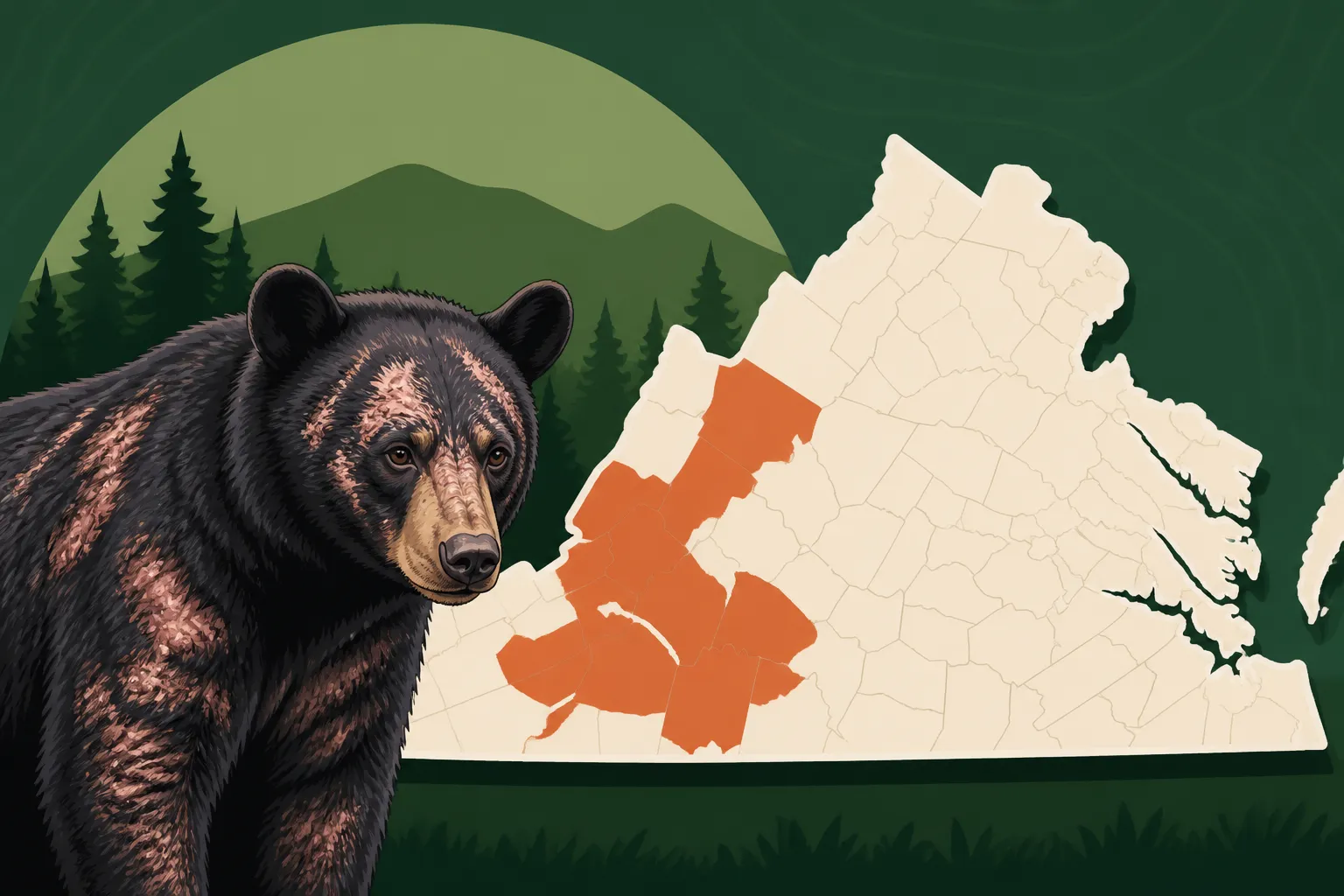
The DWR has identified specific counties where sarcoptic mange has significantly impacted local bear populations, leading to reduced hunting seasons. These counties typically exhibit a higher prevalence of mange cases, a greater number of reported sick bears, or a notable decline in local bear population health metrics. Decisions are data-driven, relying on everything from hunter harvest data and DWR field observations to public reports of mangy bears. For instance, counties in the Southwest region, like Buchanan, Dickenson, Lee, Russell, Scott, Smyth, Tazewell, Washington, and Wise, along with Bland, Giles, and Montgomery, have experienced particularly severe impacts. These areas have seen the largest concentrations of mange cases, leading to the most significant season adjustments. Other counties, often those adjacent to these core affected zones, might also see adjustments as the DWR monitors potential spread. The goal isn't to punish hunters but to allow bear populations in these stressed areas a better chance to recover, reducing pressure when their health is already compromised. Knowing which counties are affected is critical; a quick check on the DWR website or using a mapping application like GoHunt can provide current boundary information and help you plan your hunt accordingly.
Here's a generalized overview of how counties have been impacted, though hunters should always consult the official DWR regulations for the most up-to-date and specific details:
| Region | Example Counties Affected | Typical Season Adjustment | Primary Reason |
|---|---|---|---|
| Southwest | Buchanan, Dickenson, Lee, Russell, Scott, Smyth, Tazewell | Significant reduction in early firearms season; shortened general season. | High prevalence of mange, severe population health decline. |
| Western | Giles, Montgomery, Bland | Moderate reduction, often an early closure of initial periods. | Mange cases increasing, early impact on population. |
| Adjacent Zones | Portions of other counties near core affected areas | Minor adjustments, increased monitoring, or caution advisories. | Proximity to outbreaks, preventative measures. |
Specific Season Reductions and Their Implications for Hunters
The season reductions in mange-affected counties aren't uniform, but they generally involve shortening the early bear hunting periods, particularly the early firearms season where applicable. For example, some counties in Southwest Virginia have had their early bear seasons completely eliminated or significantly truncated, meaning hunters no longer have the opportunity to pursue bears during those prime early-to-mid-October weeks. This directly impacts hunters who traditionally focused on those periods, often overlapping with Hunting Mountain Bears in November or using specific early-season tactics.
In some cases, the general firearms bear season might also be shortened, or certain weeks removed from the calendar. These changes force hunters to adjust their strategies, focusing their efforts into a smaller window or shifting their attention to unaffected counties if feasible. For those who hunt locally in an affected area, it means more intense competition for fewer days, and potentially less opportunity to fill their tag. It also puts more emphasis on efficient scouting, using tools like GoHunt to analyze land features and access points within the remaining season dates. Understanding these implications is crucial not just for planning your hunt, but also for appreciating the DWR's efforts to balance hunter opportunity with wildlife conservation. Hunters will need to be particularly diligent about checking Virginia Bear Season Rules each year, as these regulations can and do change based on the latest wildlife health assessments.
Navigating Hunting in Mange-Affected Areas
Hunting in counties affected by sarcoptic mange requires a different approach than what many seasoned Virginia hunters might be used to. It's not just about knowing the new season dates; it's about adapting your scouting, strategy, and even your ethical considerations to the unique challenges presented by a compromised bear population.
Scouting and Strategy Adjustments for Reduced Seasons
When bear seasons are cut short due to mange, every day you have in the woods becomes even more valuable. This compression of opportunity means your scouting efforts need to be more efficient and focused than ever. Instead of spreading your scouting out over several months, you might need to concentrate your efforts closer to the opener. Focus on identifying critical food sources that will be available during the shortened season, whether that’s hard mast like acorns or soft mast like persimmons. Bear travel corridors between these food sources and bedding areas become even more vital to locate.
Using modern mapping tools can be a game-changer. Applications like GoHunt provide detailed topographic maps, aerial imagery, and public/private land boundaries, which are invaluable for identifying potential bear sign and planning effective entry and exit routes. You'll want to prioritize areas with fresh sign, like scat, tracks, and rub trees, understanding that with fewer hunting days, bears might be more pressured. Consider still-hunting or methodical stand hunting rather than more aggressive tactics, especially in areas with potential for multiple hunters. Because the season might be significantly shorter, the bears could be less predictable in their movements as they adapt to human presence. Paying close attention to Scouting Virginia Public Land Before Season will be paramount, and using trail cameras to monitor activity during the restricted season dates, if allowed, can also help you maximize your limited hunting window.
Ethical Considerations and Reporting Sick Bears
Hunting is about more than just harvesting an animal; it's about ethical engagement with wildlife and being a responsible steward of the resource. In mange-affected counties, these ethical considerations become even more prominent. If you encounter a bear that shows obvious signs of sarcoptic mange—significant hair loss, crusty skin, visible lesions, or emaciation—the DWR strongly encourages hunters not to harvest that animal. Harvesting a severely mangy bear removes a suffering animal from the population, which might seem humane on the surface, but it's often more beneficial to let nature take its course or for DWR to intervene with specific treatment protocols if possible. Furthermore, the meat from a severely mangy bear might not be suitable for consumption, though mange itself isn't transmissible to humans. The DWR prefers that hunters prioritize healthy animals to ensure the genetic fitness of the breeding population and to support the overall recovery effort.
If you spot a bear exhibiting signs of mange, it's crucial to report it to the DWR. They have a system in place for these reports, often through their regional offices or online portals. Provide as much detail as possible: location, date, time, and a description of the bear's condition. This information helps the DWR track the disease's spread and allocate resources for monitoring and management. Your report is a direct contribution to wildlife conservation and helps biologists understand the true scope of the problem. Remember, being an ethical hunter means making informed decisions that benefit the wildlife populations we cherish, even when it means passing on a shot. This commitment aligns with broader efforts to protect Virginia's Black Bear Population for future generations.
Long-Term Outlook and Hunter Participation
While the current situation with sarcoptic mange in Virginia's bear population presents significant challenges, there is always hope for recovery and a future where seasons can return to normal. The long-term outlook depends heavily on ongoing research, adaptive management strategies, and the continued participation and support of the hunting community.
The Hope for Recovery and Future Season Potentials
Wildlife populations are remarkably resilient, and while sarcoptic mange is a serious threat, the DWR and its partners are actively working towards solutions. Research into treatments, understanding disease dynamics, and identifying potential genetic resistances in bears are all ongoing. It’s not an overnight fix, but with sustained effort, there’s always hope for a turn-around. The DWR continuously monitors bear health and population trends in affected counties, and these data will guide future decisions on hunting seasons. If populations show signs of recovery and mange prevalence decreases, there is a very real possibility that some of the season reductions could be reversed in the future.
This adaptive management approach means that while today's restrictions might be frustrating, they are designed to be temporary measures aimed at long-term population health. Hunters who are engaged with the DWR's updates and participate in local wildlife discussions will be better prepared for potential changes, whether that means a gradual return to previous season lengths or even new management strategies based on emerging scientific understanding. The strength of Virginia's Black Bear Population relies on this ongoing commitment and adaptability from all stakeholders.
How Hunters Can Contribute to Bear Conservation Efforts
Hunters are, without a doubt, some of the most dedicated conservationists, and their role in managing and recovering Virginia's bear population, particularly in mange-affected areas, is invaluable. Beyond simply following regulations, there are several ways you can actively contribute. First and foremost, continue to be the eyes and ears in the woods. Your reports of sick or mangy bears directly inform the DWR's understanding of the disease's spread and severity. When you register your harvest, the data collected on the bear's health and location is also crucial for DWR biologists to track population trends and Virginia Bear Harvest Trends.
Secondly, consider getting involved in local conservation groups or hunter-angler associations that work closely with the DWR. These organizations often facilitate communication, organize volunteer efforts, and advocate for sound wildlife management. Even something as simple as purchasing your hunting license and tags contributes directly to conservation efforts, as these funds are often earmarked for wildlife research, habitat improvement, and disease management. Every hunter's dedication to ethical hunting practices and their commitment to reporting observations plays a significant role in ensuring the health and future of Virginia's black bears. After all, we all share the common goal of healthy, thriving wildlife populations for generations to come.
Disclaimer
The information provided in this guide is for general informational purposes only and is not intended as legal advice. Hunting regulations, season dates, and specific county restrictions regarding sarcoptic mange are subject to change by the Virginia Department of Wildlife Resources (DWR). Hunters are solely responsible for consulting the most current official DWR regulations and local ordinances before engaging in any hunting activities. Always verify all information with the official DWR publications.