20 Gauge Doubles for Mountain Cover
Hunting ruffed grouse in Virginia's rugged mountain cover is an experience unlike any other, demanding quick reflexes and gear that can keep up. Many hunters, myself included, have felt the frustration of a quick-flushing bird disappearing into the thick rhododendron before they could even get their heavy shotgun shouldered. This guide is all about why a 20 gauge double-barreled shotgun might just be the perfect companion for those challenging, yet incredibly rewarding, pursuits through the dense, unforgiving terrain of the Blue Ridge and Allegheny Mountains.
Why a 20 Gauge Double Makes Sense for Mountain Grouse
When you're slogging up and down steep grades, pushing through tangled mountain laurel, and trying to keep your footing on leaf-covered rocks, every ounce of gear makes a difference. A heavy, unwieldy shotgun quickly becomes a burden, and a slow-swinging gun means missed opportunities on the king of upland birds. That's where the 20 gauge double truly shines, offering a combination of balance, quickness, and versatility that's hard to beat in the grouse woods.
Navigating Tight Cover and Quick Shots
Mountain grouse hunting is rarely about long, open shots. Instead, it's a game of inches, where a bird can erupt from seemingly nowhere, offering only a fleeting glimpse through a thicket before vanishing. This is precisely where the inherent design of a double-barreled shotgun, particularly in a nimble 20 gauge, becomes a massive advantage. These guns are typically shorter in overall length compared to many pump-action or semi-automatic shotguns, especially those with longer barrels designed for waterfowl or trap shooting. The compact nature means less snagging on branches and vines as you navigate dense undergrowth. Imagine pushing through a patch of thick briars, your shotgun held at the ready; a long barrel is a magnet for snags, forcing you to constantly re-position. A shorter double allows for a more fluid movement, letting you keep your eyes on the cover and your mind focused on the hunt.
Beyond mere length, the balance of a good 20 gauge double is often exceptional. They tend to be "between the hands," meaning the weight is distributed evenly, making the gun feel lighter and incredibly responsive. This balance translates directly into the ability to mount the gun to your shoulder swiftly and instinctually. When a grouse flushes with a thunderous roar from under your boots, you don't have time to think; you need to react. A well-balanced double gun becomes an extension of your body, allowing for that almost unconscious, lightning-fast mount and swing that's critical for connecting with these explosive birds. It's about getting on target in a fraction of a second, often before the bird has even cleared the immediate cover.
The Advantage of Two Chokes
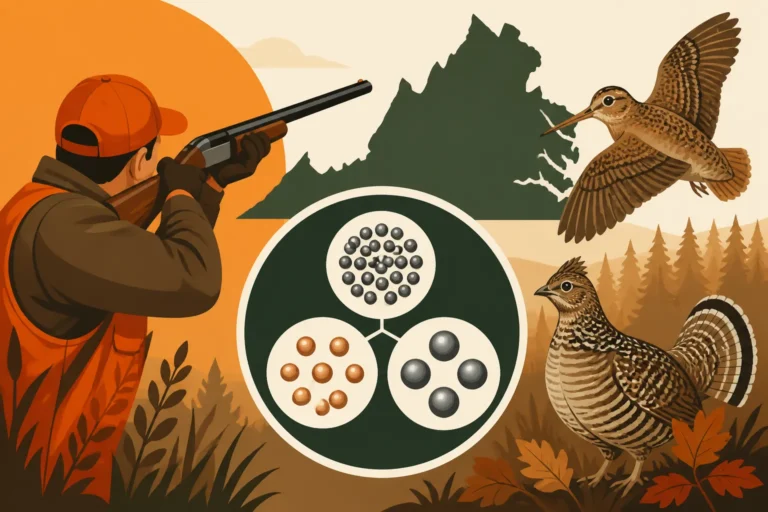
One of the defining features of a double-barreled shotgun, whether an over-and-under or a side-by-side, is the presence of two separate barrels, each with its own choke constriction. This isn't just a quirky design; it's a deliberate engineering choice that offers incredible versatility in the field, especially when pursuing a notoriously unpredictable bird like the ruffed grouse in varied mountain habitats. Most traditional grouse guns, particularly the older doubles, come with fixed chokes, often a combination like Improved Cylinder (IC) and Modified (Mod), or sometimes Skeet and Improved Cylinder.
Why is this a game-changer? Think about the typical grouse flush. Sometimes, a bird explodes from a few feet away, practically at your boot laces, demanding a wide, fast-spreading pattern to hit it cleanly before it gets into the timber. Other times, you might spot a bird slipping away at the edge of your effective range, or it might get a momentary hang-up in a gap, offering a slightly longer shot. With a single-barrel shotgun, you're stuck with one choke, a compromise that might be too tight for those close flushes or too open for the occasional longer shot.
With a double, you have options. You can load your first barrel with an IC choke for those tight, close-range flushes, ensuring a broad pattern that maximizes your chances of connecting. Then, if the bird happens to get out a bit further, or you miss with the first shot and need a follow-up, your second barrel is ready with a tighter choke, like Modified, to reach out a little further and deliver a more concentrated pattern. This immediate flexibility, without having to fumble with screw-in chokes in the heat of the moment, is invaluable. It lets you adapt to whatever the grouse and the cover throw at you, making your shotgun a truly versatile tool for Upland Guns for Mountain Grouse Cover.
Weight and Portability for Uphill Treks
Ask any hunter who has spent a full day chasing grouse in Virginia's mountains, and they'll tell you that fatigue is a real factor. The terrain can be relentless – steep ascents, rocky descents, and endless pushing through thick brush. Every extra pound of gear feels magnified, especially toward the end of the day. This is where the weight advantage of a 20 gauge double-barreled shotgun truly becomes apparent, especially when compared to its larger 12 gauge counterparts.
While a 12 gauge might offer a slightly denser pattern or more pellets, a 20 gauge double, particularly one with alloy receivers or shorter barrels, can shave off a significant amount of weight. We're often talking about a difference of a pound or even two, which might not sound like much on paper, but after hours of climbing and busting brush, that difference is profound. A lighter gun means less strain on your shoulders, arms, and back, allowing you to stay in the field longer and maintain better focus and energy when that critical flush occurs. It's not just about comfort; it's about sustained performance.
Moreover, the compact nature of a double gun, often with 26-inch barrels, means it's less cumbersome to carry. You can sling it over your shoulder, carry it at the ready, or even tuck it under your arm more easily than a longer, heavier gun. This portability is crucial when you're navigating fallen timber, crossing creeks, or scrambling up a rocky incline. It allows you to move more freely and confidently, which is essential for safely and effectively traversing the rugged landscapes found when Hunting West of the Blue Ridge or in the heart of the George Washington National Forest Hunting. A gun that you can carry comfortably all day is a gun you'll enjoy hunting with, and that enjoyment often translates to better performance.
Selecting Your 20 Gauge Double for Virginia's Mountains
Choosing the right 20 gauge double for grouse hunting in Virginia's challenging mountain cover involves more than just picking up the first one you see. There are distinct styles, critical features, and personal preferences that can make a huge difference in your effectiveness and enjoyment in the field. Let's dive into some of the key considerations.
Over-and-Under vs. Side-by-Side
This is often the first decision point for anyone considering a double-barreled shotgun, and it often boils down to a blend of practical utility, personal aesthetics, and historical preference. Both over-and-under (O/U) and side-by-side (SxS) shotguns are excellent choices for grouse, but they offer slightly different feels and sight pictures.
The Over-and-Under configuration, with one barrel stacked directly above the other, tends to offer a single sighting plane, similar to a single-barrel shotgun. Many hunters find this natural and intuitive, making it easier to acquire a target quickly. O/Us also tend to have a slightly more "modern" feel and are often favored for clay target sports, which translates well to field performance. They can sometimes feel a bit "taller" in the hands, but a good O/U 20 gauge is typically very well-balanced and quick to shoulder. They are generally robust and popular for their sleek profile.
The Side-by-Side, on the other hand, presents two barrels next to each other, resulting in a wider sighting plane. Some hunters find this width helps them pick up fast-moving targets, almost like a wider field of view. SxS shotguns often have a classic, nostalgic appeal, harking back to the golden age of upland hunting. They typically feel "flatter" in the hands and can be very quick-handling, especially models with shorter barrels. Many traditional grouse hunters swear by the side-by-side for its historical charm and its wide, forgiving sight picture in dense cover. The choice between an O/U and an SxS is deeply personal; try to shoulder both if possible to see which feels more natural to your eye and hands.
Here’s a quick comparison of the two styles:
| Feature | Over-and-Under (O/U) | Side-by-Side (SxS) |
|---|---|---|
| Sighting Plane | Single, narrow, aligned with barrels | Wider, two barrels side-by-side |
| Balance | Often feels "taller," can be very pointable | Often feels "flatter," can be very quick-handling |
| Aesthetics | Modern, sleek, popular in competition | Classic, traditional, nostalgic |
| Field of View | Can feel more precise | Wider sight picture, some say better for close birds |
| Recoil | Straight-back, often perceived as milder | Can feel more lateral due to barrel spacing |
| Weight | Can be slightly heavier in similar configurations | Often lighter and more compact for busting brush |
Barrel Length and Choke Combinations
For grouse hunting in Virginia's thick mountain cover, barrel length is a critical factor for maneuverability. While longer barrels (e.g., 30 inches) are great for waterfowl or long-range pheasant shooting, they become a liability when you're trying to swing on a bird that flushes 15 yards away in a dense thicket. Most experienced grouse hunters lean towards shorter barrels, typically in the 26-inch or 28-inch range for a 20 gauge. These lengths offer the best compromise between quick handling in tight quarters and sufficient swing for the shots that do present themselves. A 26-inch barrel is incredibly quick to get on target, while a 28-inch barrel might offer a slightly smoother swing on birds that get a little more air.
When it comes to chokes, as discussed earlier, the beauty of a double is having two options. For grouse, a classic and highly effective combination is Improved Cylinder (IC) in the first barrel and Modified (Mod) in the second.
- Improved Cylinder delivers a pattern that's around 40-50% at 40 yards, which is perfect for those close-range flushes in heavy cover, ensuring a broad spread of pellets.
- Modified tightens that up to about 50-60% at 40 yards, offering a denser pattern for follow-up shots or birds that get out a bit further.
This combination provides excellent versatility. Some hunters even prefer a Skeet choke (very open) in the first barrel, followed by an IC, for the absolute tightest cover. If you're fortunate enough to find a modern double with interchangeable choke tubes, you'll have even more flexibility, but many traditional doubles for grouse still feature fixed chokes, which often simplify the decision and keep the gun lighter and more balanced. Remember, when Choke Choice for Fast Flushes, a more open choke often increases your hit probability in tight grouse cover.
Fit and Feel – The Unsung Hero
This cannot be overstated: how a shotgun fits you is arguably more important than its brand, engraving, or even specific choke combination, especially for instinctive shooting on fast-flushing birds. A shotgun that fits properly will mount to your shoulder naturally, with your eye instinctively aligning down the rib without you having to crane your neck or adjust your head. If the gun doesn't fit, you'll be constantly fighting it, resulting in slow mounts, awkward swings, and missed birds.
Key aspects of fit include:
- Length of Pull (LOP): This is the distance from the trigger to the middle of the buttstock. If it's too long, the gun will feel cumbersome and snag your clothing. Too short, and you'll feel more recoil and potentially miss targets high.
- Drop at Comb: This determines how low or high your cheek sits on the stock, affecting where your eye aligns with the rib. If it's too low, you'll shoot high; too high, you'll shoot low.
- Cast: This refers to the lateral bend in the stock, designed to align the shooter's eye with the barrel for right or left-handed shooters.
Because grouse hunting is so reactive, you won't have time to consciously aim. You'll be pointing the gun like you point your finger. If the gun doesn't come up consistently to where your eye is aligned, you'll struggle. Ideally, you should try to shoulder several different shotguns, dry-mounting them quickly, to see which feels most natural. If buying new or used, consider taking it to a reputable gun fitter. They can often make small adjustments to the stock (like adding a spacer or bending the stock slightly) that can transform an "okay" fitting gun into one that feels like it was custom-made for you. Don't underestimate the power of a shotgun that feels like an extension of your own body; it's a true advantage in the grouse woods.
Ammunition Choices and Practical Considerations
Once you've chosen your 20 gauge double, the next step is to pair it with the right ammunition and understand the practicalities of carrying and maintaining your firearm in the often-harsh mountain environment.
Shot Size and Load for Ruffed Grouse
When it comes to ruffed grouse, you're looking for a balance of pellet count and individual pellet energy. The birds aren't large, but they are hardy and can carry a lot of lead if not hit cleanly. For the 20 gauge, generally, 7.5 or 8 shot is considered ideal.
- 7.5 shot offers a good balance of penetration and pellet count. It’s a versatile choice that performs well in both open and slightly tighter chokes.
- 8 shot provides a higher pellet count, which is excellent for creating dense patterns at close range, increasing the probability of hitting a fast-moving bird. Given the typically short ranges of grouse flushes in heavy cover, the increased pellet count often outweighs the slightly reduced individual pellet energy.
Many grouse hunters also prefer lighter, faster loads for their first barrel. Think about a 7/8 oz. or 1 oz. load moving at a good velocity. The idea is to get the pattern to spread quickly, providing a wide "net" for those immediate, close-quarter flushes. For the second barrel, if you're using a tighter choke, a slightly heavier or standard velocity load might be appropriate to maintain pattern density at slightly longer ranges.
Regarding lead versus non-toxic shot, for most upland hunting in Virginia, lead shot is still permissible. However, it’s always wise to check the specific regulations for any particular hunting area, especially if you venture into certain public lands or refuges that might have restrictions. For standard ruffed grouse hunting, lead shot is the norm and provides excellent performance.
Carrying and Maintaining Your Double in the Field
Hunting the mountains for grouse means covering a lot of ground, often steeply and through thick brush. How you carry your shotgun is crucial for both comfort and readiness. A good gun sling is essential. Look for one that's comfortable, adjustable, and won't slip off your shoulder easily. Padded slings are a godsend on long days. When you're actively hunting, however, you'll want to carry the gun "at the ready," either cradled in your arms or by the pistol grip, ready to mount instantly. You don't want to be fumbling with a sling when a bird flushes.
Maintenance is paramount, especially after a hunt in the often-wet, snowy, or muddy conditions of a Virginia mountain autumn or winter. Moisture is the enemy of firearms, particularly wood and blued steel.
- After every hunt, even if it wasn't wet, wipe down the exterior of your shotgun with a lightly oiled cloth to remove any moisture, sweat, or grime.
- If the gun gets wet, disassemble it as much as you're comfortable with (removing barrels, forend) and thoroughly dry all components. Use a soft cloth and compressed air if possible. Then, apply a light coat of gun oil to all metal surfaces to prevent rust. Pay special attention to the areas where the barrels meet the receiver and the inside of the barrels.
- The stock and forend, often made of beautiful walnut, also need care. Wipe them clean and periodically apply a good wood conditioner or stock wax to protect them from moisture and keep the wood from drying out.
- Before storing, ensure the gun is clean and lightly oiled. Store it in a breathable gun sock or case, not a sealed plastic case which can trap moisture.
A well-maintained double will last a lifetime and perform reliably when you need it most. It’s also important to have Boots for Walking Virginia Ridges and proper Brush Pants for Virginia Mountain Laurel to protect yourself while traversing tough terrain.
The GoHunt Advantage in Scouting and Planning
Even with the perfect 20 gauge double in hand, finding ruffed grouse in Virginia's vast mountain ranges can be a daunting task. That's where modern technology, like a detailed mapping application such as GoHunt, becomes an invaluable scouting and planning tool. While GoHunt is often highlighted for big game, its mapping capabilities are incredibly useful for identifying potential upland habitat.
Before you even step foot in the woods, you can use GoHunt's satellite imagery and topographical maps to analyze potential grouse cover. Look for areas within the Jefferson National Forest Hunting or George Washington National Forest Hunting that feature:
- Mature Hardwood Ridges: Grouse often favor mixed hardwoods, especially oaks and beeches that provide mast crops.
- Younger Timber Cuts or Regenerating Forests: These areas, often 5-20 years old, provide dense overhead cover and thick understory, which grouse absolutely love for protection and foraging. Look for clear-cuts or areas that have been selectively logged.
- Mountain Laurel and Rhododendron Thickets: These dense evergreen shrubs provide crucial winter cover and protection from predators. Use GoHunt to zoom in and identify these distinctive dark green patches.
- Old Logging Roads and Trails: These often serve as travel corridors for grouse and offer easier walking for hunters.
You can use GoHunt to drop pins on promising spots, mark potential access points, and plan your routes to avoid overly steep or impenetrable areas. Understanding the topography with contour lines can help you identify benches or saddles where grouse might concentrate. By doing your homework with tools like GoHunt, you're not just walking blindly; you're hunting smarter, increasing your chances of finding those elusive birds and putting your nimble 20 gauge double to good use. It also helps you understand Hunting Pressure on Virginia Public Land and find less-traveled areas.
Mastering the Art of the Upland Flush with a Double
Hunting ruffed grouse is an active, demanding sport that combines elements of a hike, a treasure hunt, and a lightning-fast shooting challenge. Your 20 gauge double is a tool, but mastering its use comes down to technique, knowledge of the birds, and experience in the field.
Reading the Cover and Anticipating Flushes
Ruffed grouse are masters of camouflage and deception. They prefer dense cover, often blending seamlessly into the forest floor until they explode into the air with startling force. To find them, you need to learn to "read" the cover. In Virginia's mountains, this often means focusing on:
- Thick Undergrowth: Areas with dense patches of mountain laurel, rhododendron, greenbrier, or young saplings are prime spots. These provide both food and excellent protection.
- Edges: Grouse often hang out along the edges of different cover types – where a clear-cut meets mature timber, or where a thicket borders a more open patch of woods.
- Mast-Producing Trees: During autumn, look for areas with oaks (especially white oaks) or beech trees, as grouse feed heavily on acorns and beechnuts. Knowing Hunting After a Poor Acorn Year can help you adjust your strategy.
- Water Sources: While not as critical as for other game, grouse will sometimes be found near small springs or seepages, especially in drier periods.
The key is to hunt slowly and deliberately. Walk a few steps, then pause and listen. Grouse will often "foot flush" (run) a short distance before taking flight, and those rustling leaves can betray their presence. Hunt into the wind if possible, as it helps carry your scent away from the birds and allows you to hear flushes better. Work back and forth through promising cover, especially along benches or creek bottoms.
Hunting with a well-trained bird dog, particularly a pointing breed, can dramatically increase your success. The dog helps locate the birds, holds them on point, and gives you a chance to get into position for the shot. Without a dog, you'll need to be even more vigilant and ready for those explosive flushes.
The "Mount, Swing, and Shoot" Mentality
When a grouse flushes, especially in thick cover, you often only have a window of a second or two to make a shot. This requires an almost instinctual reaction, built on repetition and practice. The "mount, swing, and shoot" sequence needs to be fluid and seamless:
- Mount: As the bird flushes, your gun should come smoothly to your shoulder, your cheek firmly on the comb, and your eye aligned down the rib. This needs to happen quickly, without hesitation. Your 20 gauge double's balance and trim profile will assist greatly here.
- Swing: Track the bird with the muzzle, swinging through its flight path. Don't stop your swing! Continue moving the gun even as you pull the trigger. For crossing shots, you'll need to lead the bird. For straight-away shots, aim directly at or just above the bird.
- Shoot: Pull the trigger decisively as your lead or alignment feels right. With a double, you have two chances. If you miss with the first barrel, quickly transition to the second, maintaining your swing.
The open chokes (like IC or Skeet) in your first barrel are forgiving for these close, fast shots, providing a wider pattern that increases your chances of connecting. Practice dry-mounting your gun at home, focusing on smooth, quick movements. This muscle memory will pay dividends in the field.
Ethical Shooting and Shot Placement
Ethical hunting means striving for clean, humane kills. For ruffed grouse, this means understanding your effective range and knowing when not to shoot. With a 20 gauge and typical grouse loads, your effective range is generally considered to be 20-35 yards, depending on your choke and pattern. Beyond that, pellet energy drops off, and your pattern spreads too thin, increasing the risk of wounding a bird.
- Wait for a Clear Shot: Don't shoot at a bird that's obscured by branches or leaves. It's better to let a bird go than to make a poor shot that results in a wounded animal.
- Focus on the Vitals: Aim for the bird's front half, where the head, neck, and chest offer the most vital organs.
- Retrieve Quickly: Grouse often fall into dense cover, making retrieval challenging. If you make a shot, immediately mark where the bird went down and go directly to that spot. A good bird dog can be invaluable here.
Using your 20 gauge double effectively in Grouse Hunting Blue Ridge Cover is a deeply rewarding experience. It connects you to a classic hunting tradition and provides a genuine challenge in some of Virginia's most beautiful, wild places. With the right gun, proper technique, and respect for the game, you'll be well on your way to enjoying some fantastic days afield.
Disclaimer
This article is for general informational purposes only and does not constitute professional advice. Laws, prices and regulations vary by location and change over time. Consult a qualified professional for guidance on your specific situation.