Climbing Sticks for Virginia Hardwoods
Oh, the sheer frustration of trying to get into a prime hunting spot in Virginia, only to be met with thick hardwoods and no easy way to get an elevated vantage point! It's a common dilemma for hunters navigating our beautiful, but often challenging, landscapes. This comprehensive guide will walk you through everything you need to know about choosing, using, and maintaining climbing sticks specifically for the diverse and sometimes unforgiving terrain of Virginia's hardwood forests, ensuring you can reach those key spots safely and effectively.
Why Climbing Sticks Matter for Virginia Hunters
Virginia's hunting landscape is a tapestry of rolling Piedmont hills, steep Blue Ridge mountains, and dense bottomland forests. While ground blinds have their place, getting above a deer's line of sight and scent cone is often the game-changer, especially when targeting mature whitetails. Climbing sticks are your ticket to unlocking those elevated positions where traditional ladder stands or cumbersome climbing stands just won't cut it. They offer unparalleled versatility and access, transforming what might look like an impossible setup into a potential honey hole.
Navigating Varied Virginia Terrain
Imagine hiking deep into the George Washington National Forest, crossing a couple of steep ridges and a creek bottom, only to find the perfect oak flat, heavy with acorns. You might have walked a mile or two, and lugging a heavy ladder stand or a large, awkward climbing stand just isn't feasible. This is where the portability of climbing sticks shines. Whether you're in the steep, rocky Appalachian Mountains, navigating the swampy edges of the Dismal Swamp, or stalking the rolling timber of the Piedmont, a set of lightweight, compact climbing sticks allows you to get into places others can't or won't. They’re designed for mobility, letting you adapt to changing deer patterns or quickly move to a newly discovered pinch point.
The reality is that Virginia's diverse terrain rarely offers perfectly straight, limbless trees ideal for a climbing stand. You’ll encounter gnarled oaks, crooked poplars, and maples with branches starting low. Climbing sticks don't care about these obstacles; they attach independently, giving you the flexibility to work around limbs and find a solid anchor point on almost any tree. This adaptability is critical when you're trying to set up quietly and quickly in a new spot.
The Advantage of an Elevated Position
It's an age-old truth in deer hunting: getting up higher gives you a significant edge. In Virginia's hardwoods, deer often rely on their nose, and a thermal swirling in a creek bottom or a shifting breeze can betray your presence in an instant if you're on the ground. By using climbing sticks to get 15-20 feet or even higher, you elevate yourself above much of the scent cone and offer yourself a wider field of view through the dense canopy. This elevation also makes you less detectable visually, as deer are less likely to look up for danger than they are to scan at eye level.
Think about a crisp November morning during the rut, nestled high in an old oak overlooking a scrape line or a subtle travel corridor. You're out of the deer's primary line of sight and scent, giving you precious extra seconds to identify a buck and make a shot. It also often provides safer shooting lanes, as you're shooting down into the ground rather than through potential branches. This clear advantage is why so many seasoned Virginia hunters rely on climbing sticks to put them in the optimal position for success.
Public Land Regulations and Treestand Use
Hunting on Virginia's public lands, such as the expansive national forests or our numerous Wildlife Management Areas (WMAs), comes with its own set of rules. While specific regulations can vary slightly by area, a common theme is the prohibition of permanent stands or stands that damage trees. Climbing sticks are generally permissible because they are designed for temporary use and don't typically involve screwing into the tree or leaving behind significant damage. This makes them an ideal choice for hunters who frequent public land, offering access to high-quality hunting without running afoul of regulations.
It's always wise to double-check the specific rules for the public land you plan to hunt, as some WMAs might have different requirements than the National Forests. However, the temporary nature of climbing sticks, often used in conjunction with a portable treestand or a saddle hunting setup, makes them compliant in most scenarios. This flexibility means you can scout a new area, find a fresh sign, and set up a stand for a morning hunt, then pull it down and move to a different location the next day, maximizing your opportunities. Remember to always consult the Treestand Rules on Virginia Public Land before you head out.
Types of Climbing Sticks and Their Features
When you start looking at climbing sticks, you'll quickly realize there's a whole world of options out there, each with different materials, attachment methods, and step designs. Understanding these differences is key to picking the right set for your Virginia hunting style, whether you're a run-and-gun bowhunter or someone who prefers a more semi-permanent setup for a few days.
Material Matters: Aluminum vs. Steel vs. Carbon Fiber
The material your climbing sticks are made from directly impacts their weight, durability, and cost.
- Aluminum Sticks: These are perhaps the most common choice for many Virginia hunters due to their excellent balance of strength and weight. Aluminum sticks are significantly lighter than steel, making them a top pick for those long walks into the backcountry or for mobile hunters who move their setups frequently. They're generally robust enough to handle the rigors of hunting season and varying weather, though they can be a bit more expensive than steel. Many popular models from brands like XOP and Lone Wolf Custom Gear are made from high-grade aluminum.
- Steel Sticks: If durability is your absolute top priority and weight is less of a concern, steel sticks might be for you. They are incredibly strong and typically the most budget-friendly option. However, they come with a significant weight penalty, often weighing twice as much or more than aluminum sticks. For short walks from the truck or for sticks you plan to leave in place for an extended period on private land, steel can be a good choice. For serious public land missions or mobile hunting, the weight quickly becomes prohibitive.
- Carbon Fiber Sticks: The Cadillac of climbing sticks, carbon fiber offers the ultimate in lightweight performance. These sticks are incredibly strong and often unbelievably light, making them perfect for hunters who demand the absolute lightest setup possible for deep-woods excursions or extreme mobility. The trade-off, as you might expect, is the price tag. Carbon fiber sticks are typically the most expensive option, a premium investment for hunters looking to shave every possible ounce from their pack.
Attachment Systems: Straps, Chains, and Cam-Buckles
The way your sticks attach to the tree is crucial for both security and ease of use.
- Cam-Buckle Straps: This is arguably the most common and user-friendly attachment system. Cam-buckle straps are quick to deploy, offer a very secure bite on the tree, and are relatively quiet. You simply wrap the strap around the tree, feed it through the cam buckle, and pull it tight. They work well on a variety of tree sizes and shapes found throughout Virginia's timber. However, ensure your straps are durable and don't fray easily, as worn straps can compromise safety.
- Rope/Ammosteel Systems: Some systems utilize a rope or a coated steel cable (sometimes called ammosteel) with a buckle or knot system. These can be incredibly lightweight and quiet, often favored by minimalist saddle hunters. They can take a little more practice to master the attachment method compared to a cam-buckle, but once you get the hang of it, they offer excellent security and can conform well to irregular tree shapes.
- Chain Systems: Less common on modern climbing sticks, chain systems offer extreme durability and a rock-solid attachment. They are heavier and can be noisier during deployment, but once locked in, they aren't going anywhere. You'll more often see chains used on older, more permanent ladder stands or on private land setups where noise and weight are secondary concerns. For public land where mobility is key, they are largely impractical.
When considering attachment systems, think about how quickly and quietly you need to deploy your sticks, and what kind of trees you'll be using. A system that works great on a smooth pine might struggle on a rough-barked oak.
Step Design and Spacing
The design and spacing of the steps on your climbing sticks greatly influence comfort, stability, and packability.
- Single vs. Double Steps:
- Single-step sticks typically have a step on only one side of the stick, requiring you to alternate your feet around the stick as you climb. They are generally lighter and more compact, making them popular for mobile hunters. However, some find them less stable or comfortable for extended climbs.
- Double-step sticks feature steps on both sides, allowing you to place both feet on the stick at the same level. This can feel more secure and comfortable, especially if you're carrying a heavy pack or have larger boots. The trade-off is often increased weight and bulk.
- Step Spacing: Most sticks have a fairly consistent step spacing, usually around 15-20 inches. Wider spacing means fewer sticks are needed to reach a given height, reducing overall weight, but it requires a longer stride, which can be challenging, especially when wearing bulky hunting clothes or carrying a heavy pack. Closer spacing makes for an easier climb but means you'll need more stick sections, adding weight and potentially bulk. Climbing Sticks for Rough Bark is a related consideration here, as rough bark can make wider spacing more difficult to manage.
- Step Texture and Width: Look for steps that offer good grip, even when wet or muddy. Some steps have an aggressive texture, while others might be wider to accommodate larger boots. Wider steps generally feel more secure and reduce foot fatigue during the climb.
Ultimately, the best step design and spacing for you will depend on your personal preference, physical ability, and the typical gear you carry into the woods.
Choosing the Right Climbing Sticks for Virginia Hardwoods
Selecting the perfect set of climbing sticks for hunting Virginia's hardwood forests means weighing several practical factors against your personal hunting style and the specific challenges of the terrain. It's not just about what looks good online; it's about what performs best when you're loaded down with gear, trying to make a silent ascent in the pre-dawn darkness.
Weight and Portability for Long Walks
Let's be honest, those prime spots in Virginia's public land often require a decent hike. Whether you're heading deep into the Jefferson National Forest or navigating a large WMA, every ounce in your pack counts. This is why weight and portability are often at the top of a Virginia hunter's priority list for climbing sticks. Lightweight aluminum or even carbon fiber sticks can make a monumental difference on a mile-plus walk, especially if you're carrying a treestand, backpack, and weapon.
Consider how the sticks stack or nest together. Many modern designs are made to pack down tightly, minimizing bulk and preventing rattling against other gear. Some models even come with integrated carrying straps or bags. A cumbersome, noisy set of sticks that's constantly catching on brush or clanking against your pack isn't just annoying; it can spook game long before you even get to your stand. The ability to pack them securely and quietly is almost as important as their actual weight. When you're using a tool like GoHunt to scout aerial photos of a remote area, you'll instantly appreciate the thought of lighter sticks for that trek.
Height and Stackability for Different Setups
How high do you typically want to get? For many, 15-20 feet is the sweet spot in Virginia's hardwoods, offering excellent concealment and scent control. To reach this height, you'll need enough stick sections. Most sticks come in 2-4 foot sections, so calculate how many you'll need. If you regularly hunt areas with dense undergrowth or heavy thermal activity, you might even want to get higher, requiring more sections.
Stackability refers to how efficiently multiple stick sections connect and carry together. Many systems are designed to nest within each other or connect end-to-end for easy transport. The goal is a compact, manageable bundle. If your sticks don't stack well, they become awkward to carry, especially when trying to navigate through thick brush or over fallen timber. Think about the types of trees you typically climb, and whether you need to bypass low limbs or overcome steep inclines. Having enough height capability while maintaining a compact carry size is the delicate balance you're trying to achieve.
Stealth and Noise Reduction
In a mature Virginia hardwood forest, sound carries. A clanking metal stick or a noisy cam-buckle strap can shatter the silence of a pre-dawn approach and alert every deer within earshot. Stealth is paramount, especially when setting up in tight quarters or near a bedding area. Look for features designed to minimize noise:
- Coated metal parts: Some sticks have rubber or plastic coatings on critical contact points to reduce metal-on-metal noise.
- Quiet attachment systems: Straps or rope systems tend to be quieter than chains. Practice with your chosen system to ensure you can deploy it silently.
- Tight connections: Sticks that fit together snugly without wobbling or rattling are crucial. Loose connections will make noise with every movement.
Consider adding rubber washers, electrical tape, or even pipe insulation to areas that tend to clank. Every little bit of noise reduction helps, turning your ascent into a silent, efficient operation rather than a cacophony of metal. Many hunters spend a lot of time on Entry Routes Through Standing Soybeans or Hunting a Funnel Between Two Hollows – spots where stealth on approach is everything.
Durability Against the Elements
Virginia weather can be fickle. From scorching September heat to freezing December rains and even ice, your gear needs to stand up to the elements. Your climbing sticks will be exposed to moisture, UV rays, and physical impacts from being carried through the woods.
- Corrosion resistance: Aluminum is naturally resistant to rust, but steel needs good powder coating or other finishes to prevent corrosion.
- Strap quality: Inspect straps regularly for fraying, cuts, or degradation from UV exposure. Replace them if there's any doubt about their integrity.
- Robust construction: Look for solid welds and hardware that can withstand repeated use and abuse. Sticks will get bumped, scraped, and occasionally dropped. They need to be built to last through many seasons.
Investing in a quality set of sticks that can handle Virginia's varied weather and terrain means they'll be reliable when you need them most, rather than failing you in a critical moment.
Safe and Efficient Deployment in Virginia
Even the best climbing sticks are only as good as their deployment. Safe and efficient setup is crucial, not just for your personal well-being but also for the success of your hunt. A noisy, fumbling ascent can ruin an otherwise perfect morning, and a haphazard setup can lead to a dangerous situation.
Tree Selection in Hardwood Forests
Choosing the right tree is the foundation of a safe and effective stand setup. In Virginia's hardwood forests, you'll encounter a variety of species, and not all are created equal for treestand use.
- Straight and Healthy: Look for a live tree that is straight, healthy, and free of dead limbs, rot, or significant leans. Avoid trees that look diseased or have obvious signs of structural weakness. Oaks, maples, poplars, and hickory are common and generally good choices, but always inspect the individual tree carefully.
- Diameter: The tree should be of an appropriate diameter for your sticks and stand. Too small, and the stick might spin or feel unstable. Too large, and your straps might not reach, or the stick might not sit flush. Most sticks accommodate trees from about 8 inches to 22 inches in diameter.
- Concealment and Cover: Beyond safety, consider concealment. A tree with some branching at your desired height or a bit of natural camouflage from vines or leaves will help break up your outline. However, don't sacrifice safety for concealment. Sometimes, the best tree for safety isn't the best for cover, and you might need to use natural features or additional camo netting to compensate. Think about how Wind and Thermals on a Blue Ridge Slope will affect your scent cone when choosing your tree.
Always remember that the ground beneath the tree should be relatively clear of obstacles like rocks or sharp stumps, in case of an accidental fall.
Step-by-Step Setup Process
Practicing your setup at home, in daylight, before season opens, is invaluable. When you're in the field in the dark, every movement counts.
- Assess the Tree and Area: Before attaching anything, do a final check of the tree and scan the immediate surroundings for potential hazards or better options.
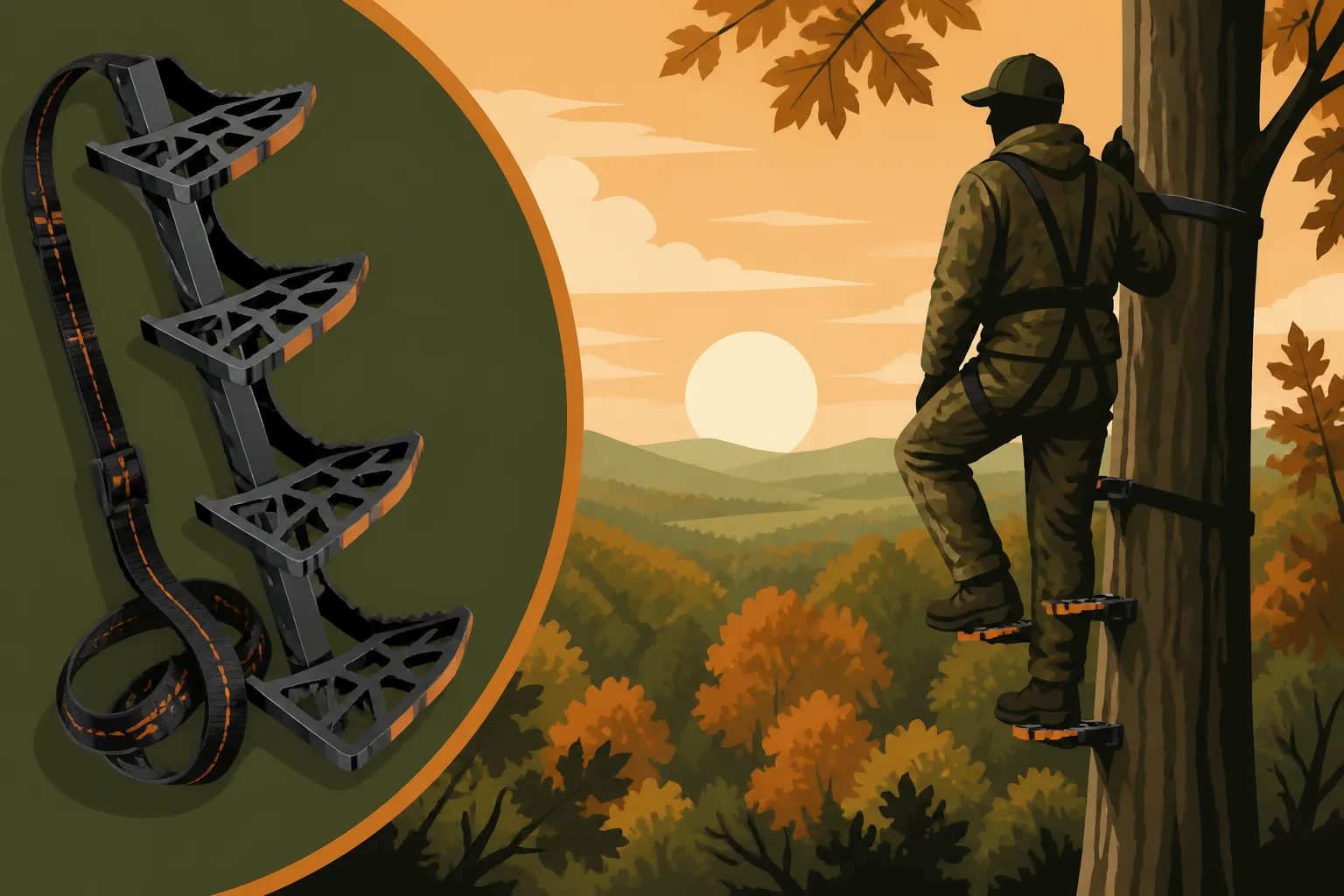
- Attach First Stick: With your safety harness tethered to the base of the tree (if possible, or secured as high as you can reach on the trunk), attach your first climbing stick section at a comfortable height, usually around waist or chest level. Ensure it's pulled tight against the tree and doesn't wiggle. Give it a good tug to confirm stability.
- Ascend and Repeat: Climb onto the first stick. As you get ready to attach the second, deploy your safety harness tree strap (lifeline) and attach yourself to it before proceeding. This is paramount. Then, reach up and attach the second stick as high as you can comfortably and safely reach, ensuring it's also pulled tight.
- Continuous Safety: Continue this process, always remaining tethered to the tree. As you reach the top of your stick sections, attach your portable treestand or saddle platform, ensuring it's also tightly secured. Once the stand is secure, transfer your harness tether from the sticks to the stand's lifeline for your final elevated position. Saddle Hunting in Virginia Hardwoods is a method that integrates very well with climbing sticks for maximum mobility and quiet setup.
Take your time. Rushing leads to mistakes, and mistakes lead to noise or, worse, accidents. Practice makes perfect, and silent, efficient deployment is a skill worth honing.
Essential Safety Practices
Safety should always be your number one priority when using climbing sticks and treestands. No deer is worth a serious injury.
- Full-Body Harness: Always, always, always wear a full-body harness when your feet leave the ground. Period. Attach yourself to the tree or a lifeline before climbing. Many hunters use a lineman's belt for hands-free attachment while ascending and descending.
- Lifeline: A well-installed lifeline that runs from your stand to the base of the tree provides continuous connection as you go up and down. This system means you are never untethered from the tree.
- Inspect Gear Regularly: Before each season, and periodically throughout, inspect all your climbing sticks, straps, buckles, and safety harness for any signs of wear, damage, or defects. Sunlight, moisture, and general use can degrade materials over time. Replace any compromised components immediately.
- Test Weight: Before fully committing your weight to a stick or stand, give it a small test bounce or tug to ensure it's secure.
- Practice in Daylight: As mentioned, practice at home or in a safe area during daylight hours. This builds muscle memory and confidence, which is invaluable when doing it in the dark.
- Tell Someone Your Plan: Let a trusted friend or family member know where you're going and when you expect to return. In case of an emergency, they'll know where to look. Hunting Pressure on Virginia Public Land means there are often other hunters around, but don't rely on them for your safety.
Remember, gravity is unforgiving. Taking shortcuts with safety gear or practices is never worth the risk.
Integrating Climbing Sticks into Your Overall Setup
Climbing sticks aren't just standalone tools; they're often a critical component of a larger, more mobile hunting system. How you integrate them with your other gear, from your treestand to your backpack, can make or break your hunting experience in Virginia's challenging terrain.
Pairing with Treestands and Saddles
The synergy between climbing sticks and a portable treestand or a saddle hunting setup is what makes them so powerful for adaptable hunters.
- Portable Treestands: Sticks are the perfect complement to a lightweight hang-on treestand. You carry your sticks and stand in, attach the sticks to your desired height, then hang your stand. This allows you to hunt virtually any suitable tree, unlike climber stands that require specific tree characteristics. It's the go-to for many public land hunters who need to be able to move quickly and set up where the sign dictates. Just remember to attach your stand after your sticks are secure and you're safely tethered. Consider a scenario where you've Scouted Virginia Public Land Before Season and found a prime bottleneck. Sticks give you the ability to set up precisely there.
- Saddle Hunting: For the ultimate in lightweight and mobile hunting, climbing sticks are almost universally used with saddle hunting. A saddle hunter uses a climbing method (often sticks or a single stick called a "one-stick") to gain height, then girth-hitches a personal bridge to a tree, allowing them to lean back comfortably. This setup is incredibly compact, versatile, and stealthy, perfect for the deep woods of Virginia's mountains or thick river bottoms where traditional stands are too bulky. Many saddle hunters prefer sticks with minimal bulk and weight, like carbon fiber or super-light aluminum, to keep their entire system streamlined. When Hanging a Stand on a Jefferson Forest Ridge, a combination of sticks and a saddle offers maximum flexibility on steep slopes.
Both of these methods allow for incredible adaptability, letting you choose the exact tree and height that makes the most sense for the wind, cover, and game movement on any given hunt.
Packing and Transport Strategies
Getting your sticks to and from your hunting spot silently and comfortably is just as important as the climb itself. A good packing strategy is crucial.
- Integrated Systems: Many climbing stick brands design their sticks to nest or strap directly to their hang-on treestands, creating a single, consolidated unit for carrying. This minimizes loose parts and makes for a more efficient carry.
- External Frame Packs: For hunters who carry a lot of gear or multiple stick sections, an external frame pack can be incredibly useful. Sticks can be strapped vertically to the frame, distributing the weight more comfortably and keeping them from interfering with your movement through brush.
- Custom Straps/Bags: Some hunters create their own custom strap systems or use a dedicated carrying bag to keep their sticks quiet and organized. The goal is to prevent rattling, snagging, and uncomfortable carrying. Packs for a Jefferson Forest Day Hunt often need to accommodate climbing sticks and a treestand comfortably.
Before each hunt, take a moment to pack your sticks strategically. Lay out your gear and figure out the most efficient and quiet way to carry everything. A quick, quiet approach can be the difference between seeing that buck and alerting him to your presence.
Scouting for Optimal Placement
You wouldn't just throw a dart at a map and expect to find a deer. The same goes for climbing stick placement. Effective scouting is paramount.
- Pre-Season Reconnaissance: Use tools like GoHunt (or other mapping apps) to identify potential pinch points, funnels, ridge lines, and bedding areas. Look for changes in elevation, water sources, and different timber types that deer might favor. Then, get boots on the ground to confirm your suspicions and find fresh sign.
- On-Site Assessment: Once you're in the woods, look for fresh rubs, scrapes, tracks, and droppings. Identify common travel corridors between bedding and feeding areas. This fresh sign will guide your precise stand placement.
- Wind and Thermals: Always consider the prevailing wind and thermal currents. You want your scent to blow away from where you expect deer to approach. This is especially critical in hilly or mountainous terrain where thermals can shift throughout the morning and evening. You can learn a lot from scouting the lay of the land, especially regarding Wind and Thermals on a Blue Ridge Slope.
Climbing sticks give you the flexibility to be opportunistic. If you scout a new hot sign in a remote area, you can quickly and quietly move your entire setup to capitalize on it, rather than being restricted by bulky or heavy equipment.
Maintenance and Longevity of Your Sticks
Your climbing sticks are an investment in your hunting success and safety. Like any piece of gear, they require proper care and maintenance to ensure they perform reliably season after season, especially given the harsh conditions they can endure in Virginia's woods.
Post-Season Cleaning and Inspection
Once the last deer season wraps up, don't just toss your sticks in the garage. A thorough post-season cleaning and inspection will prolong their life and ensure they're ready for action next year.
- Thorough Cleaning: Remove all mud, dirt, leaves, and debris from your sticks. A stiff brush and some water, possibly with a mild soap, can do the trick. Pay close attention to pivot points, step attachments, and strap buckles where grime can accumulate. Rinse thoroughly and allow everything to dry completely to prevent rust or mildew.
- Hardware Check: Inspect all bolts, nuts, rivets, and welds. Are any loose, bent, or showing signs of stress? Tighten any loose fasteners. If you see cracks or severe bending, it might be time to replace that section or the entire stick.
- Strap Inspection: The straps are perhaps the most critical component for safety. Look for any fraying, cuts, abrasions, UV degradation (cracking or stiffening), or signs of rodent damage. If a strap looks compromised in any way, replace it immediately. Never take chances with a worn strap.
- Cam Buckle/Attachment Mechanism: Ensure the cam buckles or other attachment mechanisms are functioning smoothly and securely. Clean out any grit that might be preventing them from engaging properly. Test them on a tree if you have any doubts.
This annual ritual is more than just maintenance; it's a safety check that gives you peace of mind when you climb into a tree next fall.
Storage Tips for Off-Season
How you store your sticks during the off-season matters just as much as how you clean them. Improper storage can lead to premature wear and damage.
- Dry, Cool Location: Store your climbing sticks in a dry, cool place away from direct sunlight. Excessive heat and UV exposure can degrade plastic and fabric components over time. A garage, basement, or shed that doesn't experience extreme temperature swings is ideal.
- Pest Protection: Rodents love to chew on straps and ropes. Consider storing your sticks in a container that pests can't access, or at least keep them elevated off the floor.
- Organized Storage: Keep your sticks organized. If they nest, stack them together. If they have straps, keep them neatly rolled or folded. This prevents tangles, makes them easy to grab when needed, and reduces the chance of accidental damage during storage.
Taking the time to store your sticks properly ensures they'll be in prime condition when the next Virginia hunting season rolls around.
Addressing Wear and Tear
Even with the best care, your climbing sticks will experience some wear and tear over time. Knowing how to address common issues can save you from having to buy a whole new set.
- Replacing Straps: This is perhaps the most common component that needs replacement. Many manufacturers offer replacement straps, or you can find high-quality aftermarket options. Always use straps rated for the appropriate weight and designed for climbing sticks.
- Lubricating Moving Parts: If your cam buckles or other articulated parts become stiff or squeaky, a light application of a silicone-based lubricant can help. Avoid oil-based lubricants that might attract dirt or become sticky.
- Minor cosmetic damage: Scrapes, dings, and chipped paint are normal, especially on aluminum sticks. These generally don't affect structural integrity. However, if you see any deep gouges, bends, or cracks in the metal, that's a red flag.
- Rust: If you have steel sticks and notice rust developing, particularly on critical load-bearing components, it's a serious concern. Light surface rust can sometimes be treated, but deep pitting rust indicates a compromised structure.
If you are ever in doubt about the safety or structural integrity of any part of your climbing sticks, err on the side of caution and replace the component or the entire set. Your life is worth more than saving a few dollars.
Climbing Stick Comparison Table
To help you visualize the different types of climbing sticks and their primary characteristics for Virginia hunting, here's a quick comparison:
| Feature | Aluminum Sticks | Steel Sticks | Carbon Fiber Sticks |
|---|---|---|---|
| Weight | Moderate (Good balance) | Heavy (Most budget-friendly) | Ultra-light (Premium performance) |
| Durability | Very Good | Excellent (Most robust) | Excellent (Highest strength-to-weight) |
| Cost | Moderate | Low | High (Premium investment) |
| Portability | High (Great for long walks) | Low (Best for short distances/semi-permanent) | Very High (Ideal for extreme mobility) |
| Stealth | Good (Can be improved with wraps) | Moderate (Prone to noise if not managed) | Excellent (Inherently quiet) |
| Corrosion | Excellent Resistance | Moderate Resistance (Depends on coating) | Excellent Resistance |
| Typical Use | Mobile public land, general purpose | Private land, short walks, budget-conscious | Backcountry, minimalist, saddle hunting |
Disclaimer
This article is for general informational purposes only and does not constitute professional advice. Laws, prices and regulations vary by location and change over time. Consult a qualified professional for guidance on your specific situation.