What Virginia Trespass Law Requires
Few things can ruin a hunting season faster than the unsettling realization that you might be, or worse, are, on someone else's land without permission. It’s a common worry for even the most conscientious Virginia hunters, especially when navigating mixed ownership parcels or public land edges. This guide aims to clear up the often-confusing world of Virginia's trespass laws, specifically what they mean for us as hunters, so you can hunt with confidence and respect for private property.
Understanding Virginia's Basic Trespass Laws for Hunters
Before you even step foot into the woods with your bow or rifle, it’s absolutely crucial to understand the foundation of Virginia's trespass laws. It’s not just about a "No Trespassing" sign; the law has specific definitions that apply to hunters, and ignorance is rarely an acceptable excuse. For us, respecting these boundaries isn't just about avoiding a fine; it's about upholding the integrity of the hunting community and maintaining good relationships with landowners, which are vital for future access and opportunity.
What Constitutes Illegal Entry in Virginia
In Virginia, simply entering or remaining upon another's land without permission can constitute trespass. This isn't just about driving a truck onto someone's field; it includes walking, setting up a stand, or even just tracking a wounded animal if you cross a boundary. The law doesn't necessarily require "intent to trespass" to be present, meaning even an accidental boundary crossing can still be considered a violation, though penalties might differ. Imagine you're deep in the George Washington National Forest, pursuing a deer you've been Still-Hunting Jefferson Forest Ridges, and you unknowingly step across an unmarked property line into a private timber tract. Even if you didn't mean to trespass, you've still entered private land without permission, which is the core of the issue.
The legal definition focuses on the act of entry without lawful authority or permission. This applies to all land, whether it's clearly marked or not, although the presence of "No Trespassing" signs or purple paint certainly strengthens the landowner's case and can impact the severity of the charge. It's a fundamental responsibility of every hunter to know where they are and whose land they're on, a task that can be incredibly challenging in the varied landscapes of our state, from the dense mountain forests to the patchwork farm fields of the Piedmont.
Different Classes of Trespass and Penalties
Virginia law classifies trespass offenses, and for hunters, these can range from a Class 1 misdemeanor, carrying potential jail time and significant fines, to more specific violations related to hunting. A general trespass charge might apply if you simply walk onto someone's land. However, if you are actively hunting, trapping, or fishing on someone else's property without permission, especially after being forbidden to do so, the penalties often increase. This distinction is vital. It’s one thing to accidentally wander onto a property line while scouting; it’s another to set up a deer stand and hunt knowingly where you shouldn't be.
The legal system takes hunting trespass seriously because it impacts both private property rights and wildlife management. Repeated offenses or trespass combined with other violations (like hunting out of season or without a license) can lead to more severe consequences, including the loss of your hunting privileges. It’s not just about a simple ticket; it can affect your ability to enjoy the outdoors for years to come. Virginia wants to ensure that those who enjoy its natural resources do so responsibly and legally.
The Nuance of "Posted" Land and Obtaining Permission
The term "posted land" is one we hear often, but its implications for hunters are sometimes misunderstood. It's not just about a sign; it's about clear communication from the landowner regarding their intent. Securing proper permission is your first, best line of defense against any trespass accusation, and understanding the different ways permission can be granted (or denied) is paramount.
What "Posted" Really Means in Virginia
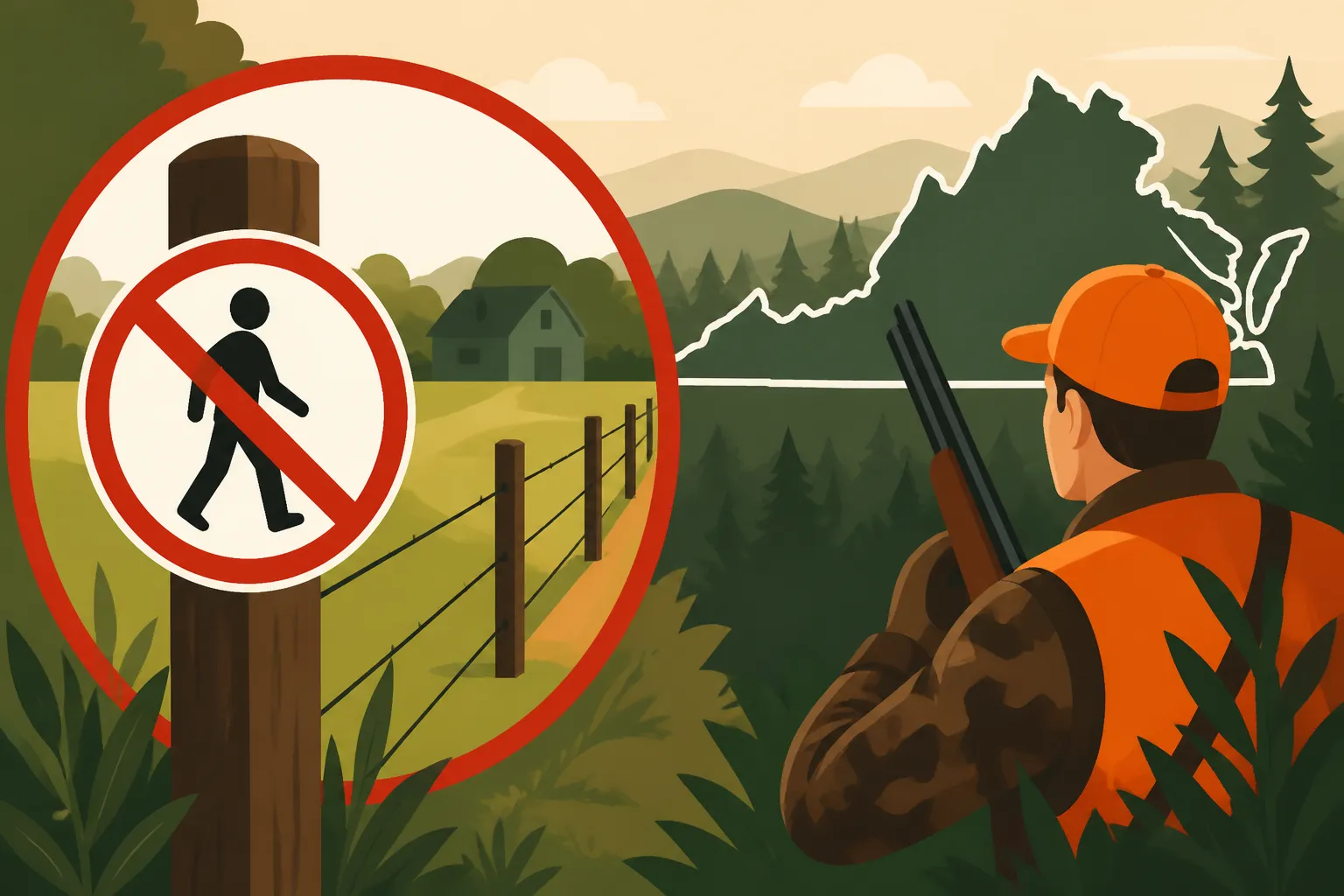
In Virginia, "posted" land generally refers to property where the owner has taken clear steps to warn others against trespassing. This most commonly involves placing signs that read "No Trespassing," "Private Property," or similar warnings. These signs must be conspicuous and placed at regular intervals, typically no more than 100 yards apart, along the property boundaries, and at gates or entrances. You might also encounter property marked with purple paint on trees or posts. This is a legally recognized method of posting land in Virginia. A clearly visible band of purple paint around trees or posts, at specific heights and intervals, serves the same legal purpose as a written "No Trespassing" sign. This purple paint rule is often seen as a landowner-friendly alternative, reducing the need for constant sign maintenance.
The presence of these markings removes any doubt about whether a reasonable person should have known they were on private land. If you cross a boundary clearly marked with "No Trespassing" signs or purple paint, and you don't have permission, you're willfully trespassing. This isn't an accident anymore. Even if the land isn't explicitly posted, it's still private property, and you still need permission to enter. The signs simply make the landowner's intent undeniably clear and can lead to more straightforward prosecution for intentional violations. It underscores why Finding Virginia Property Lines is so important, especially when these lines might not always be marked explicitly.
Verbal vs. Written Permission: Which is Best?
When seeking permission to hunt private land, the age-old question often arises: is verbal permission enough, or do you need something in writing? While verbal permission is legally valid in Virginia, written permission is always, always, always your best bet. A handshake agreement is great for building rapport with a landowner, and many of us have relied on them for years. However, memories fade, circumstances change, and if a dispute arises, it can become a "he said, she said" situation. Imagine you've been given verbal permission by Farmer John to hunt his back forty, only for his nephew, who also hunts, to spot you there and call the Department of Wildlife Resources (DWR) because he wasn't aware you had permission. Without anything in writing, you're left to explain the situation, which can be stressful and problematic, even if you are ultimately cleared.
Written permission clarifies everything. It documents who has permission, for what specific land, for what duration, and for what activities (e.g., deer hunting, turkey hunting, specific dates). A simple signed note, an email, or a formal hunting lease agreement can provide this clarity. It protects both you and the landowner. For sensitive areas, or if you're Hunting Small Private Tracts in Virginia where neighbors are close, written permission offers peace of mind. Some landowners even require you to sign in and out, or carry a specific tag, which acts as a formal record of your presence. Always ask the landowner what they prefer, but lean towards getting it in writing, even if it’s just a text message confirming the details. In fact, many guides strongly recommend it, especially when Asking a Virginia Farmer for Permission for the first time.
Implied Permission and Its Limitations
"Implied permission" is a tricky concept, and for hunting, it's generally a path fraught with risk. Implied permission usually arises when a landowner takes no action to prevent someone from using their land, and that use has been ongoing and known to the landowner without objection. For example, if a path has been openly used by hikers for years without a "No Trespassing" sign or any attempt by the landowner to stop them, implied permission might exist for recreational walking.
However, for hunting, you should never rely on implied permission. Hunting is an activity with inherent risks and specific regulations, and landowners typically want to know exactly who is on their property, when, and for what purpose. The potential for liability, property damage, or safety concerns means that landowners almost always prefer explicit permission for hunting. A landowner who tolerates hikers might be vehemently opposed to hunters. Always assume that for hunting, explicit, ideally written, permission is required unless you are on designated public land. Don’t gamble your season, your reputation, or your legal standing on the assumption of implied permission.
Leveraging Technology and Due Diligence to Stay Legal
In today's hunting world, we have incredible tools at our fingertips that can drastically reduce the chances of accidental trespass. Gone are the days of relying solely on paper maps and compasses to figure out property lines in dense woods. Modern technology, combined with good old-fashioned scouting, makes it easier than ever to be a responsible hunter.
Using Digital Mapping for Property Line Awareness
Digital mapping applications have revolutionized how hunters understand land ownership. Tools like onX Hunt have become indispensable for countless hunters across Virginia. These apps use GPS technology to show your exact location in real-time, overlaid on parcel maps that display property lines, landowner names, and land types (public, private, WMA, National Forest). This is incredibly powerful, especially when you're hunting near the edges of public lands or in areas with fragmented private ownership. For example, when you're Scouting Virginia Public Land Before Season, you can use an app to walk the boundaries, identify potential access points, and note adjacent private holdings.
Imagine you're hunting in a region where Reading Aerial Photos for Piedmont Deer is crucial. An app like onX Hunt allows you to toggle between satellite imagery, topo maps, and parcel data, giving you a comprehensive view of the landscape and who owns what. You can see agricultural fields, timber stands, creek bottoms, and where those features cross property lines. Before you even leave your truck, you can identify potential hotspots on public land, and just as importantly, see exactly where the private property begins. Many hunters also rely on platforms like GoHunt for detailed land information, especially useful for researching larger tracts and understanding general ownership patterns before diving into specifics with a landowner. These tools provide a level of spatial awareness that was unheard of just a couple of decades ago, giving you no excuse for not knowing where you are.
Scouting and Physical Boundary Checks
While digital maps are a game-changer, they don't replace the need for physical scouting and checking property boundaries on the ground. GPS signals can be spotty in deep hollows or under heavy canopy, and map data, while usually very accurate, isn't always perfect. Always cross-reference your app with physical markers. Look for posted signs, purple paint, fences, old survey markers, or changes in timber cuts that often indicate property lines. When hunting areas that are a mix of public and private, like many tracts adjacent to the George Washington or Jefferson National Forests, a physical walk of the boundary is essential.
Before setting up a treestand or a ground blind, especially if you're Hanging a Stand on a Jefferson Forest Ridge near a suspected property line, confirm your location. Walk out the boundaries as displayed on your app and compare them to what you see on the ground. Look for discrepancies. Sometimes, a creek shown as a boundary on a map might actually have the property line running parallel to it a few yards back into the woods. If there's any doubt, err on the side of caution and stay well within what you know is legal ground. A few extra minutes of scouting can save you a lot of headache later.
Communication with Landowners and Neighbors
Open and honest communication is perhaps the most powerful tool against trespass. If you have permission to hunt a parcel, make sure you understand the landowner's specific rules and expectations. Do they want you to check in? Are there areas off-limits? Can you drive a vehicle on their property? Are gates to be kept closed or open? Knowing these details up front prevents misunderstandings.
Furthermore, if you're hunting close to a property line, it can be a good idea to introduce yourself to the adjacent landowner, if possible. A quick conversation can prevent a lot of anxiety and calls to the game warden. For example, if you're Hunting a Ridge-Top Saddle for Rutting Bucks and you know the property line is right at the crest, a friendly chat with the neighbor can alert them to your presence and prevent them from thinking you're trespassing if they hear a shot or see your vehicle. Many landowners appreciate the courtesy, and it fosters a positive image for hunters in general. Respectful behavior goes a long way.
Here’s a quick overview of how technology helps and what hunters should still do on the ground:
| Aspect | Digital Mapping Benefits (e.g., onX Hunt, GoHunt) | Crucial On-the-Ground Actions |
|---|---|---|
| Property Line ID | Real-time GPS location overlaid on parcel maps with owner info. | Visually confirm signs (No Trespassing, purple paint), fences, natural boundaries, and old markers. |
| Scouting & Planning | Pre-scout potential access, identify food sources, bedding areas, and public/private interfaces. | Physically walk boundaries, identify ground features that match maps, and confirm topography. |
| Avoiding Accidental Trespass | Alerts for boundary crossings, clear visual representation of where you are relative to property lines. | Always err on the side of caution; if in doubt, stay clearly on known legal ground. Double-check before setting up. |
| Landowner Relations | Provides specific landowner names to facilitate permission requests. | Establish clear communication and get explicit, ideally written, permission. Understand specific landowner rules and expectations. |
| Legal Protection | Provides evidence of due diligence if a dispute arises, showing you attempted to know boundaries. | Carry written permission at all times if hunting private land. Be prepared to explain your location and purpose politely. |
The Serious Ramifications of Hunting Trespass in Virginia
Trespassing while hunting isn't just a minor infraction; it carries significant legal, financial, and ethical consequences. It can damage your reputation as a hunter, harm relations between hunters and landowners, and impact the future of hunting access in Virginia. Understanding these ramifications should reinforce the importance of meticulous planning and adherence to the law.
Legal Penalties and Fines
Virginia law is quite clear on the penalties for hunting trespass. As mentioned, it can often be a Class 1 misdemeanor, which is the most serious class of misdemeanor in Virginia. This means potential jail time (up to 12 months), a substantial fine (up to $2,500), or both. If you are found guilty of hunting, trapping, or fishing on posted property after having been forbidden to do so, the penalties can be severe. This is not a traffic ticket. A conviction for a Class 1 misdemeanor goes on your criminal record, which can impact employment opportunities, background checks, and even your ability to own firearms in some circumstances.
Beyond the general trespass laws, there are specific wildlife violation penalties that can apply. The DWR takes these offenses seriously. Imagine you’re caught with an antlered buck on private land without permission; not only would you face trespass charges, but potentially also charges for unlawfully taking game, which carries its own set of fines and additional penalties, including replacement costs for the animal. Virginia Wildlife Violation Penalties are designed to deter illegal activities and protect both landowners' rights and wildlife resources. It's a heavy price to pay for what could have been avoided with a simple permission slip or better map work.
Loss of Hunting Privileges
One of the most immediate and impactful consequences for a hunter caught trespassing is the potential loss of hunting, trapping, and fishing privileges in Virginia. The DWR has the authority to suspend or revoke your license for a period of time, which could range from a year to several years, depending on the severity and nature of the offense, and whether it's a repeat violation. If your privileges are revoked, you won't be able to buy a hunting license, much less legally hunt, anywhere in Virginia. This can be devastating for someone who lives for the outdoors and plans their year around the seasons, from Bowhunting Virginia's Statewide Archery Season to Spring Turkey Hunting in Virginia.
Furthermore, some states have reciprocity agreements, meaning if you lose your hunting privileges in Virginia, you could potentially lose them in other states as well. This ripple effect can extend across state lines, severely limiting your ability to pursue your passion. It's a stark reminder that our hunting licenses are privileges, not rights, and they come with the responsibility to respect the law and private property.
Damaged Landowner-Hunter Relations
Beyond the legal and financial repercussions, trespassing fundamentally erodes trust between landowners and hunters. When a landowner discovers someone hunting on their property without permission, it often leads to anger, frustration, and a general distrust of all hunters. This makes it harder for everyone to secure future hunting access. Many private landowners are hesitant to allow hunting due to concerns about safety, property damage, or simply not knowing who is on their land. A single act of trespass can confirm their worst fears and solidify their decision to post their entire property and deny all future requests.
Consider the cumulative effect: if enough hunters trespass, more and more private land becomes inaccessible. This reduces available hunting grounds, especially for popular species like white-tailed deer, and can push more pressure onto public lands, making quality hunts harder to find for everyone. Respecting private property isn't just about personal responsibility; it's about being a good ambassador for the entire hunting community and ensuring that future generations have opportunities to Hunting East of the Blue Ridge or Hunting West of the Blue Ridge on private ground. By diligently obtaining permission, knowing boundaries, and adhering to landowner rules, we contribute positively to the future of hunting in Virginia.
Disclaimer
This article is for general informational purposes only and does not constitute professional advice. Laws, prices and regulations vary by location and change over time. Consult a qualified professional for guidance on your specific situation.