Hunting a Ridge-Top Saddle for Rutting Bucks
Finding a mature buck during the Virginia rut can feel like chasing a ghost, especially when they seem to vanish into thin air. Many hunters focus on food plots or creek bottoms, but often overlook some of the most consistent travel corridors high up in the hills. This guide will walk you through precisely why ridge-top saddles are absolute magnets for rutting bucks and how you can effectively hunt these prime locations to increase your success this season.
Understanding Why Bucks Use Ridge-Top Saddles During the Rut
Ridge-top saddles, those dips or low spots along a ridge line, might not look like much at first glance, but they are nature's highways for deer, particularly during the breeding season. Bucks, driven by the urge to find does, become incredibly active, and these topographical features offer them a strategic advantage they simply can't resist.
The Natural Funnel Effect
Think of a ridge-top saddle as a natural funnel. Deer moving from one side of a mountain or ridge to another will almost always take the path of least resistance. Instead of constantly climbing over the highest peaks, they'll drop down into these saddles. This creates a predictable travel corridor, concentrating deer movement through a relatively small area. During the rut, this funnel effect is amplified. Bucks cruising for does will follow these saddles, knowing that any doe moving between drainages or feeding areas is likely to use the same route. It’s like a deer superhighway, making it easier for them to cover ground efficiently while still checking for estrous does. This natural funnel isn't just about ease of travel; it's about efficiency in scent-checking and minimizing energy expenditure during a demanding time of year.
Overcoming Topographical Challenges
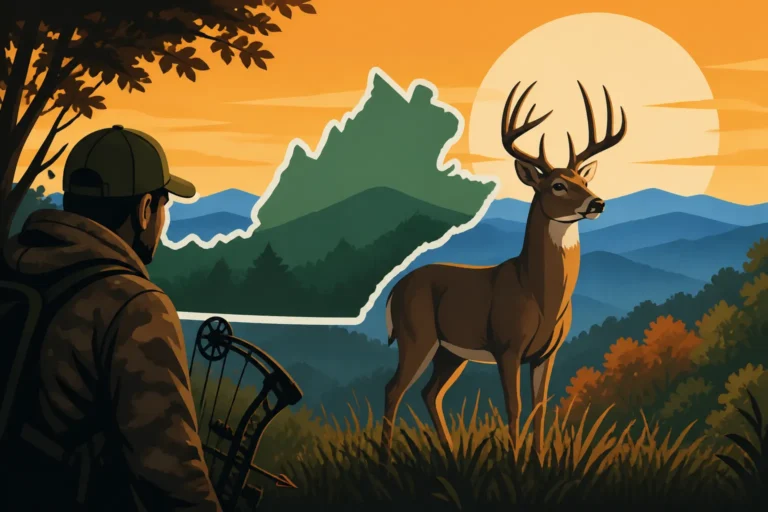
Hunting the vastness of the Blue Ridge or George Washington National Forest can be daunting. The terrain is often steep, rugged, and dense. For deer, especially mature bucks, these saddles provide a crucial navigational aid. They allow deer to traverse difficult terrain with less effort, offering a brief reprieve from steep climbs. Furthermore, these dips in the ridge often collect moisture, leading to different vegetation growth that can offer additional browse or cover, further enhancing their appeal. Imagine a buck moving from a bedding area on one side of a mountain to a feeding area or known doe group on the other. Bounding over jagged rocks and thick underbrush consumes precious energy. A saddle, however, presents a smoother, often less strenuous passage, making it a preferred transit point for any deer, but especially for a buck with a single-minded purpose. Understanding the subtle ways deer interact with these topographical challenges is key to anticipating their movements. When you’re trying to connect the dots on where a mature buck might be, consider how he would choose to navigate the landscape.
How Dominant Bucks Utilize These Spots
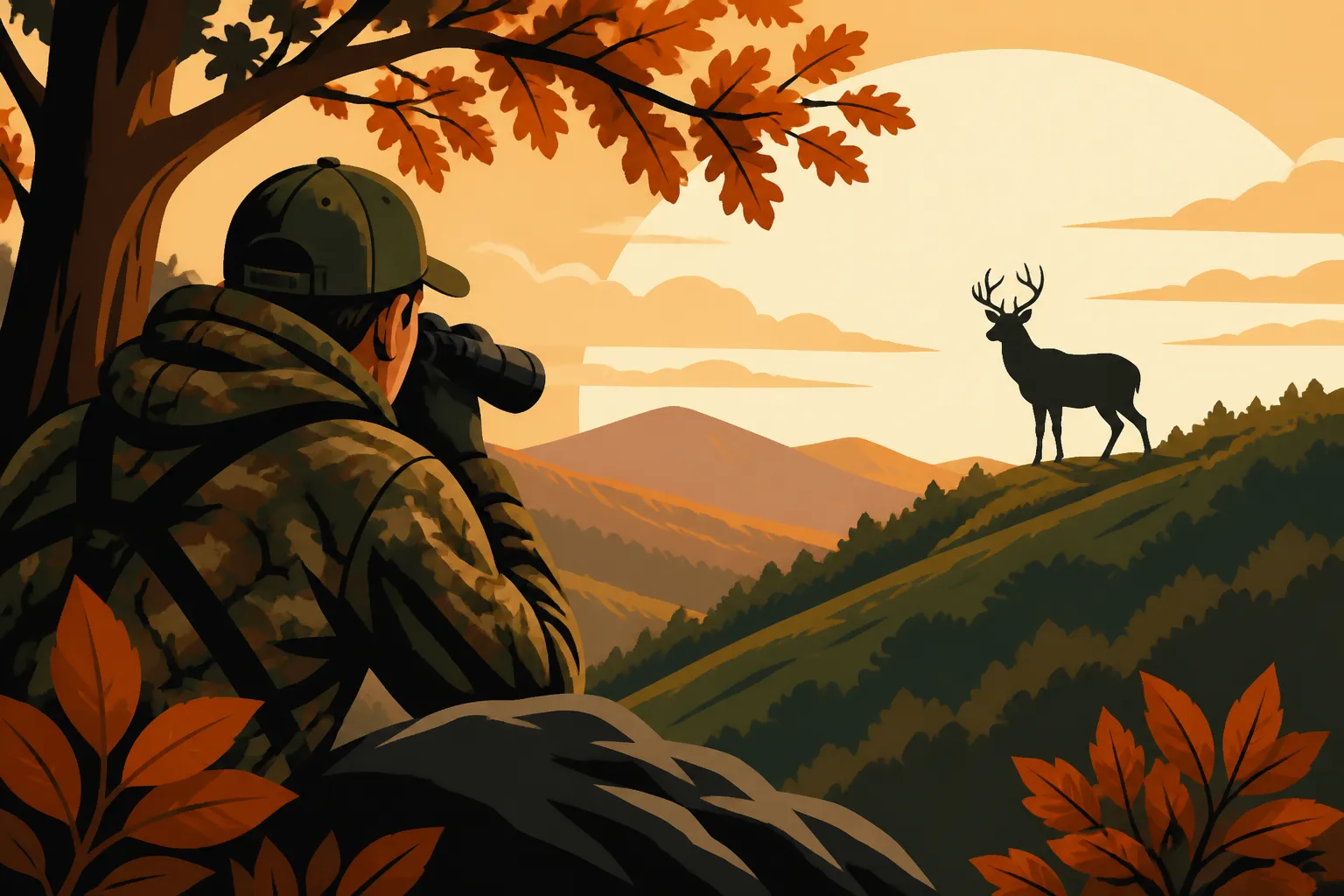
Dominant bucks, those bruisers we all dream of encountering, are masters of efficiency and strategic movement. During the rut, their priority is to find and breed does while minimizing exposure to other bucks and human pressure. Ridge-top saddles offer several advantages for them. They provide elevated vantage points on either side, allowing a buck to scent-check for does and other bucks without fully exposing himself. They also act as natural bottlenecks where bucks can intercept does moving between different sections of their home range. It's not uncommon for a mature buck to scent-check a saddle, then circle downwind to approach any doe he detects. These locations often become scraping and rubbing hubs, signaling a buck's presence and dominance. You might find a whole line of scrapes along a logging road that traverses a saddle, or rubs on trees along the distinct trail that crosses through. These are prime indicators that a dominant buck is actively using the area, leaving his calling card for any receptive doe – and any observant hunter. They're like the buck's personal signposts, telling you exactly who’s been passing through.
Scouting and Locating Promising Saddle Locations
You can’t just walk out into the woods and expect to stumble upon the perfect saddle. Effective saddle hunting begins long before the season opens, with careful scouting and an understanding of the terrain. This strategic preparation is what separates consistent success from mere luck.
Aerial Photo Analysis and Topo Maps
Before you ever step foot in the woods, the best place to start is with your maps. Modern tools like GoHunt's mapping features or other mapping applications are invaluable for identifying potential saddle locations. Look for ridge lines and then zoom in to find those distinct dips. Pay attention to how these saddles connect different drainages, clear-cuts, or bedding areas. A saddle that connects a thick bedding area to a known food source, or links two different hollows where does might frequent, is a high-percentage spot. Also, note the steepness of the terrain on either side of the saddle; the steeper the climb, the more likely deer will utilize the lowest point. I often spend hours studying these maps, marking potential spots even weeks before I can get boots on the ground. It helps me develop a mental map of deer movement and predict likely travel routes. If you’re hunting on new public land, this digital scouting is absolutely critical for narrowing down vast expanses into manageable, promising areas. For more on this, check out how to use Reading Aerial Photos for Piedmont Deer.
Boots-on-the-Ground Verification
Once you’ve identified potential saddles on your maps, it’s time to hit the woods. This is where you verify your digital findings and truly understand the lay of the land. Walk the ridge lines, noting the natural flow of deer trails. Look for well-worn trails leading directly into and out of the saddle. Pay close attention to any secondary trails that might run along the contours, parallel to the ridge, that also converge on the saddle. During the early season, or even the late summer, look for old rubs and scrapes from previous years. These tell you that the area has a history of buck activity. In the rut, you'll be looking for fresh sign: large tracks, fresh rubs, and active scrapes. Remember, a saddle isn't just a low point; it's a dynamic intersection of deer movement. It’s also crucial to identify prevailing winds and thermal currents, which can be tricky in mountainous terrain. Observing how Wind and Thermals on a Blue Ridge Slope affect scent dispersion can make or break your setup.
Reading Sign for Rutting Activity
The rut changes everything, and deer sign reflects that. When scouting saddles during the rut, you're looking for specific clues that indicate active buck cruising and doe activity.
- Fresh Scrapes: These are perhaps the most exciting sign. Bucks will paw away leaf litter, urinate in the exposed dirt, and often lick or rub an overhanging branch (the "licking branch"). Fresh scrapes, especially multiple ones forming a "scrape line" through a saddle, are undeniable proof that bucks are actively working the area. These aren't just random acts; they're communication hubs.
- Aggressive Rubs: While rubs are present throughout the year, rutting bucks make them more intensely and on larger trees. Look for fresh bark shavings on the ground and trees with polished, damaged bark. These are territorial markers and a way for bucks to vent their aggression. A cluster of fresh rubs near a saddle signals a dominant buck’s presence.
- Large Tracks: Fresh, large tracks (especially if you can differentiate them from doe tracks by size and drag marks) are a great indicator. Bucks often drag their feet slightly, leaving a tell-tale mark.
- Doe Sign: Don't forget the does! If you find fresh doe tracks and droppings in and around the saddle, it means does are frequenting the area, which, in turn, means bucks will be too. A saddle that routinely sees doe activity becomes a hotspot for rutting bucks.
Here’s a quick overview of what to look for when scouting:
| Sign Type | Rutting Activity Indicator | Importance |
|---|---|---|
| Fresh Scrapes | Exposed earth, strong urine smell, licked branch | High; active buck communication hub |
| Aggressive Rubs | Bark shavings, deep gouges on larger trees | High; territorial marking, buck presence |
| Large Tracks | Clear, broad tracks, slight drag marks | Medium-High; indicates mature buck travel |
| Doe Activity | Fresh doe tracks, droppings | High; where does are, bucks will follow |
| Well-Worn Trails | Deeply worn paths through the saddle | High; consistent travel corridor |
| Bedding Areas | Thick cover, matted down grass nearby | Medium; indicates proximity to security cover |
Effective Hunting Strategies for Virginia Saddles
Once you've done your scouting and pinpointed those high-potential saddles, it's time to craft your hunting strategy. This isn't just about showing up; it's about understanding the nuances of the terrain and deer behavior to put yourself in the best possible position for success.
Playing the Wind and Thermals
In mountainous terrain, wind and thermals are everything. They are constantly shifting, and a slight change can carry your scent directly to a buck before he ever steps into view. Early mornings, as the sun begins to warm the earth, thermals will generally rise, carrying your scent uphill. In the evenings, as the air cools, thermals tend to drop downhill. However, ridge-top saddles create unique microclimates where wind currents can swirl and become unpredictable. Always hunt with the wind in your favor, anticipating how it will shift throughout your sit. I always check multiple weather apps and even carry a small powder bottle to visually confirm wind direction at my stand. A buck approaching a saddle will almost always circle downwind to scent-check for danger before committing. If you don't account for this, he'll smell you every time. This is especially critical when you're perched on a ridge, often exposed to unpredictable air currents. Don't be afraid to adjust your stand location or even abort a hunt if the wind isn't right. It’s better to hunt another day than to blow out a prime location. Understanding how to navigate tricky air currents is paramount for success, especially when considering Wind and Thermals on a Blue Ridge Slope.
Stand Placement and Concealment
Your stand placement in a saddle is absolutely critical. You want to be close enough to cover the natural travel lanes but far enough away that deer don't see or hear you approaching or entering/exiting your stand. I often look for a good sturdy tree just off the main trail, slightly below the crest of the saddle, allowing me to shoot both directions as deer cross. Consider the prevailing winds for your stand location. As mentioned, bucks will often circle downwind, so setting up to intercept them before they detect your scent is key. Think about shooting lanes, background cover, and your entry/exit routes. For example, if you're targeting a saddle in the Jefferson National Forest, you might want to find a spot that offers a clear shot at deer traversing the low point, but also provides concealment from above and below. Don't forget your concealment – break up your outline, use natural cover, and make sure your gear doesn't glint in the sun. If you're using a ground blind, ensure it's brushed in thoroughly. For more specific advice, consider guides like Treestand Setups in George Washington National Forest or Using a Ground Blind on Virginia Public Land.
Calling and Decoying Tactics
The rut is a vocal time for deer, and effective calling can be a game-changer in saddles.
- Grunts and Bleats: Bucks are cruising and looking for companionship. A simple grunt or doe bleat can pique a buck's curiosity and draw him into your shooting lane. Don't overdo it; subtle grunts can be more effective than aggressive calling, especially on pressured public land.
- Rattling: If you're confident there's a buck in the area and conditions (wind, cover) are right, rattling can simulate a buck fight and draw curious or aggressive bucks in. In thick mountain cover, remember that Rattling Volume in Thick Mountain Cover needs to be adjusted. You don't need to break your antlers together to get a response. Start soft, then increase volume. Always be ready with your bow or gun when rattling, as bucks can come in fast and silently.
- Decoys: While less common in the mountains due to logistics, a small doe decoy placed strategically can be incredibly effective. A buck might approach it from downwind, offering a shot opportunity. Just be extremely cautious about using decoys, especially on public land, and ensure safety by knowing your background and identifying your target.
Remember, the goal is to convince that cruising buck that a receptive doe or a rival buck is in the saddle. Experiment with different calls and volumes based on the terrain and how active the rut feels. Sometimes, a quiet, almost imperceptible call is all it takes to turn a passing buck. Conversely, a more aggressive approach with both rattling and grunting can sometimes provoke a territorial response from a mature buck seeking to defend his turf. Knowing when to be subtle and when to be bold is a skill that comes with experience.
Final Thoughts on Saddle Hunting
Hunting ridge-top saddles for rutting bucks in Virginia is one of the most exciting and rewarding strategies you can employ. It demands patience, meticulous scouting, and a keen understanding of deer behavior and topography. By leveraging these natural funnels, playing the wind correctly, and employing smart calling tactics, you significantly increase your odds of encountering those elusive rutting bucks. So, next time you're staring at a topo map, don't just see a dip in the ridge – see a high-traffic intersection for the biggest bucks in the woods. Get out there, scout those saddles, and make this rut your most successful one yet!
Disclaimer
Hunting is an inherently dangerous activity. Always prioritize safety, understand and follow all Virginia Department of Wildlife Resources (DWR) regulations, and obtain proper licenses and permits before heading afield. The information provided in this guide is for educational purposes only and should not replace proper hunter education and adherence to local laws.