Rifle Ranges Realistic in Piedmont Woods
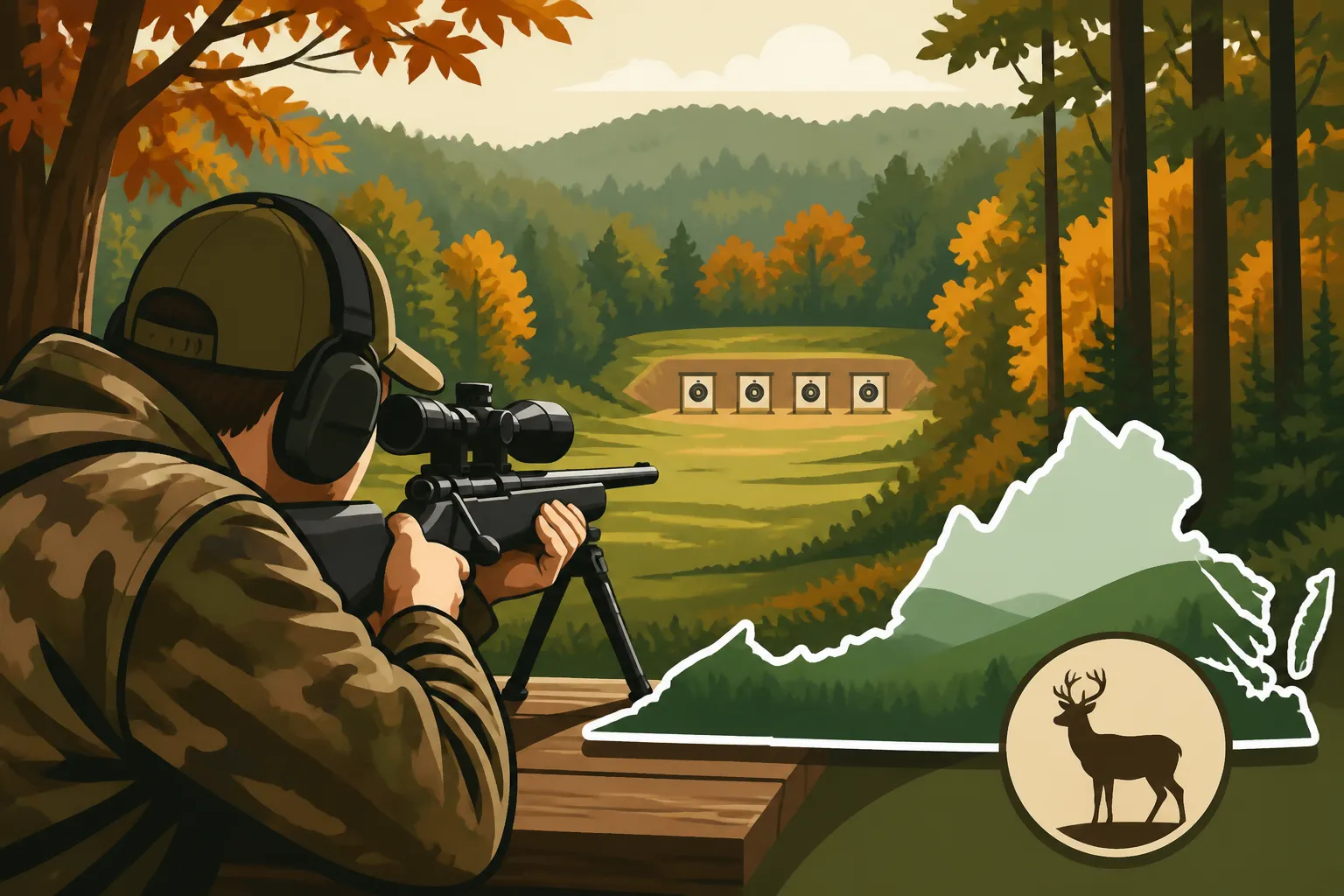
Hunting in Virginia’s Piedmont region offers some truly unique challenges and rewards. It's not the wide-open expanse of the West, nor the steep, often inaccessible mountains of our western counties. Instead, you're looking at a patchwork of rolling farmland, thick woodlots, dense creek bottoms, and transitional areas that demand a very specific approach to rifle hunting. Forget those Instagram-worthy 400-yard shots; the reality of the Piedmont often means quick, close-range opportunities where precision and quick thinking trump sheer distance. This guide will walk you through what to realistically expect when it comes to rifle ranges in these diverse woods and how to best prepare for success.
Understanding the Piedmont Terrain and Its Impact on Shots
The Virginia Piedmont is a fascinating blend of landscapes that directly influences how far you can see and, therefore, how far you can realistically expect to shoot a deer. It's a land of contrasts, moving from open agriculture to dense, tangled cover within a matter of yards.
The Rolling Hills and Scattered Woodlots
Unlike the dramatic elevation changes of the Blue Ridge, the Piedmont is characterized by its gentle, undulating topography. You'll find long, gradual slopes, shallow valleys, and rounded hilltops. While this might sound less intimidating than mountain hunting, these subtle elevation changes play a significant role in limiting your line of sight. A deer might be just over a small rise, completely hidden from view, even if it's only 70 yards away.
These rolling hills are interspersed with countless small to medium-sized woodlots, often bordering agricultural fields. These woodlots serve as critical cover and travel corridors for deer. While they might look like prime real estate on a map, once you're inside, the reality of the thick canopy and undergrowth quickly sets in, turning what seemed like an open area into a maze of limited visibility.
Vegetation Density and Visibility Challenges
If there's one defining characteristic of Piedmont woods, it's the sheer density of vegetation, especially during the early part of deer season. We're talking about a veritable jungle of multiflora rose, honeysuckle, greenbrier, and various other thorny, tenacious plants. Add to that the thick stands of young pines or cedars, and your visibility can plummet to mere yards in places.
Even in more mature hardwood stands, the understory can be so thick that seeing a deer beyond 50-75 yards can be a real challenge. You're often looking for glimpses of movement, a flick of an ear, or a patch of hide through a narrow window in the brush. This thick cover means that a deer can appear almost out of nowhere, requiring a fast and accurate shot. It also means that shot placement is absolutely critical; you rarely have the luxury of an unobstructed broadside shot in these conditions.
Creek Bottoms, Field Edges, and Transitional Zones
Many Piedmont hunting strategies revolve around these specific types of terrain features because they naturally funnel deer movement and offer the best chances for a shot. Creek bottoms, often lined with heavier timber and dense cover, act as natural highways for deer moving between bedding and feeding areas. While they offer cover for deer, the often more open canopy in these corridors can also provide slightly longer sightlines for hunters strategically positioned above them.
Field edges are another prime location. Deer will often stage in the woods just inside the edge of a corn, soybean, or hayfield before stepping out to feed at dusk. A hunter set up just inside the tree line, or in a well-brushed ground blind, might have a 100-200 yard shot across a field. However, even on a field edge, the moment a deer steps out is key, and if it stays inside the woods, those shots quickly revert to closer ranges. Setting Up on a Piedmont Field Edge offers great insights into maximizing these spots. Transitional zones, like where a clear-cut meets mature timber or a pine plantation borders hardwoods, also create natural breaks in cover where deer feel comfortable moving. Being able to read these features, perhaps by using aerial photos from a scouting app like GoHunt, helps you predict where those limited clearings might occur. Reading Aerial Photos for Piedmont Deer can be a huge asset here.
Average Shot Distances in Virginia's Piedmont
Let's be realistic: most deer taken in the heart of Virginia's Piedmont woods aren't falling to long-range precision shots. The terrain and vegetation simply don't allow it very often. Understanding these typical ranges will help you prepare mentally and choose the right gear.
The Reality of Close Encounters
When you're tucked deep in a Piedmont woodlot, surrounded by the thick, tangled underbrush we just discussed, your average shot distance is going to be surprisingly short. Think 30 to 80 yards. That's right, often less than 100 yards. A deer can appear quickly, step into a small opening, and be gone in a flash. This isn't about bragging rights on yardage; it's about being prepared for a quick, ethical shot when the opportunity presents itself.
It’s easy to get caught up in the allure of long-range shooting, but the truth is, most of your encounters will be up close and personal. You'll hear them before you see them, and when you do finally spot that buck, it’ll likely be moving through a narrow lane, giving you only a few seconds to make a decision. This emphasizes the need for fast target acquisition and confidence in your rifle and scope at these shorter distances.
Field Edge Opportunities
While the deep woods present tight shooting, the edges of agricultural fields, food plots, or even larger clear-cuts can offer longer shot opportunities. If you're hunting from a stand overlooking a soybean field in the late season, or a green winter wheat plot, you might have a shot that stretches out to 150-200 yards. These are the exceptions, though, not the rule for overall Piedmont hunting.
When planning for these field edge scenarios, it’s crucial to scout the particular field. Understand the typical routes deer take, where they prefer to enter and exit, and any natural obstacles that might impede a shot. Even if a field could offer a 200-yard shot, you might still only get a 75-yard shot if the deer decides to stick to the woods line or moves into an unshootable area. Always prepare for the closest realistic shot, and be capable of the longer one if it arises.
Factors Influencing Shot Opportunity
Several factors can dramatically shift your realistic shot opportunities in the Piedmont. Foliage, of course, is a huge one. Early archery season or even the first few weeks of general firearms season can see incredibly dense foliage, reducing visible shooting lanes significantly. As the leaves drop in late October and November, sightlines can improve, but the underlying thicket remains.
Weather also plays a massive role. A misty morning or thick fog can cut your visibility in half, turning a 70-yard shot into an unfeasible one. Conversely, a clear, crisp day with good light can extend your effective range slightly. Stand height is another key consideration. Hunting from a treestand at 15-20 feet can offer a better vantage point, allowing you to shoot over some of the dense underbrush that would block a ground-level shot. However, even from a stand, the rolling topography and thick canopy will still limit your horizontal vision. Ultimately, a dynamic approach, adapting to conditions and using tools like GoHunt to mark potential shooting lanes, is crucial.
Rifle and Caliber Considerations for Piedmont Hunting
Given the typical close-to-mid-range shots you’ll encounter in Virginia’s Piedmont, the choice of rifle and caliber is less about extreme long-range capability and more about effectiveness in thick cover, quick handling, and responsible energy transfer.
The Argument for Shorter-Range Cartridges
When deer are going to be popping out at 40, 60, or 80 yards, you don't necessarily need a cartridge designed for 500-yard precision. In fact, an overly powerful, high-velocity cartridge can sometimes be a disadvantage. For starters, an ethical hunter always considers what's beyond their target. In dense, rolling Piedmont woods, identifying a perfectly safe backstop can be challenging. A bullet that quickly sheds energy and velocity after passing through the animal or a minimal obstruction might actually be a safer choice than one that carries significant energy for hundreds of yards further.
Calibers like the good old .30-30 Winchester, .35 Remington, or even the .45-70 Government shine in these close-quarters environments. They deliver a heavy bullet with plenty of knockdown power at these shorter ranges, often with less chance of over-penetration or significant ricochet off minor brush than a higher-velocity, lighter bullet. Many hunters even opt for shorter-barreled rifles in these calibers for easier maneuverability through thickets.
Straight-Wall Cartridges and Their Role
Straight-wall cartridges have seen a massive resurgence in popularity, especially in states with specific regulations for "shotgun-only" zones or where hunters simply appreciate their effectiveness. In Virginia, these cartridges are perfectly legal statewide for deer and other big game. The .450 Bushmaster, .350 Legend, and .45-70 Government (which is also a straight-wall) are fantastic options for Piedmont hunting.
These cartridges combine impressive terminal ballistics at typical Piedmont ranges with manageable recoil in many cases. They often offer a good balance of energy and limited over-penetration risk, making them excellent choices for hunters concerned about backstops in populated areas or dense woods. Plus, many come in lever-action or bolt-action platforms that are incredibly quick to shoulder and cycle. It's always a good idea to check the latest Virginia Legal Firearms for Deer Hunting regulations before making a purchase.
Recoil Management and Follow-Up Shots
In the fast-paced, sometimes chaotic world of thick woods hunting, having a rifle you can handle comfortably for quick follow-up shots is paramount. A deer hit well might still run a short distance, and if you have another clear shot, being able to quickly re-acquire your target and deliver a second round can be invaluable for a humane harvest.
Choosing a caliber with manageable recoil allows you to stay on target better, reducing flinching and speeding up your second-shot capability. While a .300 Winchester Magnum might seem appealing for its power, its heavier recoil might slow you down more than help you in a typical Piedmont scenario. Many hunters find that a .308 Winchester, .270 Winchester, or the aforementioned straight-wall cartridges offer a sweet spot of power and shootability for these conditions. Remember, shot placement is always more important than raw power, and you can place shots better with a rifle you're comfortable shooting quickly and accurately. For a deeper dive, check out Best Rifle Caliber for Virginia Deer.
Here's a quick look at how different calibers might stack up for the Piedmont:
| Caliber Type | Typical Piedmont Use Case | Optimal Range (Yards) | Pros | Cons |
|---|---|---|---|---|
| Straight-Wall | Thick woods, brushy areas, close-in | 50-125 | Excellent energy transfer, reduced ricochet potential | Limited long-range capability |
| Traditional Deer | Mixed woods, field edges, versatile | 75-200 | Versatile, good energy, widely available, proven | Can be overkill for very close shots, more potential for over-penetration |
| Lever-Action (e.g., .30-30) | Dense cover, quick handling, classic choice | 30-150 | Fast pointing, reliable, quick follow-up, good knockdown at close range | Limited effective range beyond 150 yards |
| Modern Magnum | Longer field edge shots (rare), open country | 150-300+ | Excellent long-range power, flatter trajectory | Excessive for most woods shots, heavy recoil, higher over-penetration risk |
Optics and Sighting Systems for Close-to-Mid Range Shots
Your choice of optic is just as crucial as your rifle in the Piedmont. High-power magnification might seem impressive, but it can actually work against you when you need to acquire a target quickly in dense cover. It's all about finding the right balance for fast, clear target acquisition at those critical ranges.
The Magnification Sweet Spot
When hunting the tight confines of Piedmont woodlots, too much magnification is often a hindrance. If a deer steps out at 40 yards, having your scope cranked to 9x or 12x will give you a tiny field of view, making it incredibly difficult to find the animal quickly. By the time you find it, you might be looking at its tail as it disappears back into the brush.
For the Piedmont, scopes with a lower minimum magnification are key. A 1-4x, 2-7x, or 3-9x scope is usually ideal. On its lowest setting (1x, 2x, or 3x), you get a wide field of view, allowing for rapid target acquisition. This is like looking through a pair of binoculars or even with your naked eye, making it easy to put the reticle on the deer. If a longer shot on a field edge presents itself, you can quickly dial up the magnification to 7x or 9x for more precision. Always remember, the quicker you can get on target, the better your chances are. For more on low-light performance in similar environments, check out Rifle Scopes for Low-Light Mountain Hollows.
Reticle Choices for Fast Action
The reticle, or aiming point, inside your scope can also make a big difference in speed and accuracy. While complex BDC (Bullet Drop Compensator) reticles are great for known long-range shots, they can be distracting and slow you down when a deer pops up quickly at 50 yards.
For Piedmont hunting, a simple duplex or a German #4 reticle is often preferred. These reticles are clean, quick to pick up, and provide a clear aiming point without clutter. Many hunters also swear by illuminated reticles, especially for those low-light situations common in thick timber at dawn and dusk. A glowing red dot in the center of your crosshairs can make all the difference in quickly placing an accurate shot when legal light is fading and a dark deer appears against a dark background.
Red Dots and LPVOs for the Piedmont
In recent years, red dot sights and Low Power Variable Optics (LPVOs) have gained significant traction among deer hunters, and for good reason—they excel in exactly the kind of close-to-mid-range, fast-action scenarios typical of the Piedmont. A red dot sight, offering a simple 1x magnification with a bright, crisp dot, allows for lightning-fast target acquisition with both eyes open. It's incredibly intuitive and perfect for those 20- to 75-yard shots where speed is everything.
LPVOs, on the other hand, offer the best of both worlds. They typically range from 1-4x, 1-6x, or even 1-8x magnification. At 1x, they function much like a red dot, allowing for quick, wide-field-of-view shots. But with a quick turn of a dial, you can crank up the magnification to 4x, 6x, or 8x for those slightly longer field-edge shots, giving you more precision than a pure red dot could offer. If you're looking for ultimate versatility and speed in the varied Piedmont environment, an LPVO with an illuminated reticle is an incredibly strong contender.
Practice and Skill Development for Realistic Scenarios
Having the right rifle and optic for the Piedmont is only half the battle. The other, arguably more important, half is developing the skills to use them effectively in realistic hunting conditions. The range isn't the woods, and simply punching holes in paper from a bench rest won't fully prepare you.
Drills for Quick Target Acquisition
Since many Piedmont shots are close and fast, practicing quick target acquisition is crucial. Start with your rifle unshouldered, then rapidly bring it to your shoulder, find the target through your optic, and dry fire or live fire (safely, of course). Focus on getting a consistent cheek weld and aligning your eye behind the scope quickly. You want this motion to become second nature, almost fluid.
Set up targets at varying, unknown distances within your typical Piedmont range (say, 30-100 yards). Practice swinging the rifle from one target to another, mimicking a deer moving through brush. Work on quickly identifying a safe shooting lane and then placing your shot. You'll quickly discover that what feels slow on the bench becomes blindingly fast in the field when adrenaline kicks in.
Off-Hand and Positional Shooting
Let's face it: you rarely get a perfectly stable bench rest in the deer woods. More often, you'll be shooting from an unsupported standing position, kneeling behind a log, sitting against a tree, or perhaps using a shooting stick. Practicing these various shooting positions is essential.
Dedicate time at the range to practice off-hand shooting, kneeling, and sitting positions. Simulate leaning against a tree or using a backpack as a rest. The goal isn't necessarily bench-rest accuracy, but rather developing the stability and muscle memory to consistently hit a vital zone from these less-than-ideal positions. Even if you only get a 50-yard shot, shooting off-hand accurately requires significant practice and confidence.
Simulating Hunting Conditions
True preparation involves more than just shooting. Try practicing in your hunting gear – your jacket, gloves, and even your backpack. Walk a short distance before shooting to get your heart rate up, simulating the exertion of still-hunting or walking to your stand. Practice in various lighting conditions if your range allows, or at least during twilight hours to get a feel for how your optics perform in low light.
Consider setting up a simple "course" at a safe range where you can walk, identify a target (perhaps a 3D deer target), and then quickly get into a shooting position and take a shot. This integrated practice helps bridge the gap between static range shooting and dynamic hunting situations. Using apps like GoHunt for scouting during the off-season can help you identify realistic shooting lanes and then replicate those exact scenarios at a safe practice range. Remember, Zeroing at 100 Yards for Woods Hunting is a great baseline, but understanding how your bullet performs at closer, less perfect distances is truly what matters in the Piedmont. When you're scouting, look for those natural lanes, those places where a deer is likely to step out, and then mentally rehearse taking the shot.
Safety and Ethical Considerations for Woods Hunting
Hunting in Virginia's diverse and often densely populated Piedmont region demands an unwavering commitment to safety and ethical conduct. Unlike wide-open spaces, the proximity to homes, roads, and other recreational users, combined with the dense vegetation, requires extra vigilance.
Identifying a Safe Backstop in Rolling Terrain
The Piedmont's characteristic rolling hills and abundant thick cover can complicate the critical task of identifying a safe backstop for your shot. What appears to be an open shot may have an unseen dip in the terrain or a hidden trail just beyond your target. You must always know what lies behind your target before squeezing the trigger. This means taking an extra second to visualize the bullet's path and ensure it will safely impact the ground or a significant, impenetrable object if it passes through the deer or misses.
Never take a shot at a deer silhouetted against the sky, as this means your bullet will carry on indefinitely. Be especially cautious when hunting near roads, private property lines, or public trails. Your hunting app, like GoHunt, can be a valuable tool for understanding property boundaries, but ultimately, it's your eyes and judgment in the moment that count. In the Piedmont, sometimes the safest shot means foregoing a questionable opportunity, no matter how tempting.
Clear Target Identification in Thick Cover
The dense undergrowth and sporadic visibility in Piedmont woods often mean you'll only catch glimpses of a deer, rather than a full, unobstructed view. This poses a significant challenge for positive target identification. You might see a flash of brown, a patch of hide, or even just the antlers. In these situations, patience is not just a virtue; it's a critical safety rule.
Never shoot at sound or movement alone. Wait until you can clearly identify your target as a legal deer (check local antler point restrictions if applicable) and confirm there are no other deer or, more importantly, people near or beyond your target. This is especially vital during peak hunting times when more hunters might be in the woods. Mistakes can happen quickly, so take that extra second. It's a foundational principle covered in Virginia Hunter Education Requirements for a reason.
Shot Placement for Clean Kills in Dense Environments
Ethical hunting dictates that we strive for the cleanest, most humane kill possible. In the thick, often unforgiving environment of the Piedmont, this means being even more disciplined about shot placement. Quartering-away shots, sharp angling shots, or "Texas heart shots" that might be considered in more open country are often high-risk propositions in dense cover. The chance of deflecting the bullet on a twig, hitting non-vital areas, or simply losing the deer in the thicket increases dramatically.
Aim for the vitals: the heart and lungs. A broadside shot, or a slightly quartering-to shot that allows a bullet to penetrate the chest cavity, offers the best chance for a quick, ethical kill. If the angle isn't right, or if there's too much brush between you and the deer, resist the urge. Waiting for a better opportunity, or letting the deer walk, is always the more ethical choice. Always be mindful of your Blaze Orange Requirements to ensure you're visible to other hunters, adding another layer of safety in these shared spaces.
Disclaimer
This article is for general informational purposes only and does not constitute professional advice. Laws, prices and regulations vary by location and change over time. Consult a qualified professional for guidance on your specific situation.